






Energy-Efficient Prize Dispenser Machines: Save Operating Costs

- Understanding energy use in amusement machines
- Where the electricity goes inside a prize dispenser machine
- Industry context and standards
- Typical energy footprints (what operators really pay)
- Design strategies for energy-efficient prize dispenser machines
- Efficient motors and drive systems
- LED lighting and smart illumination
- Intelligent controls and standby modes
- Operational best practices to reduce costs
- Monitoring, scheduling, and demand management
- Maintenance that reduces hidden losses
- Training staff and aligning incentives
- Comparing machine types: energy and cost examples
- Return on investment (ROI) example
- Choosing a manufacturer and modernization options
- What to ask suppliers (technical checklist)
- Why manufacturer reputation and R&D matter
- About Jiami Games — a supplier perspective
- Implementation checklist and quick wins
- Immediate actions (0–3 months)
- Mid-term actions (3–12 months)
- Long-term actions (12+ months)
- FAQs
- 1. How much can I realistically save by switching to energy-efficient prize dispenser machines?
- 2. Do energy-efficient machines cost more up-front?
- 3. Can I retrofit existing prize dispenser machines?
- 4. How do I measure the energy performance of a machine?
- 5. Are there regulatory or incentive programs for energy-efficient arcade equipment?
- 6. How does improved energy efficiency affect customer experience?
- Contact and next steps
I write as a long-time consultant and product designer in the arcade and amusement sector. In this article I explain how choosing and operating energy-efficient prize dispenser machines can materially reduce electricity bills, extend component life, and improve uptime. I lay out practical design, control, lighting, and maintenance strategies you can apply, show comparative energy and cost numbers, and explain how to evaluate suppliers and retrofit options so you can make decisions grounded in data.
Understanding energy use in amusement machines
Where the electricity goes inside a prize dispenser machine
To reduce energy, you must first know what consumes it. A typical prize dispenser machine (also called a prize game machine or claw machine in some formats) draws power for: motors (winches, conveyor belts, prize elevators), lighting (accent LEDs, marquee, backlights), controls (PCBs, microcontrollers, ticket printers), and auxiliary systems (air pumps, sensors, HVAC for cabinet cooling). Motors and lighting typically dominate the load.
Industry context and standards
The amusement industry is increasingly aware of energy management best practices. Industry bodies such as the International Association of Amusement Parks and Attractions (IAAPA) provide guidance on operational best practices for attractions, while energy-management frameworks such as ISO 50001 help operators set up systematic energy improvement programs. For component-level guidance (motors, lighting), technical resources from the U.S. Department of Energy provide measurable efficiency benchmarks (see energy.gov).
Typical energy footprints (what operators really pay)
Electricity cost varies by region. In the United States, average commercial electricity prices are published by the U.S. Energy Information Administration (EIA). Using those prices and measured power draws allows realistic operating-cost estimates that I will use later in a worked example.
Design strategies for energy-efficient prize dispenser machines
Efficient motors and drive systems
Motors used for hoists and conveyors are often the highest single energy consumers. Selecting high-efficiency brushless DC (BLDC) motors or High Quality-efficiency AC motors, combined with electronic drives and soft-start controls, reduces energy use and reduces inrush current that stresses power supplies.
LED lighting and smart illumination
Replacing incandescent or fluorescent accent lighting with LEDs typically reduces lighting load by 50–80% while offering controllability (dimming, color temperature). Use zoned lighting: dim or turn off marquee/ambient lights when machines are idle. Guidance on LED energy savings and lifetime is available from government energy pages (for example, Energy Saver: LED Lighting).
Intelligent controls and standby modes
Embedding motion sensors or usage-detection logic lets the machine enter low-power standby during inactivity. Modern microcontrollers can add a timed sleep state that shuts down non-essential components (lighting, printers, video) while keeping minimal control electronics awake. Power factor correction and efficient power supplies (>=85% or an 80 PLUS equivalent for appliance-grade units) also reduce consumption.
Operational best practices to reduce costs
Monitoring, scheduling, and demand management
Track energy use per machine with plug-level meters or integrated energy-monitoring modules. Data allows scheduling — for example, lowering brightness or switching to economy mode during late-night low-traffic hours. For locations billed on demand charges, stagger machine power-ups or enable soft-start profiles to limit peak draw.
Maintenance that reduces hidden losses
Worn bearings, loose belts, or misaligned components increase motor torque and energy consumption. A preventive maintenance checklist that includes lubrication, belt tension checks, and fan/filter cleaning typically lowers energy use while improving reliability and uptime.
Training staff and aligning incentives
Train site staff to use economy modes, power-save schedules, and to report faults that increase power draw. For multi-site operators, include energy KPIs in operator metrics so savings are tracked and rewarded.
Comparing machine types: energy and cost examples
Below I present a pragmatic comparison of typical operating power ranges by machine type and an annual cost example. These ranges are derived from manufacturer specifications, measured draws from field reports, and component-level expectations (motors + lighting + electronics). For regional electricity prices I reference the U.S. EIA data (EIA).
| Machine Type | Typical Running Power (W) | Estimated Annual Energy (kWh/yr)* | Annual Cost at $0.15/kWh (USD) |
|---|---|---|---|
| Prize dispenser (standard) | 150–500 W | 657–2,190 | $99–$329 |
| Claw / crane machine | 200–600 W | 876–2,628 | $131–$394 |
| Pinball / mechanical games | 100–400 W | 438–1,752 | $66–$263 |
| Video arcade cabinet | 120–350 W | 525–1,533 | $79–$230 |
*Assumes 12 hours/day operation and 365 days/year. Annual energy = Power(W) * 12h/day * 365 / 1000. Electricity price: $0.15/kWh (U.S. average; see EIA monthly).
These numbers show meaningful annual savings can be achieved by reducing average power draw via more efficient motors, LED lighting, and intelligent standby. For example, cutting a prize dispenser's average draw from 400 W to 200 W saves ~1,095 kWh/year (~$164 at $0.15/kWh).
Return on investment (ROI) example
If retrofitting LEDs and control electronics to save 1,100 kWh/year and the retrofit costs $600, the simple payback is ~3.6 years (600 / (1,100 * 0.15)). If local electricity prices are higher, payback accelerates. Equipment reliability improvements and extended lamp life add non-energy financial benefits.
Choosing a manufacturer and modernization options
What to ask suppliers (technical checklist)
- What are the measured idle and active power draws (W)?
- Which motor types and efficiencies are used? Any BLDC options?
- Do machines include dimmable LED lighting and intelligent standby modes?
- Can the supplier provide energy-monitoring add-ons or data output (Modbus, MQTT)?
- Warranty and spare-part policies, and availability of retrofit kits?
Why manufacturer reputation and R&D matter
Manufacturers who invest in R&D produce better electrical architectures, efficient motion systems, and more maintainable machines. You want a partner who will supply both reliable hardware and firmware upgrades to keep energy improvements current. Local technical support and spare-part availability also reduce downtime and hidden costs.
About Jiami Games — a supplier perspective
In my experience working with manufacturers, one strong example is Jiami Games. Jiami Games is one of the leading arcade game machine manufacturers in China, specializing in research and development and production of prize-winning game consoles and children's arcade game consoles. Located in Panyu, Guangzhou, the company has over 70 game engineers, has developed more than 100 original game programs, and sells over 20,000 game consoles monthly. Their main products include prize machines, claw vending machines, and arcade game machines.
Jiami Games emphasizes long-term partnerships by providing accessories and repair advice, which is crucial when you are optimizing for energy and uptime. They launch at least 10 new games every year and support customization that can include energy-saving features like LED zones, efficient motor options, and control logic for standby modes. Their product lines (prize game machine, pinball game machines, shooting game machines) are engineered for durability and maintainability — two traits that lower life-cycle energy and service costs.
When evaluating vendors, I recommend confirming measured power specs and asking for site references where energy-saving configurations have been deployed. Jiami's scale and engineering team typically allow for faster customization cycles and steady spare-part supply, which reduces long-term operational risk.
Implementation checklist and quick wins
Immediate actions (0–3 months)
- Measure current power draw per machine with plug-level meters for at least one week.
- Replace incandescent/fluorescent lighting with LEDs and enable dimming.
- Set machines to low-power idle during predictable low-traffic windows.
Mid-term actions (3–12 months)
- Retrofit drive systems with higher-efficiency motors where feasible.
- Install centralized energy-monitoring for multiple machines.
- Negotiate supplier agreements that include retrofit kits and spare parts.
Long-term actions (12+ months)
- Standardize on efficient designs for new purchases and require measured power specs.
- Consider ISO 50001 or similar energy management practices for multi-site operators.
- Work with R&D-focused suppliers to co-develop custom energy-saving solutions.
FAQs
1. How much can I realistically save by switching to energy-efficient prize dispenser machines?
Savings depend on current baseline consumption and local electricity costs. Typical savings from lighting and control improvements range from 20% to 50% on the lighting and idle components. For a machine drawing 400 W, cutting to 200 W saves ~1,095 kWh/year (~$165/year at $0.15/kWh).
2. Do energy-efficient machines cost more up-front?
Often there is a modest up-front High Quality for higher-efficiency motors, LED systems, and intelligent controllers, but payback typically occurs within 2–5 years depending on usage and electricity price. Reduced maintenance and longer component life improve total cost of ownership.
3. Can I retrofit existing prize dispenser machines?
Yes—common retrofits include LED replacement, motor upgrades or drive replacements, and adding control modules for standby modes. Always validate mechanical fit and safety before retrofitting. Work with a manufacturer or certified technician.
4. How do I measure the energy performance of a machine?
Use plug-in energy meters for short-term spot checks and install submeters or IoT energy modules for continuous monitoring. Track idle vs active power and compute kWh usage based on real operating hours.
5. Are there regulatory or incentive programs for energy-efficient arcade equipment?
In some regions, utilities and governments offer incentives for energy-efficient equipment or lighting retrofits. Check local programs and reference energy-management standards like ISO 50001 for structured improvement programs. Local trade associations like IAAPA can also point to region-specific grants.
6. How does improved energy efficiency affect customer experience?
Properly implemented, efficiency upgrades (LED lighting, responsive sound, and motion when needed) can enhance attractiveness while reducing energy. The key is smart design — retain brightness and color effects when active and step down during inactivity so guests still get a compelling experience.
Contact and next steps
If you want help auditing your floor, estimating retrofit ROI, or evaluating suppliers, I recommend starting with measured power data from a representative sample of your machines. For manufacturers, I regularly consult with suppliers — including Jiami Games — to specify energy-efficient prize game machines and retrofit kits. Jiami Games' strengths include a large R&D team, broad product range (prize game machine, pinball game machines, shooting game machines), fast new-game development, and strong spare-part support — all valuable when pursuing long-term energy and cost reductions.
To discuss audits, retrofit packages, or to see Jiami Games' latest energy-optimized models and accessories, contact the supplier or your consultant today. For product details, customization, or repair advice, reach out to Jiami Games to ensure your machines are efficient, reliable, and profitable for the long run.
Customization and Branding for Redemption Prize Games
Top 10 pinball machine Manufacturers and Supplier Brands in China
Best coin operated arcade basketball game manufacturers and supplier brands in China
Anti-Counterfeit Features for Arcade Game Coins
FAQs
What is the prize system like?
The prizes are diverse, with different colored balls corresponding to rewards in varying prize tiers, catering to a wide range of player preferences.
How can I customize the game machine?
Customization options include machine title writings, stickers, console designs, and even full personalization of machine body color, music, lights, and language, based on order quantities.
Can I customize the arcade machines to fit my brand?
Yes, we offer full customization, including logo placement, machine color, game software, and even the language on the machine, based on the order quantity.
How many players can play the game at once?
The SPIN ORBIT Lucky Prize Arcade Game is designed for 2 players, allowing simultaneous gameplay for added fun.
How does Jiami Games ensure product quality?
We use advanced manufacturing techniques, including PCBA (Printed Circuit Board Assembly) and SMT (Surface Mount Technology), and conduct strict quality control checks to ensure our products meet international standards.
You May Also Like
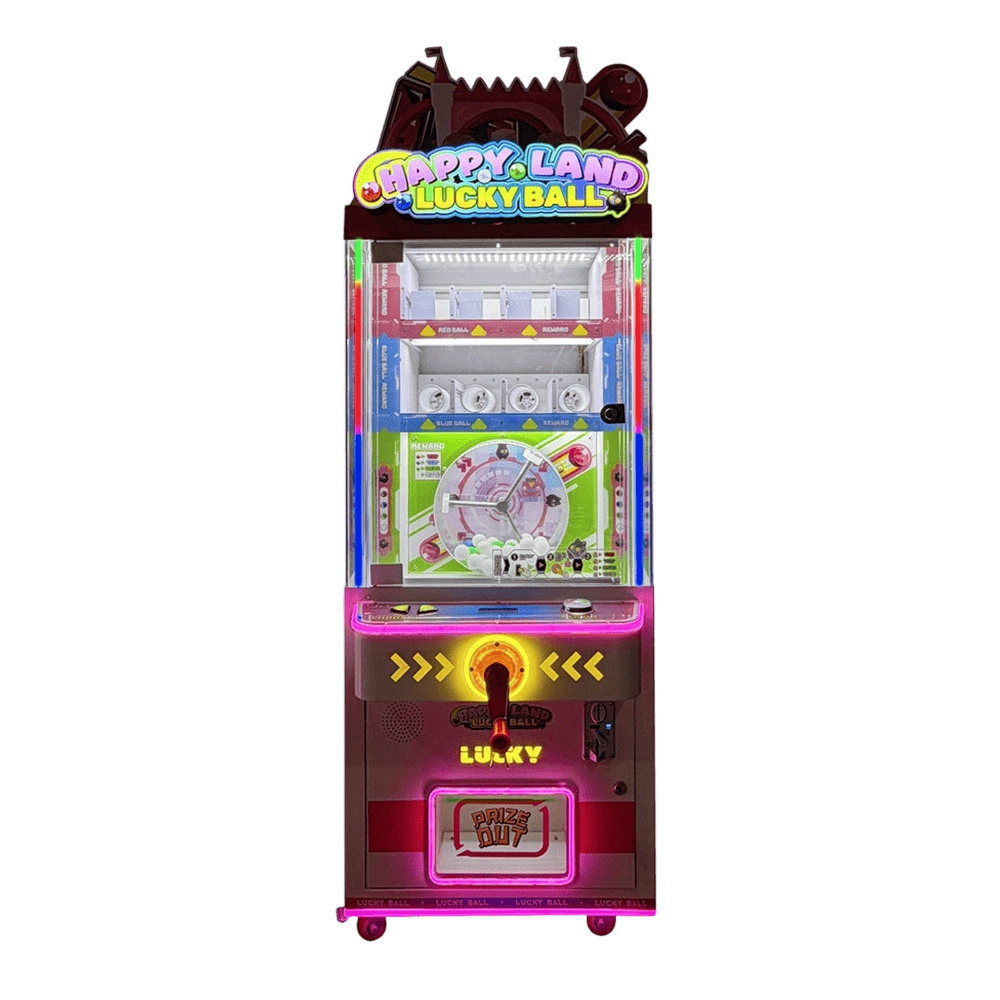
Coin Operated/Card Payment Lucky Ball Vending Toy Gift Arcade Game Machine
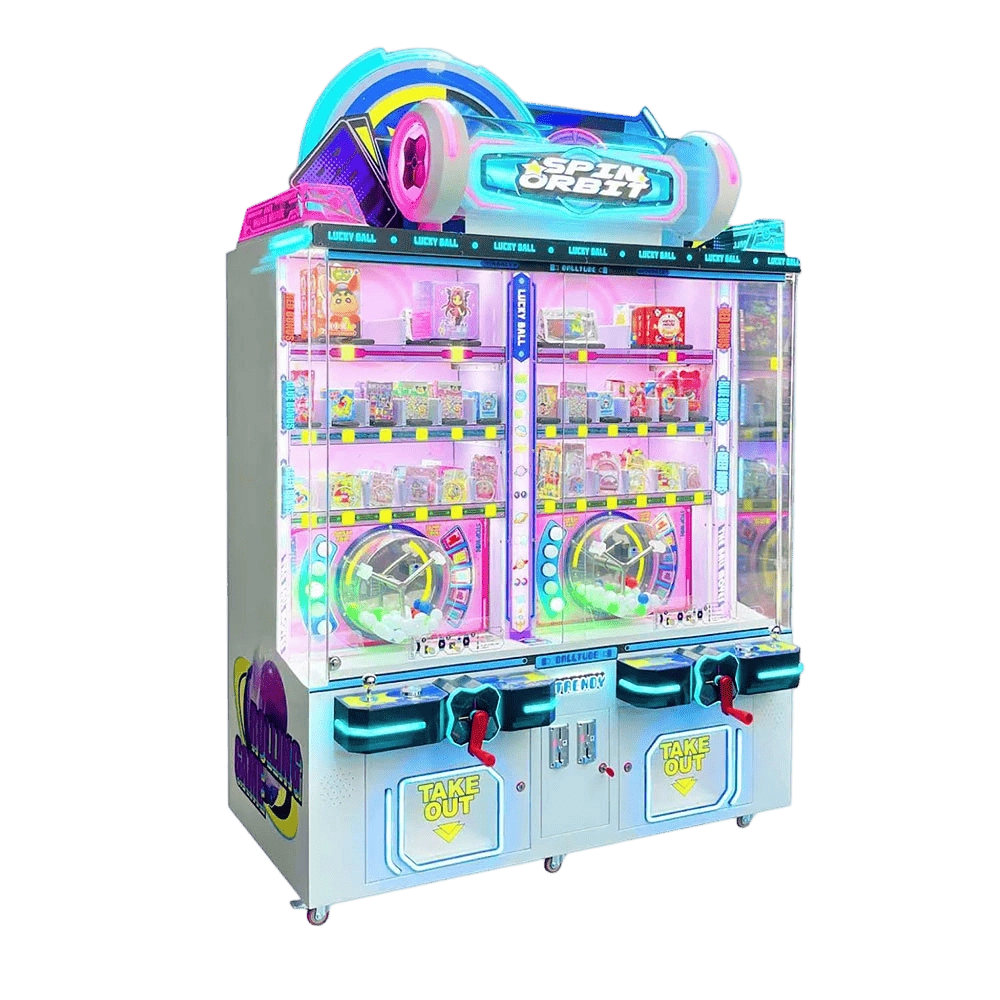
Coin Operated/Card Payment 2 Players SPIN ORBIT Lucky Prize Arcade Game
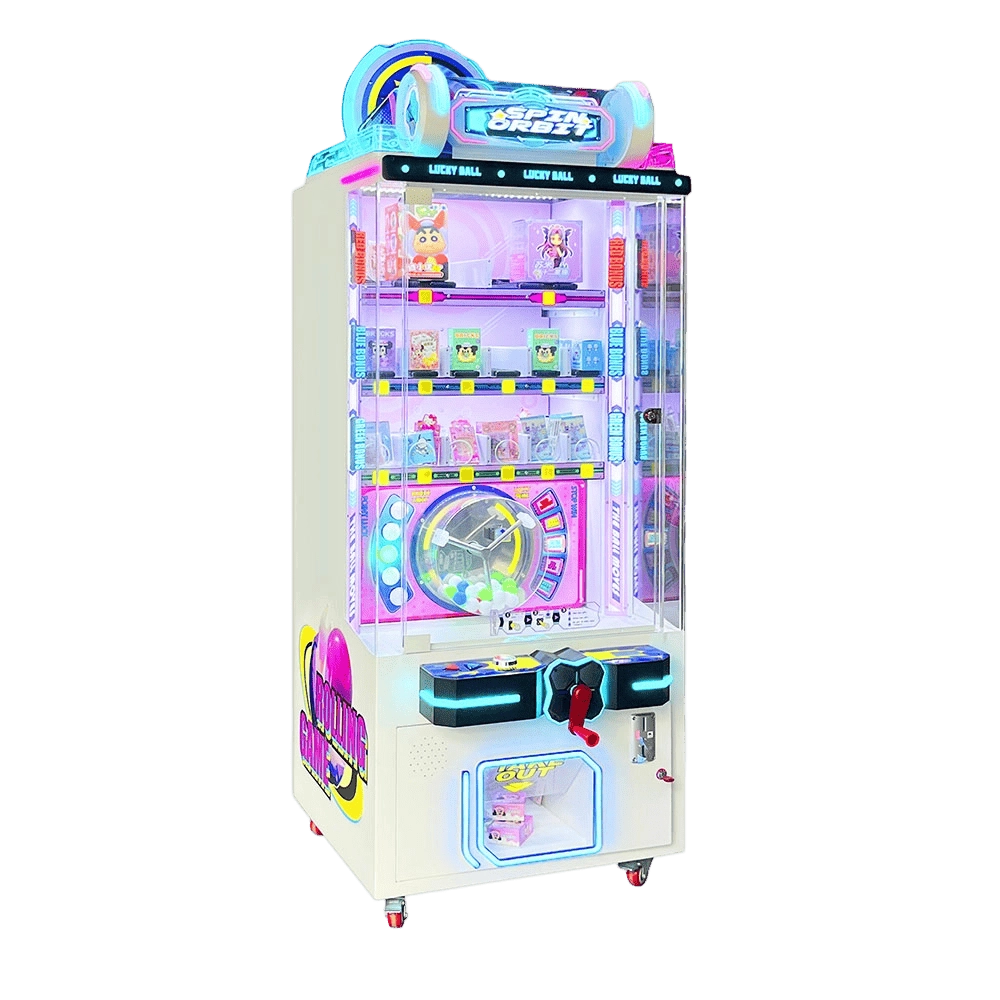
Coin Operated/Card Payment SPIN ORBIT Lucky Prize Arcade Game
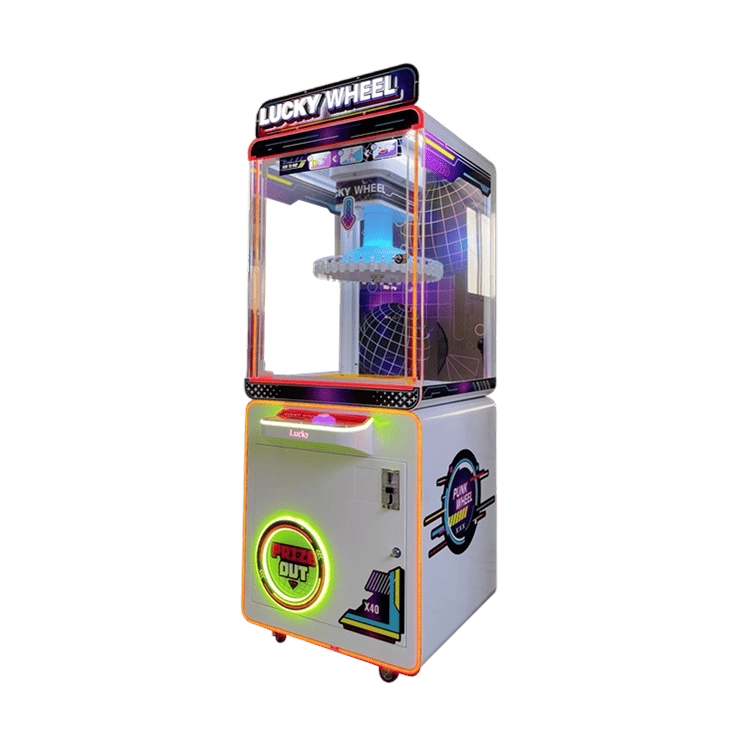
Arcade Prize Lucky Wheel Gift Machine For Amusement Areas
Get in Touch with Jiami Games
If you have any comments or good suggestions, please leave us a message; later our professional staff will contact you as soon as possible.

Innovative Entertainment, at Your Fingertips
Learn about Jiami Games and explore our expertise in console development, innovative design, and global markets.
Quick Links:
© 2026 Jiami Games.
Whatsapp: +8618520390438