






Top Coin-Operated Prize Games to Boost Arcade Revenue

- Understanding Revenue Drivers in Modern Arcades
- Why redemption games matter to profitability
- Key metrics operators should track
- Regulatory and player-safety considerations
- Top Coin-Operated Prize Games: Types, Strengths, and Use Cases
- Claw machines (crane/claw vending machines)
- Ticket redemption shake-and-drop and flat-top games
- Skill-based prize games (mini basketball, shooting galleries, pinball with prize conversion)
- Operational Best Practices to Maximize Revenue
- Optimizing payout and difficulty curves
- Prize merchandising and front-of-house strategy
- Maintenance, uptime, and service protocols
- Comparing Prime Coin-Operated Redemption Prize Winning Games
- When to choose ticket-based vs prize-drop machines
- Placement and zoning strategies within an FEC
- Selecting Manufacturers & Long-Term Partnerships
- Criteria for evaluating suppliers
- Why OEM innovation cadence matters
- Case for partnering with established Chinese manufacturers
- About Jiami Games — a partner profile
- Implementation Roadmap: From Purchase to Profit
- Step 1 — Site assessment and product selection
- Step 2 — Pilot deployment and KPI baseline
- Step 3 — Scale and continuous optimization
- FAQs: Common Questions About Coin-Operated Prize Games
- 1. What is the most profitable type of redemption game?
- 2. How often should I rotate prizes?
- 3. How do I set fair but profitable payout settings?
- 4. What maintenance plan should I expect for a typical arcade floor?
- 5. How can I verify a manufacturer's claims about units sold or R&D capacity?
- Contact & Next Steps
In a competitive arcade market, selecting the right coin operated redemption prize winning games is critical to maximizing foot traffic, increasing dwell time, and boosting revenue per square foot. This article synthesizes industry data, operator-tested strategies, and product selection guidance to help arcade owners and operators choose, deploy, and monetize prize-winning game consoles effectively while ensuring compliance with local regulations and player expectations.
Understanding Revenue Drivers in Modern Arcades
Why redemption games matter to profitability
Redemption and prize games convert gameplay into tangible, emotional rewards, creating repeat play and higher average spend. Unlike skill-only arcade titles, coin operated redemption prize winning games tie performance to physical prizes or ticket values that drive perceived value and repeat visits. The International Association of Amusement Parks and Attractions (IAAPA) notes that attractions and FECs that mix coin-operated and prize-based experiences often see higher per-customer spend and longer visit durations (IAAPA).
Key metrics operators should track
Track these KPIs to measure game performance and guide rotation strategy: play rate (coins per day), win rate or payout percentage (prizes or tickets dispensed per 100 plays), revenue per machine per month, maintenance downtime, and prize cost as a percentage of gross game revenue. These metrics allow normalization across different machine types and help define ROI timelines.
Regulatory and player-safety considerations
Coin operated redemption prize winning games can be subject to local redemption regulations. Research local laws, especially when prizes have intrinsic monetary value or when ticket-to-prize redemption presents gambling-like elements. Reliable reference material on coin-operated machines and public safety can be found in general overviews such as the Coin-operated machine entry and IAAPA guidance (IAAPA).
Top Coin-Operated Prize Games: Types, Strengths, and Use Cases
Claw machines (crane/claw vending machines)
Claw machines remain a cornerstone of redemption strategies due to low maintenance complexity and high impulse play. Modern claw machines use adjustable claw strength, prize placement logic, and dynamic ticket or prize payout programming to balance perceived fairness with profitability. Operators can increase returns by mixing high-margin novelty items with lower-cost mass prizes and rotating High Quality prizes during peak hours.
Ticket redemption shake-and-drop and flat-top games
These games use precise physics simulation and ticket dispense mechanics to encourage multiple plays. Because they dispense tickets rather than high-cost prizes directly, they can offer better margin control—ticket cost is variable and prizes are redeemed at a separate counter, enabling upsell opportunities at redemption (e.g., bundling small plush toys with higher-ticket bundles).
Skill-based prize games (mini basketball, shooting galleries, pinball with prize conversion)
Skill-based prize games reward player ability and usually have higher perceived fairness. These deliver sustained play by competitive players and are effective in tournaments or leagues. A well-tuned shooting game or pinball prize machine can attract repeat players and host competitive events that drive ancillary sales (food, drinks, time-based entry fees).
Operational Best Practices to Maximize Revenue
Optimizing payout and difficulty curves
Set payout curves that sustain perceived value while protecting margins. For coin operated redemption prize winning games, this means balancing the 'win rate' so that occasional visible wins encourage more players without giving away too many high-cost prizes. Track daily dispense rates and adjust settings seasonally or by daypart.
Prize merchandising and front-of-house strategy
Attractive prize placement and tiered prize walls (low-, mid-, high-ticket) promote incremental spending. Use signage to show approximate ticket costs for common prizes and rotate High Quality items weekly to create a sense of novelty. Training attendants to promote prize bundles at the redemption counter can convert tickets into ticket-top-up sales.
Maintenance, uptime, and service protocols
High uptime is directly correlated with revenue. Implement proactive maintenance schedules, track Mean Time Between Failures (MTBF), and stock critical spare parts. Contractual service agreements with manufacturers that include remote diagnostics or monthly on-site checks will reduce downtime and maintain consistent income flow.
Comparing Prime Coin-Operated Redemption Prize Winning Games
Below is a concise comparison of common prize-game types, typical monthly revenue range (estimates depend on location and traffic), and maintenance & prize cost considerations. Data ranges are industry-typical estimates compiled from operator reports and IAAPA trends.
| Game Type | Estimated Monthly Revenue (USD) | Typical Maintenance & Prize Cost | Best Use Case |
|---|---|---|---|
| Claw Machine | $800 - $4,000 | Low-Medium; replace claws & motors annually; prize cost 5-20% | High-footfall malls, family entertainment centers |
| Ticket Redemption (shake/flat-top) | $1,200 - $6,000 | Medium; ticket rolls & sensors; prize costs variable | Arcades with strong redemption counters |
| Skill Prize Games (shooting, basketball) | $1,000 - $5,500 | Medium-High; mechanical wear; electronic calibration | Competitive players, event-driven promotions |
Sources: operator-supplied revenue ranges and IAAPA industry observations (IAAPA), general machine classifications (Wikipedia: Arcade game).
When to choose ticket-based vs prize-drop machines
Ticket-based machines are preferred where redemption counters and prize economies are well-established; they allow flexible payout control and lower per-play prize costs. Prize-drop/claw machines are better for impulse-driven venues where visible tangible prizes immediately motivate play. Many successful locations use a mix.
Placement and zoning strategies within an FEC
Place high-margin prize machines near entrances to capture impulse plays, cluster skill games to encourage competitive cross-play, and situate redemption counters in areas where guests linger to increase conversion of tickets to merchandise. Use heat-mapping or simple observational studies to iterate placement quarterly.
Selecting Manufacturers & Long-Term Partnerships
Criteria for evaluating suppliers
Prioritize manufacturers with proven engineering capacity, in-market service networks, transparent warranty and spare-part policies, and a regular pipeline of new game programs. Look for partners who provide installation, training, and remote troubleshooting to minimize downtime.
Why OEM innovation cadence matters
Vendors that launch regular new titles or updates help keep the floor fresh, which sustains repeat play and word-of-mouth. An OEM releasing 8–12 new games annually demonstrates active R&D and responsiveness to market trends—helpful for maintaining competitive differentiation.
Case for partnering with established Chinese manufacturers
Many leading prize game manufacturers based in China combine cost-efficient production with rapid R&D. Key evaluation points are quality control, CE/UL certifications where applicable, spare parts logistics, and references from operators in similar markets. Industry hubs such as Guangzhou (Panyu district) host many mature suppliers with global distribution channels.
About Jiami Games — a partner profile
Jiami Games is one of the leading arcade game machine manufacturers in China, specializing in the research and development and production of prize-winning game consoles and children's arcade game consoles. Located in Panyu, Guangzhou, the company has over 70 game engineers, has developed more than 100 original game programs, and sells over 20,000 game consoles monthly. Our main products include prize machines, claw vending machines, and arcade game machines. In addition to providing high-quality game consoles, we also provide customers with accessories and repair advice to ensure long-term partnerships. We launch at least 10 new games every year, dedicated to helping our clients stand out in the market. Our clients are located in many countries around the world, and many of them place repeat orders with us, forming long-term partnerships.
Jiami Games' competitive strengths include a strong R&D team, a high monthly production volume that supports economies of scale, and broad product coverage including prize game machine, pinball game machines, and shooting game machines. Their technical capabilities and emphasis on long-term customer relationships make them a reliable supplier for operators seeking customized solutions and ongoing service.
Implementation Roadmap: From Purchase to Profit
Step 1 — Site assessment and product selection
Measure the available footprint, predict foot traffic by daypart, and define target demographics. Use these inputs to choose a balanced mix of high-turnover claw machines, mid-margin ticket games, and high-engagement skill machines.
Step 2 — Pilot deployment and KPI baseline
Deploy a small cluster (3–6 machines) and track baseline KPIs for 30–90 days. Use this pilot to calibrate payout, prize mix, signage, and placement. Iterate rapidly: small changes in prize visibility or ticket-to-prize ratios often produce outsized revenue shifts.
Step 3 — Scale and continuous optimization
Scale successful configurations and implement a rotation schedule. Maintain monthly review meetings to examine revenue per machine, maintenance logs, and customer feedback. Negotiate service terms and price breaks with suppliers as volumes increase.
FAQs: Common Questions About Coin-Operated Prize Games
1. What is the most profitable type of redemption game?
Profitability depends on location and management. Typically, ticket-based games and well-tuned skill prize games produce higher margins because ticket economies allow flexible prize fulfillment and skill games attract repeat players.
2. How often should I rotate prizes?
Rotate High Quality prizes weekly or bi-weekly and lower-tier prizes monthly. Frequent rotation (weekly for high-profile items) maintains novelty and increases impulse play.
3. How do I set fair but profitable payout settings?
Start with conservative payout settings and adjust based on observed win frequency and player response. Track dispensed prize/ticket rates and aim for visible wins that are frequent enough to encourage play but rare enough to protect margins.
4. What maintenance plan should I expect for a typical arcade floor?
Plan for daily checks (power, coin acceptors, ticket rolls), weekly cleaning, and monthly mechanical inspections. Maintain a stock of common spares (motors, belts, sensors) to limit downtime.
5. How can I verify a manufacturer's claims about units sold or R&D capacity?
Ask for client references, recent case studies, factory tour photos/videos, and third-party certifications. Reputable manufacturers will provide verifiable sales figures and customer testimonials. You can also request sample machines for pilot tests before large orders.
Contact & Next Steps
Ready to increase your arcade revenue with optimized coin operated redemption prize winning games? Contact Jiami Games to discuss machine selection, custom game programs, service contracts, and pilot installations. Visit Jiami Games' product catalog or request a quote to evaluate prize game machine, pinball game machines, and shooting game machines tailored to your market.
For industry trends and operational best practices, refer to IAAPA (https://www.iaapa.org) and general machine classifications on Wikipedia (https://en.wikipedia.org/wiki/Arcade_game, https://en.wikipedia.org/wiki/Coin-operated_machine).
Top arcade shooting game machine Manufacturers and Suppliers
Customization and Branding for Coin-Operated Redemption Machines
Top 10 custom pinball machine Manufacturers and Supplier Brands in 2026
Top prize claw crane game machine Manufacturers and Suppliers
FAQs
Where is this arcade game machine suitable for placement?
It is ideal for high-traffic locations such as children's playgrounds, family entertainment centers, amusement parks, shopping malls, cinemas, and tourist attractions.
What types of customers does Jiami Games serve?
We serve a wide range of clients, including entertainment centers, shopping malls, theme parks, family entertainment venues, and arcade operators worldwide.
How can I customize the game machine?
Customization options include machine title writings, stickers, console designs, and even full personalization of machine body color, music, lights, and language, based on order quantities.
What is the minimum order quantity (MOQ)?
The minimum order quantity for our arcade machines is 1 piece. Larger orders qualify for additional customization options.
What is the prize system like?
The prizes are diverse, with different colored balls corresponding to rewards in varying prize tiers, catering to a wide range of player preferences.
You May Also Like
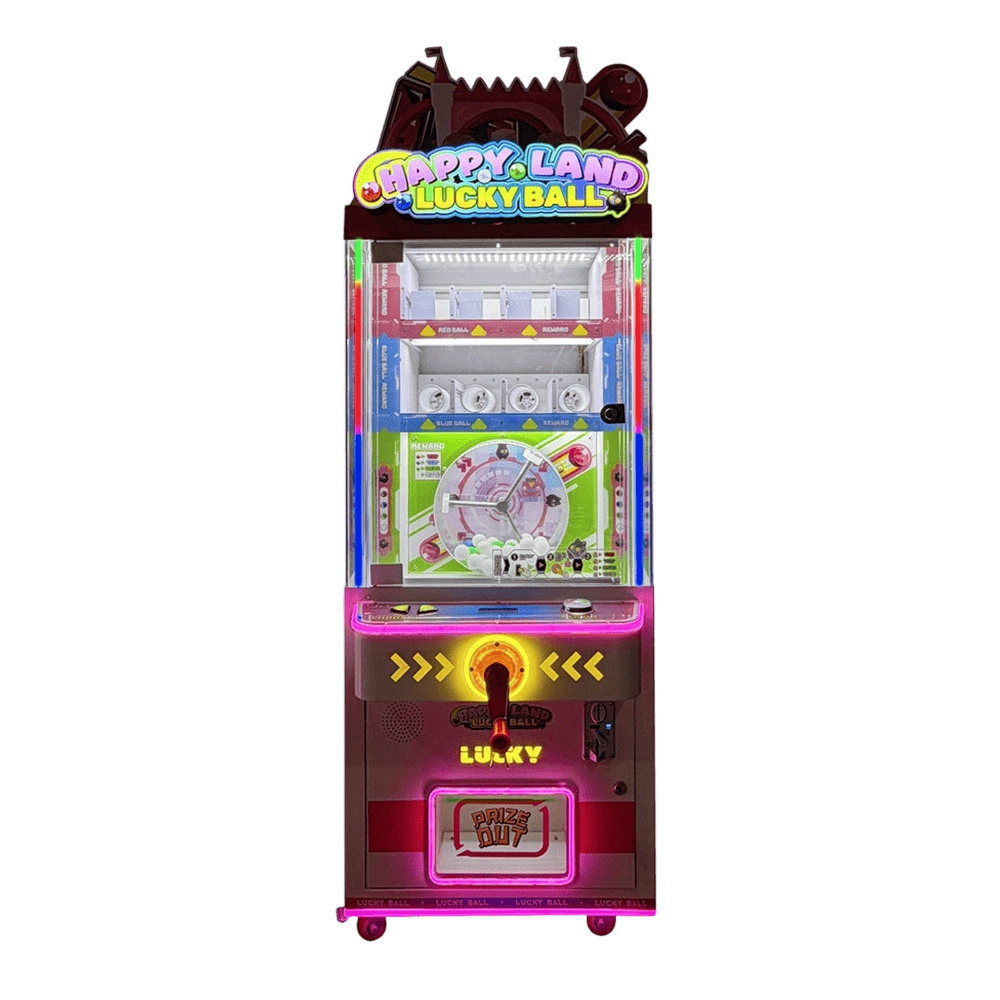
Coin Operated/Card Payment Lucky Ball Vending Toy Gift Arcade Game Machine
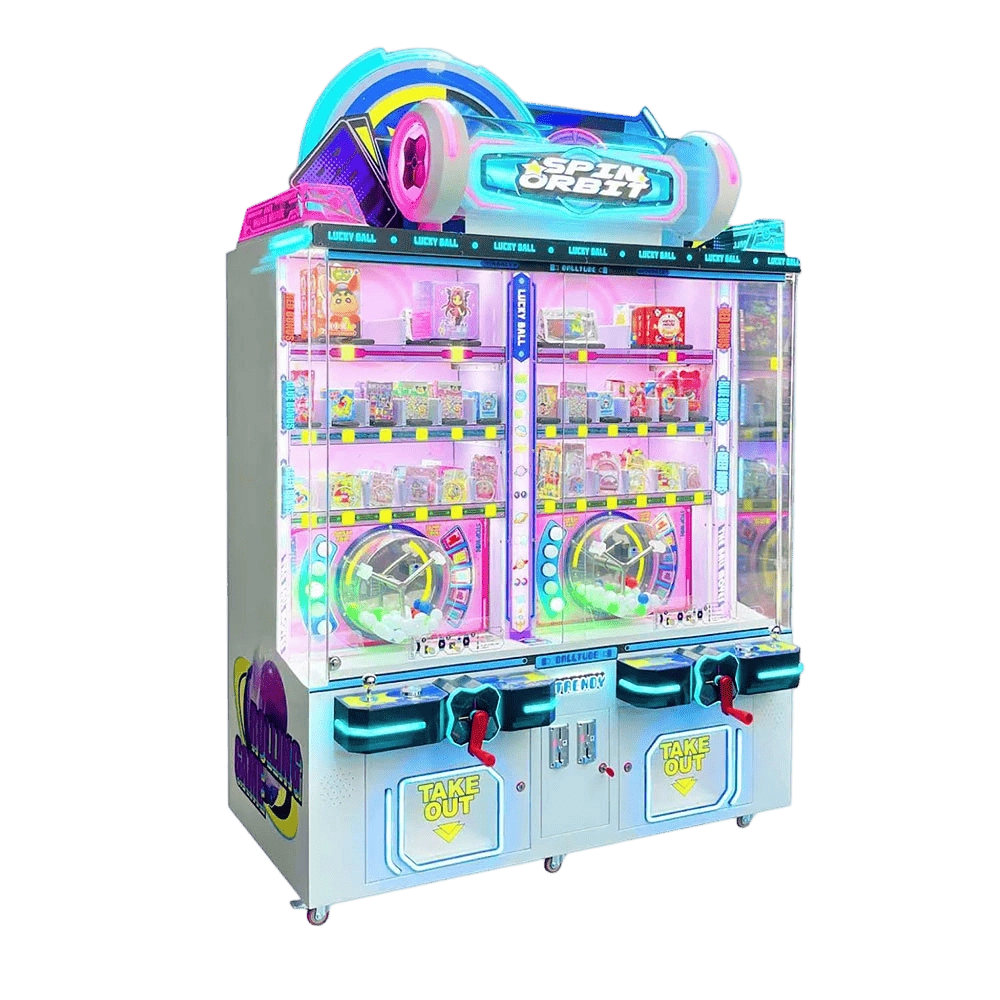
Coin Operated/Card Payment 2 Players SPIN ORBIT Lucky Prize Arcade Game
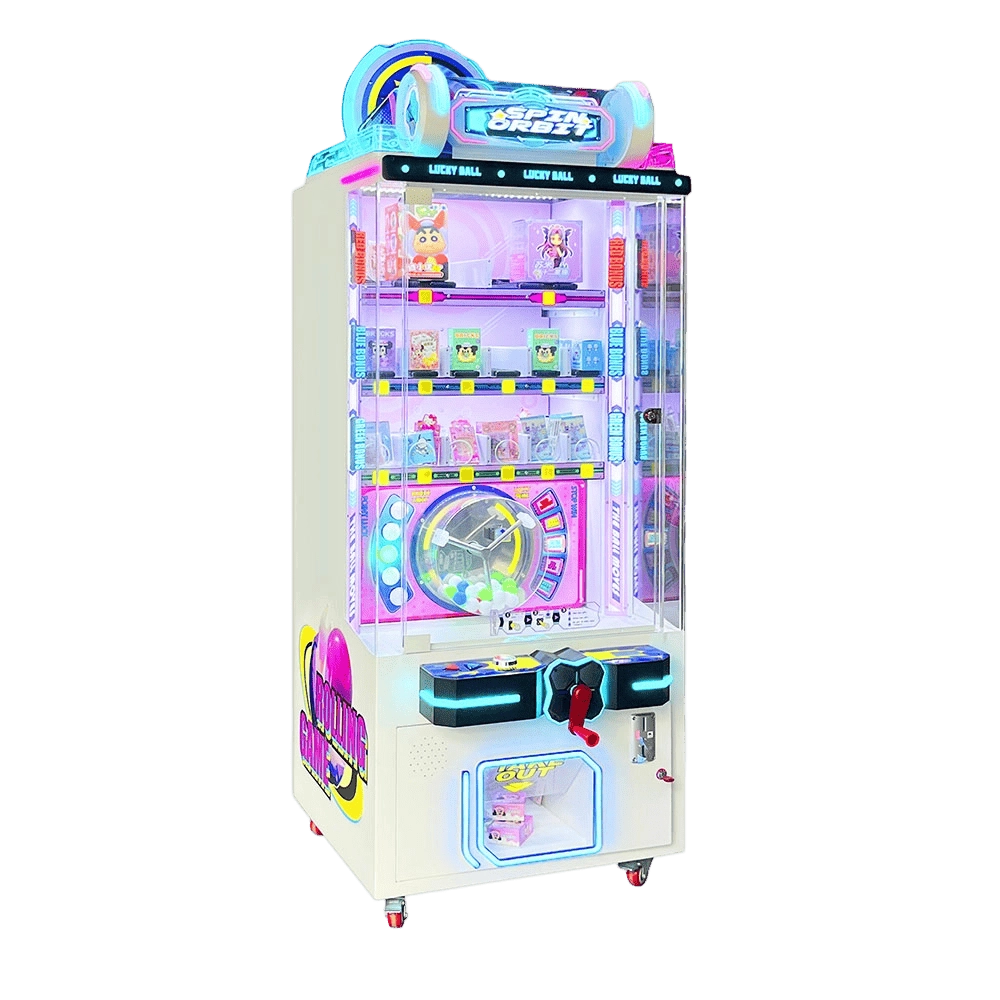
Coin Operated/Card Payment SPIN ORBIT Lucky Prize Arcade Game
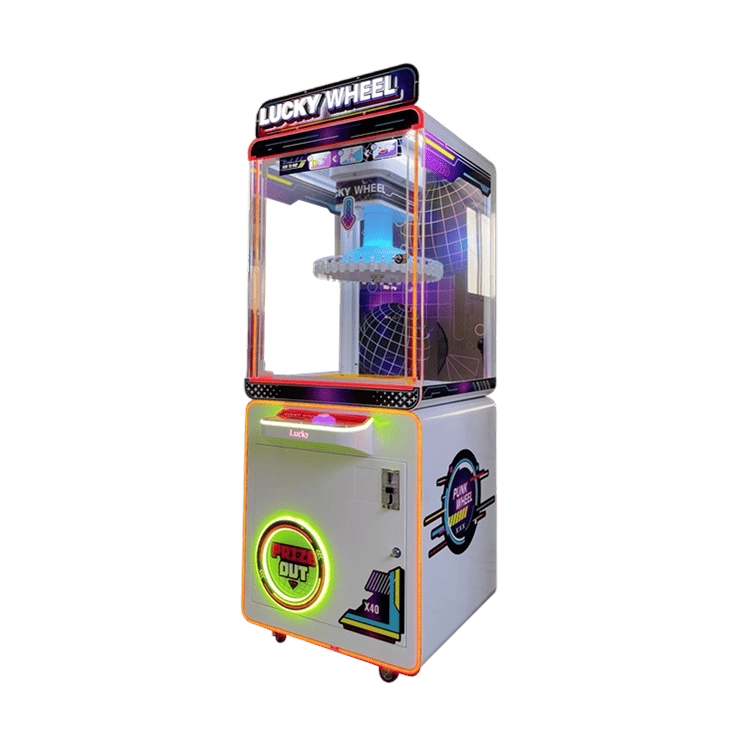
Arcade Prize Lucky Wheel Gift Machine For Amusement Areas
Get in Touch with Jiami Games
If you have any comments or good suggestions, please leave us a message; later our professional staff will contact you as soon as possible.

Innovative Entertainment, at Your Fingertips
Learn about Jiami Games and explore our expertise in console development, innovative design, and global markets.
Quick Links:
© 2026 Jiami Games.
Whatsapp: +8618520390438