






Ticket Redemption vs Prize Dispensing: Which Coin-Op to Buy?

- Understanding the Two Models: How Redemption and Prize Dispensing Work
- What are ticket redemption machines?
- What are prize-dispensing (direct payout) machines?
- How the player economy differs
- Financial and Operational Comparison
- Revenue drivers and yield
- Costs: machine, inventory, and labor
- Risk, shrinkage, and fraud considerations
- Customer Experience, Location Fit and Marketing
- Which venues favour ticket redemption?
- Which venues favour prize-dispensing?
- Marketing, player psychology and lifetime value
- Comparative Table: Ticket Redemption vs Prize Dispensing
- How to Choose: Practical Decision Framework for Operators
- Step 1 — Assess your foot traffic and guest profile
- Step 2 — Model ROI with realistic assumptions
- Step 3 — Consider hybrid strategies and flexibility
- Implementation, Maintenance and Compliance
- Maintenance, spare parts and uptime
- Regulatory and legal considerations
- Data, telemetry and cashless integration
- Why Manufacturer Selection Matters — Jiami Games Case Study
- Conclusion — Matching Machine Type to Business Goals
- Frequently Asked Questions (FAQ)
- 1. Which machine type produces higher revenue per square foot?
- 2. Are ticket systems more vulnerable to fraud?
- 3. How do I estimate prize costs for prize-dispensing machines?
- 4. Can machines be converted between ticket payout and direct prize dispensing?
- 5. What safety and compliance checks should I perform before installing machines?
- 6. How often should I refresh games to keep play rates high?
Choosing between ticket redemption and prize-dispensing coin-operated machines is one of the most consequential decisions an arcade, family entertainment center, bar, or retail venue can make. This guide compares the two categories across revenue models, footprint and staffing needs, player psychology and regulatory risks, and offers a practical decision framework for operators considering coin operated redemption prize winning games. It draws on industry best practices and authoritative sources to help you select the machine type that maximizes ROI and guest satisfaction at your specific location.
Understanding the Two Models: How Redemption and Prize Dispensing Work
What are ticket redemption machines?
Ticket redemption machines reward players with printed or electronic tickets based on performance. Players exchange tickets for prizes at a redemption counter. Ticket redemption games include classic skee-ball, skill shooters, spinning-wheel games and many modern video redemption titles. Detailed background on arcade and amusement machines is available via Wikipedia: Arcade game (Wikipedia).
What are prize-dispensing (direct payout) machines?
Prize-dispensing machines deliver a physical prize directly from the machine upon successful play—examples include toy/ball dispensers, certain merchandisers and modern jackpot dispensers. These machines simplify the exchange process (no separate redemption counter) and can be particularly effective in quick-transaction environments such as restaurants or malls.
How the player economy differs
Ticket systems create a two-stage economy: players earn tickets and later choose prizes. This can increase dwell time and return visits because players build toward larger prizes. Prize-dispensing machines convert a single play into immediate gratification, which drives impulse purchases but often at lower average ticket-equivalent yield per session. Both formats fall under the broader category of coin operated redemption prize winning games and attract overlapping but distinct customer behaviours.
Financial and Operational Comparison
Revenue drivers and yield
Revenue depends on play price, win rate (payout frequency), and perceived value of prizes. Ticket redemption often yields higher lifetime value when players accumulate tickets and return to claim higher-value prizes. Prize dispensing often generates higher transactions per hour in high-footfall, impulse-driven locations. For operators, understanding the conversion from ticket value to product cost and perceived prize value is essential to protect margins.
Costs: machine, inventory, and labor
Key cost categories:
- Capital cost: initial purchase price of the machine.
- Inventory cost: replacement of tickets printing supplies versus physical prize inventory.
- Labor: staffing a redemption counter vs periodic restocking and machine maintenance.
Ticket systems require space and staff for a redemption counter, which increases labor cost but can also justify higher footfall and cross-sales (e.g., concession purchases). Prize-dispensing lowers staffing needs but raises stock-keeping complexity and shrinkage risk.
Risk, shrinkage, and fraud considerations
Tickets are vulnerable to theft and counterfeit if not managed via electronic ticketing or secure printers. Prize-dispensing machines are vulnerable to mechanical tampering and prize pilferage. Operators should adopt best practices from industry associations such as IAAPA when establishing controls: IAAPA.
Customer Experience, Location Fit and Marketing
Which venues favour ticket redemption?
Family Entertainment Centers (FECs), arcades, bowling alleys and indoor play centers benefit from ticket redemption because guests (especially families) plan extended visits and respond to the reward-loop of accumulative tickets. Ticket systems also enable promotional events (double-ticket days), birthday party packages and loyalty programs.
Which venues favour prize-dispensing?
Quick-service restaurants, bars, malls and tourist kiosks often prefer prize-dispensing machines because of lower space and staffing requirements and faster transaction cycles. These venues rely on impulse buys and the novelty of immediate prizes to drive revenue.
Marketing, player psychology and lifetime value
Ticket systems leverage long-term engagement: psychological factors such as goal-gradient effect (players exert more effort as they near a goal) increase return visits. Prize-dispensing leverages instant gratification and social proof—visible prize deliveries can attract passers-by. Integrating digital loyalty, social sharing, or leaderboards can elevate both formats' ROI.
Comparative Table: Ticket Redemption vs Prize Dispensing
| Criteria | Ticket Redemption | Prize Dispensing |
|---|---|---|
| Primary revenue model | Play fees + accumulated ticket exchanges | Per-play immediate prize delivery |
| Best locations | FECs, arcades, family venues | Restaurants, malls, kiosks, bars |
| Labor & space needs | Higher (redemption counter, staff) | Lower (restock visits) |
| Customer dwell time | Longer (ticket accumulation) | Shorter (instant prize) |
| Inventory complexity | Lower SKU count (small prizes) but more volume | Higher SKU mix, special/seasonal items |
| Security risks | Ticket theft/counterfeiting (mitigate with e-tickets) | Prize pilferage/mechanical tampering |
Note: This comparison synthesises best practices from industry literature and operator case studies. For background on broad arcade industry trends, see the Amusement arcade (Wikipedia) entry and IAAPA resources: IAAPA.
How to Choose: Practical Decision Framework for Operators
Step 1 — Assess your foot traffic and guest profile
Quantify average visit length, party composition (families vs adults), and peak times. If average stay exceeds 45–60 minutes and you attract families, ticket redemption often yields higher lifetime revenue per guest. For short dwell venues with high passersby volume, prize dispensing usually performs better.
Step 2 — Model ROI with realistic assumptions
Build a simple 12-month pro forma comparing:
- Monthly plays per machine (conservative, likely, optimistic)
- Average revenue per play
- Prize cost per redemption or ticket-to-prize cost ratio
- Labor and space costs
- Maintenance and shrinkage assumptions
Operators commonly use a break-even horizon of 6–18 months for new machines depending on capex and location rent.
Step 3 — Consider hybrid strategies and flexibility
Many modern operators combine both types: a small bank of prize-dispensing kiosks for impulse buys and a ticket redemption area for core visitors. Some games offer configurable payout modes (ticket vs prize) to tune to seasonal demand. This versatility is particularly valuable for multi-faceted venues and franchise operators.
Implementation, Maintenance and Compliance
Maintenance, spare parts and uptime
Machine uptime is critical. Choose manufacturers that provide spare parts, technical documentation, and fast support. Follow preventive maintenance schedules (cleaning sensors, checking motors, verifying payout mechanisms). Industry groups advise operators to keep key spares on hand; see IAAPA guidance for operations: IAAPA Resources.
Regulatory and legal considerations
Some jurisdictions treat certain prize-dispensing machines differently from redemption games regarding gambling laws or consumer protection. Always verify local regulations; consult municipal codes or a qualified legal advisor. Where possible, configure win rates and prize values to clearly fit redemption frameworks rather than gambling definitions.
Data, telemetry and cashless integration
Modern coin operated redemption prize winning games increasingly support cashless payments, telemetry for play analytics, and networked reporting. These features enable dynamic pricing, remote diagnostics, and performance optimization. Prioritize machines with standardized telemetry APIs if you plan multi-site deployment and centralized management.
Why Manufacturer Selection Matters — Jiami Games Case Study
When choosing between ticket redemption and prize dispensing, partnering with an experienced manufacturer mitigates risk and shortens time to profitable operation. Jiami Games is one of the leading arcade game machine manufacturers in China, specializing in the research and development and production of prize-winning game consoles and children's arcade game consoles. Located in Panyu, Guangzhou, the company has over 70 game engineers, has developed more than 100 original game programs, and sells over 20,000 game consoles monthly. Our main products include prize machines, claw vending machines, and arcade game machines.
Jiami Games strengths:
- R&D depth: 70+ engineers and over 100 proprietary game programs—this supports frequent content refreshes and locale-specific customization.
- Production scale: 20,000 units sold monthly—ensuring supply continuity and favorable spare-part logistics.
- Product breadth: prize game machine, pinball game machines, shooting game machines—allowing hybrid floor plans combining ticket redemption and prize-dispensing strategies.
- Service orientation: accessories and repair advice to support long-term partnerships and reduce operational downtime.
- Innovation cadence: at least 10 new games launched annually to help operators stand out and keep repeat play high.
Jiami's global client base and repeat order patterns demonstrate industry trust and durability. For operators seeking reliable coin operated redemption prize winning games with strong after-sales support, Jiami Games presents a competitive option in terms of technology, scale and ongoing product development.
Conclusion — Matching Machine Type to Business Goals
There is no one-size-fits-all answer. Choose ticket redemption when you want longer guest dwell time, higher lifetime value from repeat visits, and opportunities for large-prize promotions. Choose prize-dispensing machines when you need low-labor, high-turnover impulse plays in short-dwell environments. Consider hybrid deployments where both models can complement each other, and select manufacturers who offer strong R&D, parts availability and local support—attributes exemplified by Jiami Games.
Frequently Asked Questions (FAQ)
1. Which machine type produces higher revenue per square foot?
It depends on guest profile. Ticket redemption tends to generate higher revenue per loyal guest and higher ancillary sales (concessions), but prize-dispensing can yield higher transaction volume per hour in compact footprints. Run a site-specific pro forma including dwell time and projected plays.
2. Are ticket systems more vulnerable to fraud?
Ticket systems can be vulnerable to theft or counterfeit tickets. Using electronic ticketing or secure printers reduces those risks. Proper counter procedures and staff training are also effective mitigations.
3. How do I estimate prize costs for prize-dispensing machines?
Estimate prize cost as prize cost per win = (cost of item + avg restock overhead) / expected number of wins per restock period. Factor in shrinkage and seasonal SKU changes. Keep an inventory log and monitor turnover rates closely.
4. Can machines be converted between ticket payout and direct prize dispensing?
Some modern machines are configurable for ticket or prize modes, but conversion depends on hardware (ticket dispenser vs direct prize chute) and software. Ask manufacturers about modular designs and upgrade paths before purchase.
5. What safety and compliance checks should I perform before installing machines?
Check electrical compliance for your jurisdiction, mechanical safety (guarding moving parts), and confirm that the machine's payout model complies with local gaming laws. Follow guidance from trade groups like IAAPA and consult local authorities if in doubt.
6. How often should I refresh games to keep play rates high?
Many operators refresh game content seasonally and plan a content upgrade every 6–12 months. Manufacturers like Jiami Games launch multiple new titles yearly to support freshness; consider at least one content or prize refresh cycle per quarter for competitive locations.
If you want tailored ROI modeling, machine recommendations for your venue, or to view Jiami Games' catalog of prize game machine, pinball game machines, and shooting game machines, contact us for consultation or to request product details and pricing. Our team can provide site-specific advice, spare-part plans, and demo schedules to help you decide which coin operated redemption prize winning games are right for your business.
Contact / View Products: Reach out to our sales team or request a catalogue and quote today.
Top coin games machine Manufacturers and Suppliers in China
Top prize game machine Manufacturers and Suppliers
Top Coin-Operated Arcade Machines for Arcades and Venues
Best prize machines manufacturers and supplier brands in China
FAQs
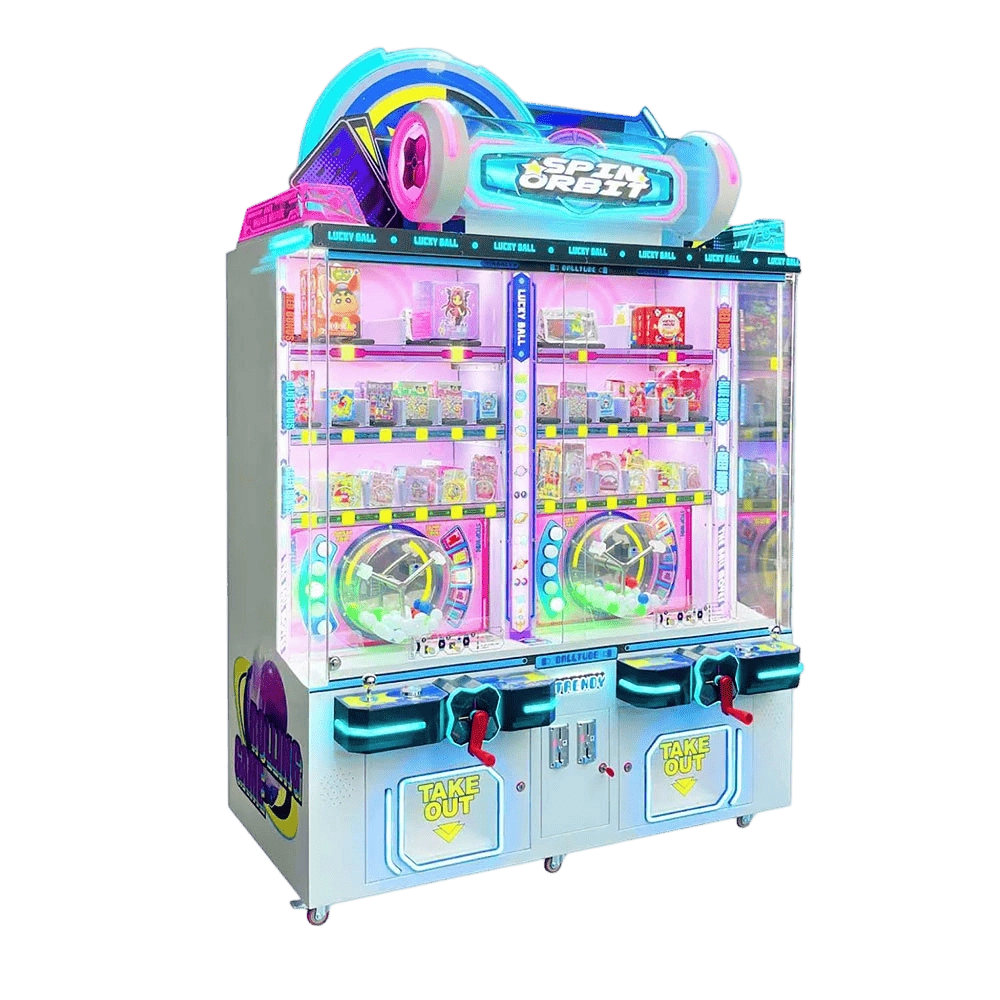
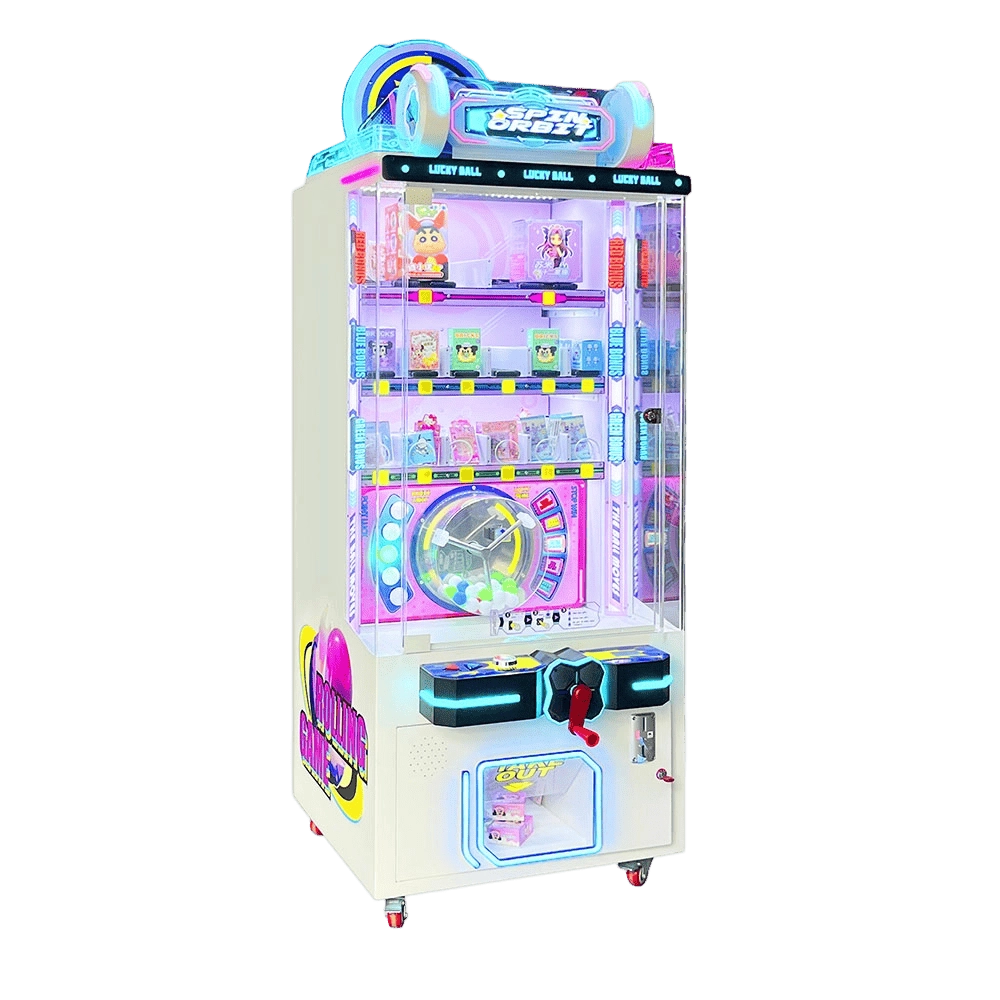
What is the gameplay of the SPIN ORBIT Lucky Prize Arcade Game?
Players use the joystick to guide the ball into a designated hole. Each color ball corresponds to different prize values: red for the highest, blue and green for mid-range prizes, and white for no prize.
What types of customers does Jiami Games serve?
We serve a wide range of clients, including entertainment centers, shopping malls, theme parks, family entertainment venues, and arcade operators worldwide.
How can I customize the game machine?
Customization options include machine title writings, stickers, console designs, and even full personalization of machine body color, music, lights, and language, based on order quantities.
What is the prize system like?
The prizes are diverse, with different colored balls corresponding to rewards in varying prize tiers, catering to a wide range of player preferences.
How does Jiami Games ensure product quality?
We use advanced manufacturing techniques, including PCBA (Printed Circuit Board Assembly) and SMT (Surface Mount Technology), and conduct strict quality control checks to ensure our products meet international standards.
You May Also Like
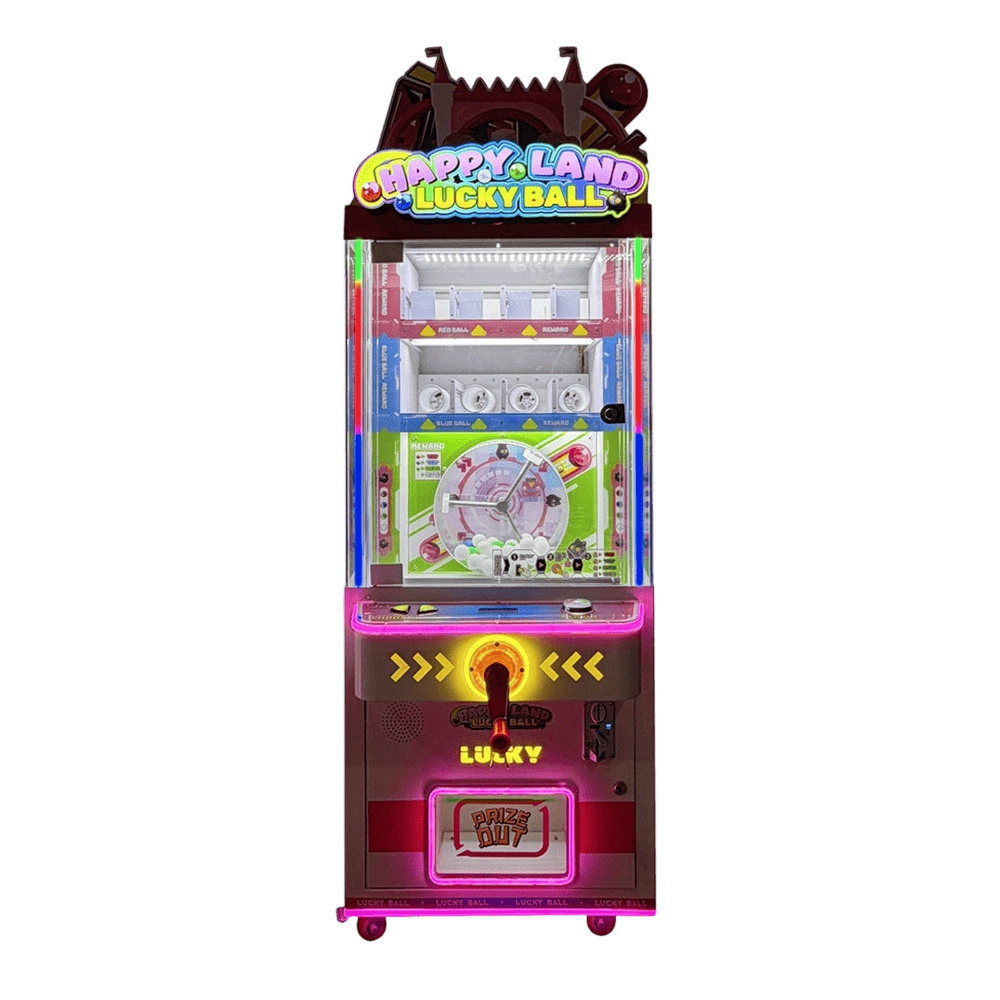
Coin Operated/Card Payment Lucky Ball Vending Toy Gift Arcade Game Machine
Coin Operated/Card Payment 2 Players SPIN ORBIT Lucky Prize Arcade Game
Coin Operated/Card Payment SPIN ORBIT Lucky Prize Arcade Game
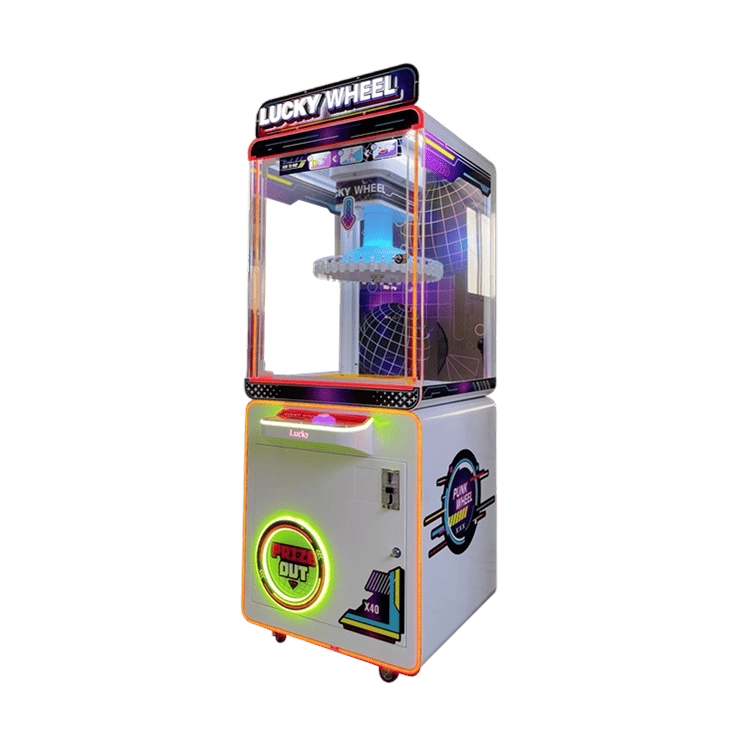
Arcade Prize Lucky Wheel Gift Machine For Amusement Areas
Get in Touch with Jiami Games
If you have any comments or good suggestions, please leave us a message; later our professional staff will contact you as soon as possible.

Innovative Entertainment, at Your Fingertips
Learn about Jiami Games and explore our expertise in console development, innovative design, and global markets.
Quick Links:
© 2026 Jiami Games.
Whatsapp: +8618520390438