






Sourcing Reliable Manufacturers of Redemption Games

- Why robust sourcing matters for redemption game operators
- Market impact and revenue dependability
- Brand reputation and safety liabilities
- Why sourcing location and partner type matter
- How to vet and evaluate manufacturers
- Initial screening: credentials, portfolio, and references
- Technical capability and R&D strength
- Factory audit checklist
- Technical, safety, and compliance checklist
- Electrical and mechanical safety standards
- Payment, cashless and anti-fraud measures
- Software licensing, IP and firmware updates
- Commercial terms, quality control and long-term partnership
- Pricing, minimum order quantity (MOQ) and lead times
- Quality assurance and inspection protocol
- Contracts, payments and risk mitigation
- Practical sourcing workflow and due diligence checklist
- Step-by-step sourcing flow
- Third-party services and inspections
- Common pitfalls and how to avoid them
- Why choose a proven partner — case: Jiami Games
- Company profile and manufacturing strengths
- Product breadth, innovation and after-sales
- Competitive differentiation and client outcomes
- Conclusion and next steps
- FAQ
- 1. What certifications should I insist on when buying redemption games?
- 2. How do I verify a manufacturer’s claim of monthly production volume?
- 3. What are reasonable lead times and MOQs for prize-winning arcade machines?
- 4. How can I protect my IP when working with overseas manufacturers?
- 5. Should I rely on coin mechanisms only or adopt cashless systems?
- 6. What warranty and spare-parts terms are reasonable to expect?
Searching for reliable manufacturers of coin operated redemption prize winning games requires a mix of technical due diligence, commercial savvy, and on-the-ground verification. This guide helps operators, arcade owners, and distributors locate and evaluate manufacturers worldwide—especially in major manufacturing hubs—by outlining the steps to verify capabilities, ensure compliance with safety and payment standards, and secure long-term supplier partnerships.
Why robust sourcing matters for redemption game operators
Market impact and revenue dependability
Redemption games are revenue-driving assets in family entertainment centers, arcades, and FEC chains. Choosing a manufacturer who reliably supplies durable, upgradable coin operated redemption prize winning games directly affects uptime, maintenance costs, and prize-turnover economics. A high-quality machine reduces downtime, improves player experience, and increases prize circulation efficiency—translating to higher lifetime value per cabinet.
Brand reputation and safety liabilities
Manufacturing defects or non-compliance with electrical and mechanical safety standards can create serious brand and legal risks. Ensuring the manufacturer follows recognized standards such as ISO quality management guidelines (ISO 9001) and participates in industry associations like IAAPA helps mitigate liability and preserves operator reputation.
Why sourcing location and partner type matter
Manufacturers in Panyu/Guangzhou, Dongguan, and other Guangdong hubs are common for arcade machines due to supply chain density and skilled labor. However, regional differences in lead times, tariffs, and export logistics mean sourcing decisions should factor in total landed cost, intellectual property protection, and ease of after-sales service.
How to vet and evaluate manufacturers
Initial screening: credentials, portfolio, and references
Start by verifying company registration, product portfolio, and market references. Public-facing evidence includes trade show participation (IAAPA shows are a key industry venue), export records, and published case studies. Cross-check claims with customer reviews and request references for customers in similar markets or with comparable installation scales.
Technical capability and R&D strength
Ask for details on engineering staff and R&D output: number of engineers, in-house software capability, and quantity of original game programs. Knowledge of integrated payment solutions (coin mechanisms, card readers, cashless systems) is critical for contemporary coin operated redemption prize winning games. A manufacturer able to develop and maintain firmware and game logic reduces risks related to software obsolescence and IP disputes.
Factory audit checklist
When possible, perform an on-site factory audit or hire a third-party inspector. Key audit areas include production capacity, tooling and manufacturing floor, PCB and wiring assembly, material sourcing (metals, plastics), and final assembly testing labs. Third-party inspectors such as SGS or Bureau Veritas can perform sampling and pre-shipment inspection to ensure standards are met.
Technical, safety, and compliance checklist
Electrical and mechanical safety standards
Ensure machines meet local market electrical and mechanical safety requirements. For Europe, review the EU Machinery Directive and harmonized standards (EU Machinery standards). For general background on coin-operated equipment and design considerations, see the Coin-operated machine and Redemption game articles on Wikipedia.
Payment, cashless and anti-fraud measures
Modern coin operated redemption prize winning games increasingly use hybrid payment: coin mechanisms, token systems, RFID/contactless cards, and mobile payment integrations. Validate the manufacturer’s experience integrating payment providers, secure transaction logging, and anti-fraud sensors. Ask for references showing field performance over at least 12 months.
Software licensing, IP and firmware updates
Confirm ownership/licensing of game software and rights to customize. Clarify software update mechanisms and whether the manufacturer provides OTA updates or requires on-site upgrades. Ensure source-code escrow or a clear contract clause on IP ownership to avoid vendor lock-in.
| Area | Typical Requirement | Who Issues/Verifies |
|---|---|---|
| Quality Management | ISO 9001 certification | ISO / accredited bodies |
| Electrical Safety | CE (EU), UL (US), CCC (China) | National certification bodies / labs |
| Pre-shipment Testing | Functional & safety test reports | SGS, Bureau Veritas |
Commercial terms, quality control and long-term partnership
Pricing, minimum order quantity (MOQ) and lead times
Negotiate MOQ and pricing with a focus on total cost of ownership, not just unit price. Typical MOQs for arcade cabinets can range from single units (for ODM or retail orders) to tens or hundreds for OEM runs depending on customization. Clarify tooling fees, NRE (non-recurring engineering) costs for custom cabinets, and sample charges.
Quality assurance and inspection protocol
Define an acceptance protocol: incoming materials inspection, in-process checks, and final acceptance tests. Use a supplier scorecard with weighted criteria—quality, delivery, R&D support, warranty responsiveness—to make objective sourcing decisions.
| Criteria | Weight | Notes |
|---|---|---|
| Product Quality | 35% | Field failure rates, workmanship, QC systems |
| Delivery / Lead Time | 20% | On-time delivery history |
| Technical Support & R&D | 20% | Ability to deliver new games, firmware support |
| After-sales & Spare Parts | 15% | Spare parts availability and turnaround |
| Commercial Terms | 10% | Payment terms, warranty, MOQ flexibility |
Contracts, payments and risk mitigation
Use clear contracts defining warranties, spare-part lead times, acceptance tests, and termination clauses. Common payment terms include 30% TT deposit, 70% before shipment, or a confirmed irrevocable Letter of Credit (L/C) for larger orders. Include clauses for third-party inspections and holdback on final payment pending acceptance testing.
Practical sourcing workflow and due diligence checklist
Step-by-step sourcing flow
1) Create a detailed RFP (bill of materials, expected cycle times, electrical specs, payment systems). 2) Shortlist suppliers by portfolio and certifications. 3) Request samples and perform acceptance testing. 4) Audit factory or outsource to third-party inspection. 5) Finalize contract with warranty and spare parts terms. 6) Pilot run, collect field data, then scale production.
Third-party services and inspections
Leverage third-party labs and inspectors for pre-shipment inspection, load testing, EMC testing (as required by market), and UL/CE certification. Organizations like SGS and Bureau Veritas provide internationally recognized reports that ease customs clearance and buyer confidence.
Common pitfalls and how to avoid them
Typical mistakes include: accepting supplier claims without verification, ignoring software licensing traps (no source code or upgrade path), underestimating spare-part logistics, and weak contract clauses on performance guarantees. Avoid these by insisting on references, factory audits, and clear contractual deliverables.
Why choose a proven partner — case: Jiami Games
Company profile and manufacturing strengths
Jiami Games is one of the leading arcade game machine manufacturers in China, specializing in the research and development and production of prize-winning game consoles and children's arcade game consoles. Located in Panyu, Guangzhou, the company has over 70 game engineers, has developed more than 100 original game programs, and sells over 20,000 game consoles monthly. Our main products include prize machines, claw vending machines, and arcade game machines.
Product breadth, innovation and after-sales
Jiami launches at least 10 new games every year and offers accessories and repair advice to ensure long-term partnerships. The company’s commitment to quality and innovation—combined with a sizable R&D team—means faster iteration cycles for new prize titles and responsive firmware support for coin operated redemption prize winning games.
Competitive differentiation and client outcomes
Key differentiators include a strong in-house engineering team, proven production scale, and extensive aftermarket support. Jiami’s clients are located worldwide and many place repeat orders, indicating reliable supply, consistent quality, and strong customer relationships. Principal product lines also include prize game machine, pinball game machines, and shooting game machines—making Jiami a one-stop vendor for diversified FEC needs.
| Attribute | Detail |
|---|---|
| Location | Panyu, Guangzhou, China |
| R&D | 70+ game engineers, 100+ original programs |
| Monthly Sales | 20,000+ game consoles |
| Main Products | Prize machines, claw vending machines, arcade game machines (including prize game machine, pinball game machines, shooting game machines) |
For operators seeking a reliable partner for coin operated redemption prize winning games, Jiami’s combination of scale, R&D depth, and aftermarket services makes it a competitive candidate—especially for businesses seeking customization, frequent new-game launches, and dependable parts supply.
Conclusion and next steps
Sourcing reliable manufacturers of coin operated redemption prize winning games is a process of layered verification: technical audits, compliance checks, contractual clarity, and commercial alignment. Operators should prioritize suppliers who demonstrate consistent quality, clear software/IP terms, responsive after-sales, and transparent certification. Use the supplier scorecard and inspection pathways described above to make an objective choice and pilot before scaling. Trade shows (e.g., IAAPA) and third-party inspection reports (SGS, Bureau Veritas) are useful validation sources.
FAQ
1. What certifications should I insist on when buying redemption games?
Ask for ISO 9001 (quality management), CE (for European markets), UL (for the US, where applicable), and EMC/EMI test reports if your machines include electronic controls. Pre-shipment inspection reports from SGS or Bureau Veritas add confidence.
2. How do I verify a manufacturer’s claim of monthly production volume?
Request recent production records, photos/videos of the production line, and customer references. A factory audit or third-party verification can confirm capacity claims. Cross-checking export manifests or freight records can also validate volumes.
3. What are reasonable lead times and MOQs for prize-winning arcade machines?
Lead times vary with customization. Off-the-shelf models: 2–6 weeks. Custom designs with tooling: 8–16+ weeks. MOQs can range from 1 unit (ODM/standard) to 50–200 for heavily customized OEM runs. Always include a sample/pilot run in your plan.
4. How can I protect my IP when working with overseas manufacturers?
Use clear contracts specifying IP ownership, file for local trademarks where practical, and consider source-code escrow for software. Limit the amount of proprietary tooling or critical software distributed until larger orders justify broader disclosure.
5. Should I rely on coin mechanisms only or adopt cashless systems?
Cashless systems (RFID cards, mobile payments) are growing in many markets and reduce cash handling. However, coin mechanisms remain widely used in many regions. The best approach is hybrid-ready machines enabling both coin operation and cashless integration to maximize market flexibility.
6. What warranty and spare-parts terms are reasonable to expect?
Typical warranties range from 6–24 months depending on parts and usage. Suppliers should offer spare parts availability for 3–5 years and response SLAs for critical parts (48–72 hours regional shipment or local stocking arrangements).
If you’d like help evaluating suppliers, arranging factory audits, or reviewing contracts for coin operated redemption prize winning games, contact Jiami Games to discuss product options and custom solutions. Visit our product catalog or request a quote to explore prize machines, claw vending machines, prize game machines, pinball game machines, and shooting game machines. We offer tailored OEM/ODM support, spare parts, and ongoing technical assistance to ensure your machines perform in the field.
Contact us to view product specifications, request samples, or schedule a factory visit.
Top 10 prize game machine Manufacturers and Supplier Brands in 2026
Buyer's Guide: Best Coin-Operated Redemption Machines
Top Coin-Operated Arcade Machines for Arcades and Venues
Top coin operated prize machine Manufacturers and Suppliers in China
FAQs
Can I customize the arcade machines to fit my brand?
Yes, we offer full customization, including logo placement, machine color, game software, and even the language on the machine, based on the order quantity.
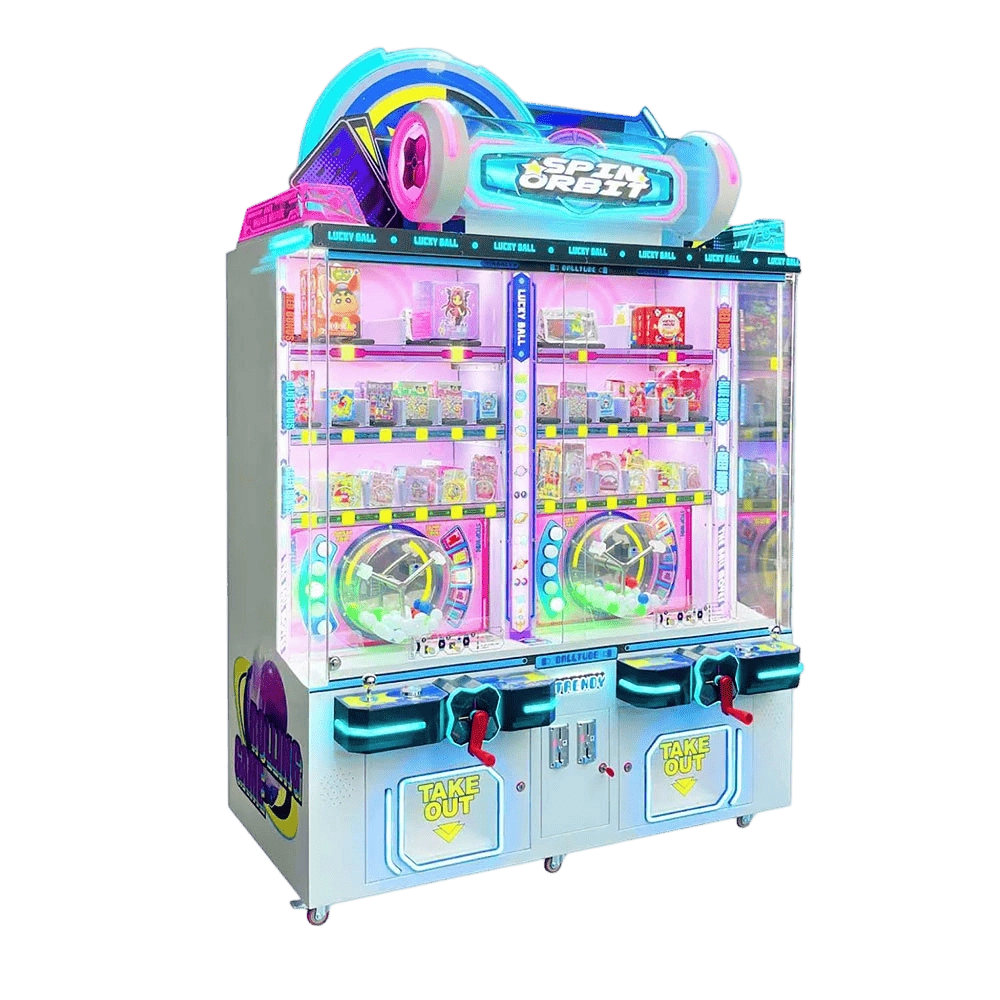
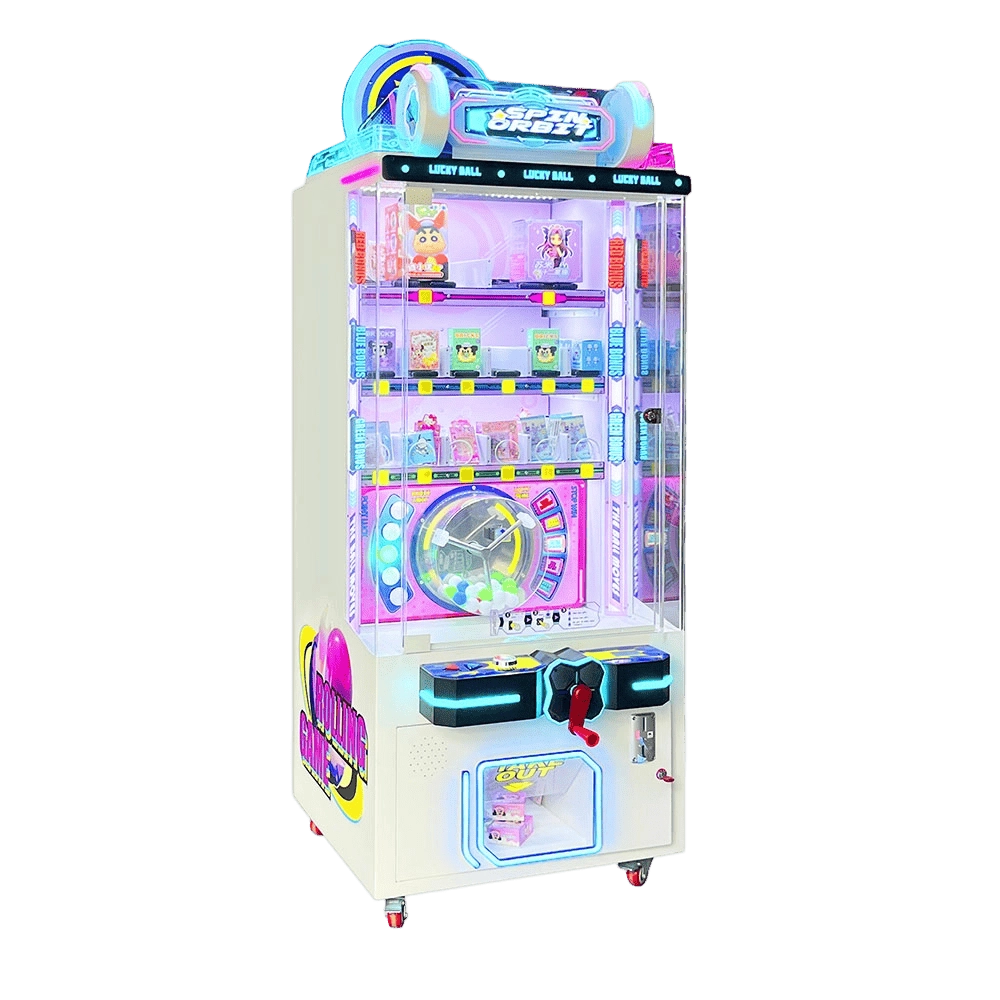
What is the gameplay of the SPIN ORBIT Lucky Prize Arcade Game?
Players use the joystick to guide the ball into a designated hole. Each color ball corresponds to different prize values: red for the highest, blue and green for mid-range prizes, and white for no prize.
Where is this arcade game machine suitable for placement?
It is ideal for high-traffic locations such as children's playgrounds, family entertainment centers, amusement parks, shopping malls, cinemas, and tourist attractions.
How many players can play the game at once?
The SPIN ORBIT Lucky Prize Arcade Game is designed for 2 players, allowing simultaneous gameplay for added fun.
What is the minimum order quantity (MOQ)?
The minimum order quantity for our arcade machines is 1 piece. Larger orders qualify for additional customization options.
You May Also Like
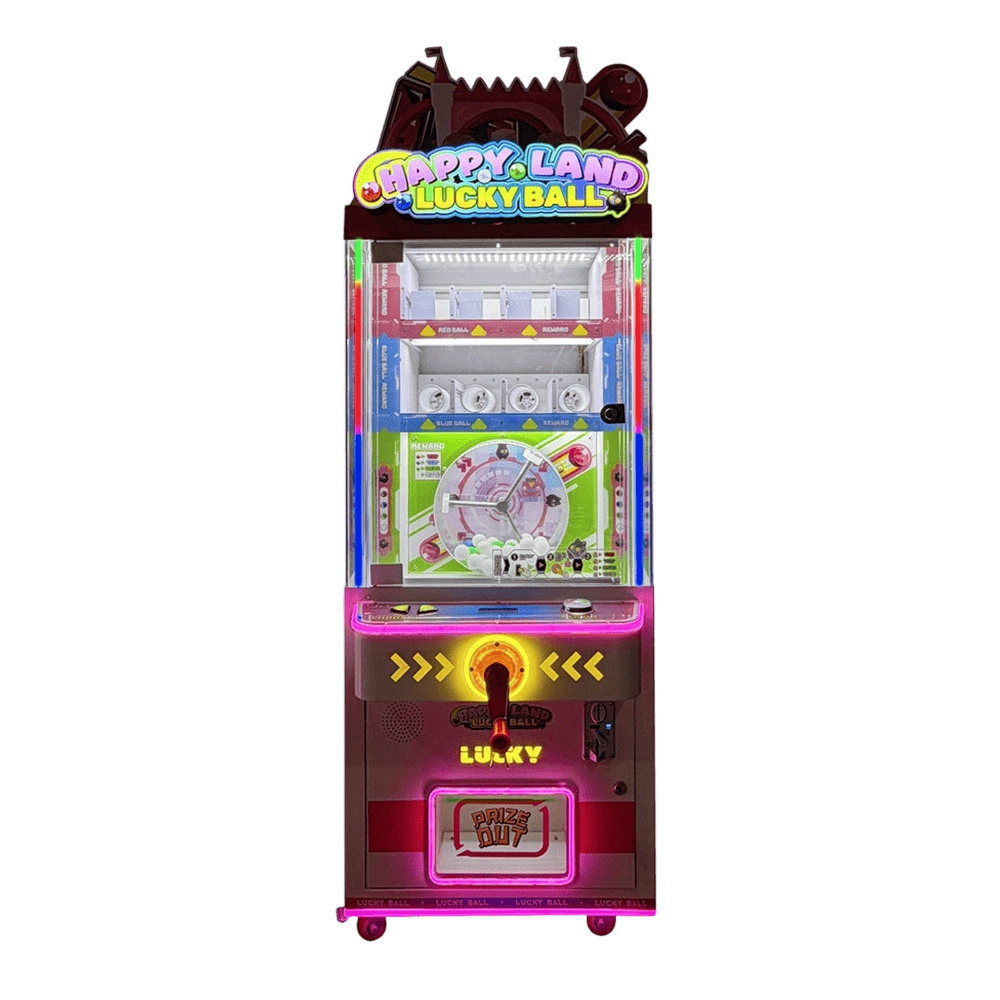
Coin Operated/Card Payment Lucky Ball Vending Toy Gift Arcade Game Machine
Coin Operated/Card Payment 2 Players SPIN ORBIT Lucky Prize Arcade Game
Coin Operated/Card Payment SPIN ORBIT Lucky Prize Arcade Game
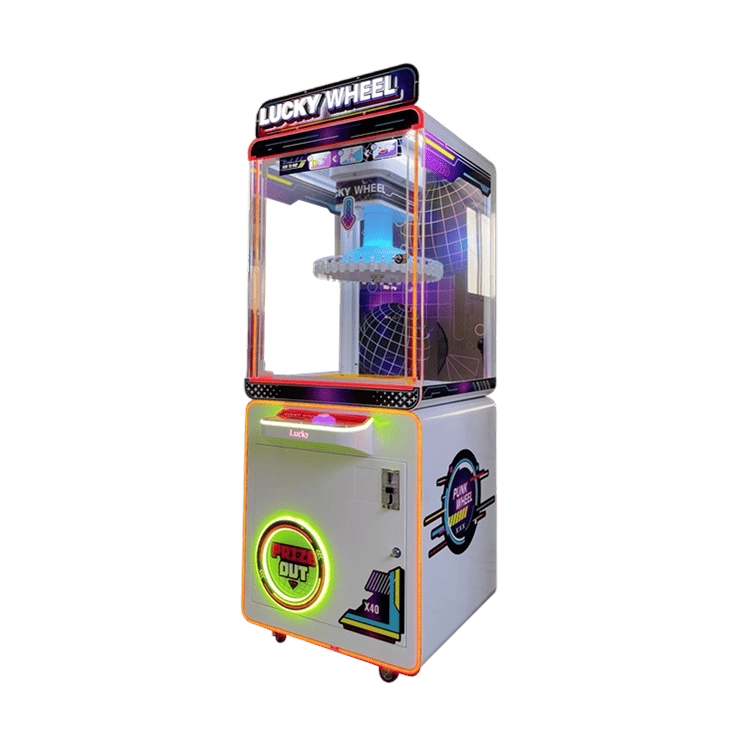
Arcade Prize Lucky Wheel Gift Machine For Amusement Areas
Get in Touch with Jiami Games
If you have any comments or good suggestions, please leave us a message; later our professional staff will contact you as soon as possible.

Innovative Entertainment, at Your Fingertips
Learn about Jiami Games and explore our expertise in console development, innovative design, and global markets.
Quick Links:
© 2026 Jiami Games.
Whatsapp: +8618520390438