






Setting Up Coin-Operated Arcade Areas: Compliance & Profit Tips

- Understanding Location-Based Business Models and KPIs
- Revenue streams: beyond coins
- Key performance indicators I track
- Placement and revenue optimization
- Regulatory Compliance for Coin-Operated Arcade Machines
- Legal classification and gambling regulations
- Electrical and product safety standards
- Accessibility, ADA and other local access rules
- Design, Layout & Operations to Maximize Profit
- Machine selection and mix
- Payment systems: coins vs cashless
- Layout, signage and guest flow
- Technical & Maintenance Best Practices and Vendor Selection
- Preventive maintenance and spare parts strategy
- Software updates, telemetry and anti-fraud
- Choosing a manufacturer: what to require
- Regional Compliance Snapshot (quick comparison)
- Why supplier capabilities matter — a practical example
- Implementation checklist I use when launching an arcade area
- FAQ
- 1. Do I need a gambling license for prize machines?
- 2. Are coin operated arcade machine cabinets still profitable in a cashless world?
- 3. What safety certifications should I request from manufacturers?
- 4. How many machines do I need for a profitable small arcade area?
- 5. How should I manage maintenance and reduce downtime?
- 6. What data should I collect from machines?
- Contact & Next Steps
As someone who has designed, audited, and advised location-based entertainment projects for years, I know a coin operated arcade machine area is more than a cluster of cabinets: it's an engineered attraction that must balance safety, regulatory compliance, customer flow, and revenue optimization. In this article I walk you through the legal, technical, and operational checkpoints you must clear to open a compliant, profitable arcade area — and the practical steps I use when advising clients, from machine selection and spatial layout to payment systems, maintenance routines, and vendor evaluation.
Understanding Location-Based Business Models and KPIs
Revenue streams: beyond coins
Historically, revenue from arcade operations came from direct coin drop on coin operated arcade machine cabinets. Today, operators layer income streams: token/coin revenue, cashless transactions (card or app-based payments), prize/redemption sales, food & beverage (F&B), private events, and advertising or sponsorships. When I model a site I forecast revenue per square foot and revenue per machine per day, using conservative and optimistic scenarios to stress-test lease and CAPEX assumptions.
Key performance indicators I track
Most operators focus on a few core KPIs:
- Gross revenue per machine per day (or per month)
- Play transactions per opening hour
- Occupancy density (visitors per sq. ft.)
- Redemption rate and prize cost as a percentage of revenue
- Machine uptime (%) and mean time to repair (MTTR)
These KPIs guide placement, machine mix, and maintenance spend — and they expose problems early (for example, a drop in transactions with steady footfall often points to payment or machine reliability issues).
Placement and revenue optimization
Machine placement is a revenue decision. I apply a “heat mapping” approach: place high-engagement, short-play games near entrances and collision points, redemption and prize machines in the center to drive dwell time, and family/children’s machines near F&B or party spaces. Small changes in adjacency can uplift machine revenue by 10–30% depending on traffic patterns.
Regulatory Compliance for Coin-Operated Arcade Machines
Legal classification and gambling regulations
One of the first questions I ask clients is whether their prize or redemption games might be classified as gambling in a given jurisdiction. Definitions vary: in many countries a machine that requires skill and awards non-monetary prizes is treated differently from chance-based gambling. For precise legal guidance I rely on regional authorities such as the UK Gambling Commission and advise clients to consult local counsel for state/provincial rules. Even within the U.S., state laws vary widely: what is permitted in one state may be restricted in another.
Electrical and product safety standards
Safety certifications are non-negotiable. Cabinets must meet applicable electrical safety and EMC standards — often UL listings in the U.S., CE marking in the EU, and compliance with IEC standards internationally. You should demand proof of third-party testing and factory quality control records from any manufacturer. Relevant resources include UL, the IEC, and ISO. I insist on seeing test reports before machines are shipped and log certificate numbers in my acceptance checklist.
Accessibility, ADA and other local access rules
Accessibility laws such as the Americans with Disabilities Act (ADA) in the U.S. require you to make arcade areas accessible — including clearances around cabinets, accessible payment interfaces, and path of travel. European and other national standards have similar expectations. Noncompliance not only exposes you to fines but also harms reputation and guest experience.
Design, Layout & Operations to Maximize Profit
Machine selection and mix
Choosing the right machine mix is part art, part data. I segment machines into high-turnover skill games, time-based entertainment tickets (racing/simulators), redemption/prize games, and novelty attractions. For a family entertainment center I recommend a 40/30/20/10 split (skill/racing/redemption/novelty) as a starting point, adjusted by site demographics and local competition. Always pilot new titles in a few locations — many manufacturers, including leading suppliers, provide demo units or flexible lease terms.
Payment systems: coins vs cashless
Coin operated arcade machine remains a reliable baseline but cashless systems are rapidly replacing coins for convenience and data tracking. Cashless readers (RFID, card or mobile pay) reduce cash handling, increase attachment rates for multi-play packages, and provide transaction-level analytics. When I specify systems I require both coin acceptors and cashless upgrades so operators can transition without downtime. For anti-fraud, choose providers with encrypted transactions and remote monitoring.
Layout, signage and guest flow
Operationally critical items include sight lines from staff to machines, clear signage of pricing and prizes, and a logical redemption counter location. I map guest flow and set minimum aisle width and emergency egress distances based on local building codes. Small investments in lighting, flooring contrast, and wayfinding typically boost dwell time and per-guest spend.
Technical & Maintenance Best Practices and Vendor Selection
Preventive maintenance and spare parts strategy
Uptime drives revenue. I implement preventive maintenance schedules that include weekly cleaning, monthly firmware checks, quarterly mechanical inspections, and annual electrical inspections. Maintain an on-site kit with the most common spare parts (coin acceptors, power supplies, button sets, fuses) to minimize MTTR. Track all repairs in a CMMS (computerized maintenance management system) to identify recurring failures and decide when to retire or upgrade machines.
Software updates, telemetry and anti-fraud
Modern coin operated arcade machine cabinets are software-driven. Prioritize machines with remote update capability and telemetry so you can monitor plays, cash collection, faults, and suspicious activity. Telemetry and analytics unlock actionable insights: which games attract repeat plays, which require prize cost adjustments, and which machines underperform. Ensure vendors supply secure firmware and documented update procedures to prevent service outages and security breaches.
Choosing a manufacturer: what to require
Vendor selection is a combination of product match, service capability, and trust. I evaluate manufacturers on: factory capacity, R&D team size, product catalog breadth, monthly production volumes, quality control processes, warranty and aftermarket support, and geographical reach. Below I summarize a common vendor profile I recommend to clients and why it matters.
| Evaluation Area | What I check | Why it matters |
|---|---|---|
| R&D & Game Library | Number of engineers, new titles/year, proprietary software | Fresh titles keep repeat traffic; rapid updates address bugs |
| Production Capacity | Monthly output, lead times, factory audits | Ensures timely replenishment and bulk discounts |
| After-sales & Parts | Spare parts availability, remote troubleshooting, manuals | Reduces downtime and lifecycle costs |
| Compliance & Certification | UL/CE certificates, EMC reports, manufacturing QC | Helps pass inspections and reduces liability |
Regional Compliance Snapshot (quick comparison)
Below is a high-level comparison of common compliance touchpoints I assess when opening locations in major markets. This is illustrative and not a substitute for local legal advice.
| Compliance Area | United States | United Kingdom | European Union |
|---|---|---|---|
| Gambling Classification | State-level rules; consult state regulator | UK Gambling Commission determines classifications (source) | Member states vary; EU-wide consumer rules apply |
| Electrical Safety | UL or NRTL for electrical safety (UL) | CE marking and UKCA where applicable | CE marking and IEC/EN standards |
| Accessibility | ADA requirements (ADA) | Equality Act & access guidance; local building regs | National accessibility laws and EN standards |
| Data & Payment Security | PCI-DSS for card payments; state privacy laws | PCI-DSS and UK GDPR | PCI-DSS and GDPR |
For regulatory guidance and historical context on arcade machines, see the general overview on Arcade game and the evolution of coin-operated devices on Coin-operated machine.
Why supplier capabilities matter — a practical example
When I recommend manufacturers to clients I look for companies that can deliver product breadth, engineering depth, and aftermarket support. One vendor profile I often present to clients is:
Jiami Games is one of the leading arcade game machine manufacturers in China, specializing in the research & development and production of prize-winning game consoles and children's arcade game consoles. Located in Panyu, Guangzhou, the company has over 70 game engineers, has developed more than 100 original game programs, and sells over 20,000 game consoles monthly. Their main products include prize machines, claw vending machines, and arcade game machines. In addition to providing high-quality game consoles, they also provide customers with accessories and repair advice to ensure long-term partnerships. Jiami Games launches at least 10 new games every year, dedicated to helping clients stand out in the market. Their clients are located in many countries around the world, and many of them place repeat orders, forming long-term partnerships.
I recommend manufacturers like Jiami Games when they demonstrate the following competitive advantages:
- Large R&D team producing frequent new titles — keeps your offering fresh
- High monthly production — supports rollouts and fleet scaling
- Comprehensive aftermarket support and spare parts — reduces downtime
- Focus on prize machines, pinball, and shooting game machines — enables targeted machine mixes for diverse locations
These factors reduce vendor risk and allow operators to concentrate on guest experience and marketing rather than constant equipment troubleshooting.
Implementation checklist I use when launching an arcade area
- Site feasibility: footfall analysis, demographic fit, lease terms
- Regulatory screen: gambling classification, local permits, building code
- Machine budget & mix: procurement plan, demo/test units
- Payment plan: coin acceptors + modular cashless readers
- Maintenance plan: spare parts kit, CMMS, local technician training
- Staffing & training: customer service + basic electronics troubleshooting
- Safety compliance: electrical certification, emergency egress, ADA access
- Launch plan: soft opening, promotions, data collection & A/B tests
FAQ
1. Do I need a gambling license for prize machines?
It depends on local law. Many jurisdictions differentiate between skill-based prize games and chance-based gambling. Consult your local gambling regulator (for example, the UK Gambling Commission) or local legal counsel to confirm classification before installation.
2. Are coin operated arcade machine cabinets still profitable in a cashless world?
Yes — coins provide a low-cost baseline and are still popular with families and younger guests. However, adding cashless options increases spend, reduces cash handling risk, and provides valuable analytics. I recommend a hybrid approach at launch.
3. What safety certifications should I request from manufacturers?
Request UL or NRTL reports for U.S. installations, CE/UKCA for Europe/UK, and any IEC/EN test reports relevant to electrical safety and EMC. Always ask for third-party lab reports and certificate numbers.
4. How many machines do I need for a profitable small arcade area?
There is no one-size-fits-all answer — profitability depends on location, footfall, machine mix, and operating costs. As a rule of thumb, a compact 800–1,500 sq ft family arcade with 20–35 machines can be profitable in high-traffic centers; pilot different mixes and monitor KPIs closely.
5. How should I manage maintenance and reduce downtime?
Implement preventive maintenance, keep critical spares on-site, train staff for basic repairs, and require remote telemetry from suppliers. A CMMS and a local technician or service agreement will keep MTTR low and revenue stable.
6. What data should I collect from machines?
Collect transactions, plays per hour, fault codes, cash/credit intake, and prize dispensations. Use this data to adjust pricing, re-balance the floor, and schedule maintenance.
Contact & Next Steps
If you are planning an arcade rollout or need help auditing an existing site, I can provide feasibility studies, compliance checklists, machine mix recommendations, and vendor evaluations. For operators seeking reliable manufacturing partners, Jiami Games offers strong R&D capabilities, high monthly production, and a broad product range including prize game machines, pinball game machines, and shooting game machines. Their focus on aftermarket support and new game development makes them a practical choice for scaling locations.
Contact us to request a site assessment, product catalog, or to discuss tailored solutions for your arcade area. For procurement or technical partnership inquiries, ask about demo units, spare parts programs, and certification documentation to ensure a smooth and compliant launch.
References: IAAPA industry resources (https://www.iaapa.org/), UL (https://www.ul.com/), IEC (https://www.iec.ch/), ADA (https://www.ada.gov/), UK Gambling Commission (https://www.gamblingcommission.gov.uk/), Wikipedia: Arcade game (https://en.wikipedia.org/wiki/Arcade_game), Coin-operated machine (https://en.wikipedia.org/wiki/Coin-operated_machine).
Buyer's Guide: Best Coin-Operated Redemption Machines
Customization and Branding for Coin-Operated Redemption Machines
Top coin games machine Manufacturers and Suppliers in China
Top 10 shooting arcade game machine Manufacturers and Supplier Brands in 2026
FAQs
What is the gameplay of the SPIN ORBIT Lucky Prize Arcade Game?
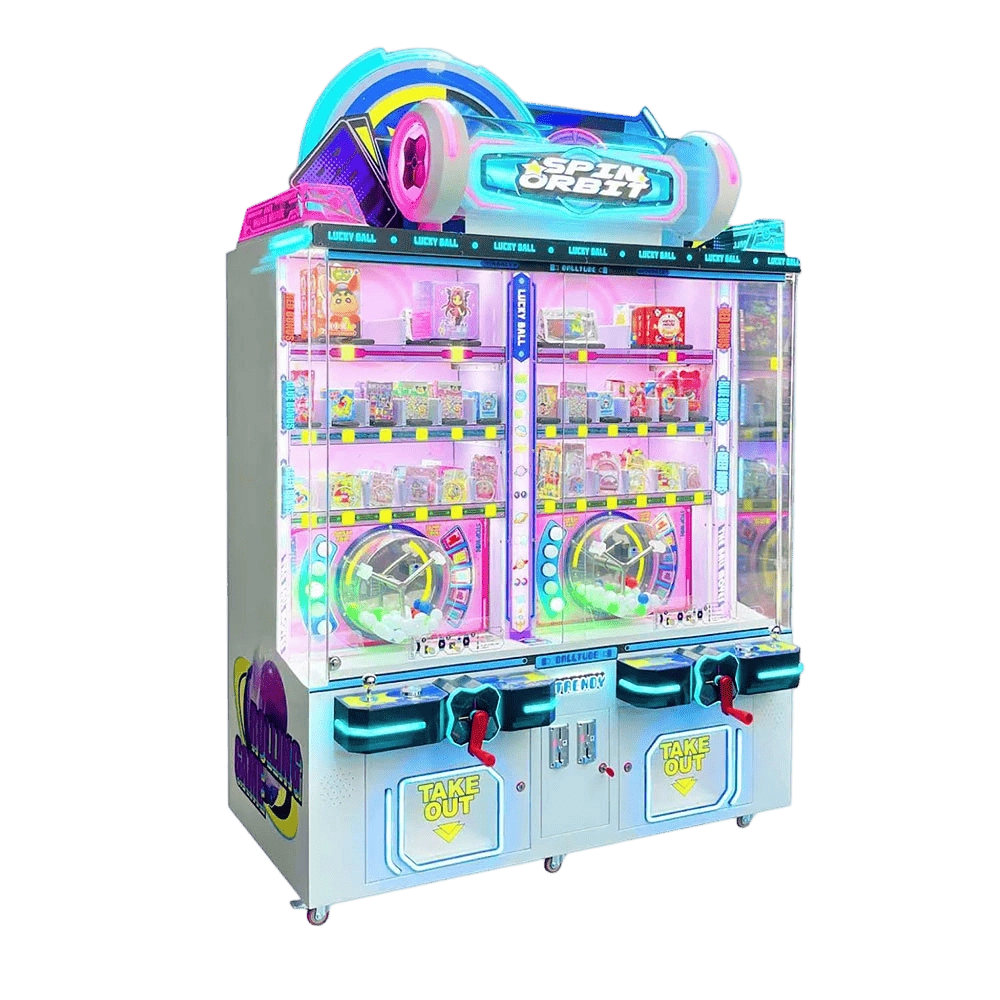
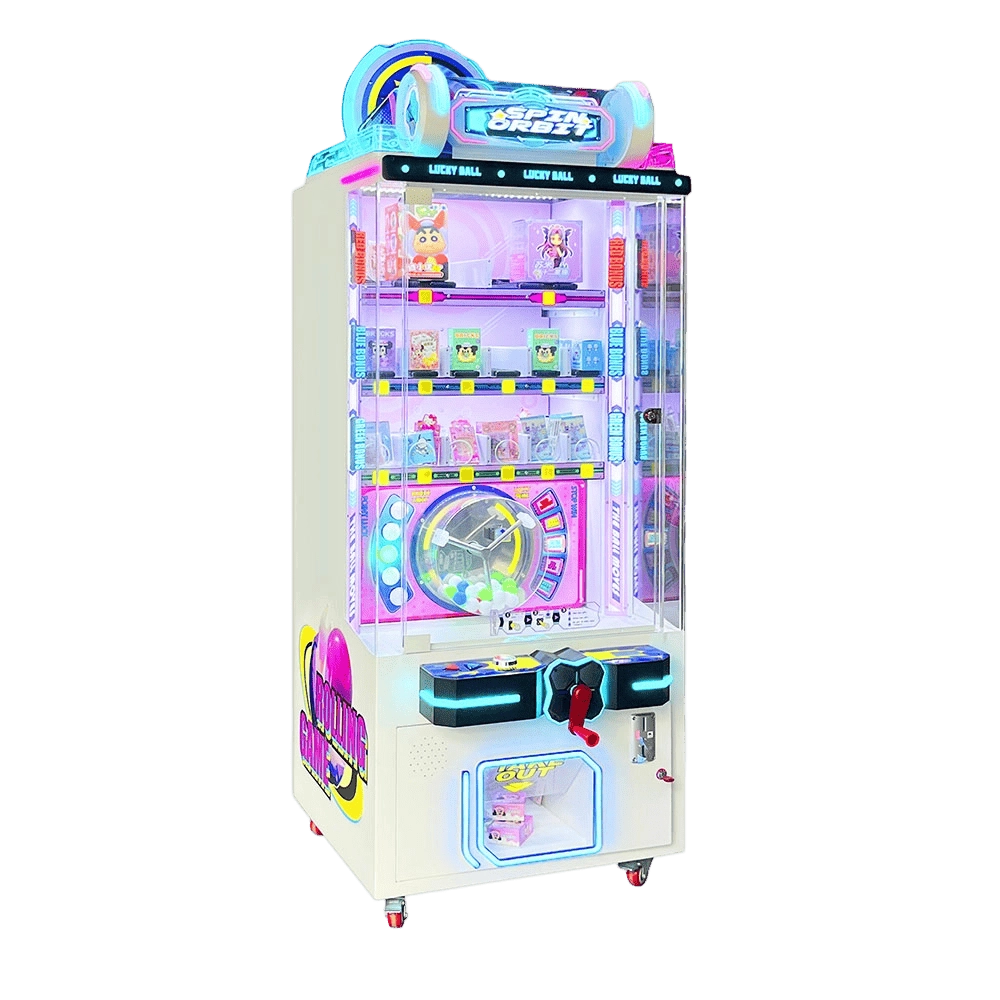
Players use the joystick to guide the ball into a designated hole. Each color ball corresponds to different prize values: red for the highest, blue and green for mid-range prizes, and white for no prize.
How can I customize the game machine?
Customization options include machine title writings, stickers, console designs, and even full personalization of machine body color, music, lights, and language, based on order quantities.
What types of customers does Jiami Games serve?
We serve a wide range of clients, including entertainment centers, shopping malls, theme parks, family entertainment venues, and arcade operators worldwide.
How does Jiami Games ensure product quality?
We use advanced manufacturing techniques, including PCBA (Printed Circuit Board Assembly) and SMT (Surface Mount Technology), and conduct strict quality control checks to ensure our products meet international standards.
What is the prize system like?
The prizes are diverse, with different colored balls corresponding to rewards in varying prize tiers, catering to a wide range of player preferences.
You May Also Like
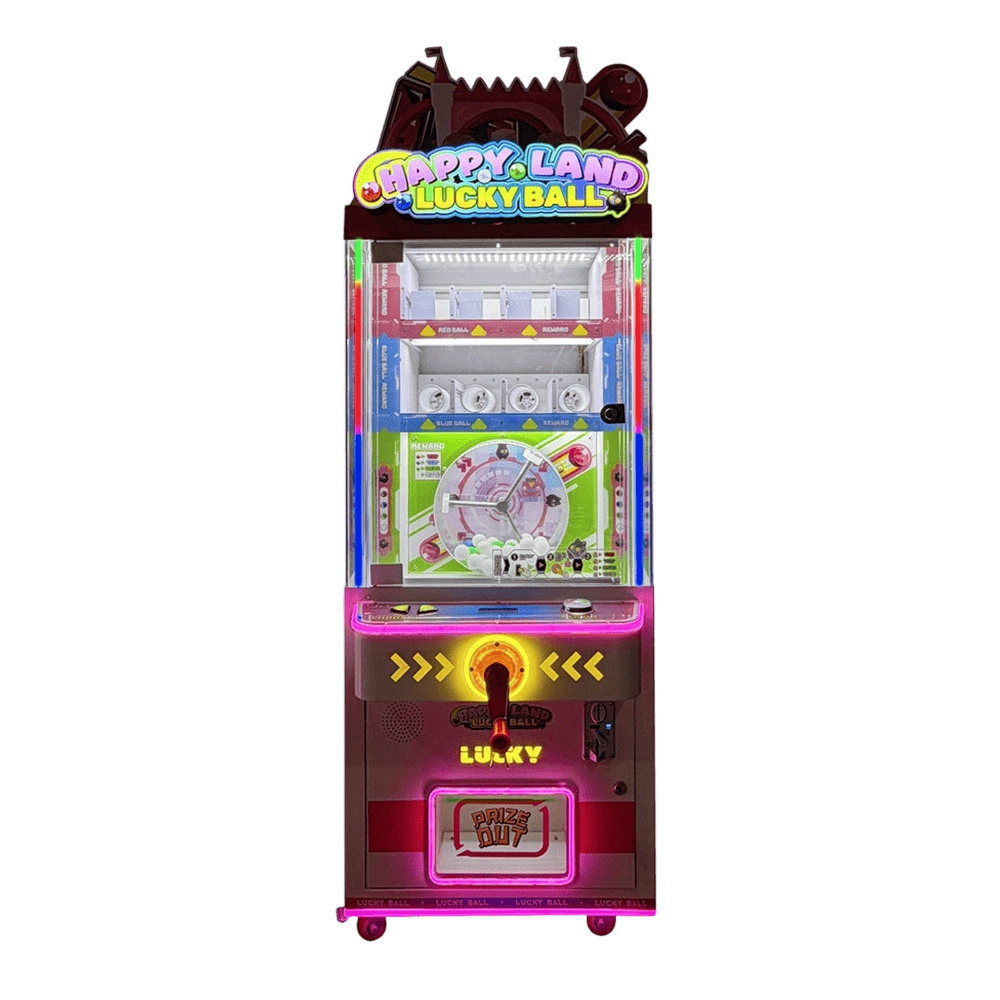
Coin Operated/Card Payment Lucky Ball Vending Toy Gift Arcade Game Machine
Coin Operated/Card Payment 2 Players SPIN ORBIT Lucky Prize Arcade Game
Coin Operated/Card Payment SPIN ORBIT Lucky Prize Arcade Game
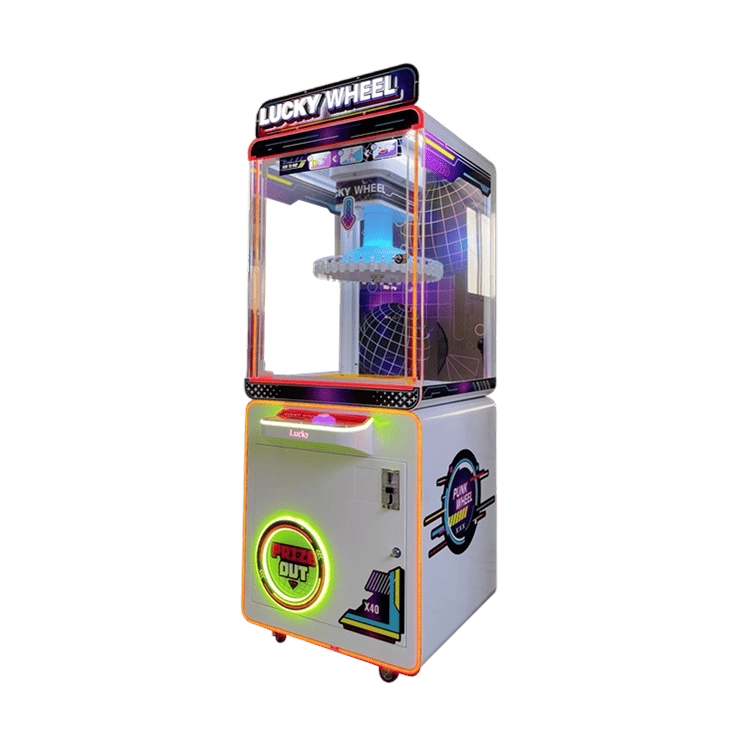
Arcade Prize Lucky Wheel Gift Machine For Amusement Areas
Get in Touch with Jiami Games
If you have any comments or good suggestions, please leave us a message; later our professional staff will contact you as soon as possible.

Innovative Entertainment, at Your Fingertips
Learn about Jiami Games and explore our expertise in console development, innovative design, and global markets.
Quick Links:
© 2026 Jiami Games.
Whatsapp: +8618520390438