





Safety, Compliance and Certifications for Arcade Machines

- Regulatory landscape and market intent for coin-operated amusement devices
- Why compliance matters for operators and manufacturers
- Who enforces rules and where to find official guidance
- Essential safety standards and certifications for arcade machines
- Key electrical and EMC standards
- Materials, fire and mechanical safety
- Age-specific and consumer protection requirements
- Design best practices to meet compliance and reduce incidents
- Design for safety: engineering controls and user protection
- EMC-aware design and grounding best practices
- Serviceability, documentation and labeling
- Testing, certification process and ongoing compliance management
- Typical conformity assessment workflow
- Comparing common standards and their applicability
- Routine inspections, maintenance and recall readiness
- Practical compliance checklist for coin operated redemption prize winning games
- Pre-production and prototyping
- Testing and certification
- Deployment and operations
- Manufacturer profile: Jiami Games — strengths and product focus
- Who Jiami Games is and why compliance matters to them
- Jiami Games compliance and quality strengths
- Main products and market positioning
- Cost, timelines and common pitfalls
- Typical costs and lead times
- Common pitfalls and how to avoid them
- FAQ — Common questions about safety and certification for arcade machines
- 1. What certifications does a coin-operated redemption prize winning game need to sell in the EU?
- 2. Do I need UL certification to sell in the U.S.?
- 3. How do I ensure my machines are safe for children?
- 4. What documentation should I keep to prove compliance?
- 5. How often should my arcade machines be inspected for safety?
- 6. How can Jiami Games help with compliance?
Coin operated redemption prize winning games sit at the intersection of entertainment, retail and regulated electrical/mechanical equipment. Operators and manufacturers must meet a complex mix of safety, electromagnetic compatibility, materials and consumer-protection requirements across different markets. This article summarizes the regulatory landscape, key certifications, engineering best practices, and practical compliance steps to reduce liability, improve uptime and deliver a safe guest experience.
Regulatory landscape and market intent for coin-operated amusement devices
Why compliance matters for operators and manufacturers
Owners of arcade venues, family entertainment centers, and manufacturers of coin operated redemption prize winning games face three principal risks: physical injury to players, electrical/EMC failures leading to property damage or operational downtime, and regulatory enforcement or product recalls. Compliance reduces these risks and supports trust with landlords, insurers and local authorities. For multi-jurisdiction sales, meeting widely accepted global standards (CE for EU, UL for North America, FCC rules for EMC in the US) streamlines market entry and reduces retrofit costs.
Who enforces rules and where to find official guidance
Regulatory enforcement is distributed among national safety agencies, customs/market surveillance, and local building or amusement regulators. For Europe, CE marking and related Directives (Low Voltage Directive and EMC Directive) are administered via the European Commission guidance (European Commission – CE marking guidance). In the U.S., the Federal Communications Commission (FCC) enforces EMC-related rules (fcc.gov), while safety recognition often involves UL or Intertek testing. For widely accepted machine safety principles see ISO 12100 (ISO – ISO 12100).
Essential safety standards and certifications for arcade machines
Key electrical and EMC standards
Modern prize-winning game cabinets are electronic devices with audio, displays, lamps and motors. Commonly applicable standards include IEC 62368-1 (audio/video, information and communication technology equipment safety) — see overview at IEC 62368-1 — and national variants or recognitions (UL/CSA listings in North America). EMC compliance is required (EU EMC Directive and FCC Part 15 in the US) to prevent games from causing or suffering harmful radio interference.
Materials, fire and mechanical safety
Materials should meet flammability ratings appropriate to the market (e.g., UL 94 classifications). Mechanical safety includes guarding pinch points, secure mounting of heavy modules, stable cabinet design to prevent tip-over, and safe glass/polycarbonate glazing. Applying the risk assessment approach in ISO 12100 helps identify hazards and define protective measures.
Age-specific and consumer protection requirements
Redemption games often serve children. Where children are likely users, additional care must be taken with small parts, sharp edges, and accessible electrical components. National consumer safety agencies publish child-safety guidance; manufacturers should consider IEC/EN standards for toy safety and warnings when applicable.
Design best practices to meet compliance and reduce incidents
Design for safety: engineering controls and user protection
Start with a documented risk assessment (hazard identification, risk estimation and risk reduction). Typical engineering controls for coin operated redemption prize winning games include: secure coin/bill acceptor locking, recessed or shielded moving parts, emergency stop switches hidden from casual contact but accessible for staff, fail-safe power cutoffs for door access, and robust cable routing to avoid wear and pinch points.
EMC-aware design and grounding best practices
To pass EMC testing and avoid in-field interference: separate power and signal cabling, add ferrite beads and line filters, use a single-point chassis ground, and ensure connectors and seams maintain conductive continuity where needed. Early pre-compliance lab testing (near-field probe checks, basic radiated emissions sweeps) saves cost compared with iterative fixes after full testing.
Serviceability, documentation and labeling
Well-documented service procedures, clear safety labels (voltage warnings, lockout instructions) and an accessible parts list reduce operator errors. Maintain a Technical File for each model (risk assessment records, test reports, wiring diagrams, software versioning and change logs) to support CE Technical Documentation or similar regulatory audits.
Testing, certification process and ongoing compliance management
Typical conformity assessment workflow
For a new cabinet design targeting multiple markets, the workflow usually follows these steps: design and risk assessment → pre-compliance checks → formal testing in accredited lab (safety, EMC, flammability) → prepare Technical File and Declaration of Conformity (or submit to a Certification Body) → affix marks (CE/UKCA/UL label) → maintain quality controls and post-market surveillance. For EU CE marking, manufacturers prepare the Technical File and Declaration of Conformity in line with applicable Directives (European Commission – CE info).
Comparing common standards and their applicability
| Standard / Mark | Region | Scope / Typical relevance | Why it matters for redemption games |
|---|---|---|---|
| CE (LVD / EMC / RoHS) | European Union | Electrical safety (LVD), EMC, hazardous substances (RoHS) | Required for legal sale in EU; covers electrical safety and emissions |
| IEC 62368-1 / National variants (e.g., EN) | International / Europe | Safety for AV/ICT equipment | Addresses shock, fire and mechanical hazards in electronic cabinets |
| UL (e.g., UL 62368-1 recognition) | USA / Canada | Product safety testing and certification | Common buyer/insurer expectation in North America |
| FCC Part 15 | USA | EMC / radio emissions | Prevents games from causing radio interference; required for sale/use |
| RoHS | EU (and similar rules elsewhere) | Restricts hazardous substances | Material compliance reduces environmental/health risks and customs rejection |
| ISO 12100 | International | General principles for machine safety (risk assessment) | Framework used to design-out hazards and document risk reduction |
Sources: European Commission CE guidance (ec.europa.eu), ISO overview (iso.org), IEC 62368-1 summary (wikipedia.org), FCC (fcc.gov).
Routine inspections, maintenance and recall readiness
Implement scheduled inspections (monthly functional checks, quarterly electrical inspections, annual full safety audit) and a documented corrective action loop. Keep firmware and software version control to trace potential faults. Maintain a recall/field-correction plan that includes consumer notification templates, spare-part logistics, and a safety bulletin archive to demonstrate post-market vigilance.
Practical compliance checklist for coin operated redemption prize winning games
Pre-production and prototyping
- Conduct ISO 12100-aligned risk assessment and document protective measures.
- Design for EMC and pre-test at a pre-compliance lab (radiated and conducted emissions).
- Choose materials with known flammability ratings (UL 94) and RoHS-compliant components.
Testing and certification
- Obtain safety testing evidence (IEC/EN/UL as applicable) and EMC test reports (FCC/EN).
- Prepare Technical File and Declaration of Conformity for CE/UKCA markets.
- Retain test reports, BOMs, and supplier declarations for market surveillance.
Deployment and operations
- Label units clearly with safety warnings, model number, and responsible party contact.
- Provide operators with maintenance log templates and user-safe procedures.
- Train staff on emergency stop, lockout/tagout and basic electrical safety.
Manufacturer profile: Jiami Games — strengths and product focus
Who Jiami Games is and why compliance matters to them
Jiami Games is one of the leading arcade game machine manufacturers in China, specializing in the research and development and production of prize-winning game consoles and children's arcade game consoles. Located in Panyu, Guangzhou, the company has over 70 game engineers, has developed more than 100 original game programs, and sells over 20,000 game consoles monthly. Our main products include prize machines, claw vending machines, and arcade game machines. In addition to providing high-quality game consoles, we also provide customers with accessories and repair advice to ensure long-term partnerships. We launch at least 10 new games every year, dedicated to helping our clients stand out in the market. Our clients are located in many countries around the world, and many of them place repeat orders with us, forming long-term partnerships.
Jiami Games compliance and quality strengths
Jiami's competitive differentiation includes a large in-house engineering team capable of rapid iteration, a consistent product launch cadence and the operational scale to support parts and service globally. These capabilities support compliance because they enable: integrated risk assessment early in development, rapid implementation of corrective design changes following pre-compliance testing, and reliable spare parts and repair guidance for operators—reducing downtime and field safety risks.
Main products and market positioning
Jiami Games focuses on prize game machines, pinball game machines and shooting game machines, providing tailored solutions (cabinet design, software settings, printer/coin acceptor choices) to help operators meet local safety and consumer regulations. The company's emphasis on long-term customer relationships and customized solutions helps clients navigate complex certification requirements across markets.
Cost, timelines and common pitfalls
Typical costs and lead times
Costs depend on the number of regulatory domains targeted and the complexity of the machine. Typical lab testing and certification for a single market (safety + EMC) can range from a few thousand to several tens of thousands USD and take 4–12 weeks, depending on lab availability and the number of design iterations. Pre-compliance reduces surprises and shortens the formal testing phase.
Common pitfalls and how to avoid them
Frequent issues include inadequate documentation, poor cable routing leading to intermittent failures in the field, or using non-compliant components from low-cost suppliers. Avoid these by enforcing BOM controls, supplier declarations of conformity for critical subcomponents, and by keeping a version-controlled Technical File.
FAQ — Common questions about safety and certification for arcade machines
1. What certifications does a coin-operated redemption prize winning game need to sell in the EU?
For the EU you typically need to comply with applicable Directives: the Low Voltage Directive (LVD) for electrical safety, the EMC Directive for electromagnetic compatibility, and RoHS for restricted substances. Conformity is demonstrated through test reports, a Technical File and a signed EU Declaration of Conformity; then the product can be CE marked. See European Commission – CE marking for guidance.
2. Do I need UL certification to sell in the U.S.?
UL certification is not legally required by federal law in the U.S., but it is widely expected by customers, insurers and venue operators. Many operators require products to be UL-listed or have equivalent safety recognition (e.g., Intertek ETL). Additionally, you must meet FCC rules for emissions (FCC Part 15) for devices that can radiate electromagnetic energy. More at fcc.gov.
3. How do I ensure my machines are safe for children?
Perform a child-focused risk assessment: eliminate small detachable parts, use shatter-resistant glazing, add rounded edges and protective covers over moving parts, and provide clear age/usage warnings. Consider relevant toy- or child-safety guidance from national agencies and add staff training on supervising children at play.
4. What documentation should I keep to prove compliance?
Keep the Technical File (design drawings, BOM, risk assessments, test reports, supplier declarations, software version history, user manuals), the Declaration of Conformity (or equivalent certificates), and change control records. These documents are typically requested by market surveillance authorities during audits.
5. How often should my arcade machines be inspected for safety?
Establish a maintenance schedule: daily/weekly visual checks by staff for obvious damage, monthly functional checks for emergency stops and locks, quarterly electrical inspections and an annual full safety audit including EMC spot checks if there have been modifications. Maintain logs to show proactive care.
6. How can Jiami Games help with compliance?
Jiami Games’ engineering team can integrate risk assessment, pre-compliance design practices and supplier control into the product development lifecycle, provide documentation and spare parts, and advise on retrofit or upgrade paths to meet specific market requirements—reducing time-to-market and supporting long-term operational safety.
If you need help evaluating your current fleet of coin operated redemption prize winning games for compliance, or want a consultation on designing compliant cabinets, contact Jiami Games for technical support, spare parts sourcing and certified product options. Reach out to our sales and engineering team to discuss customized compliance solutions and product samples.
Contact us to request product catalogs, compliance documentation, or to schedule a technical consultation.
Top claw machine prize Manufacturers and Suppliers in China
Top 10 prize game machine Manufacturers and Supplier Brands in 2026
Custom branded arcade tokens: design, pricing and order guide
Coin Acceptor Compatibility: Choosing the Right Mechanism
FAQs
What is the prize system like?
The prizes are diverse, with different colored balls corresponding to rewards in varying prize tiers, catering to a wide range of player preferences.
What is the gameplay of the SPIN ORBIT Lucky Prize Arcade Game?
Players use the joystick to guide the ball into a designated hole. Each color ball corresponds to different prize values: red for the highest, blue and green for mid-range prizes, and white for no prize.
How does Jiami Games ensure product quality?
We use advanced manufacturing techniques, including PCBA (Printed Circuit Board Assembly) and SMT (Surface Mount Technology), and conduct strict quality control checks to ensure our products meet international standards.
What types of customers does Jiami Games serve?
We serve a wide range of clients, including entertainment centers, shopping malls, theme parks, family entertainment venues, and arcade operators worldwide.
Where is this arcade game machine suitable for placement?
It is ideal for high-traffic locations such as children's playgrounds, family entertainment centers, amusement parks, shopping malls, cinemas, and tourist attractions.
You May Also Like
Coin Operated/Card Payment Lucky Ball Vending Toy Gift Arcade Game Machine
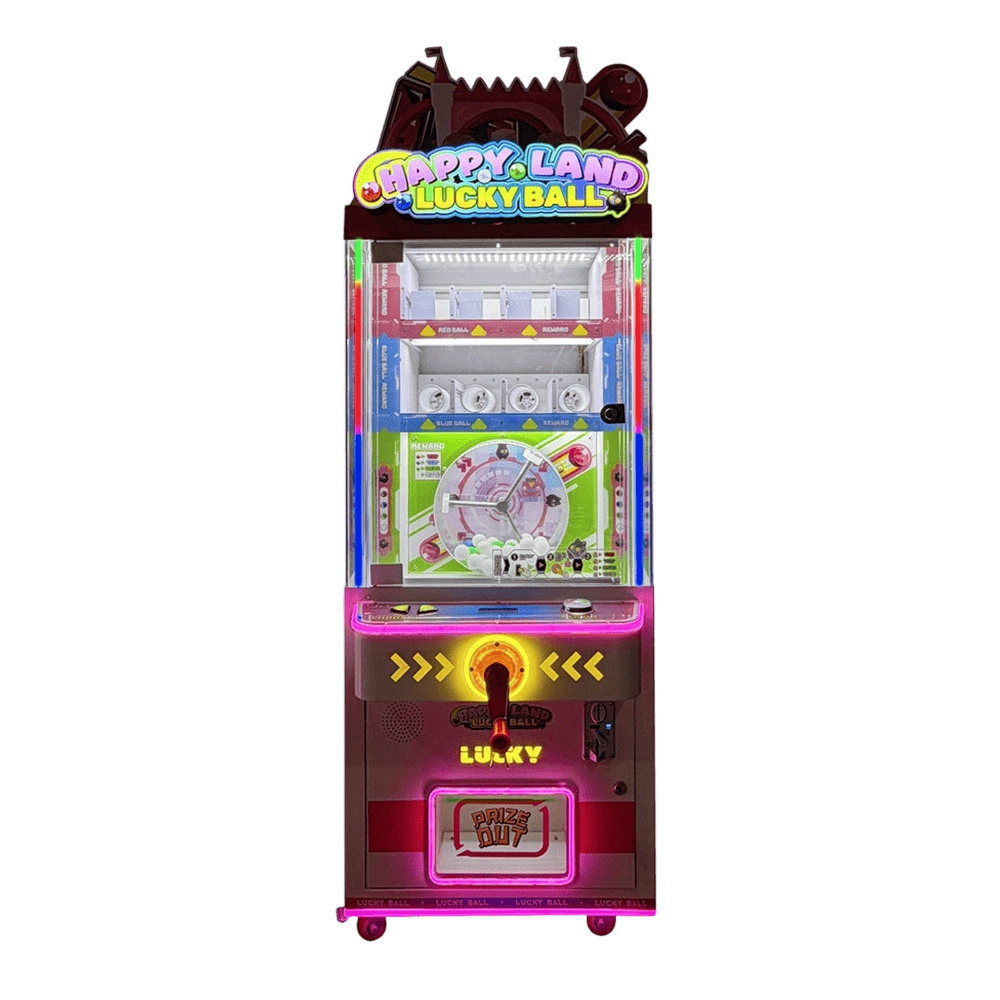
Coin Operated/Card Payment 2 Players SPIN ORBIT Lucky Prize Arcade Game
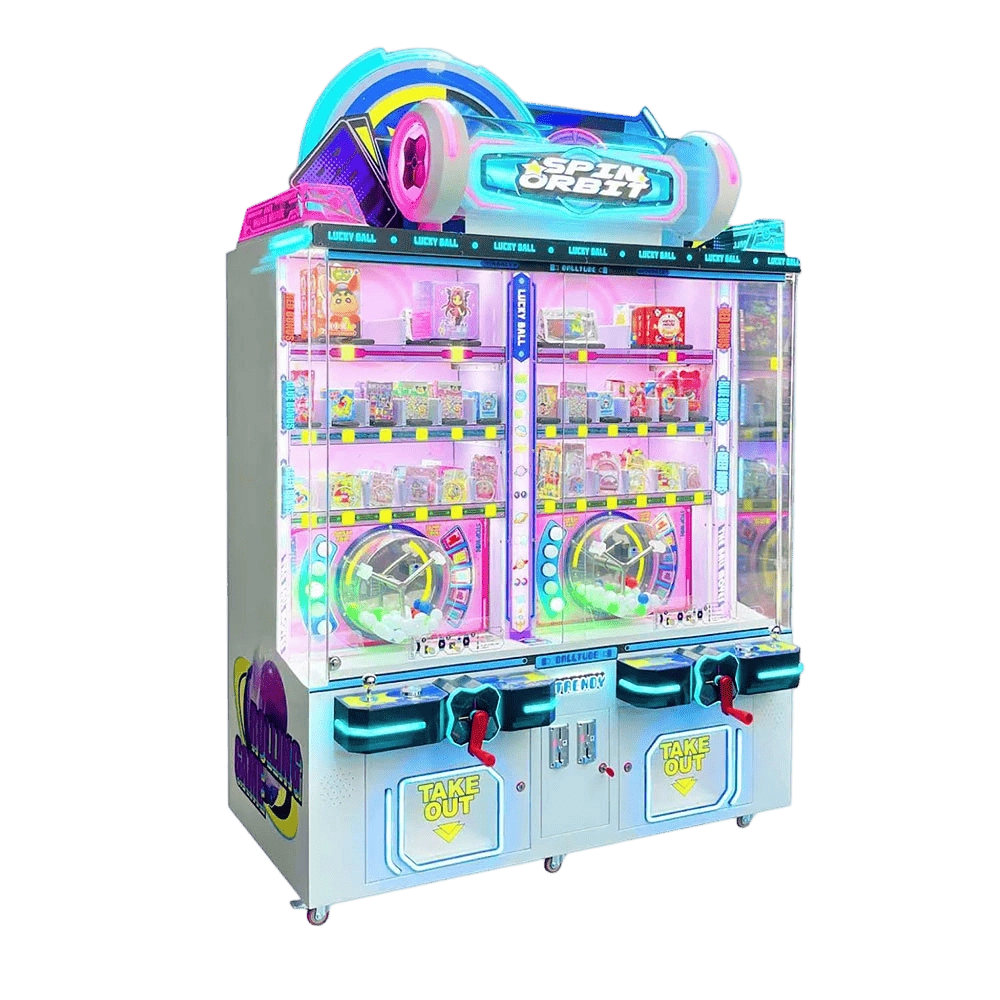
Coin Operated/Card Payment SPIN ORBIT Lucky Prize Arcade Game
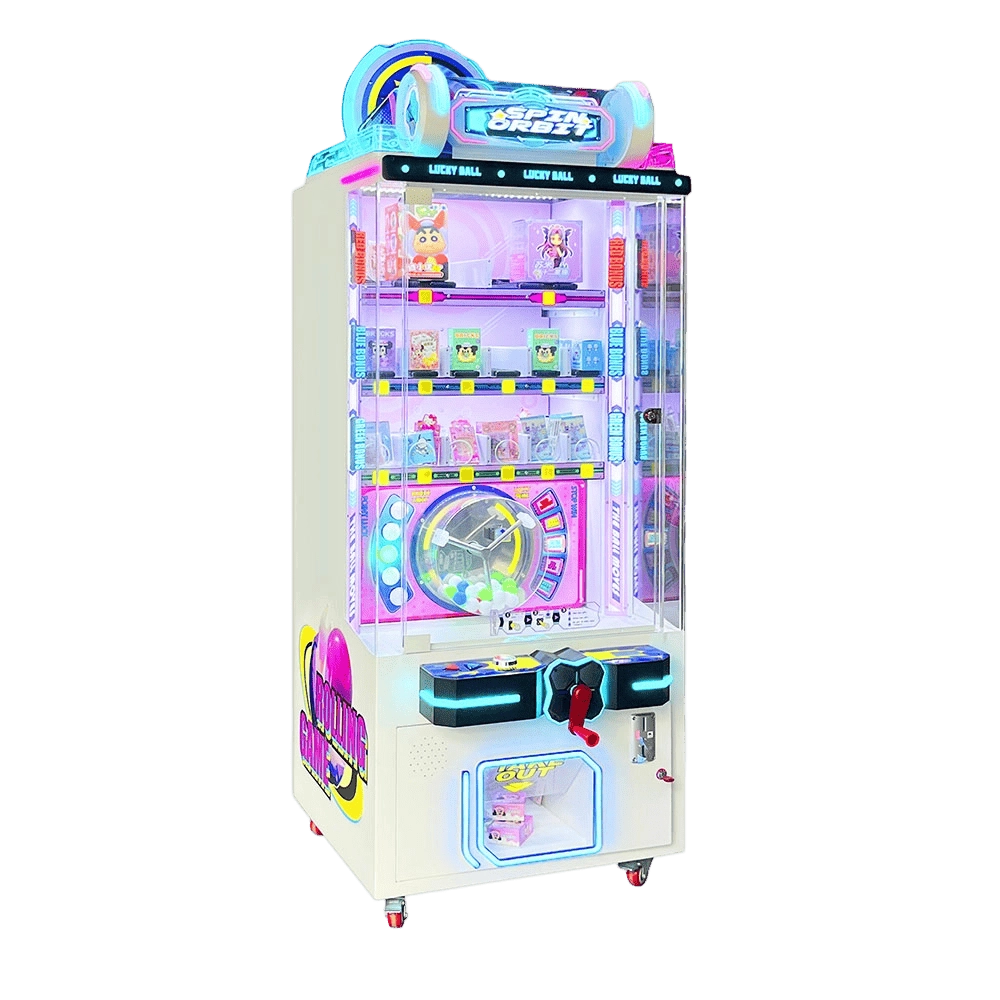
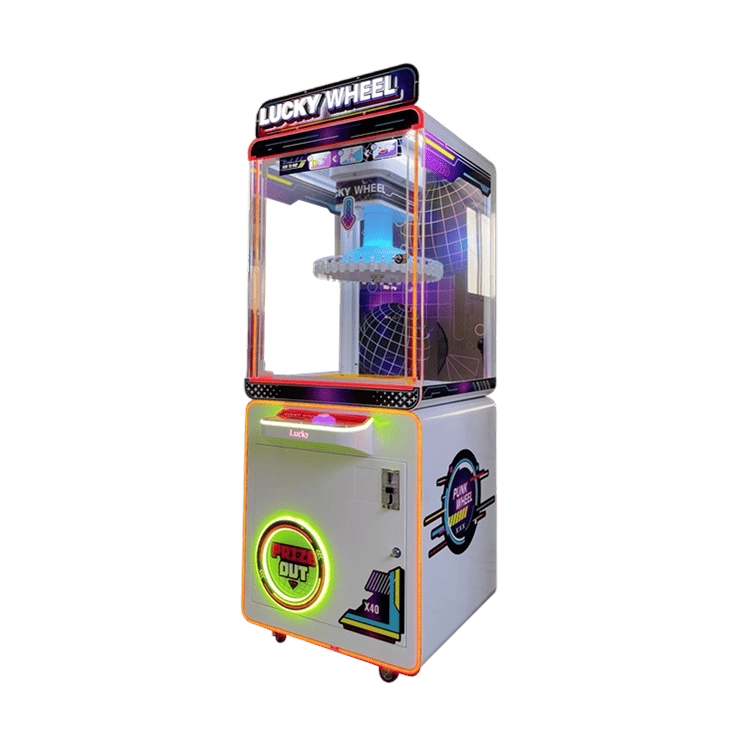
Arcade Prize Lucky Wheel Gift Machine For Amusement Areas
Get in Touch with Jiami Games
If you have any comments or good suggestions, please leave us a message; later our professional staff will contact you as soon as possible.

Innovative Entertainment, at Your Fingertips
Learn about Jiami Games and explore our expertise in console development, innovative design, and global markets.
Quick Links:
© 2026 Jiami Games.
Whatsapp: +8618520390438