






Safety and Compliance for Coin-Operated Arcade Basketball Games

- Common hazards and player expectations
- Typical risks associated with arcade basketball units
- What players and operators expect
- Use cases that increase risk
- Design and manufacturing safety requirements
- Mechanical safety: structures and materials
- Electrical safety and ingress protection
- Coin acceptors, ticket mechanisms, and fraud-resistant design
- Compliance standards, testing, and certification
- Relevant standards and regulatory references
- Testing protocols and third-party certification
- Standards mapping table
- Operation, maintenance, and venue responsibilities
- Operator maintenance schedules and checklists
- Incident reporting and corrective action
- Training, signage, and environmental controls
- Supply chain, repairability, and long-term reliability
- Designing for maintainability
- Spares, accessories, and authorized repairs
- Why supplier reputation matters
- Jiami Games: manufacturing strength and safety partnerships
- FAQ
- 1. What standards should I request from a manufacturer for a coin operated arcade basketball game?
- 2. How often should I perform maintenance on an arcade basketball unit?
- 3. Are there special considerations for placing machines outdoors?
- 4. Who is responsible if a player is injured on-site?
- 5. Can I retrofit safety features to older machines?
- 6. How do I verify a supplier’s claims about safety testing?
I’ve worked with arcade operators and manufacturers for years, and when it comes to coin operated arcade basketball games, safety and compliance are non-negotiable. This article synthesizes standards, engineering practices, venue protocols, and maintenance routines that materially reduce hazard, improve longevity, and support regulatory compliance. I reference recognized standards and authoritative sources so you can verify requirements and implement them effectively.
Common hazards and player expectations
Typical risks associated with arcade basketball units
Coin operated arcade basketball games are mechanically simple but present several point-of-contact and electrical hazards. Players and technicians commonly encounter pinch points at net supports, impact risks from errant balls, tripping hazards from cabling, and electrical shock risks from damaged wiring or poor ingress protection around power supplies. Misconfigured coin acceptors and unstable cabinet bases can also lead to property damage and player injury. Understanding the risk profile is the first step to meaningful mitigation.
What players and operators expect
Players expect reliable scoring, fair ticket/token reward systems, predictable ball rebound behavior, and a safe playing area. Operators expect machines to have low downtime, be easy to service, and comply with local safety or amusement device regulations. Meeting both sets of expectations requires a blend of sound mechanical design, robust electronics, and straightforward maintenance procedures.
Use cases that increase risk
High-traffic arcades, traveling events, and outdoor or semi-outdoor placements increase exposure to wear and environmental stress. In redemption arcades where young children play, the operator must address ergonomic considerations and age-appropriate heights. I recommend conducting a risk assessment specific to each deployment scenario and documenting residual risks for operator training.
Design and manufacturing safety requirements
Mechanical safety: structures and materials
Design choices—frame material, fastener quality, net and hoop mounting—affect both durability and safety. Cabinets should use rounded corners or impact-absorbing trim on exposed edges. Critical fasteners and brackets (hoop assembly, backboard supports) should be specified to appropriate safety factors (typically 3–5× expected service loads). Wherever possible, design to eliminate pinch points or enclose moving parts behind guards. Use tamper-resistant fasteners for access panels in public venues.
Electrical safety and ingress protection
Electronics must be housed to meet basic electrical safety. For audio/video/electrical equipment typical to arcade machines, manufacturers often design to internationally-recognized standards such as IEC and submit for third-party testing by bodies like UL. Consider the applicable clauses of IEC 62368-1 for audio/video and IT equipment safety. Cables and connectors should be strain-relieved, labeled, and routed to minimize tripping hazards and water intrusion. For outdoor or semi-exposed units, select components with suitable IP ratings (e.g., IP54 or higher where splash protection is needed).
Coin acceptors, ticket mechanisms, and fraud-resistant design
Coin and token mechanisms should be installed to prevent jamming and forced entry. Electronic coin acceptors and bill validators must be wired into secure power circuits and integrated with circuitry that prevents motor runaway or overcurrent conditions. For ticket redemption systems, ensure sensors and solenoids have end-of-travel limits or current sensing to avoid mechanical binding, which can lead to overheating or electrical faults.
Compliance standards, testing, and certification
Relevant standards and regulatory references
There is no single “arcade basketball” standard, but several authoritative frameworks apply across jurisdictions. Useful and verifiable sources include:
- Arcade game overview (technical and historical context).
- Coin-operated machine (mechanical considerations).
- ISO quality and management standards (ISO 9001) to document manufacturing quality control.
- IEC standards (e.g., IEC 62368-1) for electrical safety.
- OSHA guidance on guarding and general machine safety for U.S. venues.
- U.S. Consumer Product Safety Commission (CPSC) for recalls and consumer product hazards.
Manufacturers should align product documentation to the applicable national standards where the machines will be sold or operated (CE marking in Europe, UL/ETL/CSA in North America, CCC in China, etc.).
Testing protocols and third-party certification
I recommend a three-tier testing approach:
- In-house functional and endurance testing (continuous play cycles, coin acceptor durability, solenoid lifetime, scorer accuracy).
- Third-party electrical safety and EMC testing (UL/ETL/CE/CCC as applicable).
- Field trials in representative venues to validate ingress protection, user behavior, and maintenance intervals.
Keep test reports and Certificates of Conformity on file for audits and regulatory inquiries.
Standards mapping table
| Safety Area | Typical Standard / Guidance | Purpose |
|---|---|---|
| Electrical safety | IEC 62368-1, UL 62368-1 | Protect against shock, fire, and energy hazards |
| Mechanical guarding | OSHA machine guarding, national equivalents | Prevent access to moving parts and pinch points |
| Quality management | ISO 9001 | Ensure consistent manufacturing and documentation |
| Consumer safety and recalls | CPSC, national consumer safety agencies | Track product hazards and manage recalls |
Operation, maintenance, and venue responsibilities
Operator maintenance schedules and checklists
Regular preventive maintenance significantly reduces downtime and safety incidents. I recommend creating a visible logbook for each machine that includes daily visual checks (loose fasteners, cable damage, cabinet integrity), weekly functional tests (scoring sensors, coin/ticket mechanisms), and monthly deeper inspections (motor brushes, solenoid currents, wiring harness condition). Replace wearable items on a scheduled basis before failure—nets, backboard foam, and coin acceptor rollers are common examples.
Incident reporting and corrective action
Establish a simple incident-reporting workflow: immediate incident containment, documentation (photos, witness statements, machine serial number), and corrective action (component replacement, design review). Retain corrective action records for at least the expected service life of the machine; these records are essential if regulators or insurers request incident histories.
Training, signage, and environmental controls
Train operators and onsite technicians on safe lifting, basic electrical isolation (unplug before service), and emergency procedures. Provide user signage to discourage climbing on machines, roughhousing, or inserting foreign objects into coin slots. Ensure surrounding flooring is non-slip and that power cables are routed away from high-traffic areas.
Supply chain, repairability, and long-term reliability
Designing for maintainability
In my experience, the easiest way to reduce lifecycle costs and safety incidents is to design for serviceability. Modular control boards, labeled connectors, and accessible fasteners reduce the time technicians spend inside cabinets—minimizing exposure to electrical and mechanical hazards. Provide clear service manuals with wiring diagrams and spare parts lists.
Spares, accessories, and authorized repairs
Maintain an inventory of common spare parts: coin acceptor assemblies, solenoids, power supplies, control boards, and display panels. Only use replacement parts that meet original specifications. For warranty and safety reasons, restrict repairs that involve mains-level wiring to authorized technicians. For recall and safety notices, subscribe to the appropriate national regulatory feeds (e.g., CPSC in the U.S.).
Why supplier reputation matters
Choosing a manufacturer with a documented track record in quality control, R&D, and after-sales support reduces risks. I evaluate suppliers not only for BOM cost but for testing facilities, frequency of new game launches (evidence of active R&D), and spare parts availability—metrics that predict long-term partner reliability.
Jiami Games: manufacturing strength and safety partnerships
Jiami Games is one of the leading arcade game machine manufacturers in China, specializing in the research and development and production of prize-winning game consoles and children's arcade game consoles. Located in Panyu, Guangzhou, the company has over 70 game engineers, has developed more than 100 original game programs, and sells over 20,000 game consoles monthly. Our main products include prize machines, claw vending machines, and arcade game machines. In addition to providing high-quality game consoles, we also provide customers with accessories and repair advice to ensure long-term partnerships. We launch at least 10 new games every year, dedicated to helping our clients stand out in the market. Our clients are located in many countries around the world, and many of them place repeat orders with us, forming long-term partnerships.
I’ve worked closely with manufacturers like Jiami Games and found their strengths lie in disciplined R&D, high-volume production controls, and accessible technical support. Their emphasis on accessory availability and repair advice reduces field failures and speeds corrective maintenance—two critical factors for venue safety and uptime. Core products such as prize game machine, pinball game machines, and shooting game machines are designed with serviceability and component standardization in mind, making them easier to integrate into a compliant venue fleet.
When evaluating manufacturers, ask for: test reports (electrical safety and EMC), process quality certificates (ISO 9001), spare parts lead times, and sample maintenance manuals. These are reliable predictors of long-term support and safety compliance.
FAQ
1. What standards should I request from a manufacturer for a coin operated arcade basketball game?
Ask for third-party electrical safety and EMC test reports (UL/ETL/CE/CCC depending on market), ISO 9001 quality management certification, and any product-specific test reports for ingress protection or mechanical endurance. Also request maintenance manuals and BOM for spare parts.
2. How often should I perform maintenance on an arcade basketball unit?
Daily visual checks, weekly functional tests, and monthly deeper inspections are a practical minimum. High-traffic machines may require daily mechanical checks and more frequent replacement of consumables.
3. Are there special considerations for placing machines outdoors?
Yes—choose units with adequate IP ratings, weather-resistant materials, lockable and gasketed access panels, and corrosion-resistant fasteners. Consider climate control for electronics and secure anchoring to prevent tipping.
4. Who is responsible if a player is injured on-site?
Liability depends on jurisdiction and facts. Operators are typically responsible for reasonable inspection and maintenance. Manufacturers may be liable for design defects. Maintain logs of inspections, visible signage, and follow recommended maintenance to reduce operator liability.
5. Can I retrofit safety features to older machines?
Often yes. Common retrofits include adding guards, replacing worn wiring and connectors, installing strain reliefs, and updating coin acceptors. Always de-energize equipment before service and consult the original manufacturer or an authorized technician for complex electrical work.
6. How do I verify a supplier’s claims about safety testing?
Ask for complete test reports and certificates from accredited labs. Verify lab accreditation and certificate authenticity. For CE, UL, or CCC markings, check the issuing body’s public database when available.
If you’d like help auditing machines, writing operator maintenance programs, or procuring compliant coin operated arcade basketball game units, contact me or view our product catalog. For reliable manufacturing partners, consider Jiami Games for proven R&D, rapid new-game deployment, and strong after-sales support—especially for prize game machine, pinball game machines, and shooting game machines.
Contact us to request a safety checklist, product datasheets, or a quote for compliant arcade basketball units and accessories.
Prize Dispenser Machine ROI: Cost, Revenue and Payback Period
How to Choose Commercial Coin-Operated Arcade Machines
Ticket Redemption vs Prize Dispensing: Which Coin-Op to Buy?
Top coin games machine Manufacturers and Suppliers in China
FAQs
What is the gameplay of the SPIN ORBIT Lucky Prize Arcade Game?
Players use the joystick to guide the ball into a designated hole. Each color ball corresponds to different prize values: red for the highest, blue and green for mid-range prizes, and white for no prize.
What types of customers does Jiami Games serve?
We serve a wide range of clients, including entertainment centers, shopping malls, theme parks, family entertainment venues, and arcade operators worldwide.
Can I customize the arcade machines to fit my brand?
Yes, we offer full customization, including logo placement, machine color, game software, and even the language on the machine, based on the order quantity.
What is the prize system like?
The prizes are diverse, with different colored balls corresponding to rewards in varying prize tiers, catering to a wide range of player preferences.
How can I customize the game machine?
Customization options include machine title writings, stickers, console designs, and even full personalization of machine body color, music, lights, and language, based on order quantities.
You May Also Like
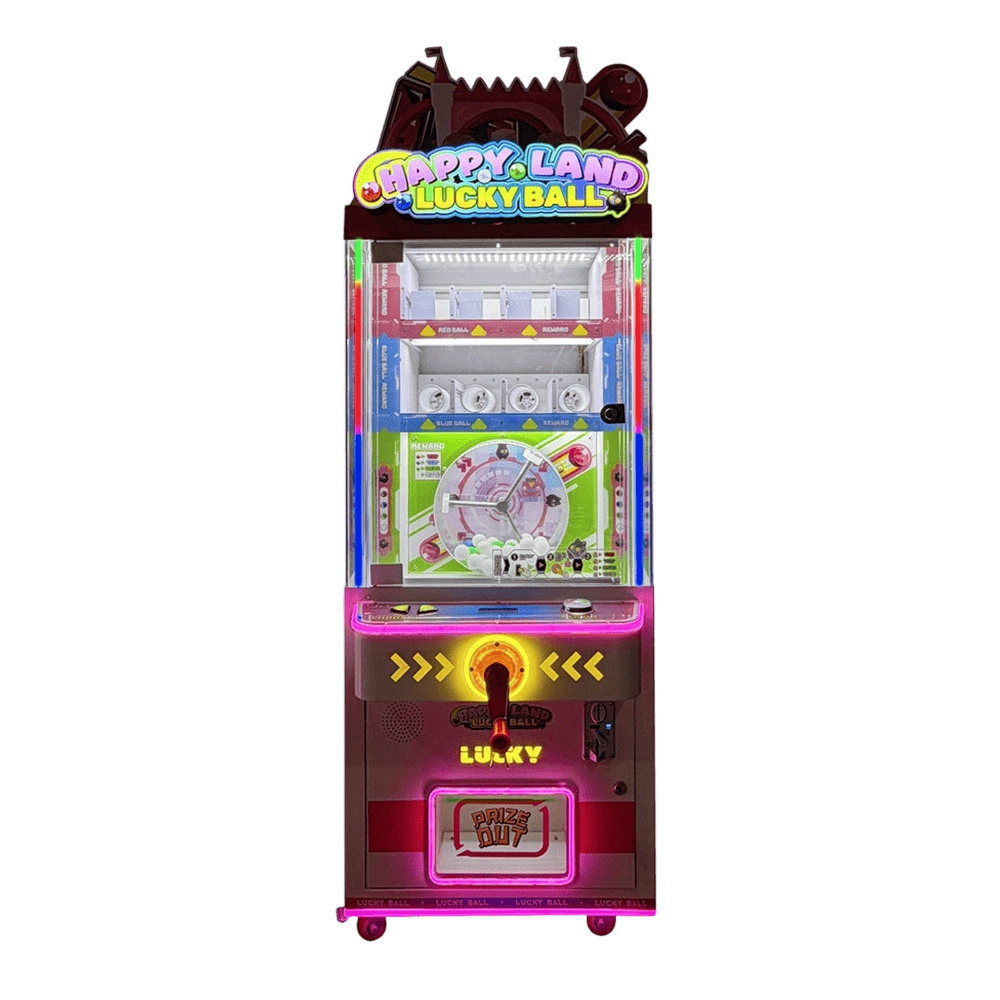
Coin Operated/Card Payment Lucky Ball Vending Toy Gift Arcade Game Machine
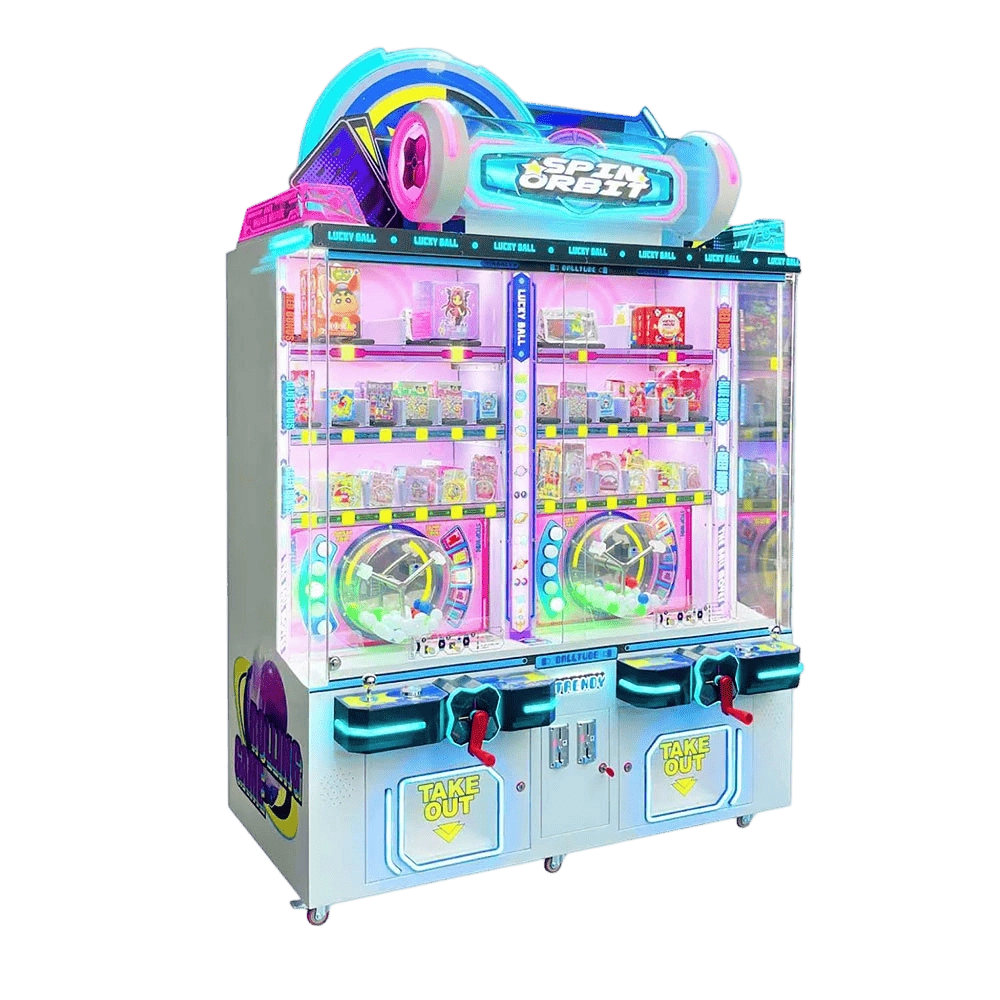
Coin Operated/Card Payment 2 Players SPIN ORBIT Lucky Prize Arcade Game
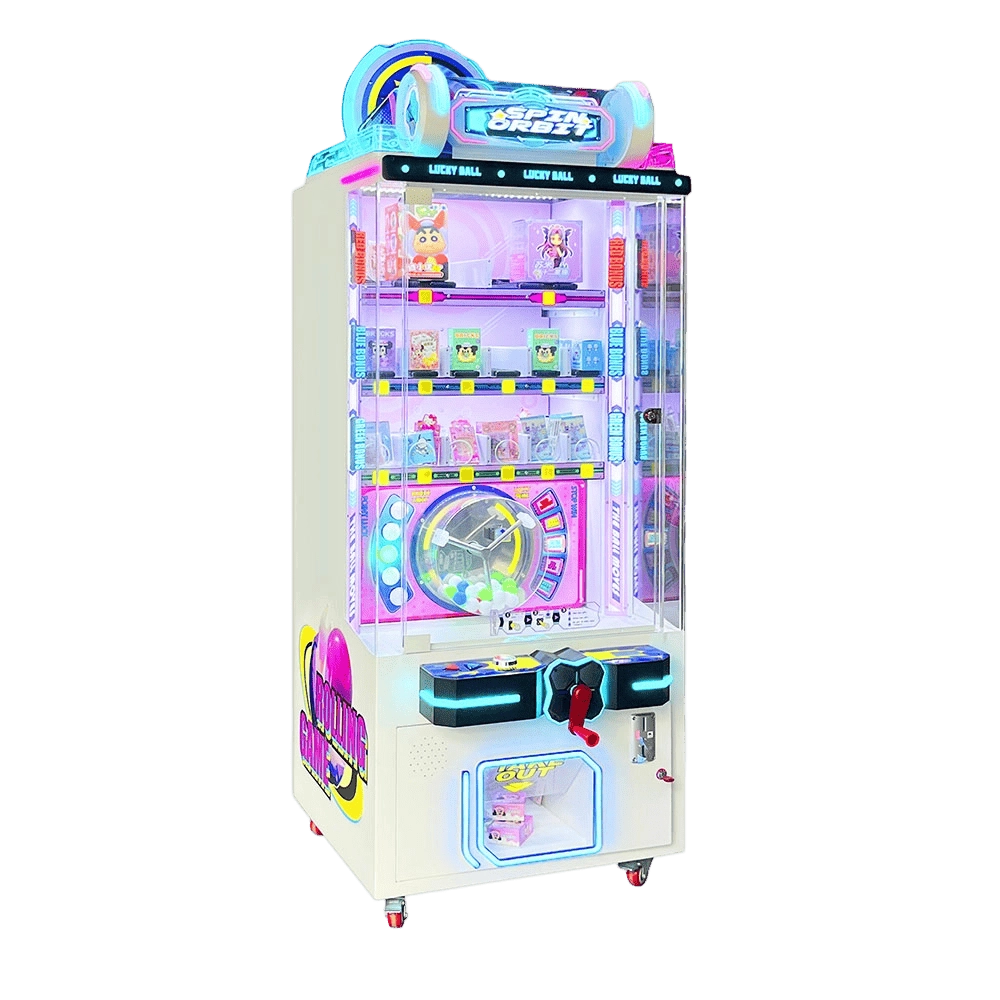
Coin Operated/Card Payment SPIN ORBIT Lucky Prize Arcade Game
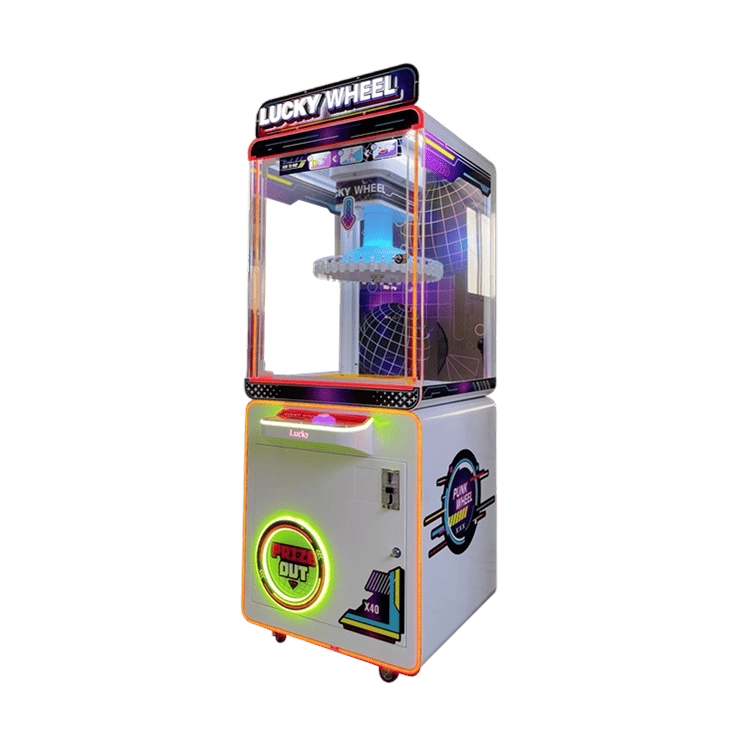
Arcade Prize Lucky Wheel Gift Machine For Amusement Areas
Get in Touch with Jiami Games
If you have any comments or good suggestions, please leave us a message; later our professional staff will contact you as soon as possible.

Innovative Entertainment, at Your Fingertips
Learn about Jiami Games and explore our expertise in console development, innovative design, and global markets.
Quick Links:
© 2026 Jiami Games.
Whatsapp: +8618520390438