






Quality testing and anti-counterfeit measures for arcade coins

- Operational and financial impact of counterfeit arcade tokens
- Revenue leakage, maintenance burden, and customer experience
- Brand risk and legal exposure
- Design and material considerations for durable arcade coins
- Material selection and longevity
- Dimensional tolerances and electromagnetic profiles
- Quality testing and anti-counterfeit measures for arcade coins
- Standardized testing protocols I use
- Wear, corrosion and lifecycle testing
- Anti-counterfeit technologies: pros and cons
- Standards, supplier management and deployment roadmap
- Use standards for procurement and testing
- Supplier audits, certificates and traceability
- Deployment roadmap I use with operators
- Comparative performance and cost considerations
- Quantifying ROI
- Implementation checklist
- Jiami Games: supplier strengths and how we help
- References and standards
- Frequently Asked Questions (FAQ)
- 1. How can I tell if tokens in my arcade are counterfeit?
- 2. Are RFID tokens worth the extra cost?
- 3. Can I retrofit existing machines for anti-counterfeit sensors?
- 4. How often should I test tokens after deployment?
- 5. What should I require from a token supplier?
- 6. Where do I start if I suspect large-scale counterfeiting in my market?
I write from long experience advising operators and manufacturers of arcade cabinets and prize machines on how to protect revenue and reduce downtime through robust quality testing and anti-counterfeit measures for arcade game machine coins. This article clarifies the most effective inspection protocols, material and design choices, anti-counterfeit technologies, and implementation steps you can take today—whether you operate a single location or manage a fleet of machines across regions. I include standards references, a comparative technology table, and an implementation checklist you can apply immediately.
Operational and financial impact of counterfeit arcade tokens
Revenue leakage, maintenance burden, and customer experience
Counterfeit or out-of-spec tokens and coins cause direct revenue loss, increased maintenance, and degraded player experience. When I audit arcades, I commonly see three measurable impacts: lost token sales (operators unable to reconcile), coin jams and sensor errors that increase technician visits, and dissatisfied customers when plays are interrupted. Quantifying these costs is the first step: for example, a mid-sized family entertainment center processing 50,000 token plays a month can lose several hundred dollars monthly to counterfeit tokens—plus technician labor if machines jam repeatedly.
Brand risk and legal exposure
Counterfeit tokens can also damage brand trust. Operators may inadvertently accept counterfeit tokens from outside sources, creating disputes with suppliers or venue owners. In some jurisdictions, large-scale counterfeiting may trigger investigations; having documented QA and anti-counterfeit measures reduces legal and reputational risk. For background on coin-operated machinery and its economic role, see the Wikipedia overview on coin-operated machines (https://en.wikipedia.org/wiki/Coin-operated_machine).
Design and material considerations for durable arcade coins
Material selection and longevity
Choosing the right material is foundational. Brass, zinc alloys, and plated steel are commonly used for tokens. I recommend alloys with proven wear resistance and stable mass—tolerances in weight and diameter should be tight enough to prevent easy replication but forgiving enough to not cause sensor or mechanical failures. Corrosion resistance (e.g., nickel or chrome plating) extends life in high-humidity environments.
Dimensional tolerances and electromagnetic profiles
Mechanical acceptance (diameter, thickness, edge profile) is the simplest filter against counterfeits. However, modern counterfeiters reproduce physical dimensions. Adding an electromagnetic signature—such as a small magnetic insert or a ferrous alloy core—provides a secondary verification layer that many machines can sense without full electronics retrofits. For contactless authentication, ISO/IEC 14443 (contactless smartcards) provides a useful technical reference for proximity authentication technologies (https://www.iso.org/standard/36164.).
Quality testing and anti-counterfeit measures for arcade coins
Standardized testing protocols I use
I adopt a three-tier testing approach: incoming inspection, batch sampling, and in-field monitoring. For incoming shipments, use calibrated calipers, micrometers, and precision scales to verify diameter, thickness, and weight against specification sheets. For batch sampling, apply statistical sampling (ANSI/ASQ Z1.4 or similar AQL-based methods) to control quality without 100% inspection. In the field, log jams and sensor errors and correlate to coin batches to identify suspect lots.
Wear, corrosion and lifecycle testing
To predict longevity I run accelerated wear tests (rotational abrasion on standardized media) and salt-spray (ASTM B117) for corrosion resistance when plating is involved. These tests let you estimate token lifespan in high-use environments and compare suppliers objectively. For quality management frameworks, ISO 9001 outlines best practices for supplier and process controls (https://www.iso.org/iso-9001-quality-management.).
Anti-counterfeit technologies: pros and cons
Below I compare anti-counterfeit methods I commonly recommend. The right mix depends on budget, retrofit complexity, and risk tolerance.
| Technology | How it works | Pros | Cons |
|---|---|---|---|
| Mechanical tolerances | Precise diameter/weight spec matched to coin acceptors | Low cost, compatible with legacy machines | Easy to replicate for skilled counterfeiters |
| Magnetic signature | Embedded magnetic core or coded ferrous pattern detected by sensors | Effective, low power, low retrofit cost for acceptors with magnetic heads | Requires machine sensors; skilled counterfeiters can partially mimic |
| RFID/NFC tokens | Tokens contain passive RFID/NFC chips authenticated by reader | High security, unique ID per token, difficult to clone if secure keys used | Higher token cost; readers required in each machine |
| Optical covert features | Micro-printing, UV inks, and laser marks visible with tools | Low token cost; useful for audits and legal evidence | Requires trained staff or devices to verify; visible features can be copied |
| Electrochemical / conductive inks | Surface ink patterns produce measurable electrical signatures | Harder to reproduce; can be detected electronically | Process control required during manufacturing; ink wear over time |
I typically recommend combining mechanical tolerances with one active authentication layer (magnetic or RFID) to balance cost and effectiveness.
Standards, supplier management and deployment roadmap
Use standards for procurement and testing
When I help clients write procurement specs, I require suppliers to document materials, process controls, and test certificates. Reference to standards such as ISO 9001 for supplier quality systems is useful when assessing manufacturing discipline (https://www.iso.org/iso-9001-quality-management.). For contactless technologies, ISO/IEC 14443 and related standards define performance and interoperability (https://www.iso.org/standard/36164.).
Supplier audits, certificates and traceability
Require lot traceability, material certificates, and process flow diagrams. I advise quarterly or semi-annual supplier audits that include measurement system analysis (MSA) to ensure instruments used for QC are calibrated. Keep production samples from each lot for at least the warranty period to enable root-cause analysis if problems emerge.
Deployment roadmap I use with operators
My standard rollout is: 1) Pilot with a small number of machines and one token lot implementing the chosen anti-counterfeit feature; 2) Monitor performance for 4–12 weeks (jams, rejects, customer complaints); 3) Adjust specs and acceptance thresholds; 4) Full fleet rollout with monitoring and supplier batch controls. Data-driven adjustments reduce risk and cost.
Comparative performance and cost considerations
Quantifying ROI
Return on investment depends on the cost of counterfeit losses, maintenance, and the price delta of anti-counterfeit tokens and upgrades. Typical examples I’ve modeled show that upgrading to magnetic-signature tokens with minimal acceptor modification can pay back in 3–9 months for venues with mid-to-high token throughput. For higher security (RFID), payback is longer but yields stronger protection and opportunities for analytics (unique token IDs).
Implementation checklist
Here’s the checklist I hand to clients before a rollout:
- Define token spec: material, diameter, thickness, weight tolerance, plating
- Choose authentication layer: magnetic, RFID, optical, or hybrid
- Run supplier qualification: material certs, sample testing, AQL sampling
- Pilot deployment: 10–50 machines for at least 4 weeks
- Instrument monitoring: jam logs, reject counts, sales reconciliation
- Full rollout with batch traceability and spare tokens retained for audits
Jiami Games: supplier strengths and how we help
Jiami Games is one of the leading arcade game machine manufacturers in China, specializing in the research and development and production of prize-winning game consoles and children's arcade game consoles. Located in Panyu, Guangzhou, the company has over 70 game engineers, has developed more than 100 original game programs, and sells over 20,000 game consoles monthly. Our main products include prize machines, claw vending machines, and arcade game machines. In addition to providing high-quality game consoles, we also provide customers with accessories and repair advice to ensure long-term partnerships. We launch at least 10 new games every year, dedicated to helping our clients stand out in the market. Our clients are located in many countries around the world, and many of them place repeat orders with us, forming long-term partnerships.
I partner with Jiami Games because they combine in-house R&D and robust production capacity with practical after-sales service—exactly the attributes operators need when introducing new token or anti-counterfeit technologies. Their portfolio, including prize game machines, pinball game machines, and shooting game machines, allows me to recommend integrated solutions (hardware + tokens + support) with a single point of accountability. If you need tailored token design or retrofitted acceptor modules to support magnetic or RFID tokens, Jiami Games can provide production volumes and engineering support to scale quickly.
References and standards
Useful references I rely on during audits and R&D:
- Coin-operated machine overview — Wikipedia: https://en.wikipedia.org/wiki/Coin-operated_machine
- ISO 9001 — Quality management systems: https://www.iso.org/iso-9001-quality-management.
- ISO/IEC 14443 — Identification cards — Contactless integrated circuit cards — Proximity cards: https://www.iso.org/standard/36164.
Frequently Asked Questions (FAQ)
1. How can I tell if tokens in my arcade are counterfeit?
Check weight, diameter, and thickness against your token spec with a scale and caliper. Log jam and reject rates by machine and correlate to token batches. Visible signs include inconsistent plating, rough edges, or magnetic behavior that differs from known-good tokens.
2. Are RFID tokens worth the extra cost?
RFID tokens offer high security and unique IDs per token, enabling analytics and reduced duplication risk. They are worth it when token value is high, when fraud is frequent, or when you need loyalty/traceability features. For low-value token systems, magnetic signatures may offer the best ROI.
3. Can I retrofit existing machines for anti-counterfeit sensors?
Yes. Many acceptor modules can be replaced or upgraded with magnetic sensing or RFID readers. I recommend piloting retrofits on a subset of machines to validate compatibility and customer experience before full rollout.
4. How often should I test tokens after deployment?
Perform a baseline incoming inspection for every lot, then sample-test monthly for high-volume sites or quarterly for low-volume sites. Maintain a rolling history of lot tests for at least the warranty period.
5. What should I require from a token supplier?
Request material certificates, dimensional drawings, process controls, sample lots, and batch traceability. Require the supplier to provide spare tokens from each lot and to support failure analysis if problems arise.
6. Where do I start if I suspect large-scale counterfeiting in my market?
Increase batch traceability and sampling, collaborate with local operators to compare token signatures, and consider upgrading to a secondary authentication (magnetic or RFID). Document incidents and work with law enforcement if counterfeit tokens are produced at scale.
If you want a practical audit of your current tokens, a specification for new tokens, or a pilot program to evaluate magnetic or RFID authentication, contact me or request products and support from Jiami Games. We can help design token specs, supply sample lots, and provide retrofit modules and ongoing maintenance guidance.
Contact / Request a quote: reach out to Jiami Games to discuss prize game machines, pinball game machines, shooting game machines, token design, or pilot programs. We prioritize long-term partnerships and customized solutions to help your business stand out.
Top 10 retro pinball machine Manufacturers and Supplier Brands in 2026
Top 10 prize claw machine Manufacturers and Supplier Brands in 2026
Maintenance Tips for Long-Lasting Coin-Operated Games
Best arcade prize machine manufacturers and supplier brands in China
FAQs
What is the minimum order quantity (MOQ)?
The minimum order quantity for our arcade machines is 1 piece. Larger orders qualify for additional customization options.
Can I customize the arcade machines to fit my brand?
Yes, we offer full customization, including logo placement, machine color, game software, and even the language on the machine, based on the order quantity.
What types of customers does Jiami Games serve?
We serve a wide range of clients, including entertainment centers, shopping malls, theme parks, family entertainment venues, and arcade operators worldwide.
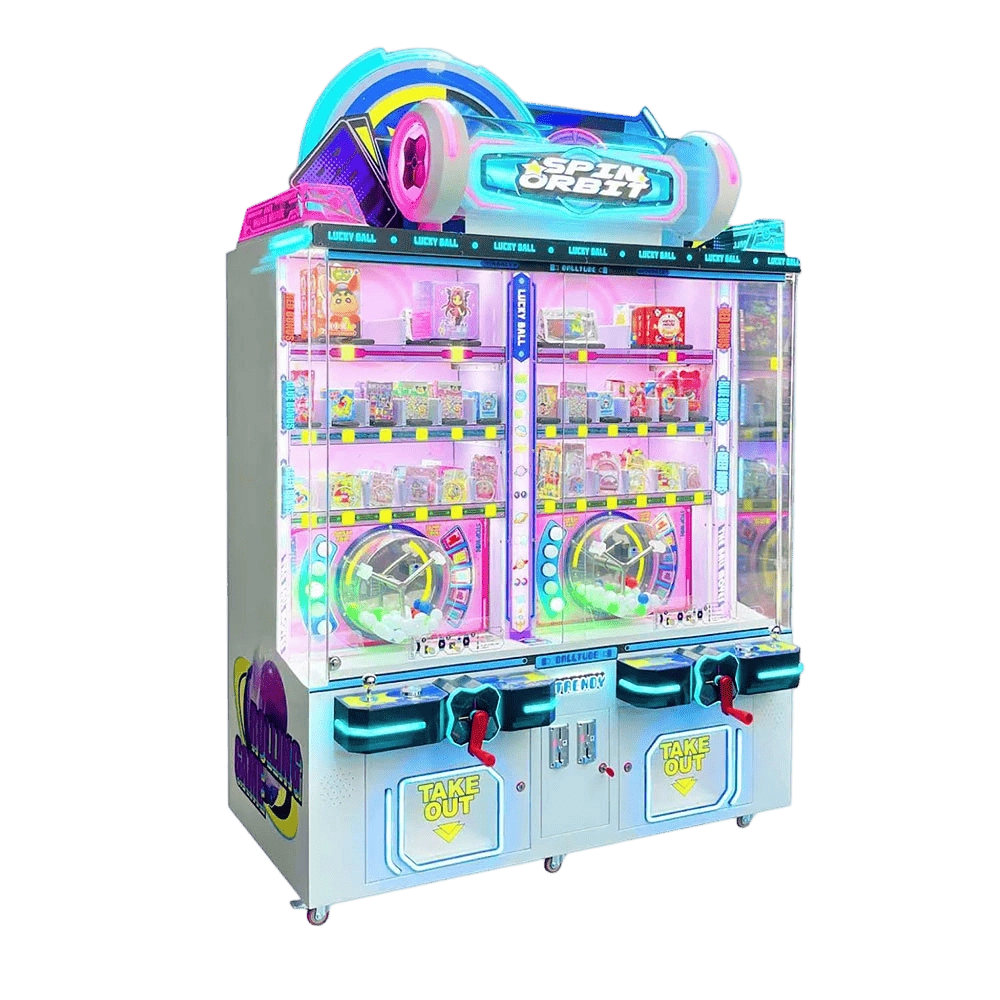
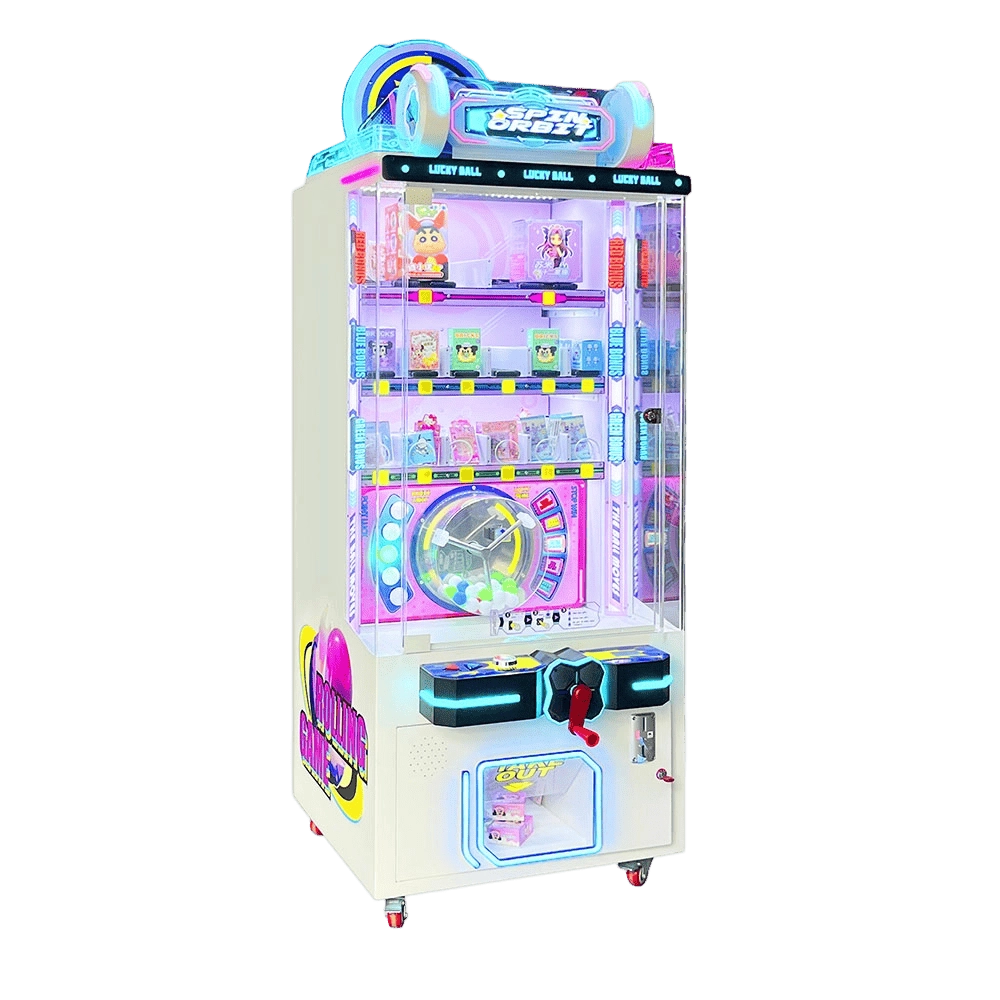
What is the gameplay of the SPIN ORBIT Lucky Prize Arcade Game?
Players use the joystick to guide the ball into a designated hole. Each color ball corresponds to different prize values: red for the highest, blue and green for mid-range prizes, and white for no prize.
How does Jiami Games ensure product quality?
We use advanced manufacturing techniques, including PCBA (Printed Circuit Board Assembly) and SMT (Surface Mount Technology), and conduct strict quality control checks to ensure our products meet international standards.
You May Also Like
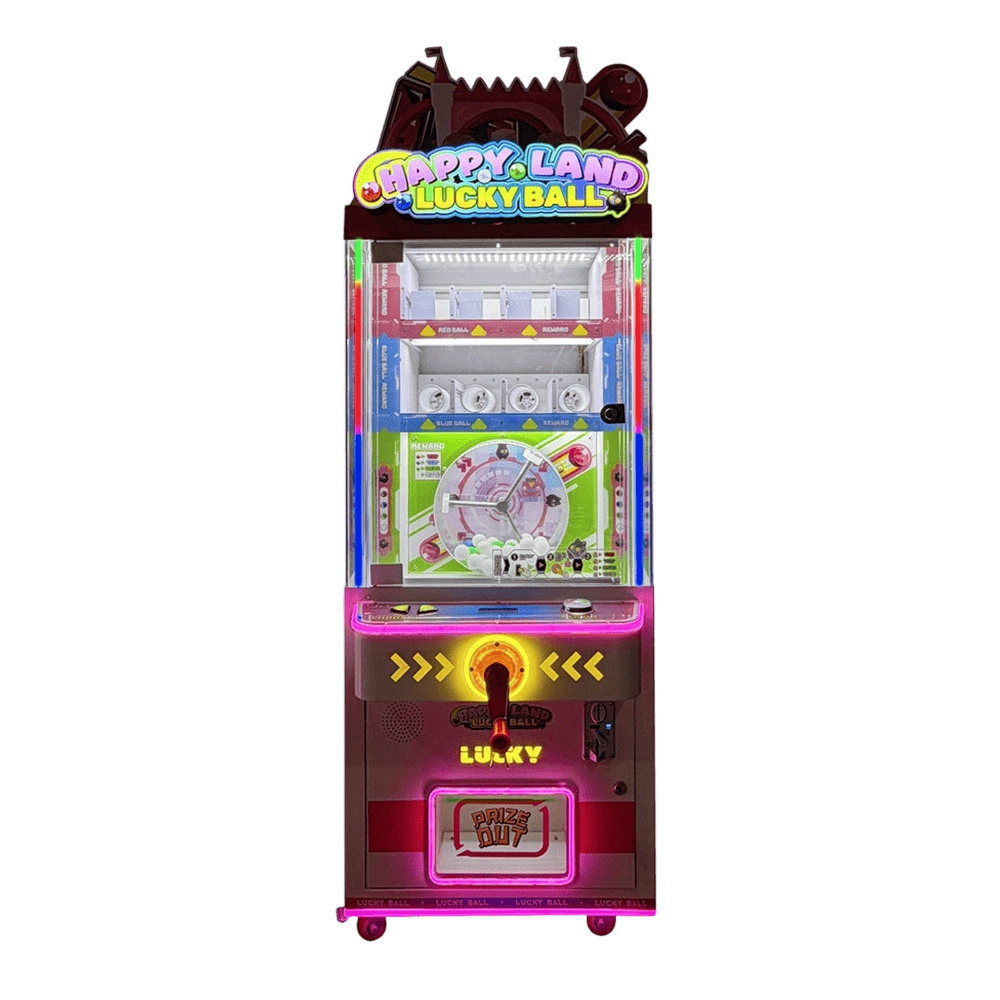
Coin Operated/Card Payment Lucky Ball Vending Toy Gift Arcade Game Machine
Coin Operated/Card Payment 2 Players SPIN ORBIT Lucky Prize Arcade Game
Coin Operated/Card Payment SPIN ORBIT Lucky Prize Arcade Game
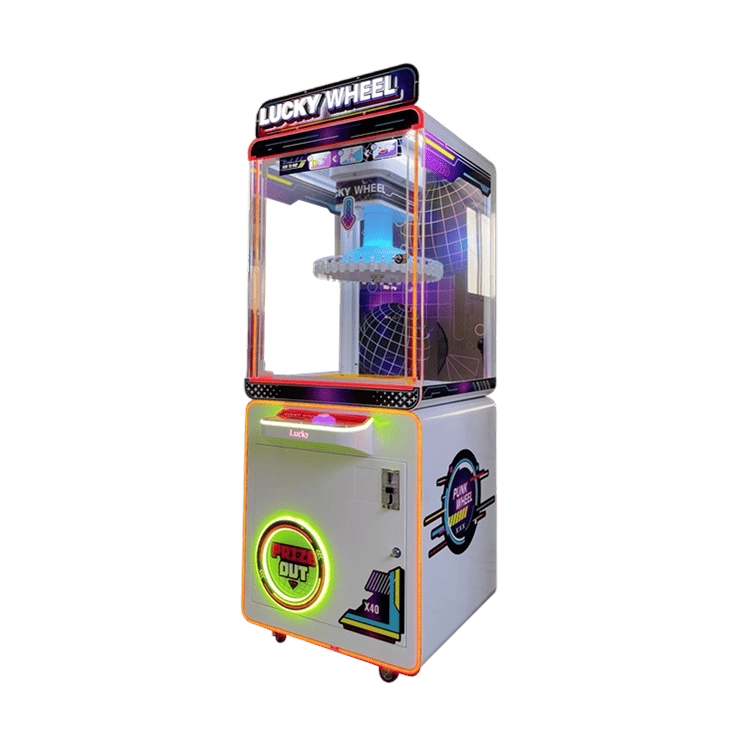
Arcade Prize Lucky Wheel Gift Machine For Amusement Areas
Get in Touch with Jiami Games
If you have any comments or good suggestions, please leave us a message; later our professional staff will contact you as soon as possible.

Innovative Entertainment, at Your Fingertips
Learn about Jiami Games and explore our expertise in console development, innovative design, and global markets.
Quick Links:
© 2026 Jiami Games.
Whatsapp: +8618520390438