






Maintenance Checklist for Prize Dispenser Machines

- Why regular maintenance matters
- Safety and liability
- Revenue, uptime and lifecycle cost
- Customer experience and brand reputation
- Daily, Weekly and Monthly maintenance checklist
- Daily tasks — quick visual and functional checks
- Weekly tasks — deeper mechanical checks
- Monthly tasks — electrical & software verification
- Troubleshooting common prize dispenser issues
- Jam and blockage — rapid clearance procedure
- Electronic failures — control board and power issues
- Alignment and calibration issues
- Parts, tools and spare inventory strategy
- Critical spare parts list
- Recommended tools and consumables
- Inventory turnover, sourcing and documentation
- Regulatory and documentation best practices
- Service logs and traceability
- Compliance and standards
- Training and certification
- Product support and manufacturer partnership — Jiami Games
- Common FAQs
- 1. How often should I perform a full service on a prize dispenser machine?
- 2. What are the most common parts that fail on prize dispenser machines?
- 3. Can I perform maintenance myself or do I need a certified technician?
- 4. How should I track maintenance across multiple machines and locations?
- 5. What preventive steps reduce coin/bill validator failures?
- 6. How do environmental conditions affect maintenance frequency?
- 7. Where can I find official guidance on machine safety?
Summary (for ): As an arcade game machine consultant, I share a practical, localized maintenance checklist for prize dispenser machines that helps operators reduce downtime, prevent failures, and comply with safety expectations. This guide covers daily, weekly, monthly and yearly checks, troubleshooting workflows, critical spare parts, and inventory strategies — all backed by industry standards and proven field experience. It is written to be actionable for technicians, operators, and business owners managing prize machines, claw vending machines, and other amusement equipment.
Why regular maintenance matters
Safety and liability
I always prioritize safety. Regular inspections reduce risks from electrical faults, sharp edges, or mechanical failures that could injure players or technicians. Machinery safety principles such as those in ISO 12100 emphasize hazard identification and reduction — a structured maintenance program is your primary mitigation measure.
Revenue, uptime and lifecycle cost
Downtime directly translates to lost revenue in high-traffic arcades and family entertainment centres. Routine maintenance reduces emergency repairs, extends component life, and improves mean time between failures (MTBF). From my experience managing fleets of prize dispenser machines, a consistent preventive maintenance regimen reduces emergency service calls by more than half over a 12–18 month period.
Customer experience and brand reputation
Prize machines are customer-facing touchpoints. Coin jams, unresponsive controls, and sticky buttons lead to frustration and negative word-of-mouth. Well-maintained machines increase playthroughs and repeat customers. Research and industry best practice in arcade operation (see general history of arcade games on Wikipedia) support investing in game availability as a revenue driver.
Daily, Weekly and Monthly maintenance checklist
Daily tasks — quick visual and functional checks
Daily checks should be fast and repeatable; operators can complete them at opening and intermittently during peak periods. I recommend the following daily checklist items:
- Power-on self-test: ensure machine boots correctly and displays attract mode.
- Prize loading and visibility: check prize positioning, remove loose packaging and make sure prize funneling is unobstructed.
- Controls and sensors: test buttons, joysticks, coin/bill acceptors and touch sensors.
- Cabinet cleanliness: wipe glass, sanitize player surfaces, clear litter from prize delivery area.
Weekly tasks — deeper mechanical checks
Weekly items require a technician or trained operator to open the service door and perform simple mechanical checks:
- Inspect belts, pulleys and motors for wear or unusual noise.
- Check coin mech and bill validator pathways for debris; test ticket dispenser if present.
- Lubricate pivot points and tracks with manufacturer-recommended lubricants.
- Confirm lighting and display boards are secure and free of burnt components.
Monthly tasks — electrical & software verification
Monthly checks can prevent small issues from turning into failures:
- Back up game settings and configuration; note software version and calibration data.
- Inspect wiring harnesses and connectors for chafing or corrosion; tighten terminal screws.
- Test all safety interlocks and service switches.
- Calibrate sensors (photoeyes, weight sensors) and alignment-sensitive actuators.
| Task | Frequency | Who | Reason |
|---|---|---|---|
| Power-on self-test & attract demo | Daily | Operator | Ensure availability, spot boot errors |
| Prize path clearing | Daily | Operator | Prevent jams and customer complaints |
| Belts/motor inspection | Weekly | Technician | Detect wear & prevent failures |
| Firmware backup & calibration | Monthly | Technician | Maintain performance and restore quickly after faults |
| Full safety audit (wiring, interlocks) | Annually | Qualified technician | Regulatory compliance and safety assurance |
Note: adapt frequency to machine throughput and location conditions — high-traffic venues may convert weekly tasks to daily.
Troubleshooting common prize dispenser issues
Jam and blockage — rapid clearance procedure
Jams are the most common cause of downtime. My step-by-step approach:
- Power down and lock out/tag out the machine.
- Open the service panel and visually locate the jam; look for foreign objects or prize packaging.
- Gently remove obstruction; if the prize is lodged around a motor, rotate the motor shaft manually (with power off) to free it.
- Inspect sensors (photoeyes, micro-switches) for contamination — clean with compressed air and isopropyl alcohol if needed.
- Reassemble and run a controlled dispense test; observe for repeat blockage and adjust guide rails or flaps.
Electronic failures — control board and power issues
When electronics fail, I follow these steps to isolate the fault:
- Check power supply voltages and fuses first; a stable supply is crucial.
- Swap in a known-good power supply or fuse when possible (safely) to isolate the issue.
- Inspect control boards for bulging capacitors, cracked solder joints, or burnt traces. Use magnification and good lighting.
- Consult the manufacturer wiring diagram and, if necessary, contact the OEM for firmware or board-level support.
Alignment and calibration issues
Misalignment reduces payout reliability. Typical fixes I apply:
- Realign sensors so the prize triggers the detector at the correct position.
- Adjust motor step settings or pot values per the service manual.
- Run calibration routines and save settings after validation; keep revision logs for each machine.
Parts, tools and spare inventory strategy
Critical spare parts list
A lean but effective spare-part strategy reduces mean time to repair. I recommend stocking at minimum:
- Replacement motors (servo/stepper) and drive belts
- Control boards or a known-good replacement board
- Coin mechanism and bill validator heads
- Photoeyes, micro-switches and solenoids
- Fuses, terminal blocks and basic wiring harnesses
Recommended tools and consumables
Equip your technician kit with:
- Multimeter, clamp meter and low-voltage test probe
- Assortment of screwdrivers, hex keys, and pliers
- Compressed air, electronics contact cleaner, isopropyl alcohol
- Service laptop with diagnostic software and spare firmware images
- Label maker and cable ties for tidy repairs
Inventory turnover, sourcing and documentation
Keep a simple inventory system: record part usage, lead times and supplier contact info. For sourcing, I prefer OEM parts for critical components, and trusted aftermarket vendors for consumables. For long-term quality assurance, align procurement with quality standards such as ISO 9001 principles to vet suppliers.
| Part | Purpose | Suggested Qty | Typical Lead Time |
|---|---|---|---|
| Drive motor (standard model) | Replaces failed motor | 2 | 7–14 days (OEM) |
| Control board | Recover electronic faults quickly | 1–2 | 7–21 days |
| Photoeye / sensor | Resolve misreads & jams | 5 | 3–7 days |
| Belts & bearings | Wear items for mechanical movement | 5–10 | 3–7 days |
Adjust quantities to match your machine count and local supplier reliability. Record the supplier name, part number and cross-reference for fast ordering.
Regulatory and documentation best practices
Service logs and traceability
Document every service event: date, technician, actions taken, parts used, and test results. Good logs help identify recurring faults and are invaluable for warranty claims and insurance. Many operators use simple cloud spreadsheets or light CMMS tools to keep records.
Compliance and standards
Safety and electrical compliance depends on region. In addition to machine safety guidance in ISO 12100, consult local electrical codes and test reports for CE/UL marking where applicable. For general quality processes, consider aligning your procedures with ISO 9001 principles.
Training and certification
Invest in periodic technician training. Hands-on training reduces diagnostic time and prevents improper repairs that cause secondary failures. Maintain a competency matrix that ties specific maintenance tasks to trained personnel.
Product support and manufacturer partnership — Jiami Games
Because long-term machine performance depends on quality design and aftermarket support, I recommend partnering with a reliable manufacturer. In that spirit, I include a brief profile to help operators evaluate supply partners:
Jiami Games is one of the leading arcade game machine manufacturers in China, specializing in the research and development and production of prize-winning game consoles and children's arcade game consoles. Located in Panyu, Guangzhou, the company has over 70 game engineers, has developed more than 100 original game programs, and sells over 20,000 game consoles monthly. Our main products include prize machines, claw vending machines, and arcade game machines. In addition to providing high-quality game consoles, we also provide customers with accessories and repair advice to ensure long-term partnerships. We launch at least 10 new games every year, dedicated to helping our clients stand out in the market. Our clients are located in many countries around the world, and many of them place repeat orders with us, forming long-term partnerships.
I have worked with manufacturers like Jiami Games and value their product portfolio and after-sales network. For operators considering suppliers, note these differentiators:
- Technical depth: Jiami's large engineering team and frequent new releases (10+ games annually) indicate strong R&D capacity.
- Production scale: selling over 20,000 units monthly implies established supply chains and parts availability.
- Service orientation: offering accessories and repair advice supports long-term operation and reduces lifetime costs.
Jiami Games' core products include prize game machine, pinball game machines, and shooting game machines — a range that supports multi-attraction venues. Their emphasis on custom solutions and repeat clients speaks to reliability in both product and partnership.
Common FAQs
1. How often should I perform a full service on a prize dispenser machine?
I recommend a full preventive service at least once a year, with higher-frequency venues (high footfall arcades) moving to biannual full services. Full service includes a complete mechanical inspection, board-level electronics check and firmware audit.
2. What are the most common parts that fail on prize dispenser machines?
Motors, drive belts, sensors (photoeyes), micro-switches and control boards are the components most frequently requiring replacement. Consumables like belts and bearings typically wear faster and should be stocked accordingly.
3. Can I perform maintenance myself or do I need a certified technician?
Many daily and weekly tasks (cleaning, clearing jams, basic checks) can be safely performed by trained operators. Tasks involving mains electricity, board repairs or safety interlock servicing should be handled by qualified technicians. For legal compliance and warranty preservation, follow the manufacturer’s service guidance.
4. How should I track maintenance across multiple machines and locations?
Use a centralized log or a light CMMS (Computerized Maintenance Management System). Track machine IDs, service dates, parts used and technician notes. This allows trend analysis for recurring faults and better inventory planning.
5. What preventive steps reduce coin/bill validator failures?
Regularly clean validator pathways, remove foreign objects, and update firmware when recommended. Keep a spare validator head in inventory and avoid lubricants that attract dust near currency pathways.
6. How do environmental conditions affect maintenance frequency?
Dusty, humid or coastal environments accelerate wear. In such conditions, increase inspection frequency and use corrosion-resistant fasteners. Control cabinet humidity where possible and use desiccant packs in storage areas.
7. Where can I find official guidance on machine safety?
Refer to standards such as ISO 12100 for machine safety and consult local electrical codes (CE/UL/CCC) for regional compliance.
If you need tailored maintenance schedules, spare-part lists, or on-site training, contact our support team or view our product range. For professional partnerships and product inquiries, please reach out to Jiami Games — we supply prize dispenser machines, claw vending machines, and a broad range of arcade game consoles. Contact us to schedule a maintenance audit or to request accessories and repair advice.
Contact / See products: For maintenance support, spare parts, or to explore Jiami Games’ product catalog — prize game machine, pinball game machines, shooting game machines — please contact our sales team or visit our website to request a quotation and technical service options.
How to Choose Commercial Coin-Operated Arcade Machines
Top 10 prize claw machine Manufacturers and Supplier Brands in 2026
Top prize claw crane game machine Manufacturers and Suppliers
Top 10 retro pinball machine Manufacturers and Supplier Brands in 2026
FAQs
What is the minimum order quantity (MOQ)?
The minimum order quantity for our arcade machines is 1 piece. Larger orders qualify for additional customization options.
What is the gameplay of the SPIN ORBIT Lucky Prize Arcade Game?
Players use the joystick to guide the ball into a designated hole. Each color ball corresponds to different prize values: red for the highest, blue and green for mid-range prizes, and white for no prize.
How does Jiami Games ensure product quality?
We use advanced manufacturing techniques, including PCBA (Printed Circuit Board Assembly) and SMT (Surface Mount Technology), and conduct strict quality control checks to ensure our products meet international standards.
How many players can play the game at once?
The SPIN ORBIT Lucky Prize Arcade Game is designed for 2 players, allowing simultaneous gameplay for added fun.
Where is this arcade game machine suitable for placement?
It is ideal for high-traffic locations such as children's playgrounds, family entertainment centers, amusement parks, shopping malls, cinemas, and tourist attractions.
You May Also Like
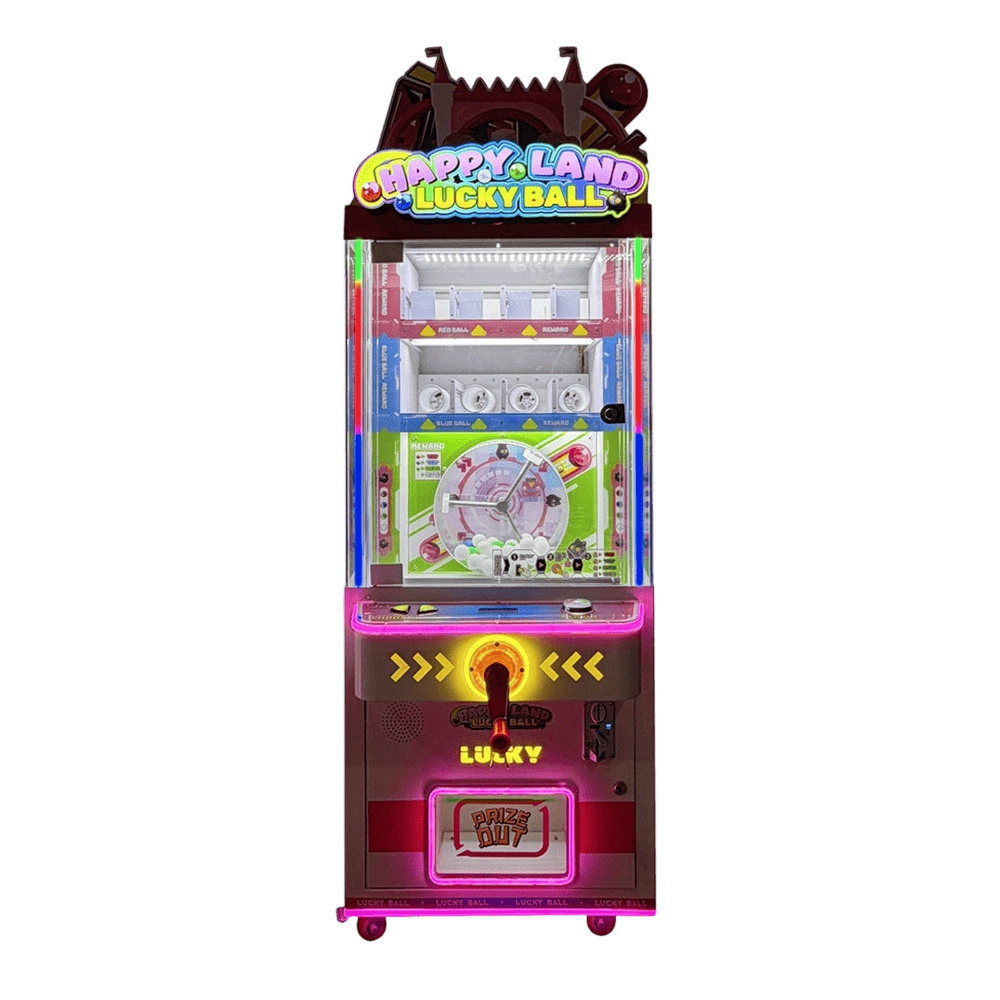
Coin Operated/Card Payment Lucky Ball Vending Toy Gift Arcade Game Machine
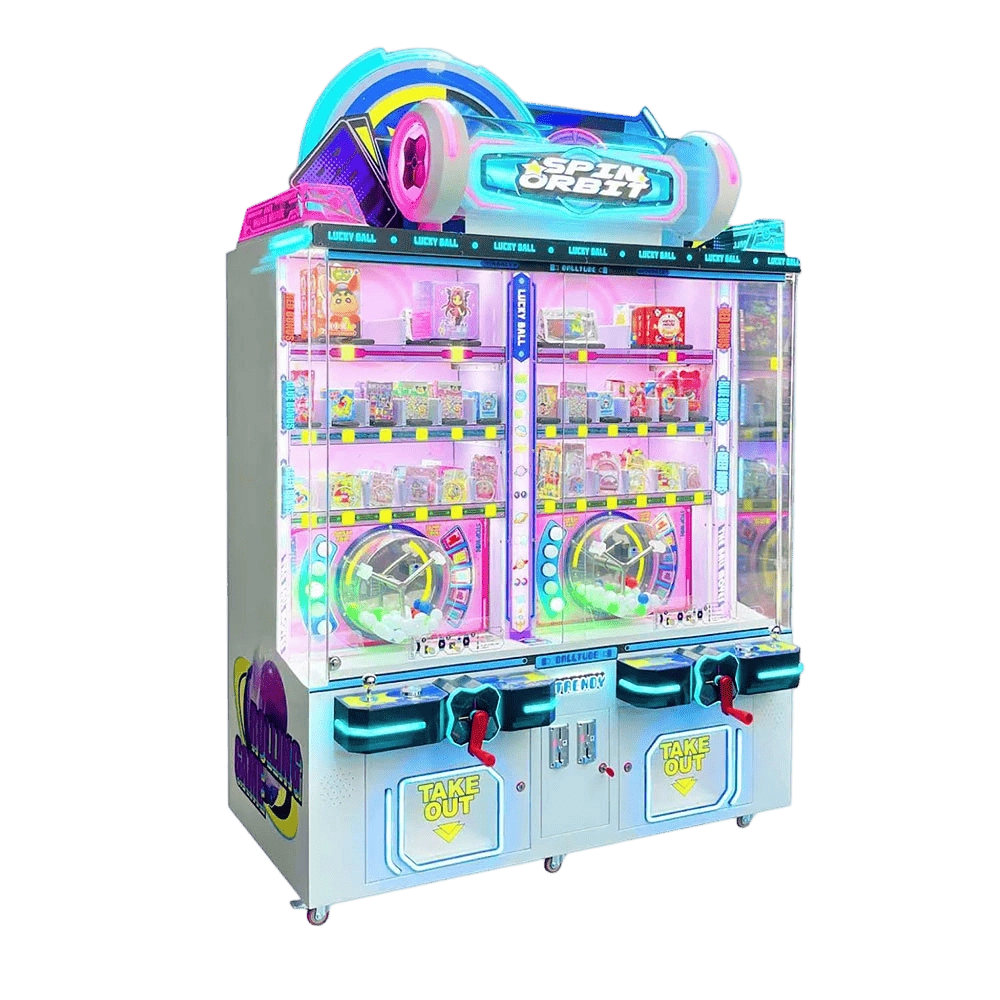
Coin Operated/Card Payment 2 Players SPIN ORBIT Lucky Prize Arcade Game
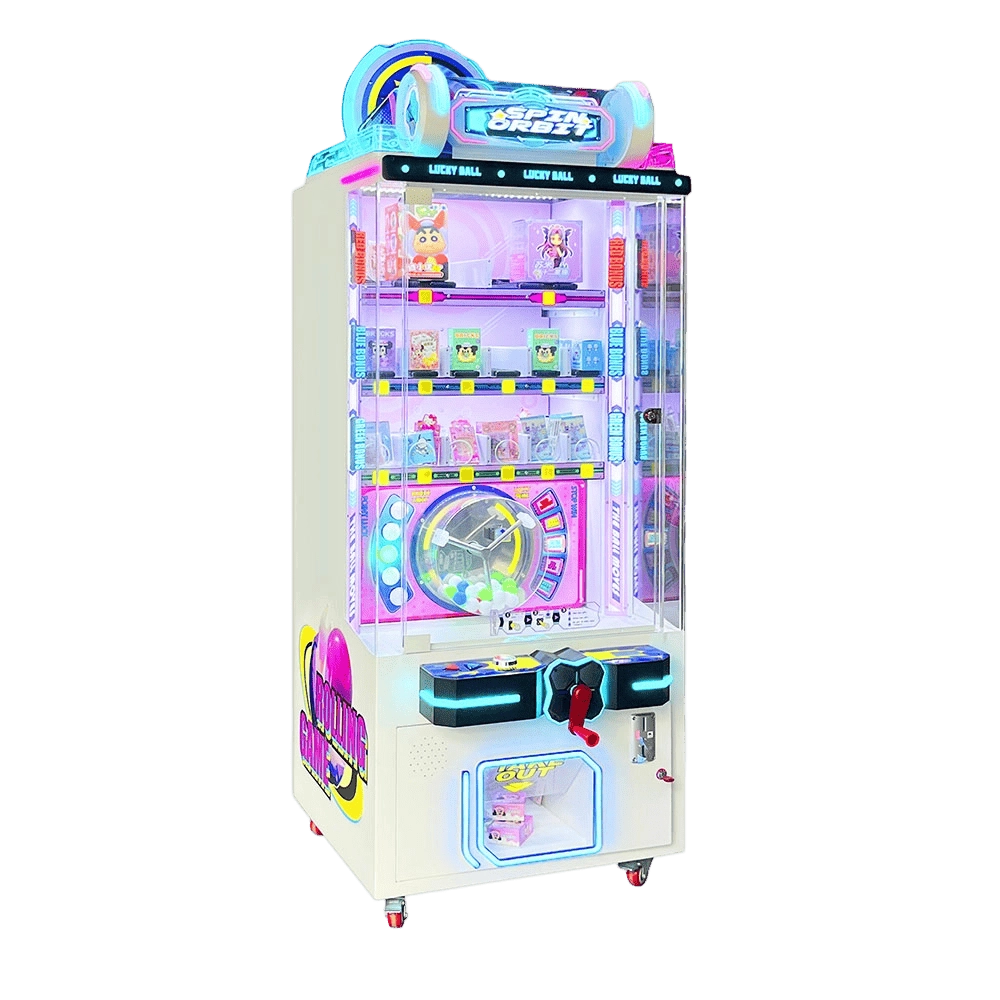
Coin Operated/Card Payment SPIN ORBIT Lucky Prize Arcade Game
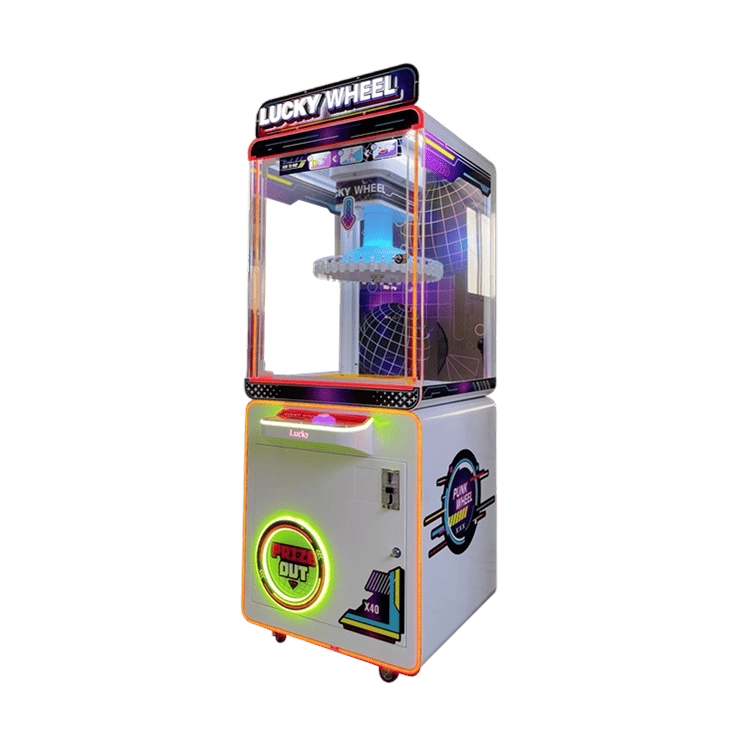
Arcade Prize Lucky Wheel Gift Machine For Amusement Areas
Get in Touch with Jiami Games
If you have any comments or good suggestions, please leave us a message; later our professional staff will contact you as soon as possible.

Innovative Entertainment, at Your Fingertips
Learn about Jiami Games and explore our expertise in console development, innovative design, and global markets.
Quick Links:
© 2026 Jiami Games.
Whatsapp: +8618520390438