






Prize Dispenser Machine ROI: Cost, Revenue and Payback Period

- Understanding redemption and prize dispenser machines in context
- What is a prize dispenser machine?
- Market context and customer behavior
- How operators use prize dispensers in a business mix
- Cost components and CAPEX considerations
- Initial purchase and installation costs
- Ongoing operating expenses
- Depreciation, lifespan, and secondary market
- Revenue drivers, payout mechanics and realistic modeling
- Key revenue metrics to track
- Understanding payout rates and play pricing
- Three example revenue scenarios and payback calculations
- Operational levers to improve ROI
- Location selection and placement
- Prize strategy and merchandising
- Maintenance, uptime and analytics
- Risk, compliance and sourcing trustworthy manufacturers
- Regulatory and compliance considerations
- Sourcing: why manufacturer choice matters
- Why I recommend factory partners with strong R&D
- Jiami Games — partner capabilities and what they offer operators
- Practical checklist before purchase
- Site and financial due diligence
- Technical and after-sales checks
- Negotiation points
- Frequently Asked Questions (FAQ)
- 1. How long does it take to recoup the cost of a prize dispenser machine?
- 2. What is a realistic daily play volume to assume?
- 3. How much should I budget for prizes per month?
- 4. Are claw machines and prize dispenser machines the same for ROI modeling?
- 5. What maintenance should I expect?
- 6. Where can I find industry benchmarks and safety standards?
I specialize in arcade game machines and help operators evaluate whether a prize dispenser machine is a sound investment. In this article I summarize what drives cost and revenue for prize and claw vending machines, how to calculate ROI and payback periods, what realistic operator expense lines look like, and operational best practices that materially affect profitability. I reference industry definitions and trade resources so you can validate assumptions and apply them to your location.
Understanding redemption and prize dispenser machines in context
What is a prize dispenser machine?
Prize dispenser machines—often called redemption machines, claw vending machines, or ticket-to-prize units—are coin- or cashless-operated arcade devices that dispense prizes or tickets based on gameplay or outcome. For an overview of the category and its place in arcade history, see the Redemption game entry on Wikipedia.
Market context and customer behavior
Demand for prize machines is driven by locations that generate steady foot traffic: family entertainment centers (FECs), malls, movie theaters, bowling alleys, and tourist attractions. Industry associations such as the International Association of Amusement Parks and Attractions (IAAPA) provide regular reports and market insight showing that location choice and the customer mix (families vs. teenagers vs. adults) are critical to revenue outcomes.
How operators use prize dispensers in a business mix
I see operators use prize dispenser machines for three main goals: (1) direct revenue from plays, (2) ancillary spend stimulation (customers stay longer and buy F&B), and (3) customer acquisition/retention (repeat visits). When evaluating ROI, include both direct machine cashflow and measurable ancillary benefits where possible.
Cost components and CAPEX considerations
Initial purchase and installation costs
Upfront costs for a prize dispenser machine vary widely by type and feature set: simple ticket dispensers and small claw machines can be a few hundred dollars while High Quality branded or skill-based prize machines can run several thousand. Typical cost elements include the cabinet, control systems, coin/card acceptors, lighting/LEDs, prize carriage, shipping, and installation. When budgeting, obtain exact quotes and compare factory direct vs. distributor pricing.
Ongoing operating expenses
Monthly costs include prizes (actual merchandise), consumables (tickets, receipt paper), utilities (power), maintenance parts, technician labor, payment processing fees (if cashless), and any site commission or space rent. Prize cost is often the largest controllable expense: balance perceived prize value versus cost to preserve margins.
Depreciation, lifespan, and secondary market
Arcade machines typically depreciate over 3–7 years depending on intensity of use and technology. Well-maintained units can be resold; a secondary market exists for refurbished units. For accounting, allocate depreciation and include expected salvage value in your ROI model.
Revenue drivers, payout mechanics and realistic modeling
Key revenue metrics to track
For modeling I recommend tracking: average revenue per play, plays per day, days of operation per month, gross revenue, variable cost per play (prize & ticket cost), fixed monthly operating expenses, and location commission (if any). These feed your net cash flow and ROI.
Understanding payout rates and play pricing
Payouts depend on the game's mechanics. Claw machines and certain skill-based prize machines have adjustable difficulty or payout windows; ticket-to-prize games have configurable ticket redemption curves. Transparent record-keeping of coin-in/transactions is essential. For definitions of arcade categories and game mechanics see Arcade game.
Three example revenue scenarios and payback calculations
I use conservative, typical, and optimistic scenarios to show how outcomes change. Assumptions are stated and you can replace them with your actual numbers. Formulae I use:
- Annual Net Profit = (Average daily plays × Price per play × 365) − Annual operating expenses − Annual prize costs
- ROI (%) = (Annual Net Profit / Total Investment) × 100
- Payback Period (years) = Total Investment / Annual Net Cash Flow
| Scenario | Total Investment | Avg plays/day | Price/play | Annual Gross | Annual Net (after 45% ops+prize) | Payback (yrs) | ROI (%) |
|---|---|---|---|---|---|---|---|
| Conservative | $3,000 | 25 | $0.75 | $6,844 | $3,764 | 0.80 | 125% |
| Typical | $4,500 | 60 | $1.00 | $21,900 | $12,045 | 0.37 | 268% |
| Optimistic | $7,500 | 150 | $1.50 | $82,125 | $45,169 | 0.17 | 602% |
Notes: The table above is a model to illustrate sensitivity. Replace inputs (investment, plays/day, price/play, expense ratios) with your actual numbers. In my operator work, most well-placed machines in busy FECs or malls achieve payback under 12 months; in low-traffic locations payback may extend to multiple years.
Operational levers to improve ROI
Location selection and placement
I cannot overstate the importance of placement. A high-visibility location near food counters, rest areas, or entrances significantly increases impulse plays. Negotiate site fees or revenue share that align incentives—if the host takes a percentage, ensure the split still produces acceptable net cash flow.
Prize strategy and merchandising
Optimizing prize assortments—mixing low-cost high-appeal items with occasional High Quality prizes—improves perceived value while controlling cost. Track prize cost per redemption and aim to keep it predictable. Many operators source wholesale novelty prizes; others use branded High Qualitys for higher perceived value.
Maintenance, uptime and analytics
High uptime equals more plays. Implement a preventive maintenance schedule, keep key spare parts on hand, and use telemetry or cashless systems to monitor coin-in and errors remotely. Data-driven adjustments (difficulty, price/play, prize mix) are the fastest way I've found to increase revenue without additional CAPEX.
Risk, compliance and sourcing trustworthy manufacturers
Regulatory and compliance considerations
Check local regulations: some jurisdictions classify certain prize games under gambling laws, limiting allowed prizes or win odds. Document your machine settings and prize logic to demonstrate compliance if required. For industry standards and safety guidance, consult trade bodies like IAAPA.
Sourcing: why manufacturer choice matters
Reliability, spare-part availability, software updates, and local support are differentiators. A low purchase price can be offset by frequent repairs or poor electronics. I advise working with manufacturers that provide clear warranty terms, parts availability, and a track record of producing machines built for continuous commercial use.
Why I recommend factory partners with strong R&D
Products with frequent game refresh (new programs) and modular electronics keep play fresh and reduce obsolescence. Telemetry-enabled units and cashless support increase yield and reduce theft.
Jiami Games — partner capabilities and what they offer operators
As a practical matter, when I recommend suppliers to clients, I look for three traits: engineering depth, production scale, and aftermarket support. Jiami Games exemplifies these strengths. Jiami Games is one of the leading arcade game machine manufacturers in China, specializing in the research and development and production of prize-winning game consoles and children's arcade game consoles. Located in Panyu, Guangzhou, the company has over 70 game engineers, has developed more than 100 original game programs, and sells over 20,000 game consoles monthly. Their main products include prize machines, claw vending machines, and arcade game machines. In addition to providing high-quality game consoles, Jiami Games offers accessories and repair advice to ensure long-term partnerships. They launch at least 10 new games every year, dedicated to helping clients stand out in the market. Their clients are located in many countries around the world, and many place repeat orders, forming long-term partnerships.
How Jiami Games' capabilities translate to better ROI:
- Scale and price competitiveness: high monthly production volumes typically reduce per-unit cost for operators purchasing multiple units.
- R&D and content refresh: frequent new game programs help sustain dwell time and repeat plays.
- Aftermarket support: parts, repair advice, and accessory supply improve uptime and reduce operating cost.
Jiami’s main product categories include prize game machines, pinball game machines, and shooting game machines—each engineered for commercial durability and to meet diverse operator needs. Their focus on long-term relationships and customized solutions helps operators optimize machine mixes for local markets.
Practical checklist before purchase
Site and financial due diligence
Survey foot traffic and adjacent tenant mix. Ask the host for comparable machine performance if available. Build a 12-month P&L including conservative, expected, and optimistic scenarios.
Technical and after-sales checks
Confirm warranty coverage, spare parts lead times, firmware/update policy, and whether the machine supports cashless payment and telemetry. Request references from other operators in similar locations.
Negotiation points
Negotiate price, delivery, training, spare parts kit, initial prize pack, and warranty service. If possible, negotiate a performance-based site agreement where the host shares in upside rather than charging a high fixed rent.
Frequently Asked Questions (FAQ)
1. How long does it take to recoup the cost of a prize dispenser machine?
Payback depends on location, price-per-play, and operating costs. In my models payback commonly ranges from 3–12 months in well-chosen locations; in low-traffic locations it can exceed 24 months. Use the payback formula: Payback (yrs) = Total Investment / Annual Net Cash Flow.
2. What is a realistic daily play volume to assume?
Realistic plays/day vary: malls or FECs can see 50–200 plays/day for popular machines; smaller locations may average 10–40. Measure comparable machines at the site where possible.
3. How much should I budget for prizes per month?
Prize costs typically range from 10%–40% of gross revenue, depending on the prize strategy. Track prize cost per redemption and aim to optimize perception vs. cost.
4. Are claw machines and prize dispenser machines the same for ROI modeling?
They are similar but differ in mechanics and player perception. Claw machines often have skill elements and can require tighter calibration; some prize-dispensing mechanics (ticket-to-prize) rely on ancillary redemption behavior. Model each by its specific plays/day, price/play, and prize cost.
5. What maintenance should I expect?
Expect routine cleaning, occasional replacement of motors, belts, sensors, and coin/card acceptor servicing. Budget a monthly maintenance reserve (e.g., $20–$100) depending on machine complexity and location traffic.
6. Where can I find industry benchmarks and safety standards?
Consult trade organizations like IAAPA and government consumer-product safety sites for electrical and mechanical safety requirements. For category definitions, see Arcade game and Redemption game on Wikipedia.
If you have specific site data (estimated foot traffic, desired machine type, available space, and budget), I can build a customized ROI model and recommend machine configurations. To discuss product options or request a quote, contact Jiami Games for factory-direct pricing, spare parts, and the newest game lineups. For inquiries and product catalogs, reach out to Jiami Games to see how their prize game machine, pinball game machines, and shooting game machines can fit your operations.
Contact / Request a Quote: Reach out to Jiami Games to discuss customized solutions, request sample ROI models for your locations, and review production lead times. Partnering with an experienced manufacturer with deep R&D and aftermarket support will materially improve your long-term returns.
Top 10 shooting arcade game machine Manufacturers and Supplier Brands in 2026
Top 10 prize gift arcade machine Manufacturers and Supplier Brands in China
Safety Standards and Compliance for Prize Dispenser Machines
Setting Up Coin-Operated Arcade Areas: Compliance & Profit Tips
FAQs
Where is this arcade game machine suitable for placement?
It is ideal for high-traffic locations such as children's playgrounds, family entertainment centers, amusement parks, shopping malls, cinemas, and tourist attractions.
How does Jiami Games ensure product quality?
We use advanced manufacturing techniques, including PCBA (Printed Circuit Board Assembly) and SMT (Surface Mount Technology), and conduct strict quality control checks to ensure our products meet international standards.
How many players can play the game at once?
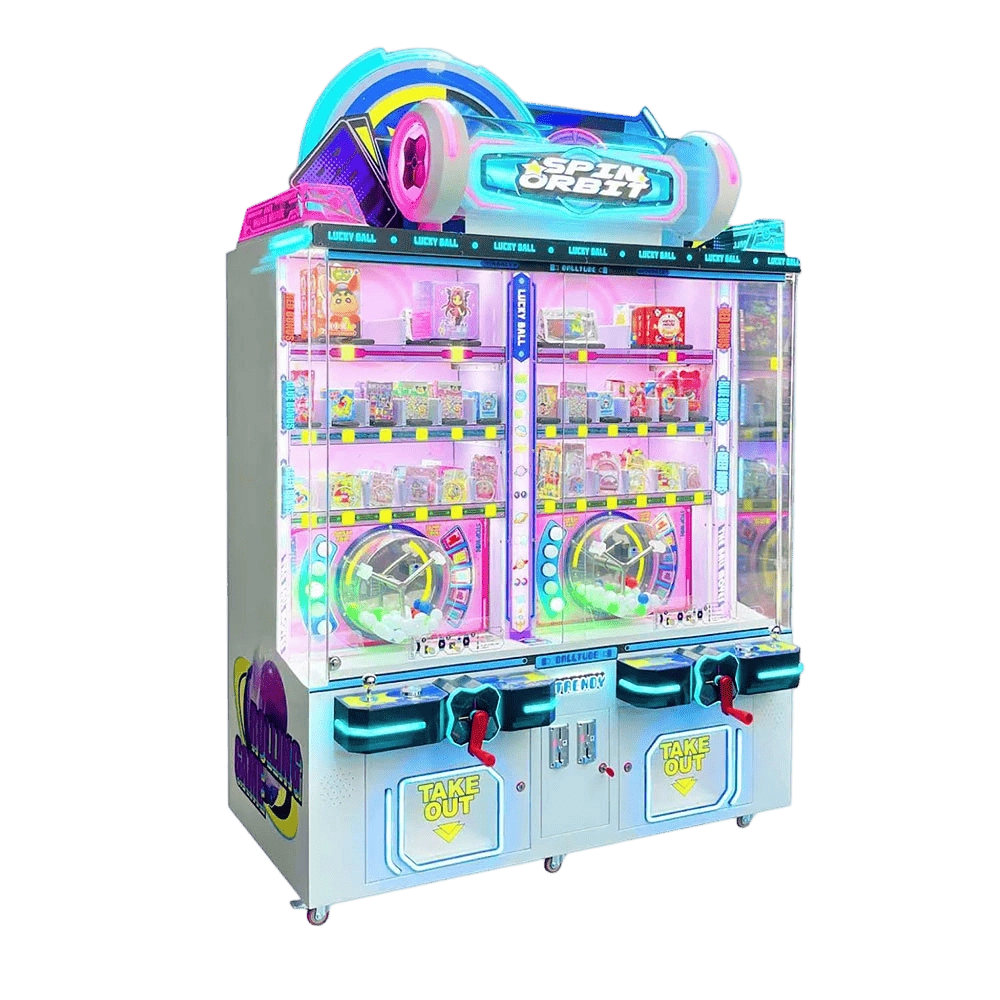
The SPIN ORBIT Lucky Prize Arcade Game is designed for 2 players, allowing simultaneous gameplay for added fun.
What is the minimum order quantity (MOQ)?
The minimum order quantity for our arcade machines is 1 piece. Larger orders qualify for additional customization options.
Can I customize the arcade machines to fit my brand?
Yes, we offer full customization, including logo placement, machine color, game software, and even the language on the machine, based on the order quantity.
You May Also Like
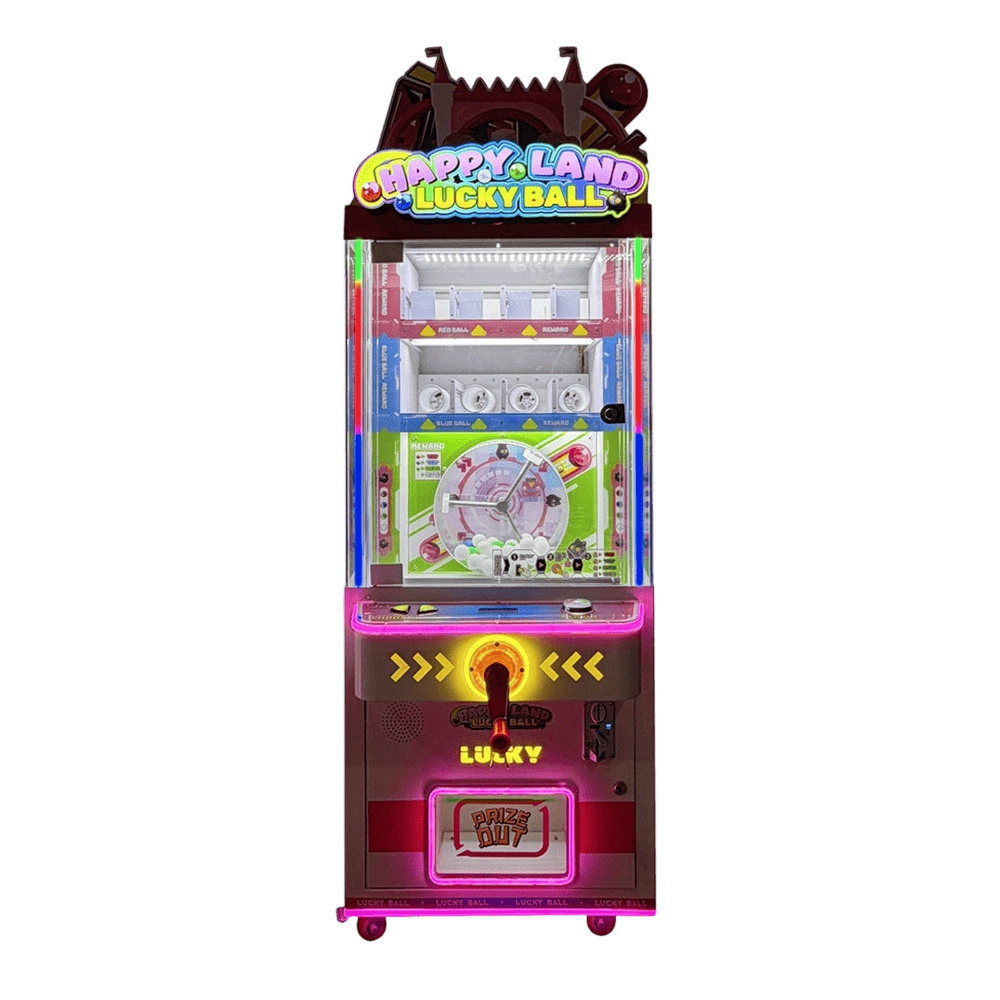
Coin Operated/Card Payment Lucky Ball Vending Toy Gift Arcade Game Machine
Coin Operated/Card Payment 2 Players SPIN ORBIT Lucky Prize Arcade Game
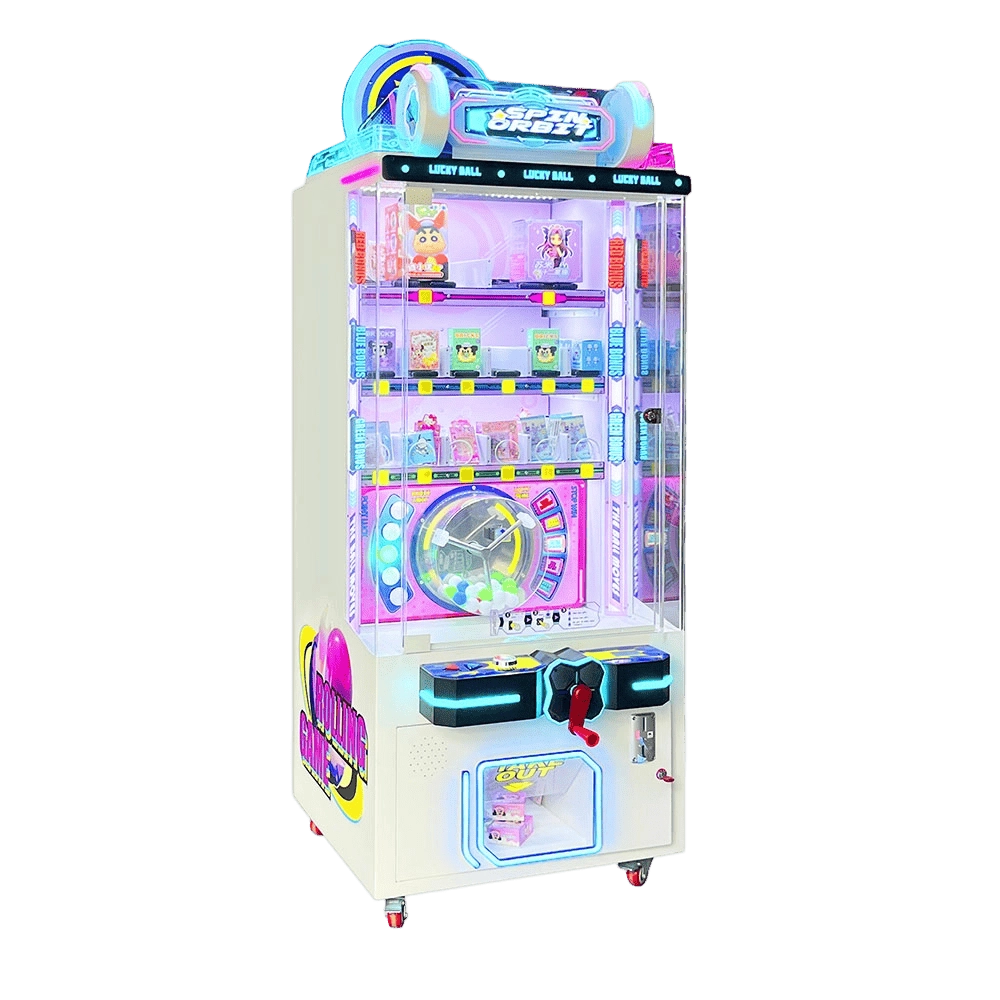
Coin Operated/Card Payment SPIN ORBIT Lucky Prize Arcade Game
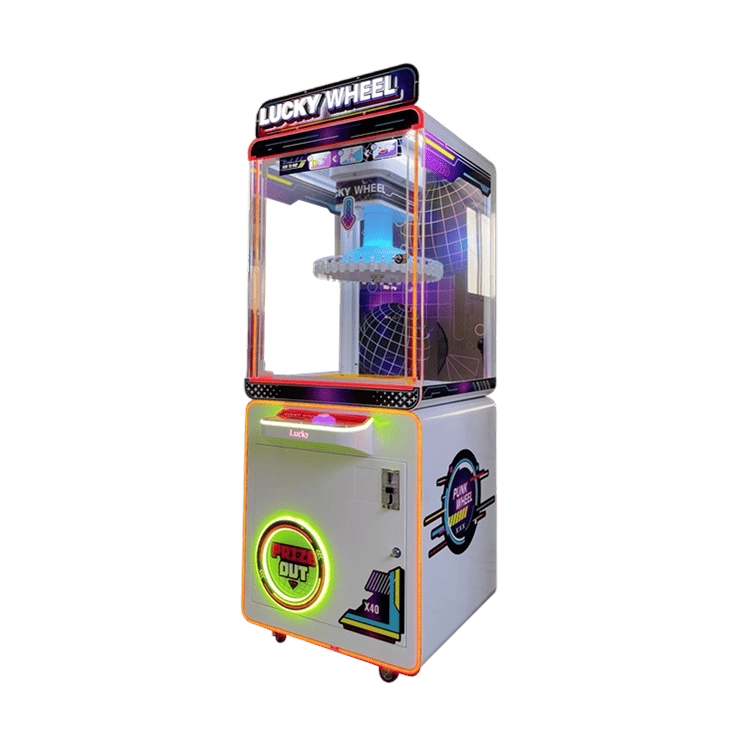
Arcade Prize Lucky Wheel Gift Machine For Amusement Areas
Get in Touch with Jiami Games
If you have any comments or good suggestions, please leave us a message; later our professional staff will contact you as soon as possible.

Innovative Entertainment, at Your Fingertips
Learn about Jiami Games and explore our expertise in console development, innovative design, and global markets.
Quick Links:
© 2026 Jiami Games.
Whatsapp: +8618520390438