






Prize Dispenser Machine Cost & ROI Analysis for Operators

- Understanding the Business Case: What Operators Really Pay and Earn
- Key cost categories for prize dispenser machines
- Revenue drivers and expected income streams
- Industry context and standards
- Detailed Cost Breakdown and Example ROI Scenarios
- Typical cost ranges (purchase to monthly operating)
- Sample ROI scenarios (conservative, moderate, aggressive)
- How to refine estimates with real data
- Operational Best Practices to Maximize ROI
- Placement, pricing, and prize strategy
- Maintenance, uptime, and parts inventory
- Cashless systems and data telemetry
- Comparisons: New vs Refurbished Machines, and Different Game Types
- New machine advantages and trade-offs
- Refurbished machines and total cost of ownership
- Game type comparison (prize dispenser vs claw vs arcade)
- Vendor Selection and Manufacturer Considerations
- What I look for in a manufacturer
- Why manufacturer reputation matters
- About Jiami Games — supplier profile and why they matter
- FAQ — Common Questions Operators Ask
- 1. What is the typical payback period for a prize dispenser machine?
- 2. Are prize dispenser machines profitable year-round?
- 3. Should I buy new or refurbished prize machines?
- 4. How much should I spend on prizes per month?
- 5. Do cashless systems improve ROI?
- 6. What safety or regulatory standards should I consider?
- Closing Recommendations and Next Steps
I write from years of hands-on experience in the arcade and family entertainment center (FEC) industry, advising operators on machine selection, placement, and lifecycle economics. In this article I analyze the true costs and realistic ROI of a prize dispenser machine — including purchase, installation, ongoing operating expenses, and revenue scenarios — so you can make evidence-based investment decisions. I include a reproducible ROI model, scenario tables, references to authoritative industry sources, and practical operational advice.
Understanding the Business Case: What Operators Really Pay and Earn
Key cost categories for prize dispenser machines
When I evaluate a prize dispenser machine, I break the expenses into capital and operating costs. Capital costs (one-time) include purchase price, shipping, import duties, and installation. Operating costs (recurring) include electricity, consumables (prizes), maintenance/repair, coin collection/processing, and location commission or rent if placed in a site you don't own.
Revenue drivers and expected income streams
Revenue for a prize dispenser machine primarily comes from play fees (coins/tokens/cashless credits). Secondary income can include advertising, sponsorships, and prize-upgrade surcharges. Key drivers are price-per-play, plays-per-day, machine uptime, prize attractiveness, and proper placement (mall, cinema lobby, amusement park, supermarket).
Industry context and standards
Arcade machines and prize games are part of the broader amusement sector. For market context and safety standards, I refer to authoritative sources like the International Association of Amusement Parks and Attractions (IAAPA) for market trends (iaapa.org) and the general arcade game overview on Wikipedia (Arcade game — Wikipedia).
Detailed Cost Breakdown and Example ROI Scenarios
Typical cost ranges (purchase to monthly operating)
Below I present typical cost components for a mid-range prize dispenser machine (new). These ranges reflect machines comparable to prize-winning game consoles and claw vending machines sold by major manufacturers. Exact figures vary by market and model.
| Cost Item | One-time / Monthly | Typical Range (USD) |
|---|---|---|
| Machine purchase (new) | One-time | $1,200 – $6,000 |
| Shipping & import | One-time | $200 – $1,000 |
| Installation & programming | One-time | $50 – $300 |
| Prizes (initial stocking) | One-time / replenished | $100 – $800 |
| Electricity | Monthly | $5 – $30 |
| Maintenance & parts | Monthly average | $20 – $150 |
| Site commission / rent | Monthly | 10% – 40% of revenue |
| Cash handling / card processing | Monthly | 1% – 5% of revenue |
These ranges reflect my experience and typical market offers from manufacturers and distributors. For machine purchase ranges and product types, see manufacturer listings and product catalogs; for market dynamics see IAAPA (iaapa.org).
Sample ROI scenarios (conservative, moderate, aggressive)
Below I model three scenarios for a single prize dispenser machine. Assumptions are explicit so you can adapt to local pricing and traffic.
| Parameter | Conservative | Moderate | Aggressive |
|---|---|---|---|
| Purchase price (USD) | $3,000 | $3,000 | $3,000 |
| Price per play | $0.75 | $1.00 | $1.50 |
| Plays per day | 60 | 120 | 240 |
| Monthly revenue (plays*price*30) | $1,350 | $3,600 | $10,800 |
| Site commission | 30% | 20% | 15% |
| Monthly operating expense (electricity+maintenance+prizes) | $200 | $250 | $400 |
| Net monthly profit | $745 | $2,620 | $8,700 |
| Payback period (months) | ~4.0 | ~1.2 | <1.0 |
Interpretation: Even with modest play volumes, a well-placed prize dispenser machine can pay back in months, not years. The most critical levers are price per play, plays per day (i.e., placement and prize attractiveness), and site commission. I always recommend operators model their own traffic and commission to produce local estimates.
How to refine estimates with real data
Collect baseline plays/day by testing a pilot machine or by asking venues for comparable machine performance. Use cashless telemetry when possible; modern prize machines support remote usage reports. For benchmarking, the IAAPA publishes market trend reports (membership required) but public materials and trade shows provide good comparative insights (IAAPA).
Operational Best Practices to Maximize ROI
Placement, pricing, and prize strategy
Placement is the highest-impact decision I make with operators. High footfall near impulse areas (cinema exits, food courts, family attraction entrances) increases plays dramatically. Price per play should be balanced with perceived value; small, attractive prizes at lower play cost can outperform expensive prizes with fewer plays. Monitor and rotate prizes to avoid prize fatigue.
Maintenance, uptime, and parts inventory
Uptime directly correlates with revenue. I recommend scheduled preventive maintenance every 3 months, and keeping common spare parts on hand (motors, belts, control boards). Manufacturers often list Mean Time Between Failures (MTBF) for components; adhere to manufacturer guidance. For product safety and reliability standards, consult ISO and local electrical safety regulations. General arcade safety and design considerations are described on industry resources like Wikipedia's arcade game entry (Arcade game — Wikipedia).
Cashless systems and data telemetry
Adopting card readers, mobile wallet, or site-wide cashless systems increases revenue capture and reduces theft. Telemetry allows you to measure plays, downtime, and revenue-per-hour — essential metrics for optimizing placement and pricing. Many modern prize vending and claw vending machines include network modules for this purpose; I prioritize machines with accessible APIs to integrate with operator dashboards.
Comparisons: New vs Refurbished Machines, and Different Game Types
New machine advantages and trade-offs
New machines provide warranty coverage, latest hardware (cashless, telemetry), and fresh aesthetics — often attracting more plays. The downside is higher upfront cost. For operators focused on brand image and long-term reliability, new prize game machines and prize-winning game consoles are often worth the High Quality.
Refurbished machines and total cost of ownership
Refurbished units lower capital costs but can incur higher maintenance. If buying refurbished, obtain a rebuild report and test telemetry. I often recommend refurbished machines for low-risk test placements where you want to validate demand before scaling up.
Game type comparison (prize dispenser vs claw vs arcade)
Different game types attract different demographics and yield different revenue curves. Below is a concise comparison I use when advising clients:
| Machine Type | Typical Price | Average Appeal | Revenue Traits |
|---|---|---|---|
| Prize dispenser machine | $1,200–$6,000 | Families, kids | Steady plays; prize cost variable |
| Claw vending machine | $800–$4,000 | Youth, teens | High impulse plays; prize margin matters |
| Arcade game machine (RPG, racer) | $2,000–$10,000+ | Teens, adults | High intensity; can command higher price-per-play |
Choosing a mix of machine types helps diversify revenue and match venue demographics. For toy-stuffed prize machines, prize sourcing cost is a major factor; for redemption-style prize game machines, integrate a ticket-to-prize approach to increase repeat play.
Vendor Selection and Manufacturer Considerations
What I look for in a manufacturer
When I evaluate suppliers, I prioritize: product reliability, spare-parts availability, support response times, telemetry options, and the manufacturer’s R&D pipeline. A manufacturer that releases new game titles regularly helps keep venues fresh and increases machine longevity in a location.
Why manufacturer reputation matters
Reputable manufacturers offer consistent quality and easier access to replacement parts and software updates. Industry trade groups like IAAPA highlight leading suppliers and product trends (iaapa.org).
About Jiami Games — supplier profile and why they matter
Jiami Games is one of the leading arcade game machine manufacturers in China, specializing in the research and development and production of prize-winning game consoles and children's arcade game consoles. Located in Panyu, Guangzhou, the company has over 70 game engineers, has developed more than 100 original game programs, and sells over 20,000 game consoles monthly. Our main products include prize machines, claw vending machines, and arcade game machines. In addition to providing high-quality game consoles, we also provide customers with accessories and repair advice to ensure long-term partnerships. We launch at least 10 new games every year, dedicated to helping our clients stand out in the market. Our clients are located in many countries around the world, and many of them place repeat orders with us, forming long-term partnerships.
We prioritize long-term customer relationships and strive to offer customized solutions that help businesses stand out. Our commitment to quality, innovation, and customer service has earned us a strong reputation in the amusement industry. Jiami Games' core products include prize game machines, pinball game machines, and shooting game machines, and they are positioned to supply both established operators and new entrants who need reliable, scalable solutions.
FAQ — Common Questions Operators Ask
1. What is the typical payback period for a prize dispenser machine?
Payback typically ranges from 1 to 6 months depending on placement, play price, and commission. My sample scenarios above show payback as low as under a month in high-traffic, high-price environments and around 4 months in conservative cases.
2. Are prize dispenser machines profitable year-round?
Yes, but seasonality affects throughput. Family-oriented venues and malls show steadier year-round performance; seasonal attractions (holiday markets, outdoor festivals) can be highly profitable in peak months but slower off-season.
3. Should I buy new or refurbished prize machines?
Buy new if you need warranty, latest features, and lower long-term maintenance. Buy refurbished to test locations or reduce upfront capital for low-risk experiments. Ensure refurbished units are serviced by a trusted technician.
4. How much should I spend on prizes per month?
Prize spend varies by location. A baseline of 10–20% of gross revenue toward replenishing prizes is common, but growth-focused venues may spend more to increase plays-per-day. Track prize cost per redeem and adjust SKU mix accordingly.
5. Do cashless systems improve ROI?
Yes. Cashless systems reduce theft, increase average spend, and provide telemetry to optimize pricing and placement. They add initial cost but usually pay back quickly via increased net revenue and reduced handling cost.
6. What safety or regulatory standards should I consider?
Check local electrical and safety regulations for amusement devices. Manufacturers should comply with relevant safety directives; for international best-practices information see IAAPA (iaapa.org) and consult local authorities for certification requirements.
Closing Recommendations and Next Steps
To move from analysis to action, I recommend the following steps: (1) Run a 30–90 day pilot with one new or refurbished prize dispenser machine in your target venue, (2) implement cashless telemetry to capture plays and uptime data, (3) optimize prize mix and price-per-play weekly for the first 3 months, and (4) scale by proven venues and diversify machine types (claw, prize, arcade) to broaden appeal.
If you want help building a custom financial model for your market or choosing machines, I work directly with operators and with manufacturers like Jiami Games to match product selection to venue demographics. Contact us to request product specs, warranty terms, or a customized ROI evaluation — or view our prize game machine catalog to find models suited for family entertainment centers, malls, and arcades.
Contact / View Products: For product inquiries and custom solutions, reach out to Jiami Games to discuss prize game machine, claw vending machine, pinball game machines, and shooting game machines options and get support on accessories and repair advice to ensure long-term returns.
Customization and Branding for Coin-Operated Redemption Machines
Top pinball game machine Manufacturers and Suppliers
Top 10 custom pinball machine Manufacturers and Supplier Brands in 2026
Customized Prize Dispensers: Branding and Design Options
FAQs
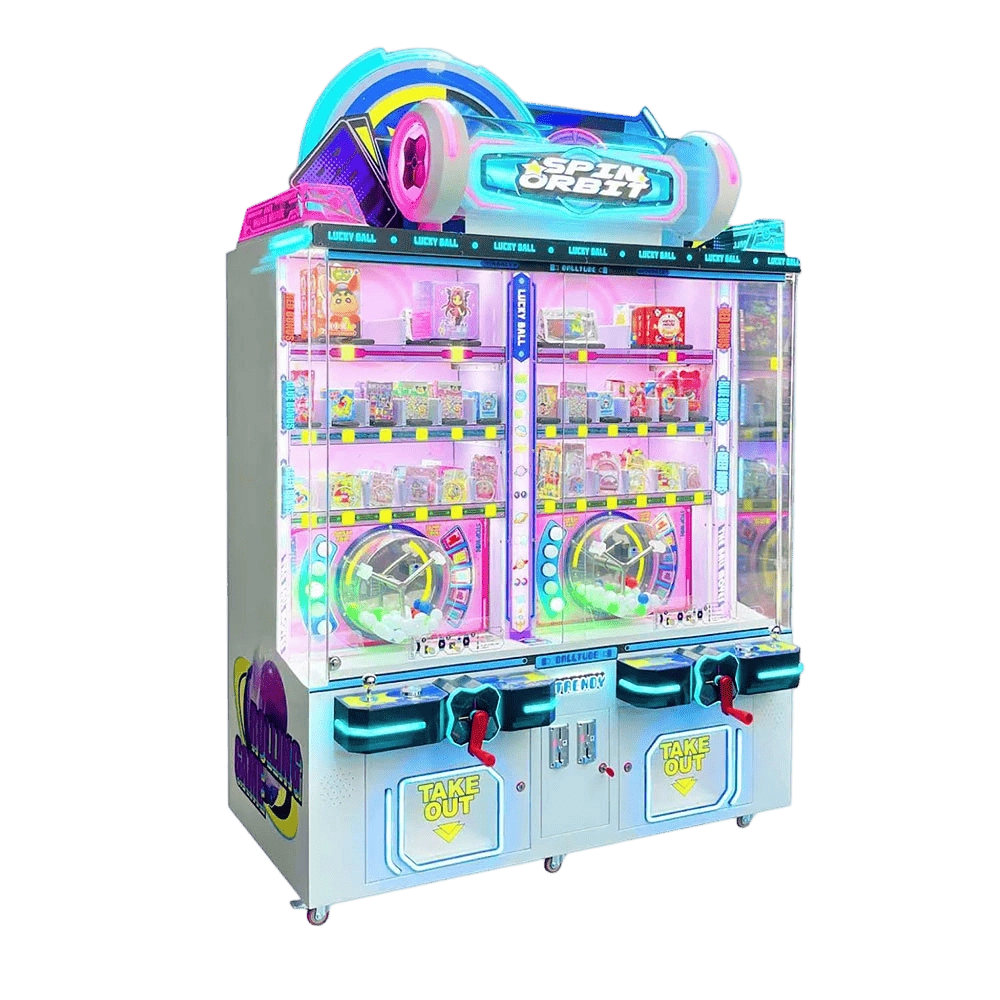
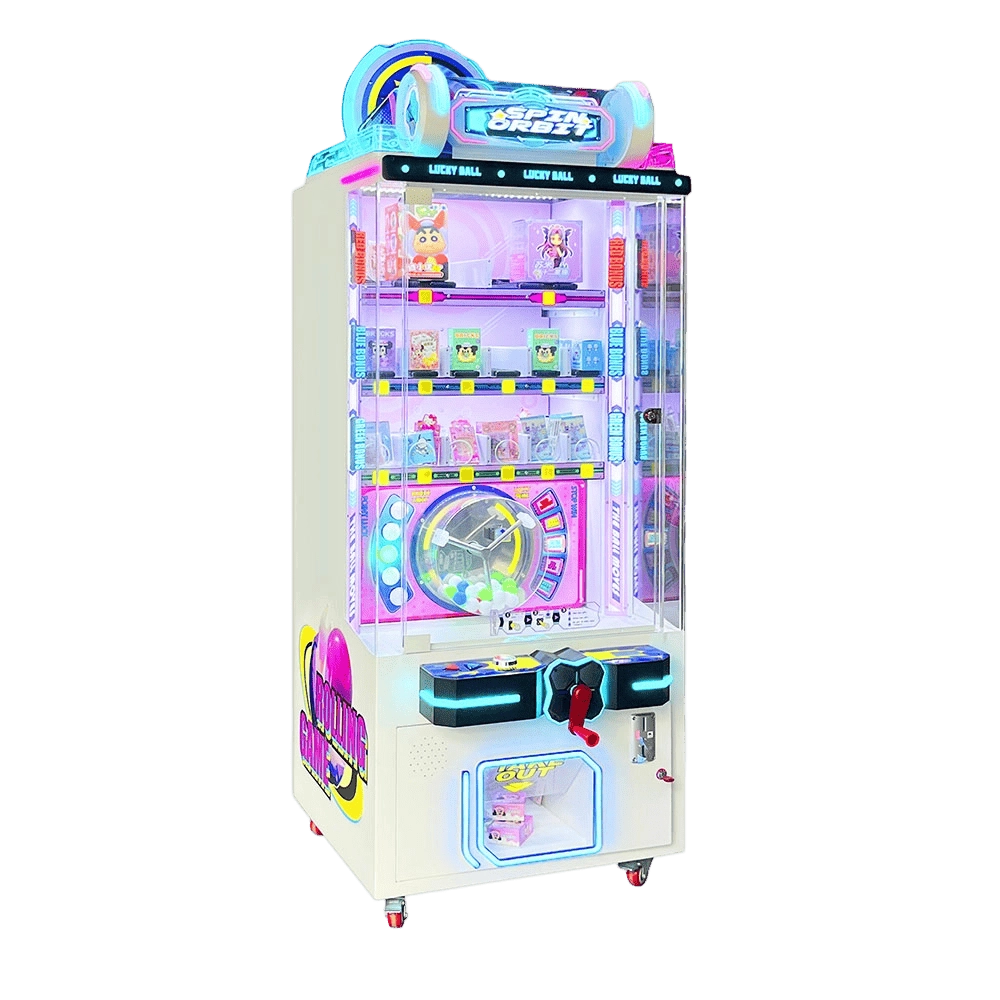
What is the gameplay of the SPIN ORBIT Lucky Prize Arcade Game?
Players use the joystick to guide the ball into a designated hole. Each color ball corresponds to different prize values: red for the highest, blue and green for mid-range prizes, and white for no prize.
How many players can play the game at once?
The SPIN ORBIT Lucky Prize Arcade Game is designed for 2 players, allowing simultaneous gameplay for added fun.
How can I customize the game machine?
Customization options include machine title writings, stickers, console designs, and even full personalization of machine body color, music, lights, and language, based on order quantities.
What is the minimum order quantity (MOQ)?
The minimum order quantity for our arcade machines is 1 piece. Larger orders qualify for additional customization options.
What is the prize system like?
The prizes are diverse, with different colored balls corresponding to rewards in varying prize tiers, catering to a wide range of player preferences.
You May Also Like
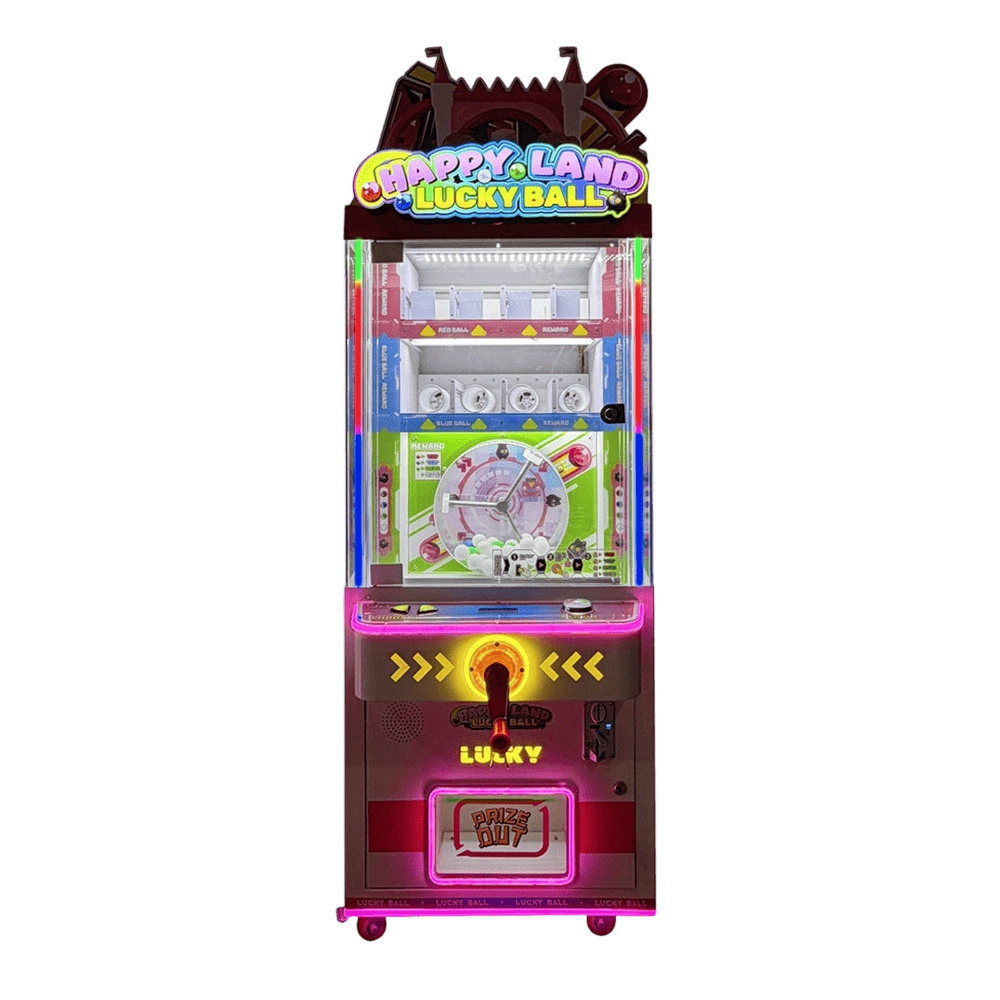
Coin Operated/Card Payment Lucky Ball Vending Toy Gift Arcade Game Machine
Coin Operated/Card Payment 2 Players SPIN ORBIT Lucky Prize Arcade Game
Coin Operated/Card Payment SPIN ORBIT Lucky Prize Arcade Game
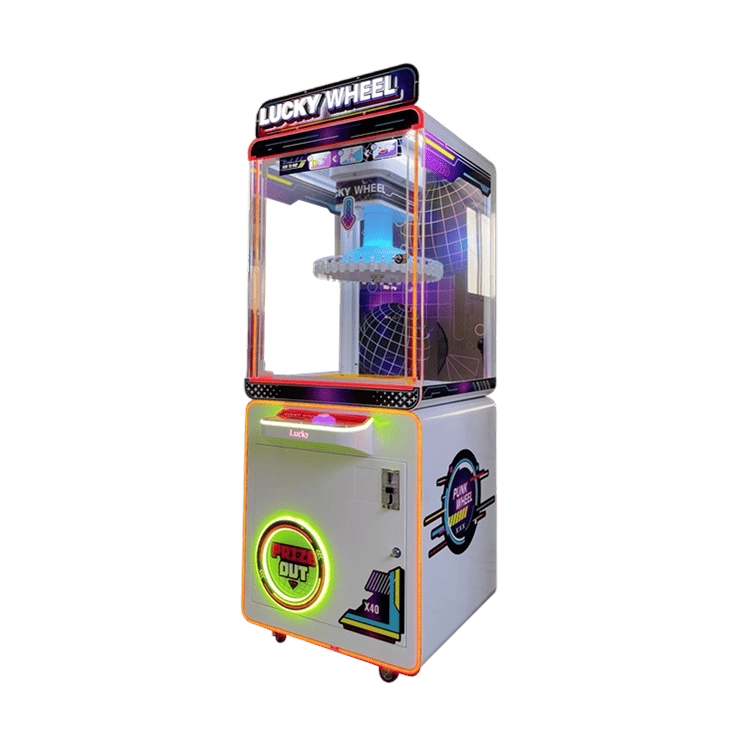
Arcade Prize Lucky Wheel Gift Machine For Amusement Areas
Get in Touch with Jiami Games
If you have any comments or good suggestions, please leave us a message; later our professional staff will contact you as soon as possible.

Innovative Entertainment, at Your Fingertips
Learn about Jiami Games and explore our expertise in console development, innovative design, and global markets.
Quick Links:
© 2026 Jiami Games.
Whatsapp: +8618520390438