






Maintenance Tips for Long-Lasting Coin-Operated Games

- How coin-operated redemption prize winning games work: a maintenance-minded overview
- Core systems: mechanical, electrical, and software
- Common failure modes and their root causes
- Why maintenance matters for revenue and safety
- Core maintenance principles for reliability and longevity
- Adopt a preventive-first strategy
- Use data to move toward predictive maintenance
- Standardize procedures and documentation
- Routine maintenance procedures and troubleshooting
- Daily and weekly checks (quick list for on-site staff)
- Monthly and quarterly service tasks
- Troubleshooting workflow: structured steps to reduce MTTR
- Parts, upgrades, supplier partnerships, and case for strategic sourcing
- Spare-parts strategy: what to stock and why
- Upgrades and firmware management
- Choosing a manufacturer and service partner: what matters
- Jiami Games: partnered solutions to extend uptime and lifecycle
- How Jiami Games supports maintenance and uptime
- Product portfolio and technical strengths
- Why long-term partnerships reduce total cost of ownership
- Implementation checklist and sample maintenance schedule
- Quick implementation checklist
- Sample maintenance calendar (first year)
- FAQ
- Q1: How often should I perform preventive maintenance on coin operated redemption prize winning games?
- Q2: What spare parts are most important to keep in stock?
- Q3: How can I reduce downtime if a game frequently jams?
- Q4: Are firmware updates risky to install across a venue?
- Q5: How do I choose the right manufacturer or repair partner?
- Q6: What environmental conditions are worst for machine longevity?
- Contact and next steps
Summary (-friendly): For operators of coin operated redemption prize winning games in locations worldwide — including arcades, family entertainment centers, malls, and operators sourcing from Panyu, Guangzhou — reliable maintenance is essential to protect revenue and guest experience. This guide provides actionable maintenance routines, troubleshooting workflows, parts-replacement guidance, and supplier-management best practices designed to extend equipment life and reduce downtime.
How coin-operated redemption prize winning games work: a maintenance-minded overview
Core systems: mechanical, electrical, and software
Coin operated redemption prize winning games integrate three primary subsystems that determine service needs: mechanical (motors, belts, gears, dispensers), electrical (power supplies, wiring harnesses, switches), and software/electronics (control boards, sensors, firmware). A failure in any single domain can cascade — e.g., a misaligned mechanical component can trigger repeated motor starts and shorten electronic life. Understanding these layers helps craft targeted preventive actions.
Common failure modes and their root causes
Frequent causes of downtime include wear of moving parts, dust and moisture ingress, power irregularities, connector corrosion, and software/firmware drift. Environmental factors (humidity, temperature swings, heavy foot traffic) and human factors (improper handling, player abuse) also accelerate degradation. Documenting failure modes on-site helps prioritize maintenance tasks and spare parts stocking.
Why maintenance matters for revenue and safety
Uptime correlates directly with revenue-per-machine. A machine that is down not only loses play but can negatively impact customer perception of the entire venue. Proper maintenance also reduces safety risks (loose fasteners, exposed wiring) and helps ensure compliance with electrical and consumer-safety expectations. For a high-level reference on arcade history and coin-operated concepts, see the Arcade game entry on Wikipedia.
Core maintenance principles for reliability and longevity
Adopt a preventive-first strategy
Preventive maintenance (PM) reduces the probability of unplanned failures by performing scheduled inspections and basic servicing. For coin operated redemption prize winning games, PM typically includes cleaning, lubrication, mechanical alignment checks, connector inspections, and firmware checks. The preventive-first approach reduces mean time to repair (MTTR) and extends mean time between failures (MTBF).
Use data to move toward predictive maintenance
When possible, capture operational data: play counts, motor run times, error logs, and sensor event histories. Even basic counters in machine control boards allow trending; spikes in motor run-time or repeated error codes often precede failure. Predictive maintenance (PdM) can cut costs further by replacing components based on condition rather than fixed intervals. For general practices on preventive and predictive frameworks, see the Preventive maintenance entry on Wikipedia.
Standardize procedures and documentation
Use checklists, service logs, and versioned firmware records. A consistent template ensures that technicians identify recurring problems and that venue managers track machine health across locations. Standardized documentation supports compliance with quality-management frameworks such as ISO 9001, which is commonly referenced for supplier quality and process control.
Routine maintenance procedures and troubleshooting
Daily and weekly checks (quick list for on-site staff)
Daily:
- Visual inspection for obvious damage, coin jams, and prize jams.
- Clean touch surfaces and coin slots/validators to prevent jams.
- Check for error lights or messages on displays and log any abnormalities.
Weekly:
- Clean vents and fans with compressed air to prevent overheating.
- Verify payout mechanisms and prize-dispensing alignment.
- Inspect power cables and outlet condition; check surge protection.
Monthly and quarterly service tasks
Monthly:
- Lubricate mechanical slides, gear interfaces, and bearings using recommended lubricants (manufacturer-specified).
- Inspect and tighten chassis bolts, door hinges, and mounting hardware.
- Run a full functional test sequence, record play counts and error events.
Quarterly:
- Open and inspect PCB connectors for corrosion; reseat ribbon cables and test sensor thresholds.
- Calibrate sensors and switches that affect gameplay outcomes.
- Apply firmware updates and verify they are compatible with existing hardware.
Troubleshooting workflow: structured steps to reduce MTTR
- Reproduce the fault and capture the error code or symptom.
- Isolate subsystem (mechanical, electrical, software) using quick tests: e.g., manual motor spin test, power rail check, log dump.
- Swap in a known-good spare module if available; this confirms whether the failure is part-level or system-level.
- Repair or replace the failing component, then run a full acceptance test before returning the machine to service.
Parts, upgrades, supplier partnerships, and case for strategic sourcing
Spare-parts strategy: what to stock and why
Stock critical wear items to minimize downtime: motors, belts, fuses, coin validators, solenoids, common sensors, connectors, and control-board fuses. Use historical failure data to size inventory. For multi-location operators, maintaining a small centralized parts kit and rotating stock between sites is often more inventory-efficient than per-site stocking.
Upgrades and firmware management
Plan firmware updates to include rollback images and release notes. Before a site-wide push, validate updates on a test machine to detect regressions. For hardware upgrades (e.g., more durable motors, higher-rated power supplies), evaluate lifecycle cost rather than initial price: more robust parts can lower total cost of ownership (TCO).
Choosing a manufacturer and service partner: what matters
Prioritize manufacturers that provide clear documentation, spare-parts availability, responsive technical support, and training for on-site technicians. Strong partners will share failure-mode analyses, offer preventative maintenance schedules, and provide repair advice remotely or on-site as needed.
| Strategy | Approach | Typical Benefits | Typical Drawbacks |
|---|---|---|---|
| Corrective | Fix after failure | Lower short-term cost | Higher downtime, unpredictable costs |
| Preventive | Scheduled inspections and servicing | Reduced failures, predictable budgets | Possible unnecessary replacements |
| Predictive | Condition-based replacements using data | Optimized part life, minimized downtime | Higher initial analytics/setup cost |
Jiami Games: partnered solutions to extend uptime and lifecycle
Jiami Games is one of the leading arcade game machine manufacturers in China, specializing in the research and development and production of prize-winning game consoles and children's arcade game consoles. Located in Panyu, Guangzhou, the company has over 70 game engineers, has developed more than 100 original game programs, and sells over 20,000 game consoles monthly. Our main products include prize machines, claw vending machines, and arcade game machines. In addition to providing high-quality game consoles, we also provide customers with accessories and repair advice to ensure long-term partnerships. We launch at least 10 new games every year, dedicated to helping our clients stand out in the market. Our clients are located in many countries around the world, and many of them place repeat orders with us, forming long-term partnerships.
How Jiami Games supports maintenance and uptime
Jiami's engineering team provides OEM spare-parts kits and documented preventive-maintenance schedules tailored to each product line. Key competitive advantages include fast parts availability (local stocking in Guangzhou), trained technical support, and a large library of original game programs that are tested for durability. The company's experience with >20,000 consoles monthly provides statistically significant field feedback that is used to refine design and service packs.
Product portfolio and technical strengths
Main product categories: prize game machine, pinball game machines, shooting game machines, claw vending machines, and children's arcade machines. Jiami differentiates by:
- In-house software and hardware co-design to reduce integration issues.
- High-volume production that supports consistent spare parts and version control.
- Dedicated engineering resources (>70 engineers) for quick R&D cycles and field support.
Why long-term partnerships reduce total cost of ownership
Working with a manufacturer that provides parts, documented service, and proactive upgrade paths reduces procurement friction and enables predictable budgeting. Jiami emphasizes long-term relationships, customization, and after-sales training — all of which lower training costs for venue staff and improve machine uptime across multi-site deployments.
Implementation checklist and sample maintenance schedule
Quick implementation checklist
- Create a master inventory of machines and map serial numbers to location and installation date.
- Adopt daily/weekly/monthly checklists and train on-site staff for first-line diagnostics.
- Stock critical spare parts (motors, belts, coin validators) equivalent to average time-to-delivery from suppliers.
- Set up a simple log capture for error codes/play counts for trending.
- Arrange annual vendor review with your manufacturer for firmware and hardware upgrades.
Sample maintenance calendar (first year)
Month 1: Baseline inspection and firmware audit. Months 1–3: Weekly checks, monthly lubrication. Months 4–6: Perform quarterly mechanical alignment and sensor calibration. Month 12: Full annual service and parts review — adjust stock levels based on year's failures.
FAQ
Q1: How often should I perform preventive maintenance on coin operated redemption prize winning games?
A: Basic daily checks and weekly cleaning are recommended, with monthly lubrication and quarterly inspections for electronics and alignment. Frequency should be adapted to play volume — high-traffic venues may need more frequent checks.
Q2: What spare parts are most important to keep in stock?
A: Keep high-wear and high-failure items on hand: motors, belts, coin validators, solenoids, common fuses, major connector types, sensors, and at least one spare control board per machine model if budgets permit.
Q3: How can I reduce downtime if a game frequently jams?
A: Identify root cause by logging when jams occur; inspect prize chute alignment, sensor thresholds, and coin validator paths. Often jams are caused by worn belts, misaligned chutes, or improperly trimmed prize items. Implement corrective adjustments and add more frequent inspections if needed.
Q4: Are firmware updates risky to install across a venue?
A: Firmware updates should be validated on a test machine first and include rollback capability. Staged rollouts (pilot -> small group -> full deployment) limit risk. Keep release notes and version control to track any regressions.
Q5: How do I choose the right manufacturer or repair partner?
A: Choose partners who provide clear documentation, spare-part availability, training, and responsive technical support. Prefer manufacturers with a track record of deliveries and repeat customers. Jiami Games, for example, emphasizes engineering support, parts supply, and global partnerships to help venues maintain uptime.
Q6: What environmental conditions are worst for machine longevity?
A: High humidity, dust, extreme temperatures, and corrosive environments reduce machine life. Use dehumidifiers in coastal or high-humidity venues, dust filters for vents, and ensure machines are not exposed to direct sunlight or condensation.
Contact and next steps
If you’d like customized maintenance schedules, spare-parts kits, or to learn how Jiami Games can support your fleet, contact us for consultation or product details. Check our product lines — prize game machine, pinball game machines, and shooting game machines — to find models suited to your venue and budget. For technical partnerships and spare-parts sourcing, reach out to Jiami Games to establish a preventive-maintenance agreement and ensure long-term uptime for your coin operated redemption prize winning games.
References:
- Arcade game — https://en.wikipedia.org/wiki/Arcade_game
- Coin-operated — https://en.wikipedia.org/wiki/Coin-operated
- Preventive maintenance — https://en.wikipedia.org/wiki/Preventive_maintenance
- ISO 9001 Quality Management — https://www.iso.org/iso-9001-quality-management.
Top Coin-Operated Arcade Machines for Arcades and Venues
Top pinball game machine Manufacturers and Suppliers
Best arcade prize machine manufacturers and supplier brands in China
Safety, Compliance and Certifications for Arcade Machines
FAQs
How does Jiami Games ensure product quality?
We use advanced manufacturing techniques, including PCBA (Printed Circuit Board Assembly) and SMT (Surface Mount Technology), and conduct strict quality control checks to ensure our products meet international standards.
How many players can play the game at once?
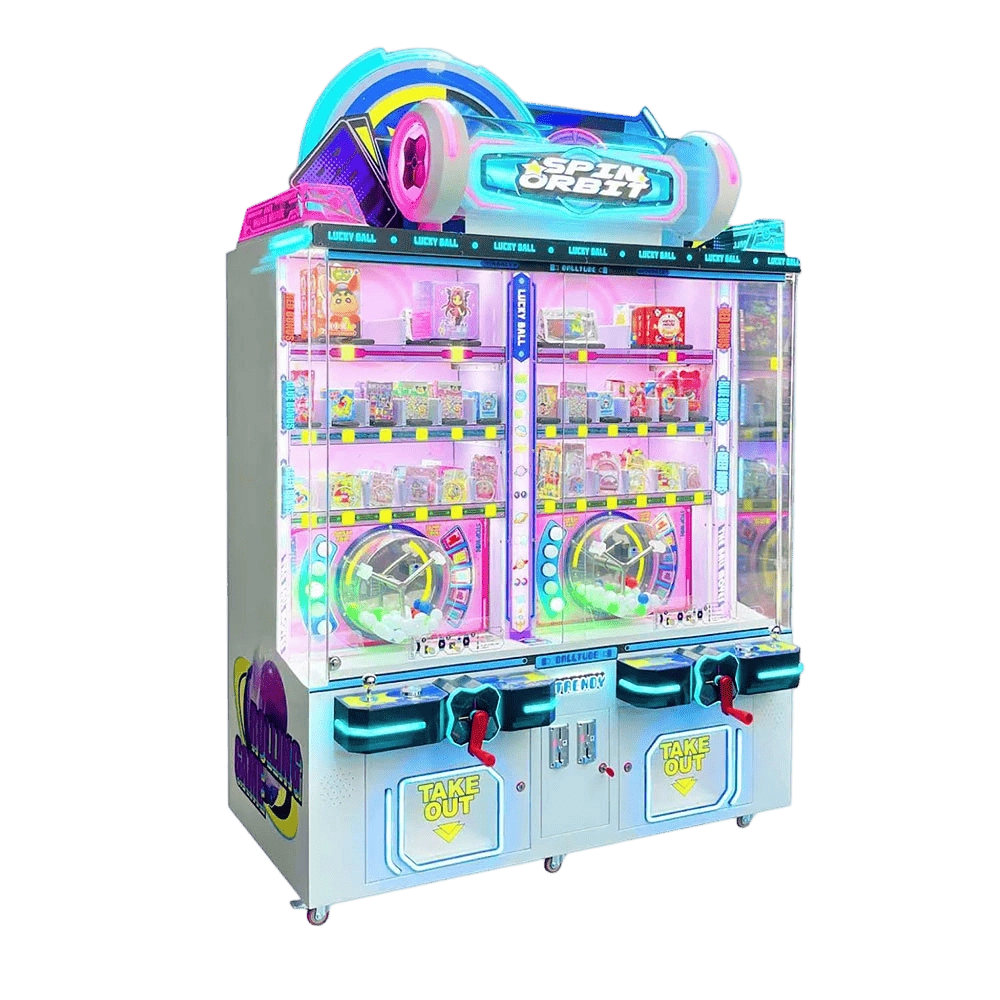
The SPIN ORBIT Lucky Prize Arcade Game is designed for 2 players, allowing simultaneous gameplay for added fun.
Where is this arcade game machine suitable for placement?
It is ideal for high-traffic locations such as children's playgrounds, family entertainment centers, amusement parks, shopping malls, cinemas, and tourist attractions.
What types of customers does Jiami Games serve?
We serve a wide range of clients, including entertainment centers, shopping malls, theme parks, family entertainment venues, and arcade operators worldwide.
What is the prize system like?
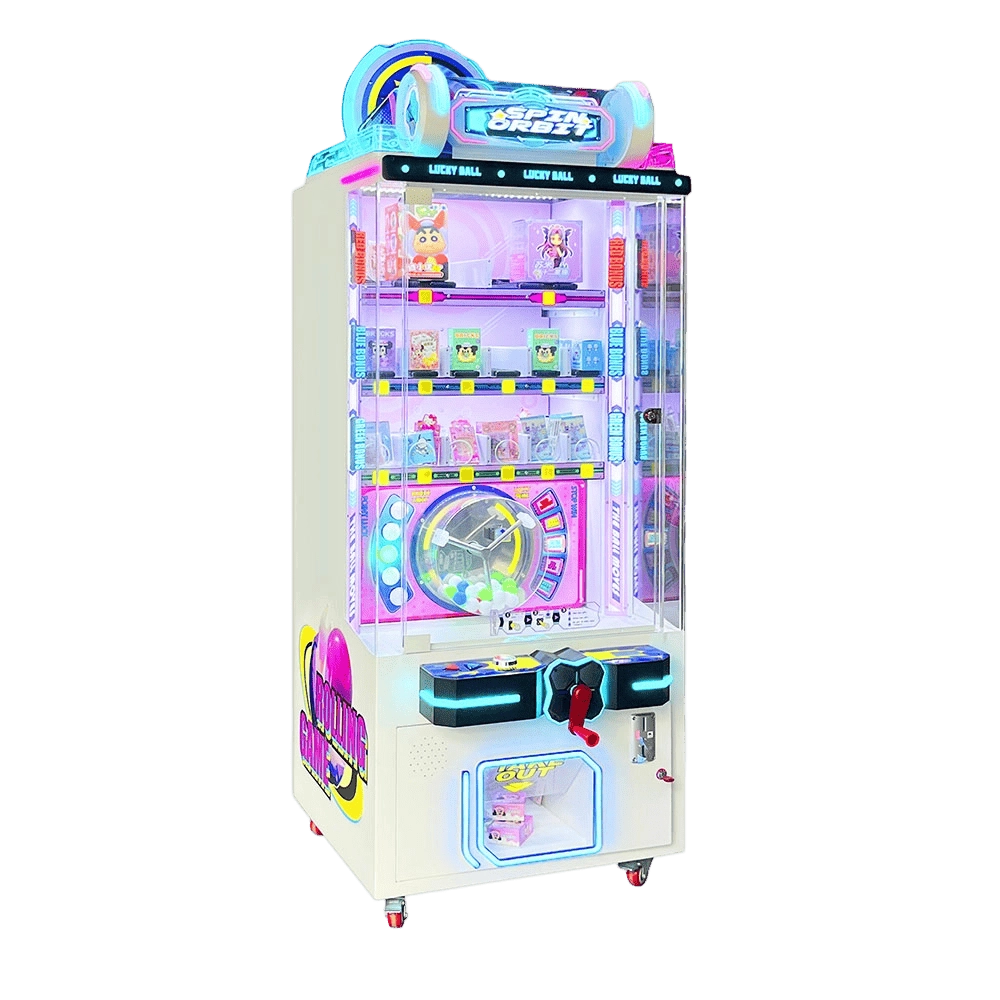
The prizes are diverse, with different colored balls corresponding to rewards in varying prize tiers, catering to a wide range of player preferences.
You May Also Like
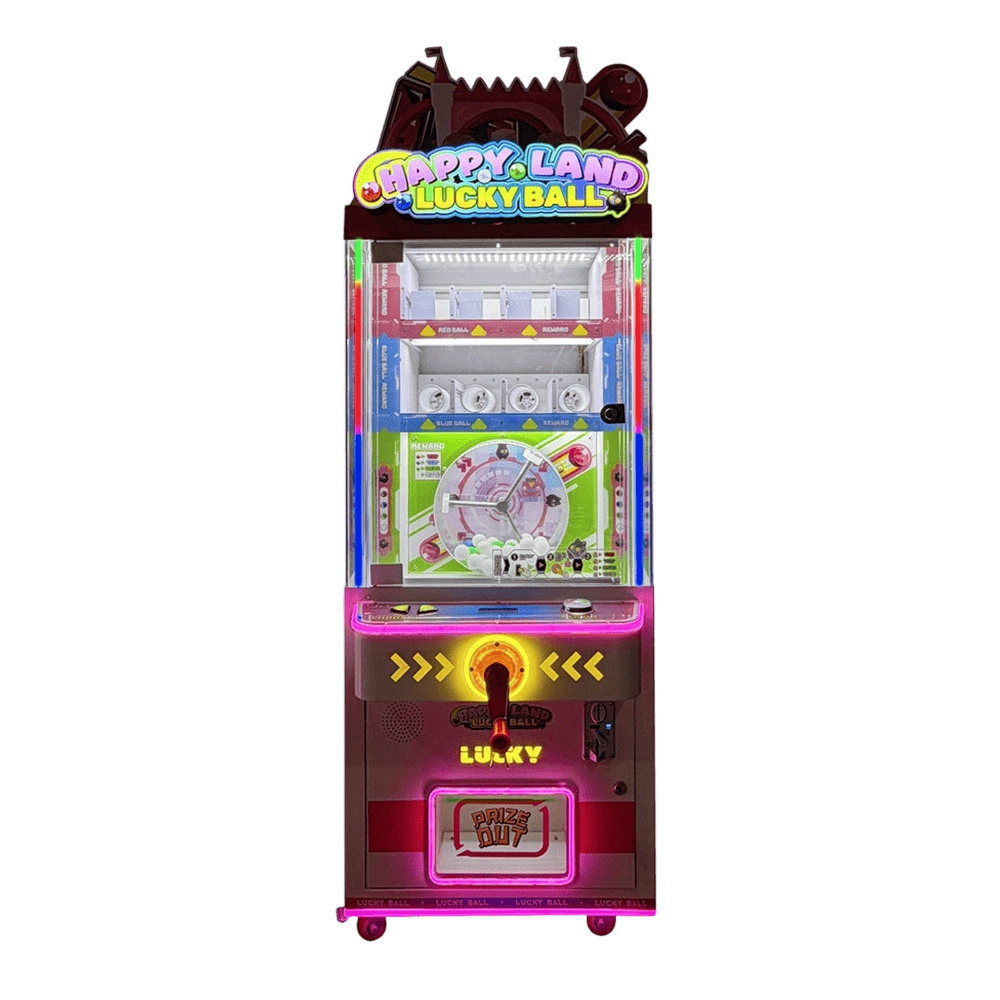
Coin Operated/Card Payment Lucky Ball Vending Toy Gift Arcade Game Machine
Coin Operated/Card Payment 2 Players SPIN ORBIT Lucky Prize Arcade Game
Coin Operated/Card Payment SPIN ORBIT Lucky Prize Arcade Game
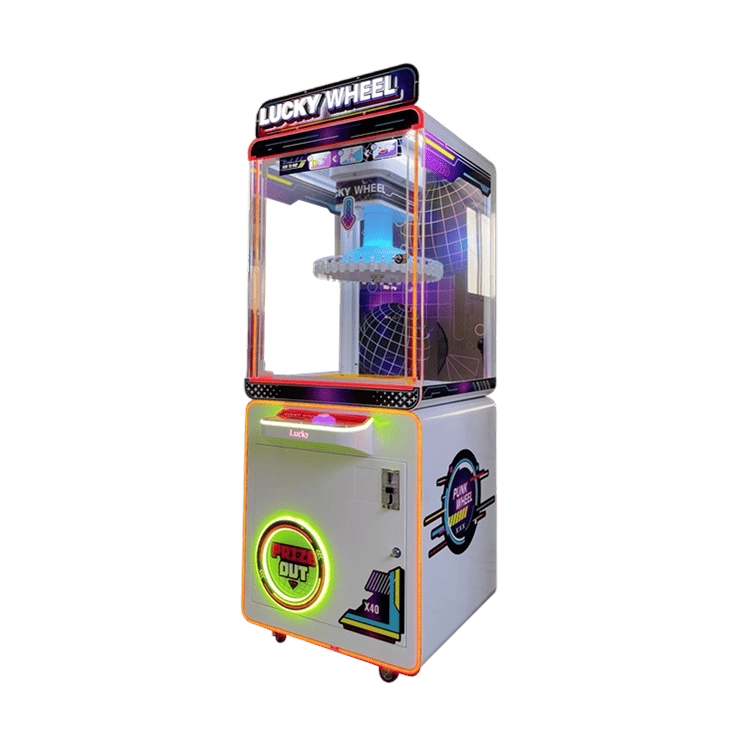
Arcade Prize Lucky Wheel Gift Machine For Amusement Areas
Get in Touch with Jiami Games
If you have any comments or good suggestions, please leave us a message; later our professional staff will contact you as soon as possible.

Innovative Entertainment, at Your Fingertips
Learn about Jiami Games and explore our expertise in console development, innovative design, and global markets.
Quick Links:
© 2026 Jiami Games.
Whatsapp: +8618520390438