






Installation and Space Planning for Coin-Operated Arcade Machines

- Site Assessment and Layout Considerations
- Measuring and mapping your floor plan
- Power, ventilation, and accessibility requirements
- Traffic flow and sightlines
- Installation and Technical Setup
- Electrical and grounding best practices
- Networking, payment systems, and coin mechanisms
- Assembly, anchoring, and ADA positioning
- Operations, Safety, and Maintenance
- Routine maintenance checklist
- Safety, ADA, and child protection
- Cash handling and anti-theft measures
- Optimizing Revenue through Placement and Experience
- Game mix and sightline optimization
- Height, lighting, and signage
- Seasonal and event-based layouts
- Comparative footprint and placement table
- Why vendor selection matters — supplier capabilities and long-term support
- What I look for in a manufacturer
- Jiami Games — capabilities and how they help operators
- Choosing the right partner for your project
- Practical checklists and final recommendations
- Pre-install checklist
- Installation day checklist
- Ongoing operations checklist
- FAQ
- 1. How much space does a coin operated arcade machine need?
- 2. Do I need a dedicated circuit for arcade machines?
- 3. How do I make machines ADA accessible?
- 4. Should I use cashless payment systems?
- 5. How often should I perform preventive maintenance?
- 6. What are common installation mistakes to avoid?
I often get asked by operators and venue owners how to best install and position a coin operated arcade machine to maximize uptime, player comfort, and revenue while meeting safety and accessibility standards. This guide condenses my on-the-ground experience with arcade deployments, engineering basics, and space-planning best practices into a practical roadmap you can apply whether you’re fitting a single machine into a bar or rolling out an entire game room.
Site Assessment and Layout Considerations
Measuring and mapping your floor plan
Before you order arcade machines, I always start with precise measurements. Sketch the room to scale (use grid paper or a simple CAD/floor-planning tool). Mark doors, windows, columns, HVAC vents, electrical panels, and emergency exits. Note clearances for service access — you should leave a minimum of 600–900 mm (24–36 in) behind upright cabinets for maintenance and cabling, and more for sit-down or ticket redemption machines.
Typical cabinet footprints vary by machine type; planning with ranges helps avoid surprises. The International Arcade Museum and cabinet manufacturers document common cabinet footprints and should be referenced when you order specific models (arcade-museum.com).
Power, ventilation, and accessibility requirements
Power is one of the most common limiting factors. Most modern upright arcade cabinets draw between 1–5 A at 120 V (US) or similar power at 230 V (EU), but some larger driving or prize machines need dedicated circuits. I recommend labeling branch circuits by zone and providing surge protection and proper grounding for each cluster of machines. For any commercial installation in the U.S., review the National Electrical Code (NEC) guidance (NFPA / NEC).
Ventilation is critical: heat buildup shortens component life. Allow unobstructed venting and avoid placing machines in enclosed cabinets or directly under HVAC return grilles. For public-access facilities, plan for ADA-compliant access routes and machine reach ranges—ADA Title III provides guidance for public accommodations (ada.gov).
Traffic flow and sightlines
Observe or simulate customer flow. Place high-attract machines (racing, shooting, ticket redemption) near entry points or sightlines to draw attention. Lower-attract or niche machines can be staged deeper in the room. Maintain clear walkways—minimum 36 in (915 mm) is common for aisles, with wider circulation (48–60 in) in high-traffic zones. This reduces congestion and improves accessibility.
Installation and Technical Setup
Electrical and grounding best practices
I always start installations with an electrical checklist: confirm circuit capacity, identify nearby outlets, and install surge protection and dedicated GFCI protection where water or damp cleaning is possible. For installations involving multiple machines, use distribution panels with labeled breakers and consider a UPS for critical ticket printers and network devices.
Follow local electrical codes (refer to the NEC in the U.S.: nfpa.org) and consult a licensed electrician if you need to add circuits or upgrade panels. Proper grounding and isolation reduces noise on audio/video systems and prevents damage to sensitive electronics.
Networking, payment systems, and coin mechanisms
Modern coin operated arcade machines frequently include networked leaderboards, cashless payment, and telemetry. Plan for wired Ethernet drops where possible (more reliable than Wi‑Fi in dense RF environments). If you use Wi‑Fi, provide separate SSIDs and VLANs for machines to protect guest networks and enable QoS for critical traffic.
For coin mechanisms and cashless systems, include secure cable runs and lockable enclosures. I recommend testing coin validators and bill acceptors thoroughly and provision for remote monitoring to spot jams or fraud quickly.
Assembly, anchoring, and ADA positioning
Follow manufacturer assembly instructions carefully. Anchor cabinets where tipping risks exist (e.g., ~4–6 ft tall upright machines) to the floor or wall per manufacturer guidance. For children’s machines, ensure anchoring meets local safety codes. Position at least some machines at accessible heights and with clear knee and toe space for wheelchair users, consistent with ADA technical requirements (ada.gov).
Operations, Safety, and Maintenance
Routine maintenance checklist
Preventive maintenance reduces downtime. My typical checklist for each coin operated arcade machine includes:
- Daily: check coin/bill acceptors, clear ticket hoppers, wipe player surfaces, and verify network connectivity.
- Weekly: vacuum vents, inspect power cords, check for loose fasteners, and test emergency stop or service switches.
- Monthly: inspect capacitors and fans, update firmware/software, and run a diagnostic on payment systems.
Keep a log for each machine to track service events and recurring faults. That history often reveals patterns that justify a parts upgrade or layout change.
Safety, ADA, and child protection
Safety covers electrical, trip hazards, and player ergonomics. Maintain clear egress paths; ensure cabling is routed away from walkways or encased in cable protectors. For venues serving children, make sure prize retrieval areas and coin boxes are positioned and locked to prevent accidental access. Refer to OSHA for workplace safety practices when staff perform repairs (osha.gov).
Cash handling and anti-theft measures
Design the cash flow: consolidate coin boxes in a secure back office, use drop safes, or employ cashless systems to minimize physical cash handling. Install cameras covering cash handling areas and use tamper-evident seals for coin boxes. Electronic telemetry can alert you to unusual drop patterns indicative of fraud.
Optimizing Revenue through Placement and Experience
Game mix and sightline optimization
A balanced game mix sustains dwell time and spend. My recommendation: place 1–2 high-attract marquee games near entrances, ticket redemption and prize machines in open, visible areas, and casual or gratis-play units around seating to keep groups engaged. Use sightlines and lighting to make featured machines visually dominant.
Height, lighting, and signage
Cabinet height influences who plays. Upright cabinets and driving seats should be at sight-level for teens and adults; children’s machines should be lower or be sit-down style. Use adjustable lighting to highlight marquee areas and avoid glare on screens. Clear signage—pricing, prizes, and age recommendations—reduces confusion and customer disputes.
Seasonal and event-based layouts
Rearrange machines for events or seasons. During tournaments, create dedicated lanes or clusters with seating and power for streaming equipment. For holiday periods, spotlight prize machines with seasonal branding to increase redemptions. Flexibility in your layout helps respond to short-term demand shifts without costly renovations.
Comparative footprint and placement table
| Machine Type | Typical Footprint (W×D) | Recommended Clearance | Primary Audience |
|---|---|---|---|
| Upright Video Cabinet | ~24–32 in × 32–40 in (60–80 cm × 80–100 cm) | 24–36 in (60–90 cm) behind for service | Teens/Adults |
| Sit-Down / Driving | ~30–40 in × 48–72 in (75–100 cm × 120–180 cm) | 36–48 in (90–120 cm) aisles | Families, Adults |
| Prize / Ticket Redemption | Variable; large cabinets 36–48 in × 36–48 in | Open front for players and staff access | All ages, high dwell |
Sources for typical cabinet sizes and variations include industry records such as the International Arcade Museum (arcade-museum.com) and manufacturers’ specification sheets. Use those specs to plan precise footprints for the models you order.
Why vendor selection matters — supplier capabilities and long-term support
What I look for in a manufacturer
Beyond price and delivery time, I evaluate manufacturer R&D depth, spare parts support, firmware update policies, and willingness to customize. A manufacturer that provides fast spare parts and responsive tech support reduces long-term downtime and total cost of ownership.
Jiami Games — capabilities and how they help operators
Jiami Games is one of the leading arcade game machine manufacturers in China, specializing in the research and development and production of prize-winning game consoles and children's arcade game consoles. Located in Panyu, Guangzhou, the company has over 70 game engineers, has developed more than 100 original game programs, and sells over 20,000 game consoles monthly.
Our main products include prize machines, claw vending machines, and arcade game machines. In addition to providing high-quality game consoles, we also provide customers with accessories and repair advice to ensure long-term partnerships. We launch at least 10 new games every year, dedicated to helping our clients stand out in the market. Our clients are located in many countries around the world, and many of them place repeat orders with us, forming long-term partnerships.
I’ve observed several competitive advantages Jiami brings to installations:
- Depth of R&D and regular new titles — reduces player fatigue by refreshing content seasonally.
- Large engineering team — supports customization, integration of cashless solutions, and localizations.
- High-volume manufacturing and logistics experience — helps meet rollout timelines for multi-site deployments.
- Spare parts and repair guidance — reduces mean time to repair and supports long-term machine uptime.
Core products relevant to space planning include prize game machines, pinball game machines, and shooting game machines — each with distinct footprint, power, and placement considerations as described earlier.
Choosing the right partner for your project
When evaluating vendors, request detailed CAD footprints, power and network diagrams, spare parts lists, and a sample preventive maintenance schedule. Contractually define SLAs for parts and support if uptime is critical to your business model.
Practical checklists and final recommendations
Pre-install checklist
- Measure and mark locations on scaled floor plan.
- Confirm electrical capacity and plan for dedicated circuits if necessary.
- Plan Ethernet drops or Wi‑Fi VLANs for telemetry and payment systems.
- Confirm required clearances and ADA-compliant machine placements.
- Order protective covers, surge protectors, and security anchors.
Installation day checklist
- Unpack and inspect cabinets for shipping damage.
- Assemble and anchor cabinets per manufacturer instructions.
- Test power, network, coin/bill acceptors, and printers.
- Verify audio levels and screen orientation; adjust lighting to prevent glare.
- Document serial numbers and initial configuration in your asset register.
Ongoing operations checklist
- Maintain daily and weekly maintenance logs.
- Schedule monthly firmware and software updates.
- Track revenue performance by machine to identify underperformers.
- Rotate or refresh titles and prize assortments seasonally to maintain interest.
FAQ
1. How much space does a coin operated arcade machine need?
Typical upright cabinets occupy roughly 24–32 in wide by 32–40 in deep, but you should plan for extra clearance behind and beside the machine for maintenance and player comfort. See the comparative footprint table above and confirm final dimensions with the manufacturer model sheet.
2. Do I need a dedicated circuit for arcade machines?
Smaller video cabinets can usually share branch circuits if total load is within limits, but high-draw machines (driving rigs, large prize machines) may require dedicated circuits. Consult a licensed electrician and reference your local electrical code (NEC in the U.S.: nfpa.org).
3. How do I make machines ADA accessible?
Place some cabinets at reachable heights, maintain clear approach space (knee and toe clearance where relevant), and ensure aisles meet ADA width requirements. ADA guidance is available at ada.gov. Consider alternate experiences (e.g., transfer platforms or lower consoles) for players who use wheelchairs.
4. Should I use cashless payment systems?
Cashless systems reduce cash handling, improve reporting, and can encourage repeat play via stored value. However, they require reliable networking and additional setup. For small, cash-focused venues, coin/bill systems remain viable; for modern FECs and multi-location operators, cashless is increasingly advantageous.
5. How often should I perform preventive maintenance?
Daily surface checks and weekly mechanical/ventilation inspections are standard. Monthly deeper checks — fans, capacitors, firmware updates — preserve reliability. Keep a maintenance log for each coin operated arcade machine to identify trends and recurring issues.
6. What are common installation mistakes to avoid?
Common mistakes include underestimating power needs, neglecting ventilation, placing machines in obstructive traffic paths, and failing to plan for secure coin handling. Always verify cabinet specs and plan for service access.
If you’d like help planning a layout, selecting machines, or sourcing reliable cabinets, I recommend contacting Jiami Games—our team can provide CAD footprints, detailed power/network diagrams, and long-term support options. To discuss your project, request a quotation, or view product catalogs, contact us to get tailored recommendations and product specifications.
Contact / View Products: Reach out to Jiami Games to discuss prize game machines, pinball game machines, shooting game machines, and turnkey solutions for arcade installations. We can provide layouts, product datasheets, and maintenance guidance to ensure your deployment is successful.
Prize Dispenser Machine ROI: Cost, Revenue and Payback Period
Maintenance Checklist for Prize Dispenser Machines
How to Choose the Best Prize Dispenser Machine for Arcades
Sourcing Reliable Manufacturers of Redemption Games
FAQs
Where is this arcade game machine suitable for placement?
It is ideal for high-traffic locations such as children's playgrounds, family entertainment centers, amusement parks, shopping malls, cinemas, and tourist attractions.
Can I customize the arcade machines to fit my brand?
Yes, we offer full customization, including logo placement, machine color, game software, and even the language on the machine, based on the order quantity.
How many players can play the game at once?
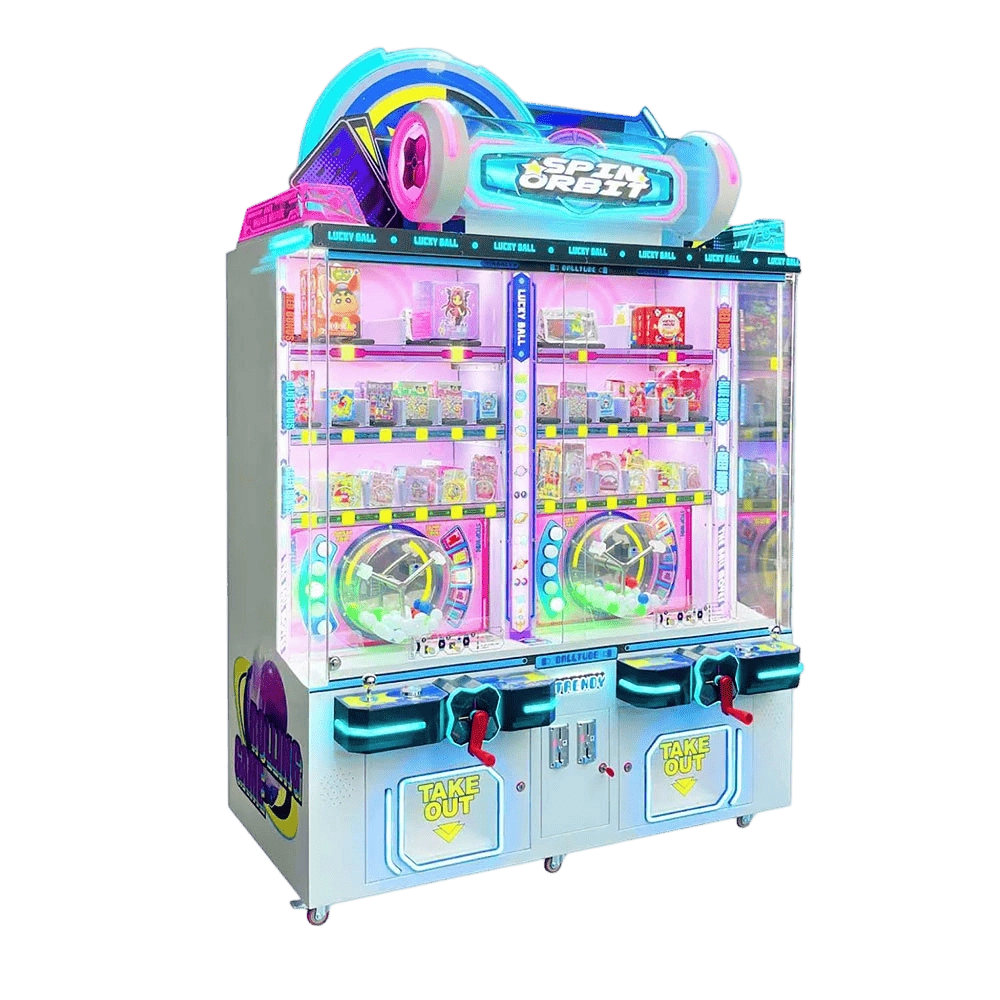
The SPIN ORBIT Lucky Prize Arcade Game is designed for 2 players, allowing simultaneous gameplay for added fun.
What is the gameplay of the SPIN ORBIT Lucky Prize Arcade Game?
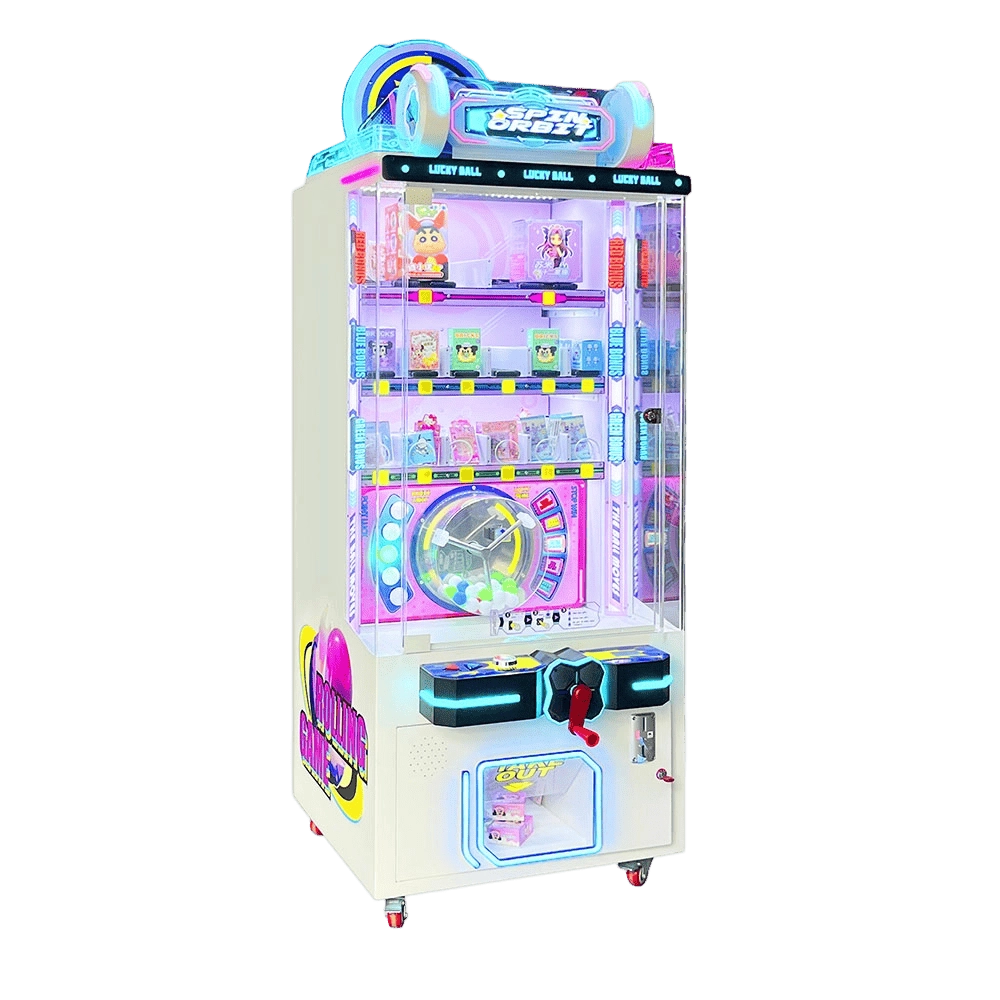
Players use the joystick to guide the ball into a designated hole. Each color ball corresponds to different prize values: red for the highest, blue and green for mid-range prizes, and white for no prize.
How does Jiami Games ensure product quality?
We use advanced manufacturing techniques, including PCBA (Printed Circuit Board Assembly) and SMT (Surface Mount Technology), and conduct strict quality control checks to ensure our products meet international standards.
You May Also Like
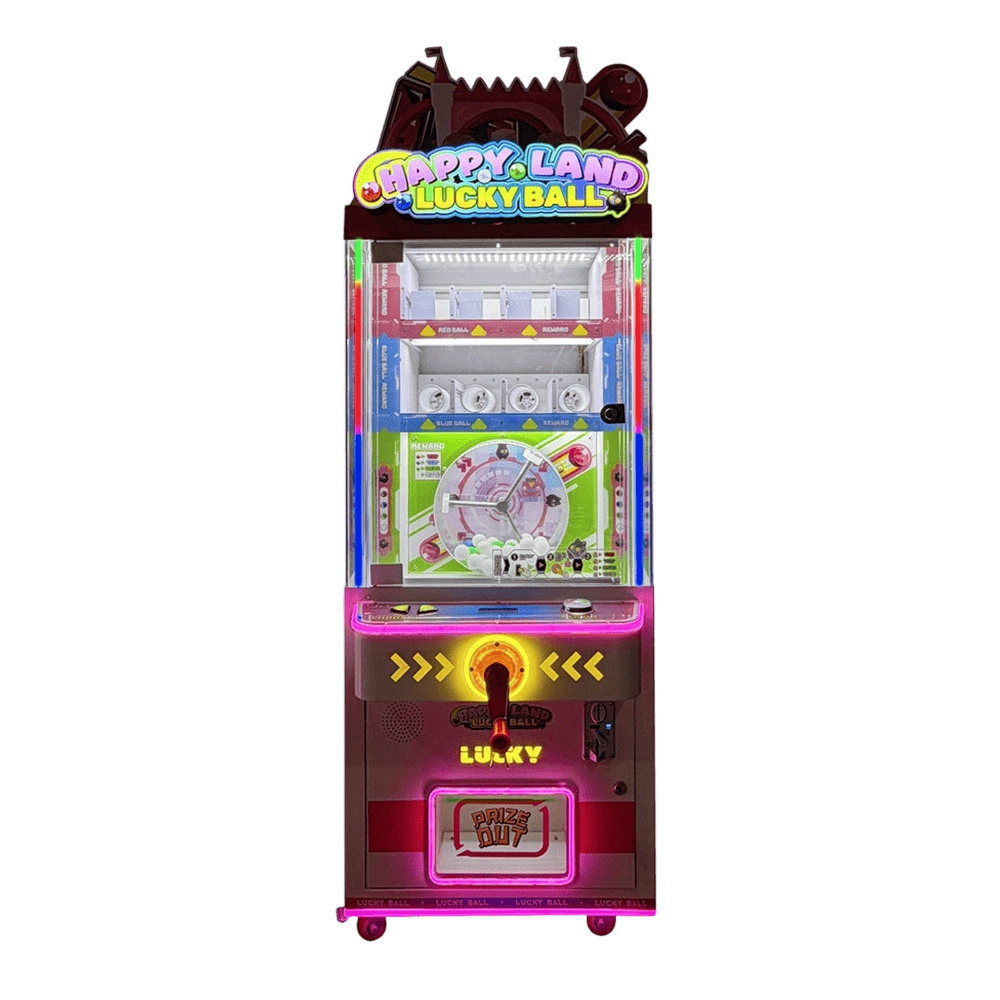
Coin Operated/Card Payment Lucky Ball Vending Toy Gift Arcade Game Machine
Coin Operated/Card Payment 2 Players SPIN ORBIT Lucky Prize Arcade Game
Coin Operated/Card Payment SPIN ORBIT Lucky Prize Arcade Game
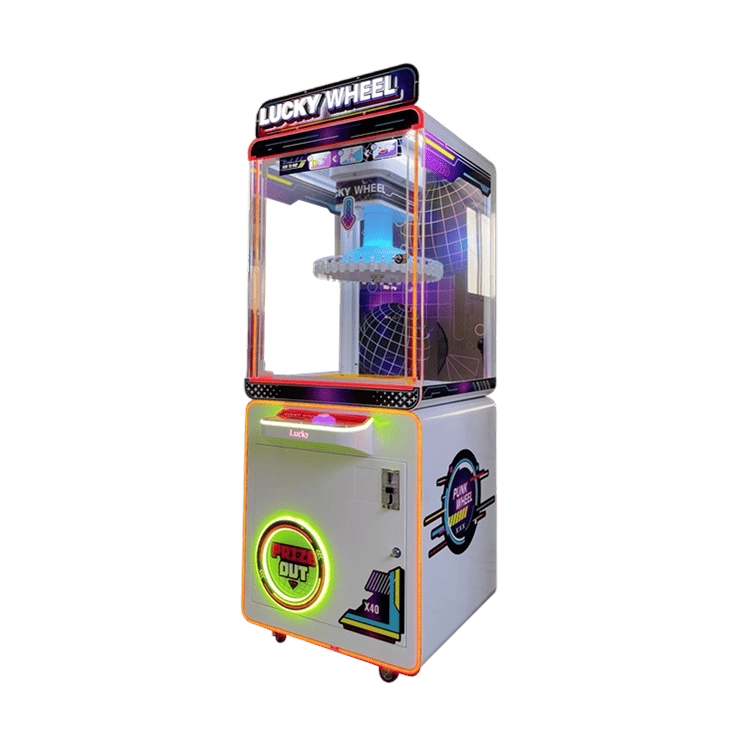
Arcade Prize Lucky Wheel Gift Machine For Amusement Areas
Get in Touch with Jiami Games
If you have any comments or good suggestions, please leave us a message; later our professional staff will contact you as soon as possible.

Innovative Entertainment, at Your Fingertips
Learn about Jiami Games and explore our expertise in console development, innovative design, and global markets.
Quick Links:
© 2026 Jiami Games.
Whatsapp: +8618520390438