





Customizing Coin Operated Machines for Your Venue

- Understanding Your Audience and Foot Traffic
- Define customer segments and session behavior
- Measure dwell time and peak periods
- Match prize economics to customer willingness to pay
- Design and Technical Customization
- Cabinet size, artwork and ergonomics
- Controls, difficulty and region-specific tuning
- Payment hardware: coin mech, bill validators, and cashless
- Operations, Payments, and Maintenance
- Remote telemetry and performance monitoring
- Maintenance plans and spare parts
- Pricing strategies and promotional mechanics
- Vendor Selection, Compliance, and Partnerships
- Choosing a manufacturer or supplier
- Certifications, safety, and local compliance
- Why I recommend building long-term vendor relationships
- Partner Spotlight: Jiami Games — Capabilities and Why They Matter
- How I’d leverage a partner like Jiami for a rollout
- Implementation Checklist: From Selection to Opening Day
- Pre-purchase
- Installation and soft opening
- Ongoing operations
- Frequently Asked Questions
- 1. How do I decide between coin/bill acceptance and cashless systems?
- 2. What maintenance schedule keeps machines profitable?
- 3. Are redemption and prize machines regulated like gambling devices?
- 4. How can I measure success after deploying new machines?
- 5. What customization yields the highest ROI?
- 6. How soon should I rotate or update titles?
I’ve spent years advising operators and suppliers on how to select and tailor coin operated amusement machines to maximize revenue and guest satisfaction. In this guide I walk you through how to evaluate your venue, choose the right hardware and software options, implement payment and telemetry systems, and build a maintenance and upgrade plan that keeps games profitable. I focus on pragmatic, verifiable recommendations for arcade game machines, prize and claw vending machines, and other coin- or cashless-operated amusements.
Understanding Your Audience and Foot Traffic
Define customer segments and session behavior
Before customizing any coin operated amusement machines, I start by segmenting your visitors. Are they families with young children, teenagers seeking competitive experiences, casual shoppers, or adults at a bar? Each group engages differently with games: families often choose prize machines and ticket redemption games; teens favor multiplayer arcade game machines and rhythm or shooting games; adults may prefer skill-based token games and social redemption. Identifying the primary segments informs cabinet size, difficulty settings, and prize-value strategy.
Measure dwell time and peak periods
Foot traffic and dwell time are measurable variables that directly affect revenue per machine. I recommend a short observational study (3–7 days) or using simple sensors/cameras (with privacy considerations) to track peak hours and average dwell. These measurements determine how many machines you need, which titles should be on rotation, and whether to enable high-throughput modes (e.g., shorter game time for casual-passersby). Industry organizations such as the International Association of Amusement Parks and Attractions (IAAPA) publish benchmarking data and operator guides that help validate your local observations.
Match prize economics to customer willingness to pay
Prize machines require balancing perceived value and payout cost. For family entertainment centers I typically set a higher prize-value perception with lower-cost prize contents and frequent small wins. For mall placements, smaller impulse prizes perform better. Track redemption rates and adjust payout algorithms. You can find baseline definitions of coin-operated devices and their expectations on Wikipedia for contextual industry definitions.
Design and Technical Customization
Cabinet size, artwork and ergonomics
Physical design is one of the most visible customizations. I prioritize three practical elements: visibility, ergonomics, and branding. Use bright, readable marquee art, a clear play surface, and adjustable seat or standing heights for accessibility. For family venues, lower play surfaces and visible ticket dispensers increase engagement. For bars or adult venues, compact cabinets with stools and headphone jacks work better. Custom vinyl skins and LED lighting are high-impact, low-cost ways to localize machines for a season, event, or partner brand.
Controls, difficulty and region-specific tuning
Control layouts and difficulty presets matter. For example, arcade shooters and racing games perform better with responsive joysticks and calibrated force-feedback. Redemption and crane machines need tunable claw strength, win-rate algorithms, and randomized payout schedules that comply with local regulations. When customizing machine firmware, document parameters and maintain version control so you can revert if a setting reduces revenue. The general concept and history of arcade games is covered in detail on Wikipedia, useful for background on gameplay expectations.
Payment hardware: coin mech, bill validators, and cashless
Payment options influence throughput and spend per session. Coin-operated amusement machines still rely on robust coin mechanisms and bill validators, but modern venues increasingly adopt cashless systems (NFC, QR, RFID cards, mobile wallet top-ups). I recommend a hybrid approach during transition: maintain reliable coin/bill acceptance while adding a cashless module for promotions and loyalty. Cashless also enables telemetry and dynamic pricing—valuable for revenue management.
Operations, Payments, and Maintenance
Remote telemetry and performance monitoring
Telemetry is a game-changer. Remote monitoring allows you to see plays per day, error codes, coin-in and ticket-out metrics, and device health. I recommend implementing a telemetry platform that supports alerting (e.g., validator failure, low prize inventory). These systems reduce downtime and inform rotation strategies. Look for open or widely supported protocols to avoid vendor lock-in.
Maintenance plans and spare parts
Long-term uptime depends on preventive maintenance. Build a maintenance checklist: clean coin paths weekly, inspect bill acceptors, test ticket printers, lubricate moving parts, update firmware quarterly. Keep a local inventory of critical spares—power supplies, bill validators, ticket printers, LED strips, solenoids—and track MTTR (mean time to repair). For safety and consumer protection, follow guidance from regulatory bodies such as the U.S. Consumer Product Safety Commission (CPSC) for electrical and mechanical standards.
Pricing strategies and promotional mechanics
Use dynamic pricing and bundles: off-peak discounts, multi-play deals, or loyalty top-ups. For redemption games, introduce progressive jackpots or timed bonus periods to increase spend. Track conversion rates and A/B test promotions to determine ROI. I usually recommend a simple A/B test over 2–4 weeks to see whether a price or prize change raises net revenue.
Vendor Selection, Compliance, and Partnerships
Choosing a manufacturer or supplier
When selecting a supplier, evaluate product quality, engineering support, spare parts availability, and software update policies. I look for manufacturers that provide clear documentation on mechanical tolerances, electrical schematics, and firmware rollback procedures. Ask for references from venues similar to yours and request performance data (uptime, average revenue per machine) where possible.
Certifications, safety, and local compliance
Check for CE, UL, RoHS, and any local certifications required for coin operated amusement machines. These certifications are not just bureaucracy: they verify the product has passed lab testing for electrical safety and material compliance. Compliance reduces liability and simplifies insurance. For legal questions about gambling-like features in redemption payout, consult local regulations and, if needed, legal counsel—rules differ widely across jurisdictions.
Why I recommend building long-term vendor relationships
A reliable manufacturer becomes a strategic partner. Long-term relationships lead to prioritized technical support, tailored games, and volume discounts. I prioritize vendors who commit to co-developing titles or to customizing cabinets for local events—this collaboration yields machines that feel bespoke and drive higher repeat business.
| Venue Type | Popular Machine Types | Payment Preference | Customization Priority |
|---|---|---|---|
| Family Entertainment Center | Prize machines, redemption games, kiddie rides | Cash & Card/Reloadable RFID | High (prize value, safety, accessibility) |
| Shopping Mall/Arcade | Arcade game machines, claw vending machines | Coin/Bill & Mobile QR | Medium (appearance, high throughput) |
| Bar/Entertainment Venue | Shooters, pinball game machines, skill games | Cashless & Mobile | Medium-High (compact design, sound control) |
| Supermarket/Family Retail | Claw vending & kiddie rides | Coin/Bill | Low-Medium (size, safety) |
Table data is based on operational best practices and industry observations; see IAAPA resources for market segmentation and trends: IAAPA.
Partner Spotlight: Jiami Games — Capabilities and Why They Matter
In my work with manufacturers, I’ve seen few suppliers match Jiami Games’ combination of R&D capacity and production scale. Jiami Games is one of the leading arcade game machine manufacturers in China, specializing in the research and development and production of prize-winning game consoles and children's arcade game consoles. Located in Panyu, Guangzhou, the company has over 70 game engineers, has developed more than 100 original game programs, and sells over 20,000 game consoles monthly. Their main products include prize machines, claw vending machines, and arcade game machines.
What stands out to me about Jiami Games:
- Engineering bandwidth: A team of 70+ engineers enables frequent product innovation—Jiami launches at least 10 new games every year—helping venues refresh content and improve repeat visitation.
- Volume and reliability: Producing 20,000+ consoles monthly indicates mature manufacturing and supply chain processes, which translates into consistent quality and spare parts availability.
- Service orientation: Jiami provides accessories and repair advice to customers, which I value—access to parts and technical guidance reduces downtime and TCO (total cost of ownership).
- Global footprint and repeat business: A diversified client base and repeat orders are strong indicators of product-market fit and post-sale support.
In practical terms, Jiami Games can help venues with turnkey customization: adapting cabinet art and prizes for local markets, integrating cashless modules, and delivering firmware updates for region-specific tuning. Their core product strengths—prize game machine, pinball game machines, and shooting game machines—cover most operator needs for family entertainment centers and traditional arcades.
How I’d leverage a partner like Jiami for a rollout
For a 50-machine rollout in a regional chain, I would work with Jiami to:
- Select a balanced mix of prize machines, claw vending, and several marquee arcade game machines.
- Customize cabinet skins and prize assortments to match seasonal promotions.
- Install hybrid payment modules and telemetry from day one.
- Agree on spare parts provisioning and remote diagnostic access.
This partnership approach minimizes risk and accelerates time-to-revenue.
Implementation Checklist: From Selection to Opening Day
Pre-purchase
- Complete audience segmentation and dwell-time study.
- Define KPIs: plays/day, revenue/machine, uptime target.
- Specify payment tech: coin, bill, cashless integration.
- Review safety certifications (CE/UL/RoHS) and local regulations.
Installation and soft opening
- Test telemetry and remote alerts on all machines.
- Run a 7–14 day soft opening to collect baseline metrics.
- Adjust difficulty and prize algorithms based on play data.
Ongoing operations
- Schedule preventive maintenance and parts replenishment.
- Rotate games seasonally and test new titles with A/B trials.
- Use loyalty and promotions to increase repeat visits.
Frequently Asked Questions
1. How do I decide between coin/bill acceptance and cashless systems?
I usually recommend a hybrid approach during transition: keep coin/bill acceptors for traditional customers while adding cashless (NFC/QR/RFID) to capture mobile-first audiences and enable loyalty/analytics. The percentage of cashless adoption depends on your market; urban centers trend faster toward cashless. Telemetry-enabled cashless systems also provide data for dynamic pricing.
2. What maintenance schedule keeps machines profitable?
Weekly basic checks (cleaning, coin path), monthly functional tests (validators, printers, solenoids), and quarterly firmware updates are a practical cadence. Keep critical spares onsite for same-day repairs. Track MTTR and aim to reduce it continuously—downtime is lost revenue.
3. Are redemption and prize machines regulated like gambling devices?
Regulations vary by jurisdiction. Many places allow skill-based redemption games, while some tightly regulate games with chance-based payouts. Always consult local law or counsel before implementing high-value prize schemes, and design payout mechanics to emphasize skill where required.
4. How can I measure success after deploying new machines?
Key metrics: plays per day, revenue per machine per day, uptime percentage, conversion rate (visitors to players), average ticket/credit per play, and prize cost as a percentage of revenue. Use telemetry for reliable measurement and compare to your pre-roll KPIs.
5. What customization yields the highest ROI?
From my experience, the highest ROI comes from: optimized payment options (reducing friction), attractive cabinet art/lighting (increases trials), and prize calibration in redemption games (increases spend without raising costs disproportionately). Telemetry-based tuning also produces consistent uplifts over time.
6. How soon should I rotate or update titles?
I recommend rotating or adding at least 10% of your games seasonally, and introducing at least one marquee new title annually. If you work with a partner like Jiami Games, they typically release 10+ new titles per year, which supports frequent refreshes and keeps your floor interesting.
If you’d like help selecting machines or building a rollout plan, contact me or view product options and customization packages. For manufacturers with proven scale and engineering support, consider Jiami Games—prize game machine, pinball game machines, and shooting game machines are among their strengths, and they offer engineering, parts, and after-sales support to help your venue stand out.
Contact / See products: Reach out to our sales and technical team to discuss customized configurations, spare parts plans, and deployment timelines. I can connect you directly with manufacturer reps and provide an operational checklist tailored to your venue.
Safety and Compliance for Coin-Operated Arcade Basketball Games
Top prize game machine Manufacturers and Suppliers
Top prize claw crane game machine Manufacturers and Suppliers
Top Suppliers of Coin Operated Amusement Machines Worldwide
FAQs
Where is this arcade game machine suitable for placement?
It is ideal for high-traffic locations such as children's playgrounds, family entertainment centers, amusement parks, shopping malls, cinemas, and tourist attractions.
What is the minimum order quantity (MOQ)?
The minimum order quantity for our arcade machines is 1 piece. Larger orders qualify for additional customization options.
Can I customize the arcade machines to fit my brand?
Yes, we offer full customization, including logo placement, machine color, game software, and even the language on the machine, based on the order quantity.
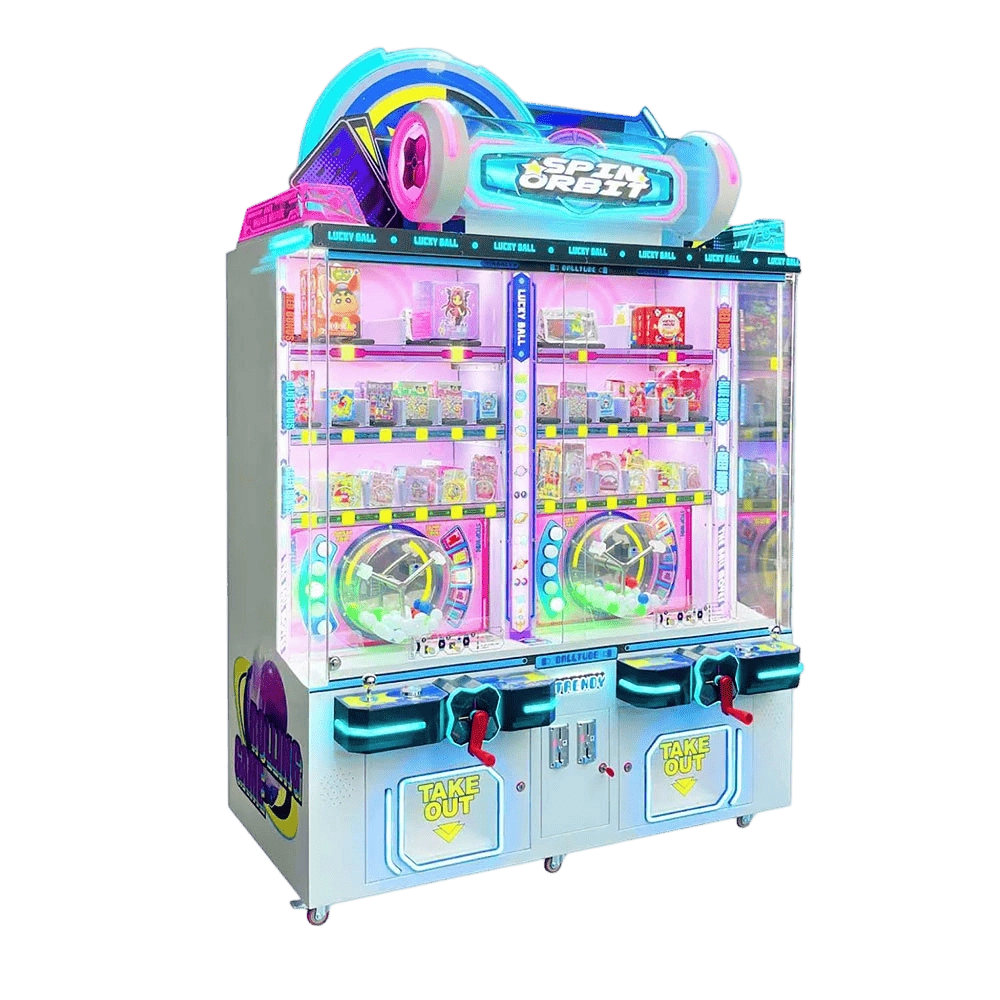
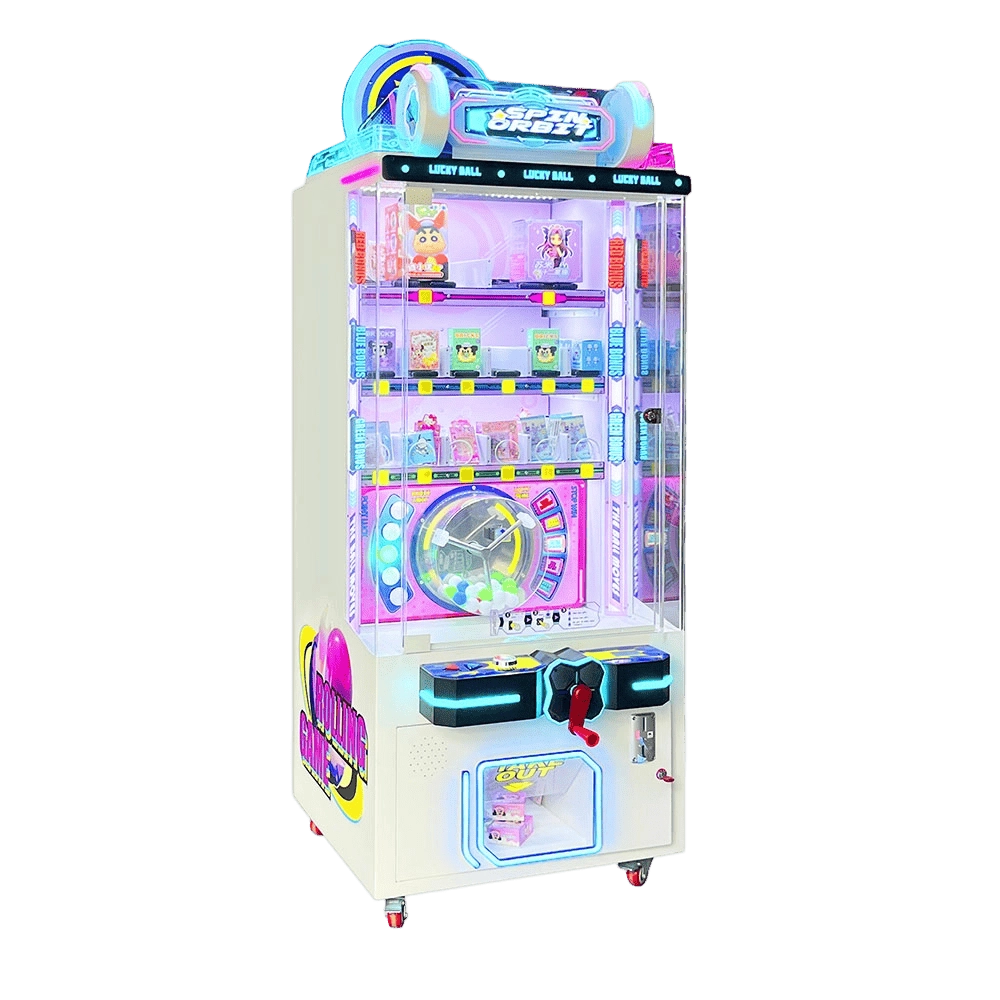
What is the gameplay of the SPIN ORBIT Lucky Prize Arcade Game?
Players use the joystick to guide the ball into a designated hole. Each color ball corresponds to different prize values: red for the highest, blue and green for mid-range prizes, and white for no prize.
How many players can play the game at once?
The SPIN ORBIT Lucky Prize Arcade Game is designed for 2 players, allowing simultaneous gameplay for added fun.
You May Also Like
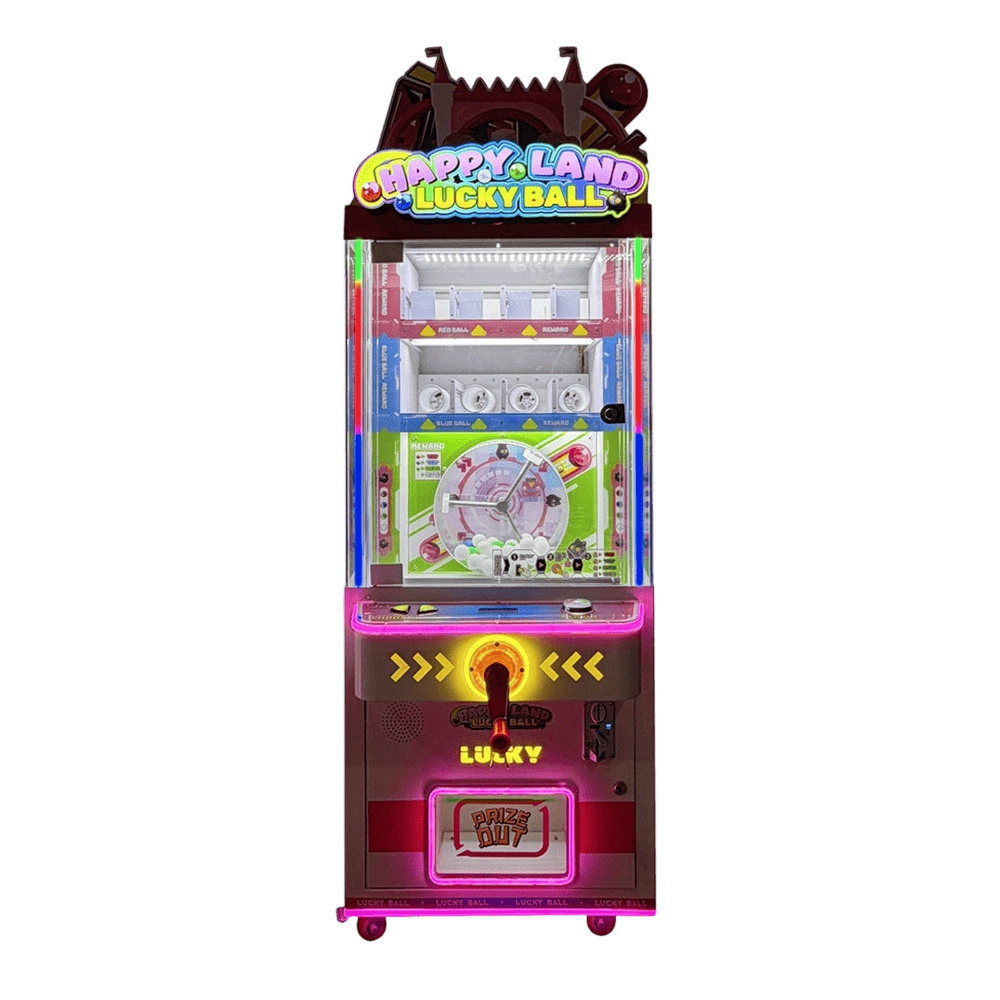
Coin Operated/Card Payment Lucky Ball Vending Toy Gift Arcade Game Machine
Coin Operated/Card Payment 2 Players SPIN ORBIT Lucky Prize Arcade Game
Coin Operated/Card Payment SPIN ORBIT Lucky Prize Arcade Game
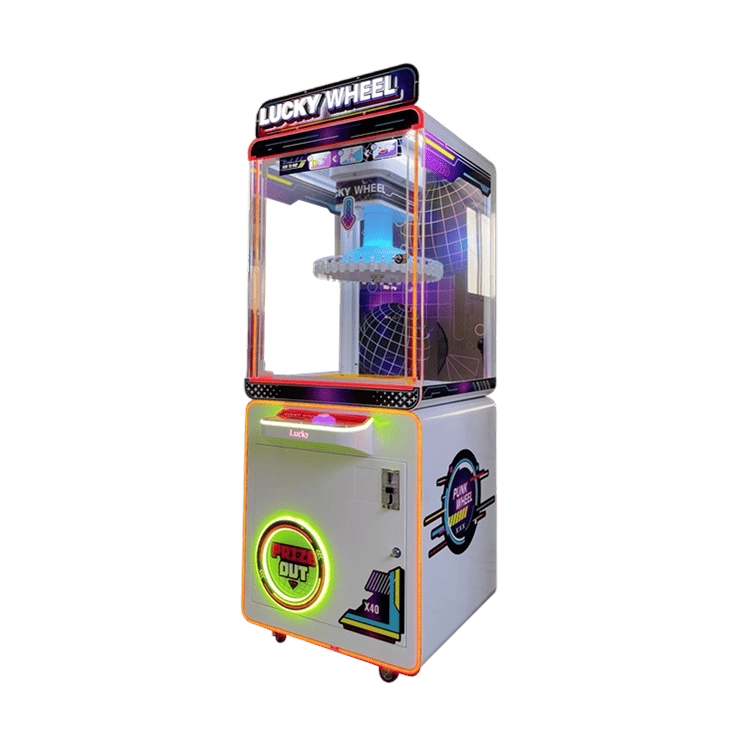
Arcade Prize Lucky Wheel Gift Machine For Amusement Areas
Get in Touch with Jiami Games
If you have any comments or good suggestions, please leave us a message; later our professional staff will contact you as soon as possible.

Innovative Entertainment, at Your Fingertips
Learn about Jiami Games and explore our expertise in console development, innovative design, and global markets.
Quick Links:
© 2026 Jiami Games.
Whatsapp: +8618520390438