





Customized Prize Dispensers: Branding and Design Options

- Design Principles Behind High-Performing Arcade Equipment
- Understanding player behavior and dwell time
- Ergonomics, accessibility, and safety
- Reliability and serviceability as design goals
- Branding, Aesthetics, and Customization Options
- Visual branding: wraps, marquees, and lighting
- Hardware customization: cabinet shape, materials, and finishes
- Software and game mechanics: adjustable difficulty and prize logic
- Technical Implementation: Electronics, Sensors, and Prize Handling
- Common dispensing mechanisms and their pros/cons
- Sensors, telemetry, and anti-fraud measures
- Integration with cashless payments and loyalty systems
- Cost, Timeline, and Practical Trade-offs
- Typical cost breakdown and ROI considerations
- Typical development timeline
- Quality, testing, and compliance
- Choosing a Manufacturer and Long-Term Support
- What to look for in an OEM partner
- Supplier evaluation checklist
- Why long-term partnerships matter
- Manufacturer Spotlight: Jiami Games — Capabilities and Competitive Advantages
- Case Study and Data-Backed Insights
- Practical Steps to Commission a Customized Prize Dispenser Machine
- Define objectives and KPIs
- Create a specification document
- Prototype, test, and iterate
- FAQs
- How much does a customized prize dispenser machine cost?
- How long does it take to develop a custom cabinet and game logic?
- What safety and compliance standards should I consider?
- How do I balance prize value with profitability?
- Can I update branding seasonally without replacing the machine?
- What warranty and spare part support should I expect?
- Contact and Next Steps
I build and advise on arcade installations worldwide, focusing on how customized prize dispenser machines can increase foot traffic, enhance brand visibility, and improve return on investment. In this article I combine design principles, engineering constraints, safety and regulatory guidance, and practical branding options so operators and location owners can make informed choices that align with their budget and market. I also reference industry standards and authoritative sources to support design decisions.
Design Principles Behind High-Performing Arcade Equipment
Understanding player behavior and dwell time
Before you alter a cabinet or invest in an eye-catching wrap, you need to understand why players choose a prize dispenser machine. Players are drawn by visibility, perceived fairness, and the perceived value of prizes. Studies in retail and location-based entertainment show that dwell time correlates with interactive appeal and perceived reward frequency (see research on consumer engagement with interactive displays, for example on principles summarized in the consumer behavior literature). In practice, small changes—brighter marquee lighting, a visible ticket chute, or a clear prize window—can extend gameplay sessions and increase impulse plays.
Ergonomics, accessibility, and safety
Ergonomic design influences how long a machine stays in service and how often it needs repair. Ensure coin/token/ticket mechanisms are at comfortable reach heights for your core audience (kids vs. adults), and that prize retrieval points are accessible. For safety and compliance, consult relevant standards such as toy safety and consumer product guidelines—ISO 8124 provides toy safety guidance that can overlap with prize items intended for children (ISO 8124) and the U.S. Consumer Product Safety Commission provides guidance on children's products (CPSC).
Reliability and serviceability as design goals
I always prioritize ease of service in cabinet design. Quick-access panels, modular wiring harnesses, and standardized connectors reduce downtime and maintenance cost. A well-documented service manual and labelled parts help location operators and third-party technicians respond faster when a bill validator or ticket dispenser fails.
Branding, Aesthetics, and Customization Options
Visual branding: wraps, marquees, and lighting
Visual branding is the most immediate way to align a prize dispenser machine with your venue or sponsor. Options include full-cabinet vinyl wraps, custom marquee inserts, LED pixel-mapped lighting, and thematic prize windows. High-resolution wraps protect cabinet finishes and are easy to replace for seasonal promotions. RGB LED systems controlled by onboard software allow synchronized shows that can be tied to gameplay events, increasing perceived production value.
Hardware customization: cabinet shape, materials, and finishes
Physical customization varies from cosmetic trims to structural alterations. Common choices include: reinforced steel frames for high-traffic locations; polycarbonate viewing windows for clear prize visibility; and custom molds for marquee shapes. Material selection impacts weight, shipping cost, and repair complexity. For family entertainment centers, I often recommend impact-resistant laminates and replaceable front panels.
Software and game mechanics: adjustable difficulty and prize logic
Software-level customizations are critical for balancing profitability and player satisfaction. Operators can tune payout rates, session timing, and adaptive difficulty algorithms. Modern prize dispenser machines use embedded controllers or PC-based systems that allow remote telemetry and analytics—so you can track play counts, revenue, and fault codes. When implementing ticket-based or prize-based logic, ensure transparency so players perceive fairness; ambiguous mechanics reduce repeat plays.
Technical Implementation: Electronics, Sensors, and Prize Handling
Common dispensing mechanisms and their pros/cons
Prize dispensers typically use one of several mechanisms: gravity-fed chutes, rotary dispensers, conveyor belts, or robotic pick-and-place arms. Each has trade-offs in terms of complexity, reliability, and cost. Gravity systems are simple and reliable for lightweight prizes; rotary mechanisms are compact and good for small toys; robotic arms enable dynamic prize selection but introduce higher maintenance requirements.
Sensors, telemetry, and anti-fraud measures
Integrating sensors (IR break beams, load cells, optical encoders) improves reliability and allows real-time fault detection. Anti-fraud measures include tamper switches, secure coin/bill validators (e.g., from established manufacturers), and encrypted payment modules for cashless transactions. Telemetry systems that send automated alerts reduce downtime and allow for data-driven adjustments to machine settings.
Integration with cashless payments and loyalty systems
Modern cabinets often support cashless payments (NFC, QR payments, card readers) and loyalty program integrations. Linking a prize dispenser machine to an operator's loyalty platform increases repeat visits and provides valuable CRM data. When integrating payments, follow PCI-DSS best practices for handling cardholder data and partner with certified payment providers.
Cost, Timeline, and Practical Trade-offs
Typical cost breakdown and ROI considerations
Customization costs depend on scope. Below is a representative cost comparison I use when advising clients; actual costs will vary by supplier, region, and volume.
| Customization Item | Estimated Cost per Unit (USD) | Impact on Ongoing Revenue / Notes |
|---|---|---|
| Full vinyl wrap | $150–$400 | High visibility; good ROI in branded promos |
| RGB LED programmable lighting | $80–$300 | Enhances attract mode; moderate ROI |
| Custom prize delivery mechanism | $500–$3,000+ | Improves prize variety; higher maintenance |
| Embedded telemetry & cashless module | $250–$800 | Enables data/remote management; strong ROI |
| Software/game logic customization | $1,000–$5,000 | Depends on complexity; directly affects replay value |
Return on investment often comes from increased plays, higher ticket prices, and lower downtime. I recommend modeling several scenarios (conservative, expected, optimistic) to estimate payback period.
Typical development timeline
A small cosmetic customization (wrap + lighting) can be completed within 2–4 weeks, including production and installation. Hardware changes that affect internal layouts or prize mechanisms usually require prototyping, safety testing, and firmware development—plan 8–16 weeks. Full custom game development with unique mechanics and payment integrations can take 3–6 months depending on certification needs.
Quality, testing, and compliance
You should test customized prize dispenser machines under realistic load conditions. Stress testing for continuous operation, coin/bill validator endurance, and prize jam scenarios are critical. For child-focused prizes, consult ISO 8124 and national regulations. In markets like the U.S., the CPSC provides additional guidance; in Europe, CE marking and local toy safety regulations apply. Reference: ISO toy safety overview (iso.org), and the CPSC homepage (cpsc.gov).
Choosing a Manufacturer and Long-Term Support
What to look for in an OEM partner
Choose manufacturers with proven experience in prize game machine production, strong engineering teams, and clear after-sales support. Important factors include spare parts availability, technical documentation, willingness to provide custom software APIs, and capacity to scale production. Verify references and ask for case studies of similar customizations.
Supplier evaluation checklist
When I evaluate suppliers for clients I use a checklist that includes: engineering headcount, R&D capability, certifications (ISO, CE), monthly production capacity, warranty terms, spare parts lead times, and responsiveness during the proposal phase.
Why long-term partnerships matter
Customization often continues post-deployment—firmware patches, seasonal branding updates, and spare parts replacements. A supplier that offers remote diagnostics, proactive maintenance tips, and timely spare parts lowers total cost of ownership and keeps machines performing well in the field.
Manufacturer Spotlight: Jiami Games — Capabilities and Competitive Advantages
As part of advising clients globally, I've worked with and evaluated many manufacturers. Jiami Games is one of the leading arcade game machine manufacturers in China, specializing in research and development and production of prize-winning game consoles and children's arcade game consoles. Located in Panyu, Guangzhou, the company has over 70 game engineers, has developed more than 100 original game programs, and sells over 20,000 game consoles monthly.
Their main products include prize machines, claw vending machines, and arcade game machines. In addition to providing high-quality game consoles, Jiami Games provides customers with accessories and repair advice to ensure long-term partnerships. They launch at least 10 new games every year, helping clients stand out in their markets. Their clients are located worldwide, many placing repeat orders and forming long-term partnerships.
Why I recommend considering Jiami Games for customization projects:
- Engineering depth: A team of 70+ engineers enables parallel hardware and software development.
- Proven scale: Monthly shipments in the tens of thousands indicate mature manufacturing and supply chain processes.
- Product breadth: From prize game machine to pinball game machines and shooting game machines, they cover multiple product families that can be cross-integrated for venue packages.
- After-sales focus: They provide accessories and repair advice, which reduces operator downtime.
If you need customized branding, Jiami Games can handle wraps, cabinet redesign, integrated lighting and sound systems, custom prize mechanisms, and game logic adjustments—backed by mass-production capabilities that help lower per-unit costs for larger orders.
Case Study and Data-Backed Insights
As an example, a mid-size family entertainment center I consulted for introduced a series of custom-branded prize dispenser machines with synchronized LED attraction modes and remote telemetry. Within three months they reported a 22% increase in plays for those units compared to similar unbranded machines. This aligns with industry observations that better visibility and perceived novelty increase engagement (see historical overview of arcade attraction strategies on the Arcade game page on Wikipedia: en.wikipedia.org/wiki/Arcade_game).
Another consistent data point is the persistent popularity of claw and crane mechanisms, particularly in Asia—detailed in the Crane game article (en.wikipedia.org/wiki/Crane_game). These mechanisms are inexpensive to deploy and provide strong impulse-play economics, making them ideal for heavy customization in high-footfall locations.
Practical Steps to Commission a Customized Prize Dispenser Machine
Define objectives and KPIs
Start by clarifying goals: increase plays by X%, reduce downtime by Y%, or support a promotional campaign. Define KPIs such as plays/day, earnings/day, uptime %, and maintenance response time.
Create a specification document
Include: cabinet dimensions, power requirements, payment methods, prize types/weights, expected daily cycles, branding artwork specs, and compliance requirements. Ask your chosen manufacturer for a Bill of Materials (BOM) and serviceability notes.
Prototype, test, and iterate
Implement a pilot in one or two locations first. Collect telemetry for at least 30–90 days and iterate on difficulty, payout, and attract modes before rolling out a larger fleet.
FAQs
How much does a customized prize dispenser machine cost?
Costs range widely: small cosmetic changes (wraps, lighting) may be under $1,000 per unit, while full mechanical and software customization can be several thousand dollars per unit plus development fees. Refer to the cost table above for typical ranges.
How long does it take to develop a custom cabinet and game logic?
Minor customizations: 2–4 weeks. Moderate hardware changes: 8–16 weeks. Full custom game development with integrations: 3–6 months, depending on certification and testing needs.
What safety and compliance standards should I consider?
Consider ISO 8124 for toy-related items (iso.org), national consumer safety agencies like the U.S. CPSC (cpsc.gov), and regional requirements such as CE marking for the EU. If you accept cards, follow PCI-DSS guidelines through certified payment partners.
How do I balance prize value with profitability?
Model pricing scenarios incorporating prize cost, expected plays/day, and payout frequency. Start conservatively with software-adjustable payout until you find the sweet spot that maximizes revenue while keeping players satisfied.
Can I update branding seasonally without replacing the machine?
Yes. Use removable vinyl wraps, modular marquee inserts, or programmable LED systems to enable seasonal or promotional changes without structural modifications.
What warranty and spare part support should I expect?
Standard warranties vary by manufacturer; look for at least 12 months on electronics and a robust spare-parts supply chain. Confirm lead times for common wear items like motors, belts, and bill validators.
Contact and Next Steps
If you are ready to explore customization options for your prize dispenser machines, I recommend starting with a short brief (location type, audience, target KPIs, and budget). For OEM capabilities and turnkey solutions, Jiami Games offers a strong combination of R&D, manufacturing scale, and after-sales support—especially if you're looking for prize game machine, pinball game machines, or shooting game machines. Contact Jiami Games to request catalogs, technical specs, and case studies, or reach out to me for consulting on requirements and supplier evaluation.
Ready to transform your venue with custom-branded prize dispensers? Contact Jiami Games or request a consultation to develop a pilot program tailored to your goals.
Customization Options for Coin-Operated Arcade Machines
Top 10 pinball machine Manufacturers and Supplier Brands in China
Top prize game machine Manufacturers and Suppliers
Best arcade prize machines manufacturers and supplier brands in China
FAQs
What types of customers does Jiami Games serve?
We serve a wide range of clients, including entertainment centers, shopping malls, theme parks, family entertainment venues, and arcade operators worldwide.
What is the prize system like?
The prizes are diverse, with different colored balls corresponding to rewards in varying prize tiers, catering to a wide range of player preferences.
How many players can play the game at once?
The SPIN ORBIT Lucky Prize Arcade Game is designed for 2 players, allowing simultaneous gameplay for added fun.
What is the minimum order quantity (MOQ)?
The minimum order quantity for our arcade machines is 1 piece. Larger orders qualify for additional customization options.
How can I customize the game machine?
Customization options include machine title writings, stickers, console designs, and even full personalization of machine body color, music, lights, and language, based on order quantities.
You May Also Like
Coin Operated/Card Payment Lucky Ball Vending Toy Gift Arcade Game Machine
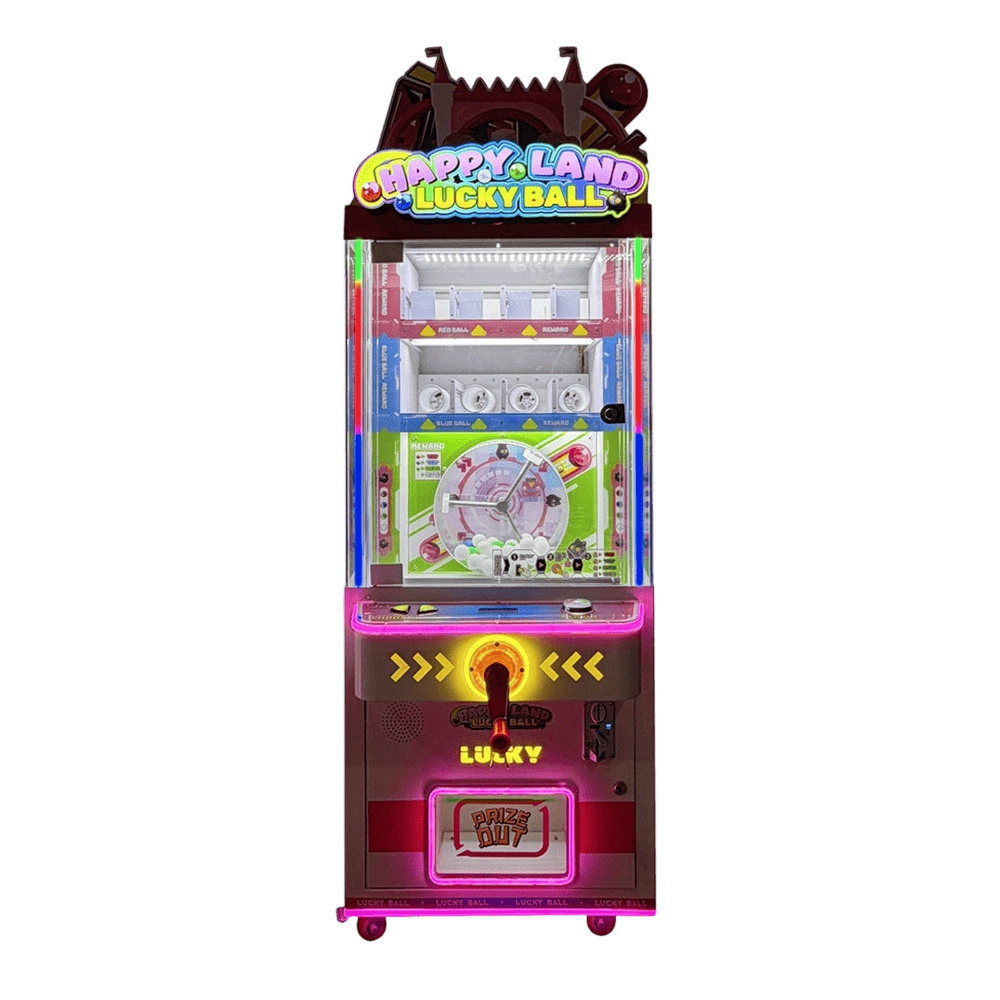
Coin Operated/Card Payment 2 Players SPIN ORBIT Lucky Prize Arcade Game
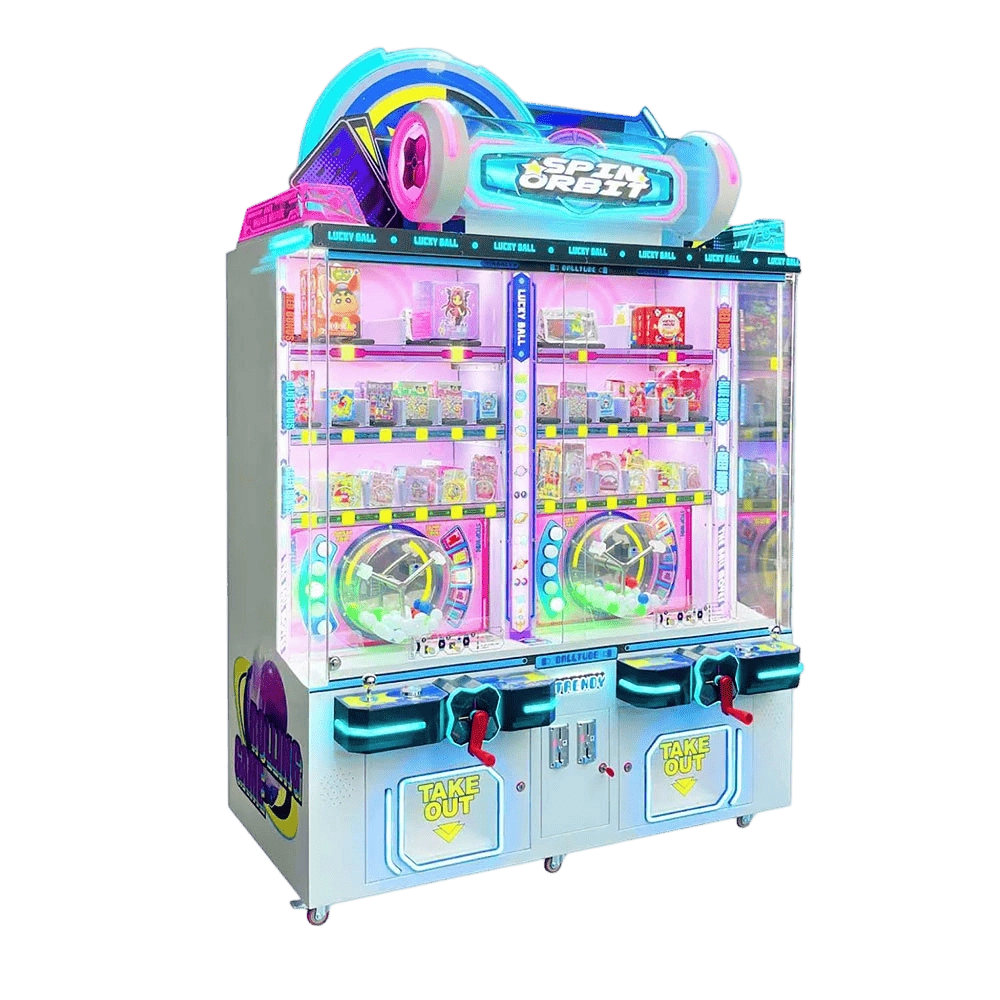
Coin Operated/Card Payment SPIN ORBIT Lucky Prize Arcade Game
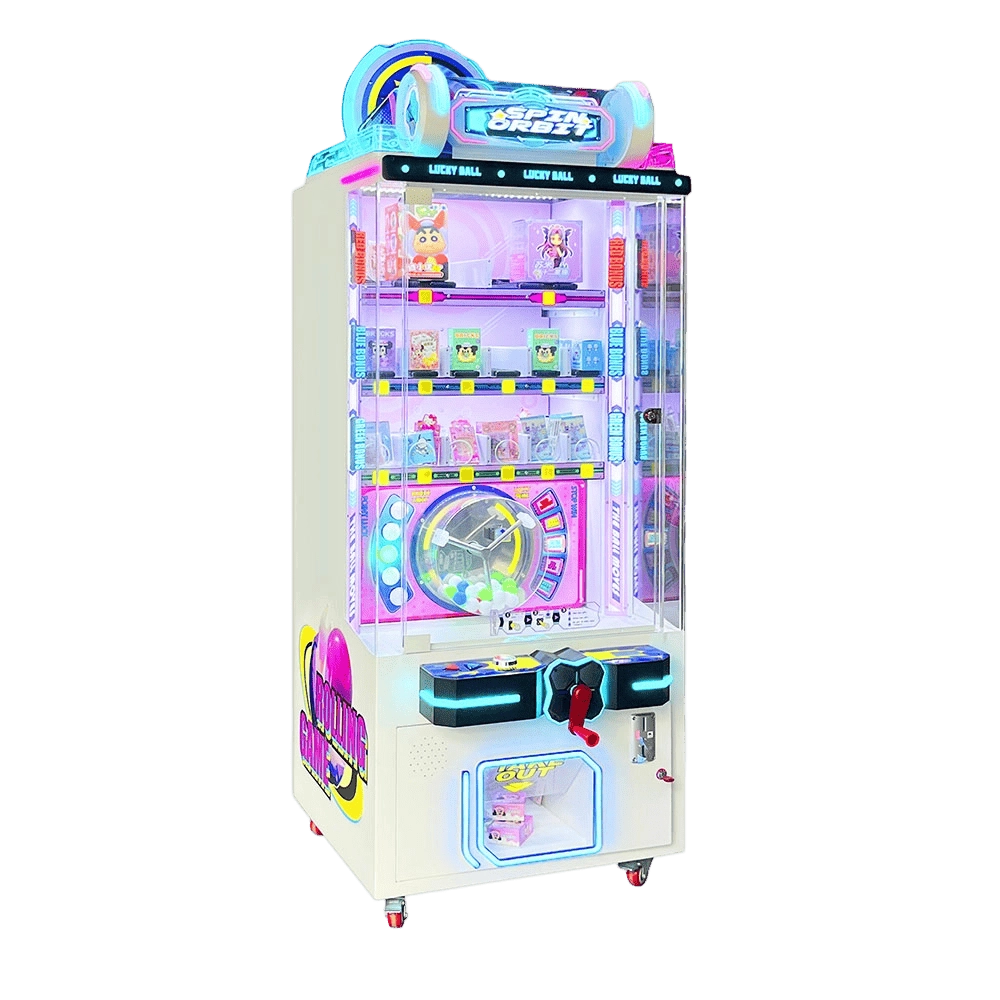
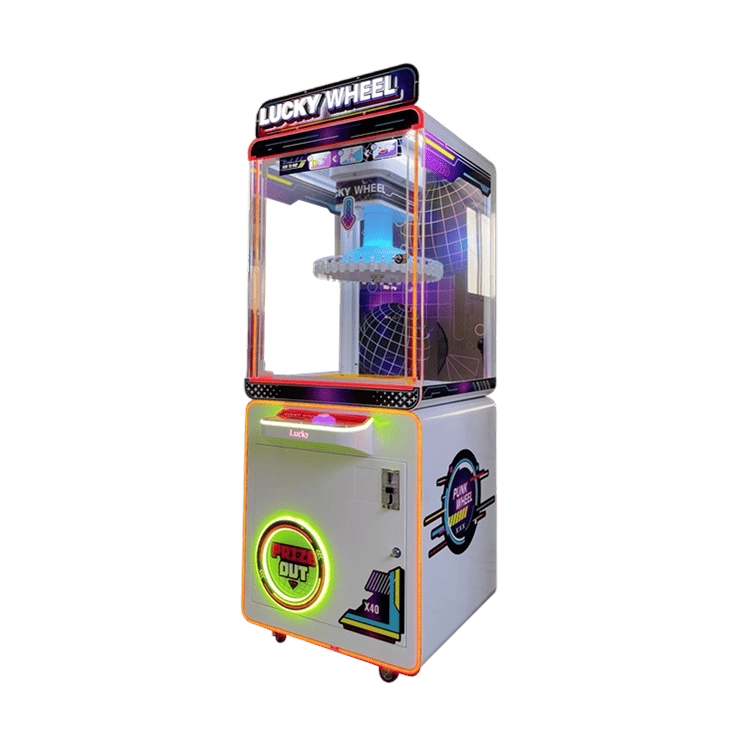
Arcade Prize Lucky Wheel Gift Machine For Amusement Areas
Get in Touch with Jiami Games
If you have any comments or good suggestions, please leave us a message; later our professional staff will contact you as soon as possible.

Innovative Entertainment, at Your Fingertips
Learn about Jiami Games and explore our expertise in console development, innovative design, and global markets.
Quick Links:
© 2026 Jiami Games.
Whatsapp: +8618520390438