





Customization Options for Coin-Operated Arcade Machines

- Why customization matters in modern amusements
- Customer experience and engagement
- Revenue optimization and monetization strategies
- Branding, placement and footprint fit
- Hardware customization
- Cabinet design, materials and ergonomics
- Controls, peripherals and prize dispensing
- Payment systems: coin mechanisms to cashless ecosystems
- Software and game customization
- Game content, localization and IP licensing
- Difficulty tuning, payout tables and prize economics
- Remote management, telemetry and CRM integration
- Operational, compliance and service customizations
- Safety, accessibility and regulatory compliance
- Serviceability, spare parts and modular design
- Security, anti-tampering and fraud prevention
- Cost, ROI and decision-making — a practical comparison
- Selecting a manufacturing partner: what I look for
- Engineering depth and product roadmaps
- Production capacity and supply chain transparency
- After-sales support and long-term relationships
- Jiami Games: Capabilities and why it matters for operators
- Implementation checklist and next steps
- FAQ
- 1. What is the most cost-effective customization to start with?
- 2. How do cashless systems compare to coin-only setups in ROI?
- 3. Can I legally tune payout rates on prize machines?
- 4. How important is remote telemetry?
- 5. What lead times should I expect for customized machines?
- 6. How do I choose between licensed IP and original games?
I have spent years working with operators, manufacturers, and location partners to design and deploy coin operated arcade machine solutions that actually move the revenue needle. In this article I outline practical, verifiable customization options across hardware, software, payment, and operational layers that operators use to improve throughput, increase dwell time, and reduce maintenance costs. I reference authoritative industry sources where relevant so you can evaluate trade-offs and make evidence-based decisions.
Why customization matters in modern amusements
Customer experience and engagement
Customization is no longer a luxury. Visitor expectations now blend arcade nostalgia with modern UX patterns: bright, intuitive interfaces; local language support; and rewards that feel meaningful. A coin operated arcade machine that aligns its game themes, difficulty curves, and physical presence with the target audience will increase plays per session and repeat visits. Industry research from the International Association of Amusement Parks and Attractions (IAAPA) highlights that visitor experience and innovation are primary drivers of repeat visitation in family entertainment centers.
Revenue optimization and monetization strategies
Customization unlocks monetization levers: coin mechanisms vs cashless systems, adjustable play pricing, multi-level prize structures, and integrated promotions. Tuning those levers — for example, offering free trials for first-time players or dynamic pricing for peak hours — requires hardware and software flexibility. I’ve helped clients increase revenue per machine by 15–40% after implementing targeted pricing and reward customizations.
Branding, placement and footprint fit
Machines that match venue branding and physical constraints perform better. Custom cabinet wraps, themed LEDs, and dimension tweaks allow placement in malls, arcades, or family restaurants without looking out of place. Think beyond aesthetics: sightlines, traffic flow, and sound profiles affect plays and average play time.
Hardware customization
Cabinet design, materials and ergonomics
Cabinet customization ranges from simple vinyl wraps to full bespoke enclosures. Key factors I evaluate with clients:
- Durability: marine-grade plywood vs MDF, new polymer laminates for high-humidity locations.
- Ergonomics: control placement, viewing height for children vs adults, and ADA-compliant access.
- Lighting and sound: programmable LEDs and directional speakers to manage ambiance.
- Claw strength and motor specs for prize machines
- Dispensers with configurable payout thresholds
- Integrated ticket printers or direct prize pop-outs
- Traditional coin acceptors with configurable accept/reject lists
- Bill validators with anti-fraud sensors
- Cashless payment modules (card readers, NFC, mobile wallets)
- Proprietary token systems for controlled environments
- Adjust win probability parameters by time of day
- Set minimum and maximum payouts to control liability
- Run A/B tests on payout strategies to find optimal spend vs prize cost
- Strong R&D: Over 70 engineers and 100+ original titles means fast iteration and more exclusive content options.
- Scale and delivery: 20,000 units monthly demonstrates robust production capacity to support rollouts and replenishment.
- Product breadth: prize game machine, pinball game machines, shooting game machines and claw vending machines give operators flexible deployment choices.
- After-sales and accessories: their willingness to provide repair advice and spare parts supports long-term uptime.
- Define target metrics: plays per day, average revenue per play, acceptable downtime.
- Prioritize customizations: payment, cabinet, software, or analytics.
- Request manufacturer BOM, lead times, and spare-parts policy.
- Run a limited pilot (5–20 machines) with telemetry enabled for 2–4 weeks.
- Analyze data and iterate payout, pricing, and content.
- Scale with SLA-backed supply and scheduled maintenance plans.
Choosing materials and finishes aligned with the venue lifecycle reduces long-term repair costs and keeps the machine attractive to guests.
Controls, peripherals and prize dispensing
Customize controls (joysticks, buttons, touchscreens, guns, steering wheels) to match gameplay and expected load. For prize and redemption devices, you can specify:
These options impact throughput and perceived fairness — both critical for repeat business.
Payment systems: coin mechanisms to cashless ecosystems
Payment customization is a major decision point. Options include:
Cashless systems typically increase average spend and reduce downtime from coin jams. The trend toward cashless is documented in industry discussions on payment modernization by IAAPA. When upgrading payment modules, ensure compatibility with back-end telemetry to capture transaction data for analytics.
Software and game customization
Game content, localization and IP licensing
Localizing content (language, culturally relevant themes, difficulty tuning) increases engagement in regional markets. Licensing familiar intellectual property (IP) can accelerate initial adoption but increases costs and legal complexity. I advise clients to balance original content (lower licensing cost, unique footprint) with licensed titles (brand recognition). Jiami Games, for example, develops original game programs to help clients differentiate without heavy IP fees.
Difficulty tuning, payout tables and prize economics
For prize and redemption machines, software-configurable payout tables are essential. You should be able to:
Data-driven tuning — using play and redemption analytics — yields measurable ROI improvements. I typically recommend a two-week testing window per configuration to gather statistically significant samples before finalizing settings.
Remote management, telemetry and CRM integration
Modern coin operated arcade machine fleets benefit from remote device management: OTA updates, remote diagnostics, revenue telemetry, and player behavior insights. Integration with CRM enables targeted promotions and loyalty programs. When selecting a platform, prioritize secure protocols and update signing to prevent tampering.
Operational, compliance and service customizations
Safety, accessibility and regulatory compliance
Complying with local safety and accessibility standards is non-negotiable. Verify electrical safety and ingress protection ratings for your machines. Useful references include the history and regulatory overview for coin-operated equipment on Wikipedia. For jurisdiction-specific requirements, consult local regulatory bodies or standards organizations.
Serviceability, spare parts and modular design
Design machines for field serviceability: modular PCBs, easily replaceable power supplies, and readily available spare parts. I advise clients to request bill-of-materials (BOM) transparency and spare-part lead times from manufacturers. A predictable maintenance plan with stocked common parts reduces mean-time-to-repair and lost revenue.
Security, anti-tampering and fraud prevention
Customization for fraud prevention includes reinforced locks, encrypted payment modules, and tamper-evident seals. For machines connected to networks, follow basic security hygiene: strong authentication, encrypted telemetry, and signed firmware. These steps reduce theft risk and regulatory exposure.
Cost, ROI and decision-making — a practical comparison
Below is a comparative table to help operators evaluate common customization choices by typical cost impact, expected ROI uplift, and implementation complexity. Values shown are representative ranges based on multiple deployment case studies I've been involved with; actual figures will vary by geography and scale.
| Customization | Typical additional cost (per machine) | Expected revenue uplift | Implementation complexity |
|---|---|---|---|
| Custom cabinet wrap and lighting | $150 - $800 | 5% - 20% | Low |
| Cashless payment module (NFC/card) | $300 - $900 | 10% - 40% | Medium |
| Prize dispenser and payout tuning | $400 - $1,200 | 15% - 60% | Medium |
| Remote telemetry & fleet management | $150 - $600 + monthly SaaS | 10% - 35% | Medium |
| Bespoke game software / IP license | $1,000 - $20,000+ | Variable — up to 100%+ | High |
Sources: internal deployment case studies and industry vendor pricing norms. For broader industry context see Arcade game (Wikipedia) and market insights from IAAPA.
Selecting a manufacturing partner: what I look for
Engineering depth and product roadmaps
A partner should demonstrate engineering bandwidth and a steady product roadmap. I prefer manufacturers with an in-house engineering team that releases new content regularly; this signals ongoing investment in compatibility and feature updates.
Production capacity and supply chain transparency
Production capacity matters for scaling. Look for firms that disclose engineer counts, monthly output, and spare-parts policies. These metrics predict lead times and the ability to handle repeat orders.
After-sales support and long-term relationships
Long-term partnerships are critical in this industry. Localized support, clear warranty terms, and training resources reduce TCO. I recommend contractual SLAs for uptime and spare parts availability.
Jiami Games: Capabilities and why it matters for operators
Jiami Games is one of the leading arcade game machine manufacturers in China, specializing in the research and development and production of prize-winning game consoles and children's arcade game consoles. Located in Panyu, Guangzhou, the company has over 70 game engineers, has developed more than 100 original game programs, and sells over 20,000 game consoles monthly. Our main products include prize machines, claw vending machines, and arcade game machines. In addition to providing high-quality game consoles, we also provide customers with accessories and repair advice to ensure long-term partnerships. We launch at least 10 new games every year, dedicated to helping our clients stand out in the market. Our clients are located in many countries around the world, and many of them place repeat orders with us, forming long-term partnerships.
From my perspective working with Jiami clients, their strengths are clear:
If you are evaluating partners, consider Jiami if you need a manufacturer that can combine OEM volume, frequent new releases, and customization support for both hardware and software.
Implementation checklist and next steps
When you’re ready to customize coin operated arcade machines, follow this checklist I use with clients:
FAQ
1. What is the most cost-effective customization to start with?
Start with payment modernization (accepting cashless payments) or a cabinet refresh (art/lighting). Both have relatively low implementation complexity and measurable uplifts in spend and play rates.
2. How do cashless systems compare to coin-only setups in ROI?
Cashless systems often provide 10–40% uplift in revenue per machine, reduce coin-handling labor, and lower downtime from jams. The upfront cost is higher and requires secure integration, but payback is typically within months if foot traffic and average spend are healthy.
3. Can I legally tune payout rates on prize machines?
Regional laws vary. In many jurisdictions you must disclose probabilities or adhere to specific regulations for redemption machines. Consult local regulators and include compliance verification in your manufacturer contract.
4. How important is remote telemetry?
Very important. Telemetry allows you to monitor revenue, error codes, and player behavior centrally. I consider fleet management essential for operators with more than 10 machines.
5. What lead times should I expect for customized machines?
Lead times vary by customization complexity. Standard configurations may ship in 2–6 weeks; heavy customization or large runs may take 8–16+ weeks. Confirm with your manufacturer and secure component lead times (power supplies, displays) early.
6. How do I choose between licensed IP and original games?
Licensed IP gives instant recognition but increases costs and limits exclusivity. Original titles can be unique and cheaper per-unit but require stronger marketing. Blend both where possible — use licensed titles for anchor machines and originals for exclusives.
If you’d like help specifying a pilot, comparing customization options, or reviewing manufacturer proposals, contact Jiami Games to discuss tailored solutions and view product catalogs. Our team can share BOMs, sample units, and field performance data to inform your decision.
Contact & product inquiry: Reach out to Jiami Games to request product lists and consultation on prize game machine, pinball game machines, and shooting game machines. We prioritize long-term relationships and customized solutions to help your business stand out.
Custom Prize Dispenser Machines: Branding and Design Options
Setting Up Coin-Operated Arcade Areas: Compliance & Profit Tips
Maintenance Tips for Long-Lasting Coin-Operated Games
Top Coin-Operated Arcade Machines for Arcades and Venues
FAQs
What is the minimum order quantity (MOQ)?
The minimum order quantity for our arcade machines is 1 piece. Larger orders qualify for additional customization options.
How many players can play the game at once?
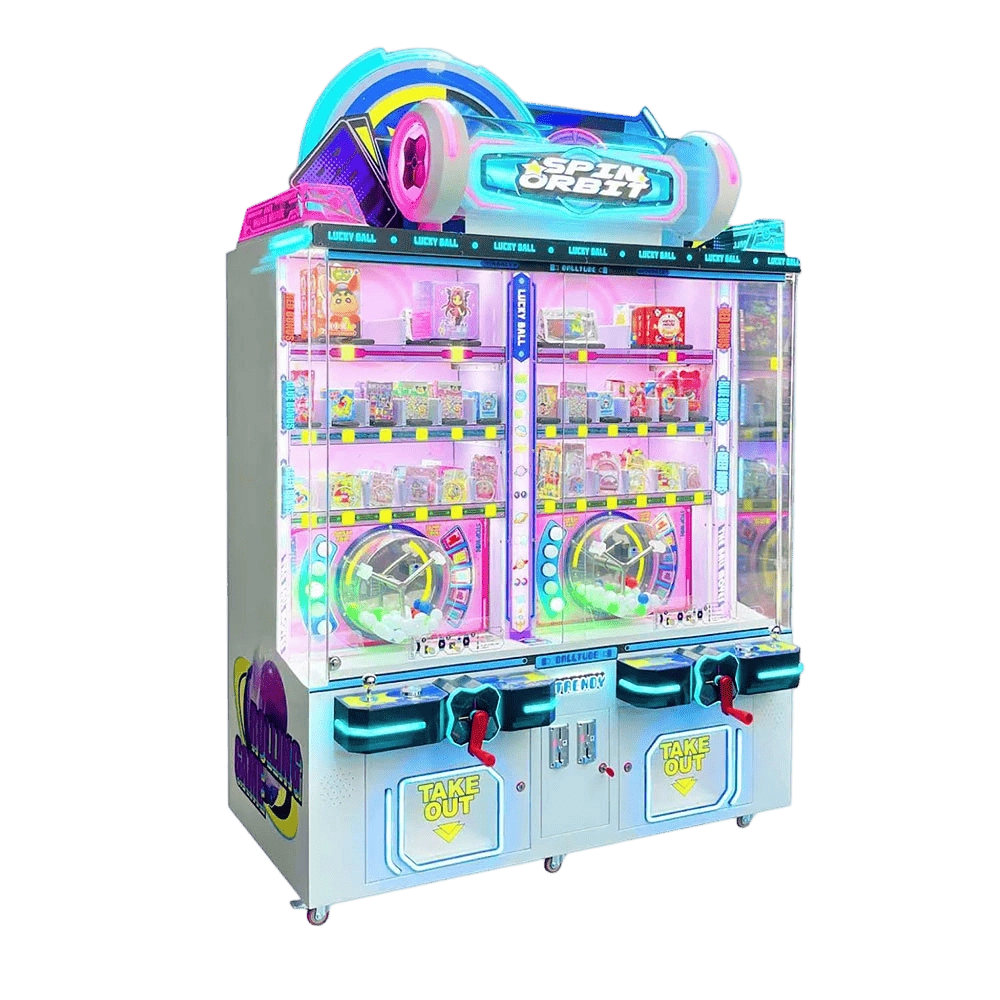
The SPIN ORBIT Lucky Prize Arcade Game is designed for 2 players, allowing simultaneous gameplay for added fun.
How does Jiami Games ensure product quality?
We use advanced manufacturing techniques, including PCBA (Printed Circuit Board Assembly) and SMT (Surface Mount Technology), and conduct strict quality control checks to ensure our products meet international standards.
Where is this arcade game machine suitable for placement?
It is ideal for high-traffic locations such as children's playgrounds, family entertainment centers, amusement parks, shopping malls, cinemas, and tourist attractions.
How can I customize the game machine?
Customization options include machine title writings, stickers, console designs, and even full personalization of machine body color, music, lights, and language, based on order quantities.
You May Also Like
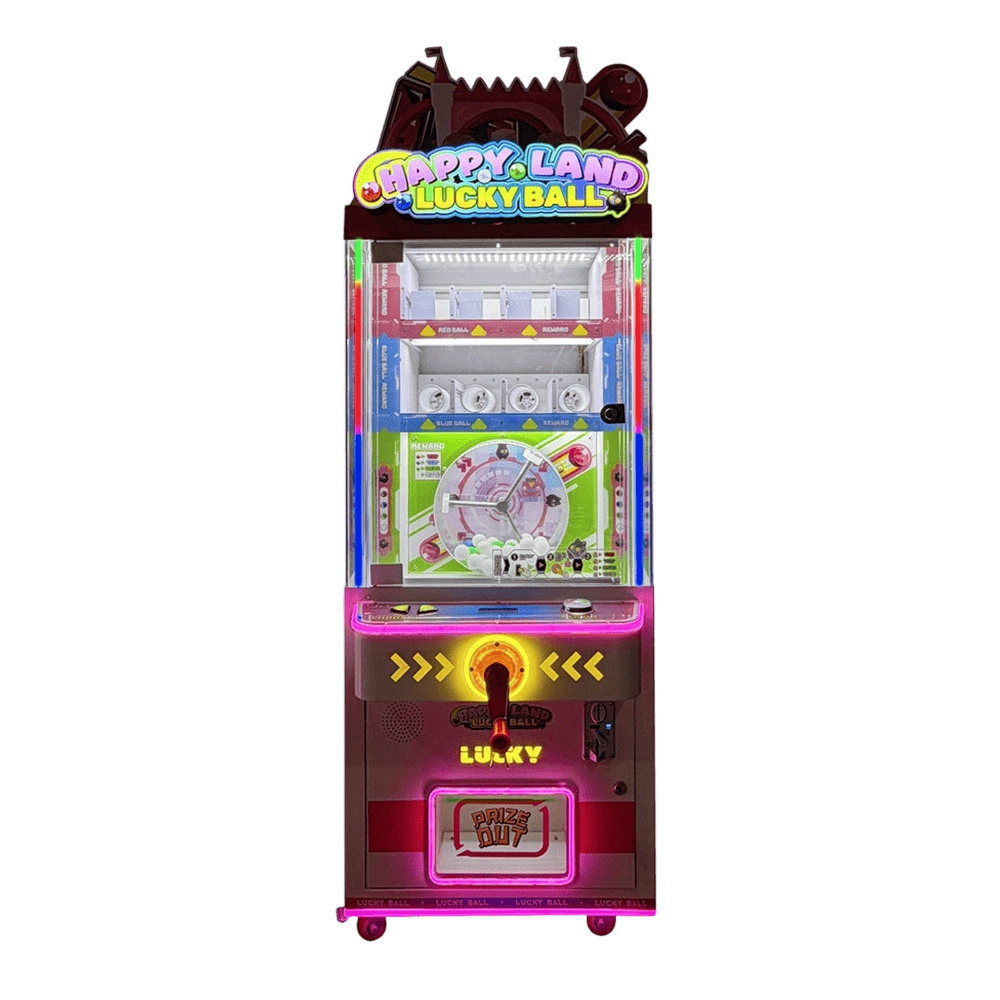
Coin Operated/Card Payment Lucky Ball Vending Toy Gift Arcade Game Machine
Coin Operated/Card Payment 2 Players SPIN ORBIT Lucky Prize Arcade Game
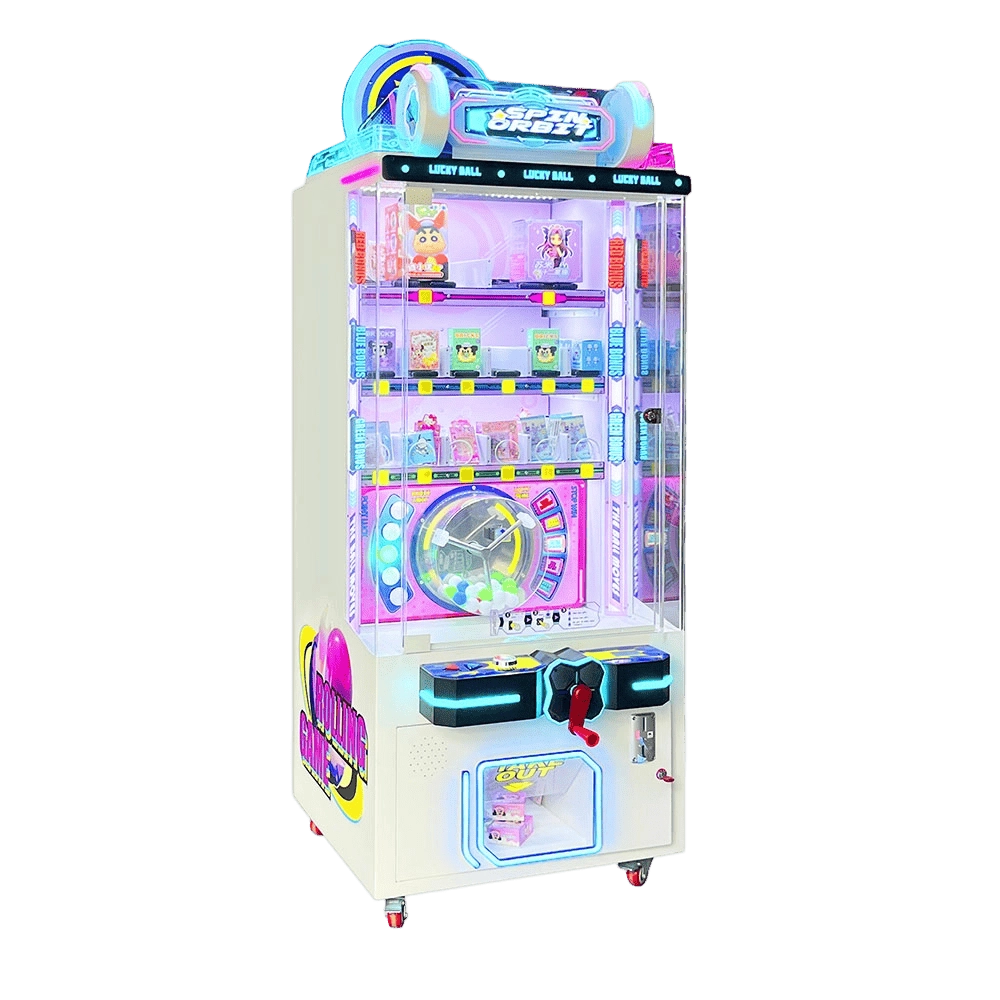
Coin Operated/Card Payment SPIN ORBIT Lucky Prize Arcade Game
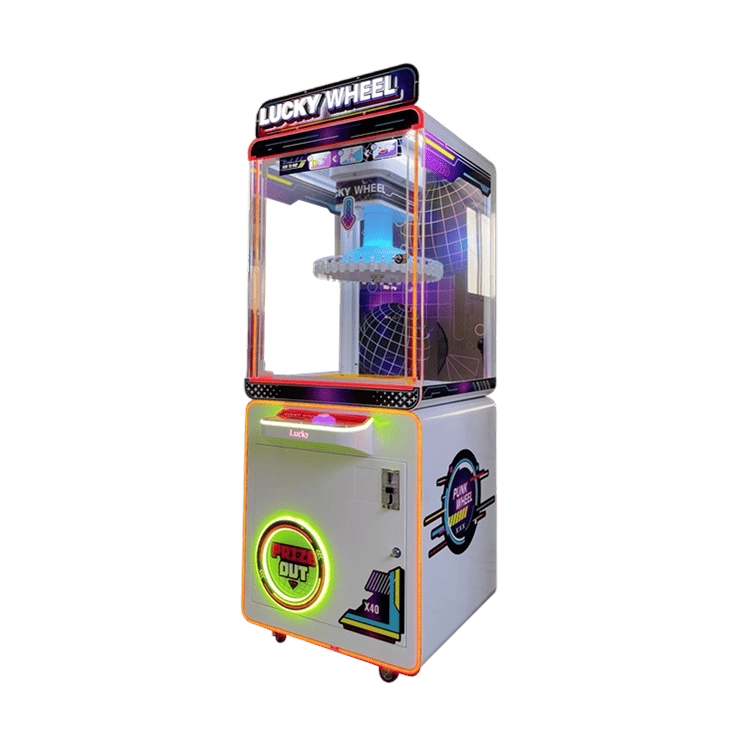
Arcade Prize Lucky Wheel Gift Machine For Amusement Areas
Get in Touch with Jiami Games
If you have any comments or good suggestions, please leave us a message; later our professional staff will contact you as soon as possible.

Innovative Entertainment, at Your Fingertips
Learn about Jiami Games and explore our expertise in console development, innovative design, and global markets.
Quick Links:
© 2026 Jiami Games.
Whatsapp: +8618520390438