






Customization and Branding for Redemption Prize Games

- Why customization matters for arcade attractions
- Customer attention and differentiated experiences
- Revenue impact of localized branding
- Addressing user demographics and accessibility
- Practical customization strategies for coin operated redemption prize winning games
- Cabinet and artwork customization
- Software and gameplay personalization
- Prize assortment and merchandising tactics
- Payments, hardware integrations, and modernizing coin-operated systems
- From coin-only to hybrid payment systems
- Hardware upgrades: sensors, lighting, and IoT telemetry
- Payment and anti-fraud considerations
- Measuring ROI, compliance, and operational impact
- Key performance indicators for customized machines
- Regulatory and safety compliance
- Operational considerations and lifecycle costs
- Partnering with a manufacturer: why choose Jiami Games
- Company profile and capabilities
- Customization services and technical strengths
- Competitive differentiators and long-term partnership model
- Implementation checklist and best practices
- Step-by-step deployment checklist
- Vendor selection criteria
- Cost-control and scalability tactics
- Frequently Asked Questions (FAQ)
- 1. What kinds of customization most reliably increase revenue on coin operated redemption prize winning games?
- 2. Are cashless payment systems worth the investment for redemption machines?
- 3. How do I ensure a custom game complies with local regulations?
- 4. What metrics should I track after customizing machines?
- 5. How long does it take to develop a customized machine or themed variant?
- 6. Can I mix branded/licensed IP with custom game mechanics?
- Contact and next steps
Coin operated redemption prize winning games are a cornerstone of modern family entertainment centers, arcades, and tourist attractions. Effective customization and branding of these machines — from cabinet art and themed prize assortments to tailored game logic and payment options — can meaningfully improve foot traffic, play frequency, and per-play revenue. This guide explains practical customization strategies, compliance considerations, measurement approaches, and how partnering with an experienced manufacturer like Jiami Games can accelerate market differentiation.
Why customization matters for arcade attractions
Customer attention and differentiated experiences
In a crowded entertainment environment, visually distinct machines attract attention. Eye-catching cabinet wraps, LED lighting schemes, and localized themes (seasonal, regional, or IP-licensed) increase first-glance engagement and motivate impulse plays on coin operated redemption prize winning games. According to the International Association of Amusement Parks and Attractions (IAAPA), operators that refresh aesthetics and offer varied experiences report stronger repeat visitation trends (IAAPA).
Revenue impact of localized branding
Branding and theme customization influence perceived value. A study of point-of-sale merchandising in leisure venues shows that perceived prize value and visual prominence can lift ticket-redemption activity and spend-per-play. Custom branding also enables cross-promotion with in-venue restaurants, shows, or retail, turning arcade machines into marketing touchpoints rather than isolated devices.
Addressing user demographics and accessibility
Customization is not just skin-deep. Cabinet height, button size, language selection, and prize type should reflect your customer demographics (families, teens, tourists). Implementing multilingual UI and accessibility-friendly controls expands your addressable audience and aligns with best practices cited in accessible entertainment guidelines.
Practical customization strategies for coin operated redemption prize winning games
Cabinet and artwork customization
Cabinet-based customization includes full-wrap graphics, color and finish choices, marquee art, and LED sequencing. Consider modular panels that allow seasonal artwork swaps without replacing the whole cabinet. Durable vinyl wraps with UV-resistant lamination protect investment and are cost-effective compared with full repaint jobs.
Software and gameplay personalization
Adjustable game settings — difficulty curves, payout tables, bonus modes, and event scheduling — let operators match machine behavior to local demand and session patterns. Implement telemetry-enabled firmware to A/B test settings (e.g., prize thresholds, bonus frequency) and use data to refine configurations. Open or remotely-updatable game code reduces downtime when deploying localized content or regulatory updates.
Prize assortment and merchandising tactics
Prizes drive redemption behavior. Use tiered prize assortments (low-ticket impulse items, mid-ticket collectables, high-ticket experiential prizes) to capture varying spend levels. Localize prizes to seasonal trends and cultural preferences. Effective merchandising also uses transparent pricing cues (ticket-to-prize mapping) and strategic placement to encourage incremental plays.
Payments, hardware integrations, and modernizing coin-operated systems
From coin-only to hybrid payment systems
While coin operated remains a core descriptor, modern redemption centers benefit from hybrid payment systems: coin mechanism, RFID cards, cashless kiosks, mobile payments, and stored-value wallets. Cashless adoption reduces maintenance (fewer coin jams) and gives operators loyalty data for personalization. Integrations with venue-wide cashless systems enable cross-machine promotions and time-limited offers.
Hardware upgrades: sensors, lighting, and IoT telemetry
Upgrading hardware improves both reliability and analytics. High-resolution sensors for prize delivery, programmable RGB lighting, and secure bill validators increase uptime and user trust. Embedding IoT telemetry supports remote diagnostics, play-count metrics, and dynamic payout management. For guidance on electronic equipment safety standards, consult resources such as the general information available through IEC and standards organizations (Coin-operated machine — Wikipedia).
Payment and anti-fraud considerations
Cashless systems require secure communication and authentication. Use PCI-compliant payment processors when handling card data. Design anti-fraud measures into both hardware (tamper sensors) and software (play-pattern analytics). Additionally, maintain accessible service logs and diagnostic tools to rapidly address disputes or faults.
Measuring ROI, compliance, and operational impact
Key performance indicators for customized machines
Track KPIs that tie customization to business outcomes: plays per day, average spend per play, dwell time near machines, ticket redemption rate, and cabinet uptime. Collect pre- and post-customization baseline data to quantify impact. Use short A/B trials to minimize confounding variables (location changes, promotions).
Regulatory and safety compliance
Redemption prize games must comply with local gambling and prize laws, electrical safety standards, and accessibility requirements. For example, claw machines and redemption consoles can be subject to consumer protection regulations; always consult local legal counsel and industry guidance from bodies like IAAPA when expanding into new jurisdictions. Wikipedia offers background on claw machines and their regulatory history (Claw machine — Wikipedia).
Operational considerations and lifecycle costs
Customize with maintenance in mind. Modular components and standardized spare parts reduce Mean Time To Repair (MTTR). Consider total cost of ownership (TCO): initial customization cost + maintenance + downtime impact. Investing in remote diagnostics and clear service documentation reduces long-term operational expenses and preserves uptime.
| Customization Area | Operator Benefit | Typical Implementation Effort |
|---|---|---|
| Cabinet artwork & lighting | Increased attention and impulse plays | Low–Medium (wraps, LED kits) |
| Software/game logic | Optimized revenue per play, tailored experience | Medium–High (firmware updates, telemetry) |
| Prize assortment | Higher redemption satisfaction, repeat visits | Low (sourcing, merchandising) |
| Payment systems (cashless) | Lower cash handling, loyalty data | Medium (hardware + integration) |
Partnering with a manufacturer: why choose Jiami Games
Company profile and capabilities
Jiami Games is one of the leading arcade game machine manufacturers in China, specializing in the research and development and production of prize-winning game consoles and children's arcade game consoles. Located in Panyu, Guangzhou, the company has over 70 game engineers, has developed more than 100 original game programs, and sells over 20,000 game consoles monthly. Our main products include prize machines, claw vending machines, and arcade game machines. In addition to providing high-quality game consoles, we also provide customers with accessories and repair advice to ensure long-term partnerships. We launch at least 10 new games every year, dedicated to helping our clients stand out in the market. Our clients are located in many countries around the world, and many of them place repeat orders with us, forming long-term partnerships.
Customization services and technical strengths
Jiami Games offers end-to-end customization: cabinet art, bespoke game logic, integrated payment modules (including cashless), and telemetry-ready hardware. With an R&D team of 70+ engineers and 100+ original game programs, Jiami can rapidly prototype and deploy themed titles, seasonal promotions, or market-specific gameplay adjustments. Jiami's production scale (>20,000 units monthly) supports volume customization while retaining quality control and timely delivery.
Competitive differentiators and long-term partnership model
Key differentiators include rapid game development cadence (10+ new games annually), a large engineering bench for bespoke feature work, on-site accessory and repair guidance, and an established international client base with repeat orders. Jiami emphasizes long-term customer relationships, offering tailored after-sales support that covers spare parts, firmware updates, and merchandising advice to maximize uptime and revenue. Major product lines include prize game machine, pinball game machines, and shooting game machines — each engineered for durability and straightforward customization.
Implementation checklist and best practices
Step-by-step deployment checklist
1) Define objectives: footfall growth, revenue uplift, or brand promotion. 2) Audit location and demographics. 3) Select customization scope: visual, hardware, or software. 4) Pilot with telemetry and A/B testing. 5) Roll out, monitor KPIs, and iterate. 6) Maintain a spare-parts program and scheduled preventive maintenance.
Vendor selection criteria
Evaluate manufacturers on R&D capability, production capacity, warranty and service response times, customization cost and lead time, and global references. Request telemetry demonstration and examples of previous localization projects. Working with a partner that offers both manufacturing scale and engineering flexibility—like Jiami Games—reduces time-to-market for customized concepts.
Cost-control and scalability tactics
Use modular customization (interchangeable panels, updateable firmware) and standardized electrical / mechanical components to keep per-unit costs predictable at scale. Negotiate multi-year service agreements and volume discounts for artwork and spare parts to reduce ongoing costs.
Frequently Asked Questions (FAQ)
1. What kinds of customization most reliably increase revenue on coin operated redemption prize winning games?
Visual branding (cabinet wraps, LEDs), localized prize assortments, and tuned payout/bonus mechanics typically yield the strongest revenue increases. Combining visual refreshes with software adjustments and cashless payments produces synergistic uplift.
2. Are cashless payment systems worth the investment for redemption machines?
Yes, in most modern venues. Cashless systems reduce downtime from coin jams, provide valuable loyalty and play data, and simplify accounting. Ensure integrations are secure and compliant with payment standards (PCI).
3. How do I ensure a custom game complies with local regulations?
Consult local legal counsel and industry associations early. Verify whether machines are classified under gambling, amusement, or vending laws in your jurisdiction, and document payout mechanisms and prize structures to demonstrate compliance.
4. What metrics should I track after customizing machines?
Track plays per day, average spend per play, prize redemption rates, machine uptime, and average ticket yield. Compare against pre-customization baselines and run A/B tests where possible.
5. How long does it take to develop a customized machine or themed variant?
Lead time varies by scope. Simple artwork and minor firmware tweaks can be done in weeks; deeper hardware changes or bespoke game mechanics typically take 2–4 months including prototyping and compliance testing. Manufacturers with large R&D teams and production capacity can shorten timelines.
6. Can I mix branded/licensed IP with custom game mechanics?
Yes, but licensing introduces additional legal and cost considerations (royalties, approval cycles). Work with your manufacturer and legal advisors to align artwork, animation, and prize messaging with licensor requirements.
Contact and next steps
If you want to explore customized solutions for coin operated redemption prize winning games, consider a consultation with an experienced manufacturer. Jiami Games provides tailored design, rapid prototyping, global shipping, and post-sale support to help venues differentiate their offerings and maximize lifetime value. Learn more about Jiami Games' prize game machine, pinball game machines, and shooting game machines, request product catalogs, or get a consultation by contacting our sales team. We prioritize long-term customer relationships and strive to offer customized solutions that help businesses stand out. Our commitment to quality, innovation, and customer service has earned us a strong reputation in the amusement industry.
To request a quote or schedule a product demo, please contact Jiami Games through our official channels and specify your target market, customization goals, and expected volumes so we can provide a tailored proposal.
Custom branded arcade tokens: design, pricing and order guide
Top Coin-Operated Arcade Machines for Arcades and Venues
Top prize game machine Manufacturers and Suppliers
Top pinball game machine Manufacturers and Suppliers
FAQs
How does Jiami Games ensure product quality?
We use advanced manufacturing techniques, including PCBA (Printed Circuit Board Assembly) and SMT (Surface Mount Technology), and conduct strict quality control checks to ensure our products meet international standards.
What is the prize system like?
The prizes are diverse, with different colored balls corresponding to rewards in varying prize tiers, catering to a wide range of player preferences.
What is the gameplay of the SPIN ORBIT Lucky Prize Arcade Game?
Players use the joystick to guide the ball into a designated hole. Each color ball corresponds to different prize values: red for the highest, blue and green for mid-range prizes, and white for no prize.
What is the minimum order quantity (MOQ)?
The minimum order quantity for our arcade machines is 1 piece. Larger orders qualify for additional customization options.
Where is this arcade game machine suitable for placement?
It is ideal for high-traffic locations such as children's playgrounds, family entertainment centers, amusement parks, shopping malls, cinemas, and tourist attractions.
You May Also Like
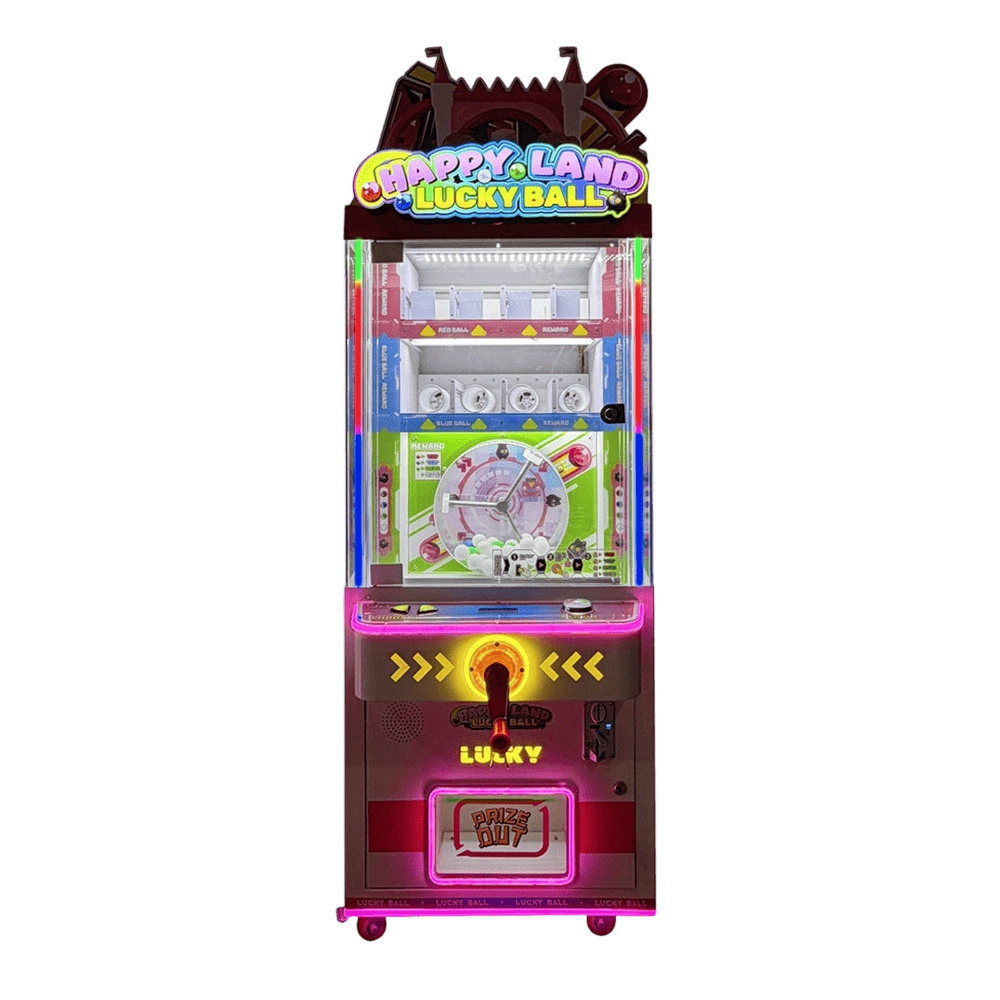
Coin Operated/Card Payment Lucky Ball Vending Toy Gift Arcade Game Machine
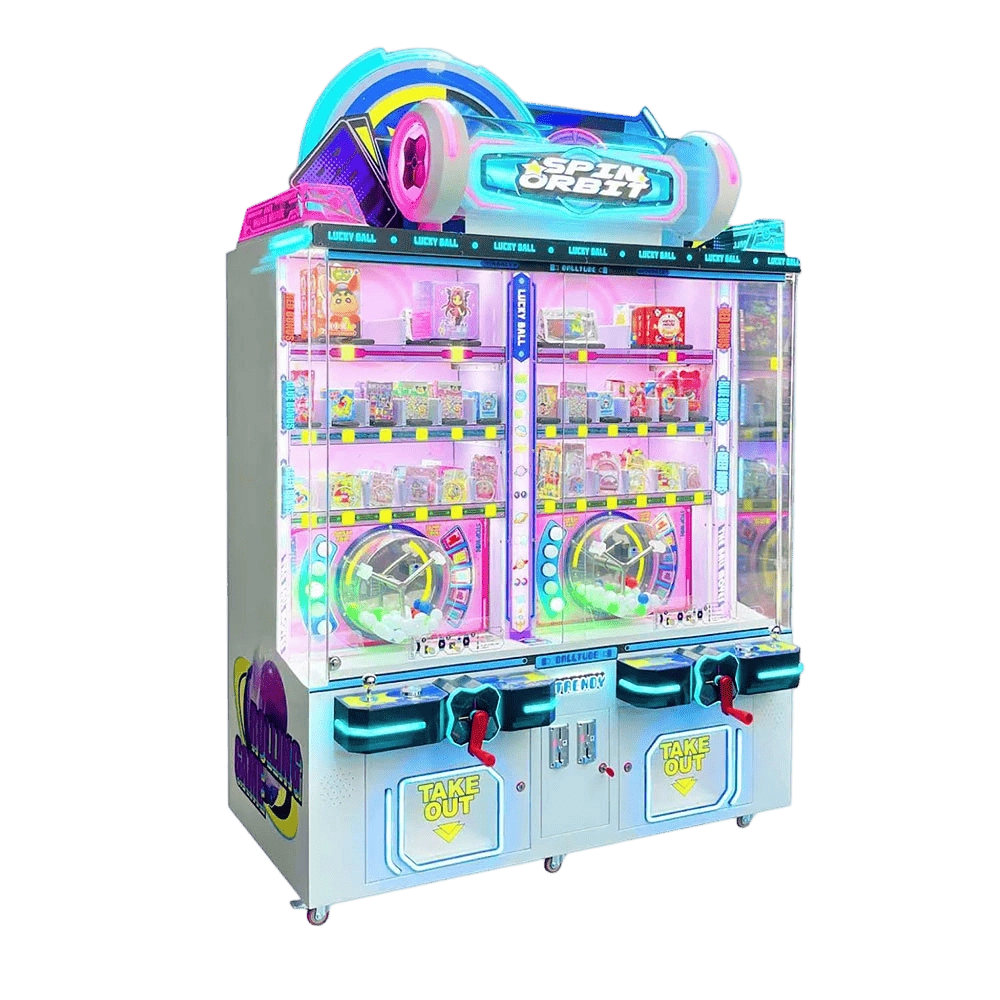
Coin Operated/Card Payment 2 Players SPIN ORBIT Lucky Prize Arcade Game
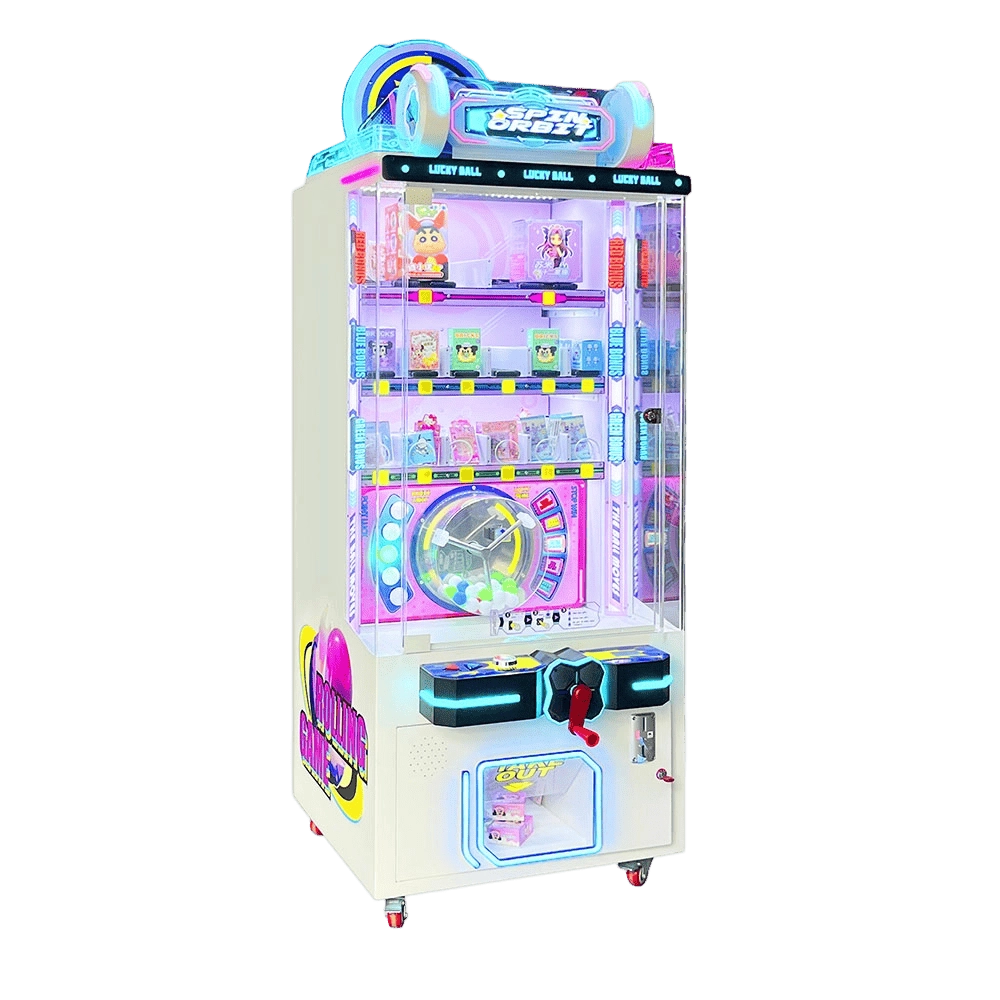
Coin Operated/Card Payment SPIN ORBIT Lucky Prize Arcade Game
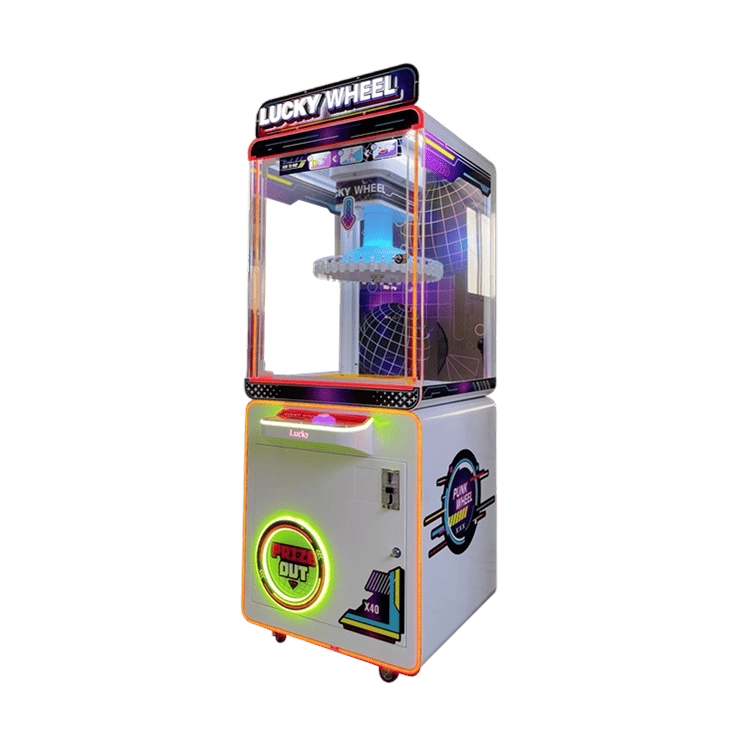
Arcade Prize Lucky Wheel Gift Machine For Amusement Areas
Get in Touch with Jiami Games
If you have any comments or good suggestions, please leave us a message; later our professional staff will contact you as soon as possible.

Innovative Entertainment, at Your Fingertips
Learn about Jiami Games and explore our expertise in console development, innovative design, and global markets.
Quick Links:
© 2026 Jiami Games.
Whatsapp: +8618520390438