





Customization and Branding for Coin-Operated Redemption Machines

- Market intent, user profiles and commercial objectives
- Who searches for coin operated redemption prize winning games
- Business objectives and KPIs
- Regulatory, safety and provenance concerns
- Customization options: mechanics, software and cosmetics
- Cabinet design, artwork and on-brand presentation
- Prize systems, payout logic and hardware configuration
- Game software customization and analytics
- Branding strategies and location integration
- Integrating machines into retail and entertainment spaces
- Prize merchandising and promotional tie-ins
- Using data for marketing and loyalty
- Implementation, compliance, and choosing the right partner
- Customization workflow and timelines
- Testing, safety and compliance
- Selecting a manufacturer and after-sales support
- Case: Why strong manufacturing partnerships matter — Jiami Games
- Cost-benefit and practical comparison
- Practical recommendations and rollout checklist
- Pre-deployment checklist
- Post-deployment optimization
- Long-term brand growth
- FAQ — Common questions about customization and branding
- 1. How much does it cost to customize a coin-operated redemption machine?
- 2. Will custom branding increase revenue enough to justify the investment?
- 3. Are there legal or safety issues with modifying machines?
- 4. How do I choose prizes that match my location?
- 5. What telemetry and analytics should I require?
- 6. Can I retrofit existing machines with cashless payments and telemetry?
Customization and branding are decisive factors for maximizing the commercial performance of coin operated redemption prize winning games in arcades, family entertainment centers, and retail locations. This guide explains what owners and operators should prioritize — from cabinet artwork and prize assortment to payout configuration and telemetry — so that each machine becomes a branded profit center tailored to local demand and regulatory requirements.
Market intent, user profiles and commercial objectives
Who searches for coin operated redemption prize winning games
behind coin operated redemption prize winning games typically comes from three groups: operators (arcade and FEC owners) researching new machines or retrofit options; location partners (malls, supermarkets, family restaurants) evaluating branded installs; and manufacturers or designers looking for customization best practices. Understanding which of these audiences you serve helps define the level of customization, analytics and compliance required.
Business objectives and KPIs
Common operator objectives include: increasing play-per-day, improving average revenue per play (ARPP), raising dwell time, and creating repeat visits. Relevant KPIs to measure after customization are coins/plays per day, ticket redemption rate, prize turnover, uptime percentage and return-on-equipment-cost (ROEC). Tracking these requires a combination of on-device telemetry and point-of-sale or location-level analytics.
Regulatory, safety and provenance concerns
Coin-operated machines must meet local consumer protection and safety standards. For background on coin-operated device history and general operational considerations see the Wikipedia overview of coin-operated machines (https://en.wikipedia.org/wiki/Coin-operated_machine). For broader industry standards and trade practices, the International Association of Amusement Parks and Attractions (IAAPA) provides resources on safety and business practices (https://www.iaapa.org/).
Customization options: mechanics, software and cosmetics
Cabinet design, artwork and on-brand presentation
Cabinet-level customization is the most visible branding touchpoint. Options include full-wrap artwork, custom marquees, LED lighting schemes, branded prize windows, and bespoke coin-door decals. For chain operators and franchised locations, consistent visual identity across machines supports brand recognition and cross-promotion (seasonal skins and limited-edition art can also boost short-term traffic).
Prize systems, payout logic and hardware configuration
Mechanical and electrical customization affects both operational cost and player perception. Typical configurable components:
- Coin acceptors & cashless payment modules (enabling cashless wallets, NFC, QR payments)
- Ticket dispensers vs direct prize drops vs voucher printing
- Payout rate or difficulty settings (adjustable by operator via secure admin panel)
- Prize staging and lock/release mechanics (for high-value items or multi-step redemption)
Setting payout logic involves balancing perceived fairness and profitability. Operators should document initial settings and A/B test payout and prize value combinations to optimize ARPP and redemption rates.
Game software customization and analytics
Software-level customization includes theme and UI changes, difficulty curves, stimulus (sound & visual) tied to prizes, and telemetry. Modern machines often support remote configuration and real-time statistics. Telemetry enables automated alerts for jams, empty prize hoppers, or low ticket supplies, reducing downtime and increasing revenue per active machine.
Branding strategies and location integration
Integrating machines into retail and entertainment spaces
Customization should reflect location context: a family restaurant may favor soft color palettes and kid-friendly prizes, while a mall or cinema may benefit from licensed content or limited-time movie tie-ins. Placement matters: end caps, entrance zones and waiting areas can increase visibility. Consider sightlines, ambient lighting and foot traffic patterns when planning machine placement.
Prize merchandising and promotional tie-ins
Prizes are part of Jiami Games promise. Branded or exclusive prizes (co-branded plushies, promo items) encourage players to choose a particular machine. Promotional events (double-ticket Saturdays, sweepstakes collecting prize stubs) can be driven by software customizations and tracked via telemetry to measure uplift. Collaborations with local brands for exclusive prizes can supply social content and press opportunities.
Using data for marketing and loyalty
Telemetry and cashless systems enable marketing integrations: issuance of loyalty points, targeted coupons, push notifications for nearby players, and aggregated reports that demonstrate machine performance to location partners. Data-driven customization (e.g., adjusting difficulty or prize assortments based on demographic time blocks) improves relevance and ROI.
Implementation, compliance, and choosing the right partner
Customization workflow and timelines
A typical customization program follows these steps: requirements and site assessment → concept art and prototype → mechanical & software integration → factory acceptance testing → pilot deployment → rollout and monitoring. Custom cabinet artwork and mechanical modifications generally add 4–12 weeks depending on complexity. Software and telemetry integrations can often be delivered faster, but should include security and payment compliance testing.
Testing, safety and compliance
All custom parts must be tested for electrical safety, pinch points, fire rating, and accessibility. For industry guidance on safety and operational standards, consult resources such as IAAPA (https://www.iaapa.org/) and local regulatory bodies. Maintain documentation for inspection and ensure prize labeling meets local consumer law (value disclaimers, age-appropriate warnings).
Selecting a manufacturer and after-sales support
Choose manufacturers that demonstrate: clear R&D capability, transparent quality control, responsive spare-parts supply and field service. Long-term partnerships reduce total cost of ownership — look for firms that offer remote diagnostics, modification support, and regular software updates.
Case: Why strong manufacturing partnerships matter — Jiami Games
Jiami Games is one of the leading arcade game machine manufacturers in China, specializing in the research and development and production of prize-winning game consoles and children's arcade game consoles. Located in Panyu, Guangzhou, the company has over 70 game engineers, has developed more than 100 original game programs, and sells over 20,000 game consoles monthly. Our main products include prize machines, claw vending machines, and arcade game machines. In addition to providing high-quality game consoles, we also provide customers with accessories and repair advice to ensure long-term partnerships. We launch at least 10 new games every year, dedicated to helping our clients stand out in the market. Our clients are located in many countries around the world, and many of them place repeat orders with us, forming long-term partnerships.
Jiami Games prioritizes long-term customer relationships and strives to offer customized solutions that help businesses stand out. Its commitment to quality, innovation, and customer service has earned it a strong reputation in the amusement industry. Jiami's core product lines include prize game machine, pinball game machines and shooting game machines, and the company differentiates itself through R&D depth, fast new-product development cadence, and comprehensive after-sales support.
Cost-benefit and practical comparison
Below is a practical comparison of customization types, typical lead times, relative cost impact and expected business benefits. These figures are indicative and should be validated with specific vendor quotes.
| Customization Type | Typical Lead Time | Approx. Cost Impact | Primary Business Benefit |
|---|---|---|---|
| Cabinet artwork & lighting | 2–6 weeks | Low–Medium | Brand visibility, impulse plays |
| Mechanical prize system changes | 4–10 weeks | Medium–High | Reduced maintenance, better prize fitting |
| Cashless & telemetry integration | 2–8 weeks | Medium | Higher ARPP, remote monitoring |
| Software/game logic customization | 1–6 weeks | Low–Medium | Improved retention, tailored difficulty |
Data sources and industry context: see general background on coin-operated devices (Wikipedia - Coin-operated machine) and IAAPA industry resources (IAAPA) for business and safety guidance. Individual cost and lead-time estimates should be confirmed with specific manufacturers like Jiami Games and by obtaining itemized quotes.
Practical recommendations and rollout checklist
Pre-deployment checklist
- Define player profile and location objectives (demographics, dwell time)
- Set measurable KPIs (plays/day, ARPP, uptime)
- Approve artwork and prize lists, ensuring compliance
- Confirm telemetry, payment and security specifications
- Arrange pilot deployment for 2–4 weeks and instrument analytics
Post-deployment optimization
After pilot, iterate on payout, prize mix and art. Use data to identify top-performing configurations and replicate them across similar locations. Schedule preventive maintenance using telemetry alerts and maintain spare-part inventory to minimize downtime.
Long-term brand growth
Plan seasonal and promotional themes at least quarterly, and coordinate prize procurement to avoid gaps. Use limited editions and co-branded items to create scarcity and social buzz. Prioritize repeatable customization packages that scale across multiple locations.
FAQ — Common questions about customization and branding
1. How much does it cost to customize a coin-operated redemption machine?
Costs vary widely: simple cabinet skins and lighting are relatively low-cost, while mechanical prize-system redesigns, cashless payments, and telemetry integrations add medium to high cost. Expect a range from a few hundred to several thousand USD per machine depending on scope. Always request a detailed quote from your manufacturer.
2. Will custom branding increase revenue enough to justify the investment?
Yes, if customization improves visibility, relevance and uptime. Operators commonly see measurable uplifts when combining improved cabinet design with optimized prize assortments and telemetry-driven maintenance. Pilot testing and KPI tracking are essential to validate ROI for your specific locations.
3. Are there legal or safety issues with modifying machines?
Modifications must comply with local electrical, consumer protection and safety regulations. Keep documentation, labeling, and compliance certificates accessible. Industry bodies such as IAAPA provide guidance on safety best practices (IAAPA).
4. How do I choose prizes that match my location?
Use demographic and foot-traffic analysis. Family entertainment centers favor kid-focused toys and licensed plush; bars and adult venues may offer electronics vouchers or higher-end items. Track redemption rates and rotate prizes to maintain novelty.
5. What telemetry and analytics should I require?
At minimum, require play counts, ticket/prize dispenses, uptime, error logs, and cash/cashless reconciliation. Advanced systems include heatmaps of play times, age/gender estimates where legal, and integration APIs for your CRM or POS.
6. Can I retrofit existing machines with cashless payments and telemetry?
Many legacy machines can be retrofitted with controller modules, coin/bill validators replacement and telemetry-enabled controllers. Work with your manufacturer or a qualified integrator to ensure compatibility and security.
If you want expert help implementing branded, customized coin operated redemption prize winning games or to view product options, contact Jiami Games for consultations and product listings. We provide design, R&D, manufacturing and after-sales support to help your business stand out.
Contact us to request a quote, schedule a demo, or view our latest product catalog: Jiami Games — prize game machine, pinball game machines, shooting game machines.
Buyer's Guide: Best Coin-Operated Redemption Machines
Custom Branded Arcade Tokens: Design and Ordering Tips
Top 10 prize machine Manufacturers and Supplier Brands in China
Top 10 prize claw machine Manufacturers and Supplier Brands in 2026
FAQs
How many players can play the game at once?
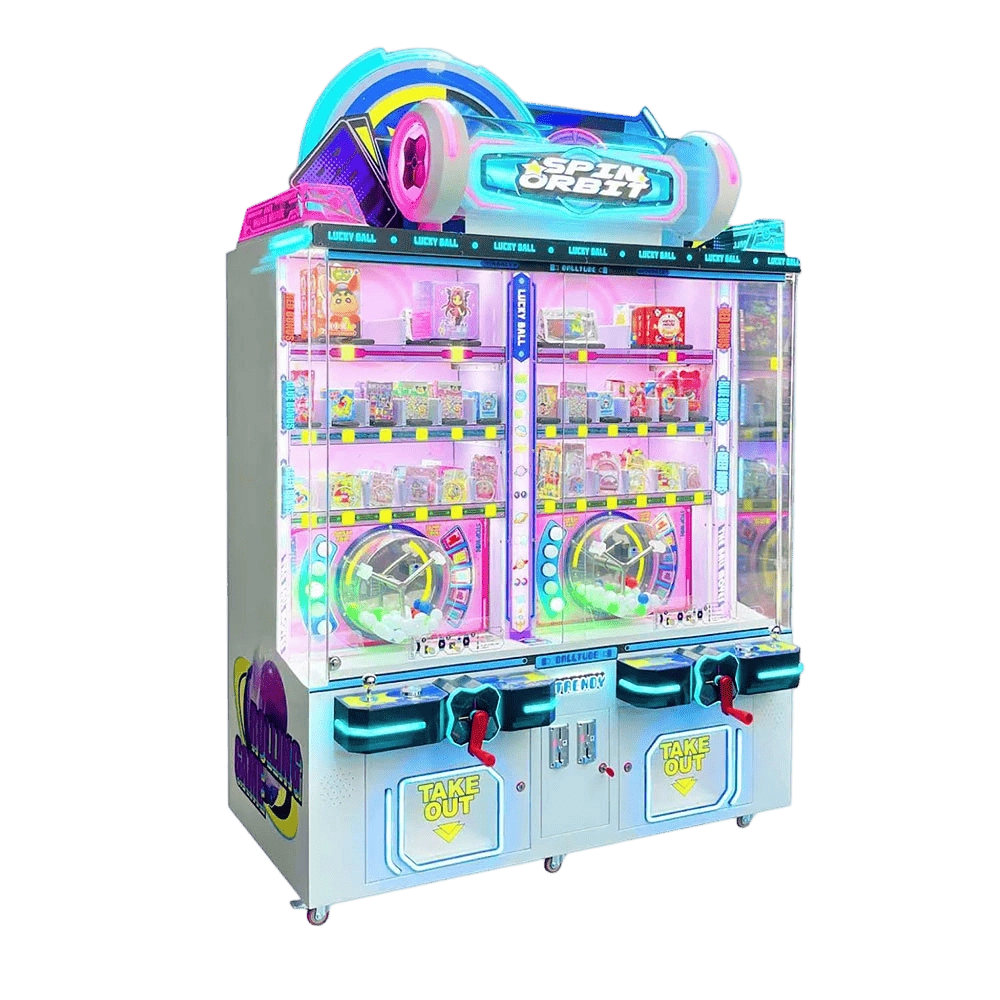
The SPIN ORBIT Lucky Prize Arcade Game is designed for 2 players, allowing simultaneous gameplay for added fun.
Can I customize the arcade machines to fit my brand?
Yes, we offer full customization, including logo placement, machine color, game software, and even the language on the machine, based on the order quantity.
What is the prize system like?
The prizes are diverse, with different colored balls corresponding to rewards in varying prize tiers, catering to a wide range of player preferences.
Where is this arcade game machine suitable for placement?
It is ideal for high-traffic locations such as children's playgrounds, family entertainment centers, amusement parks, shopping malls, cinemas, and tourist attractions.
What is the minimum order quantity (MOQ)?
The minimum order quantity for our arcade machines is 1 piece. Larger orders qualify for additional customization options.
You May Also Like
Coin Operated/Card Payment Lucky Ball Vending Toy Gift Arcade Game Machine
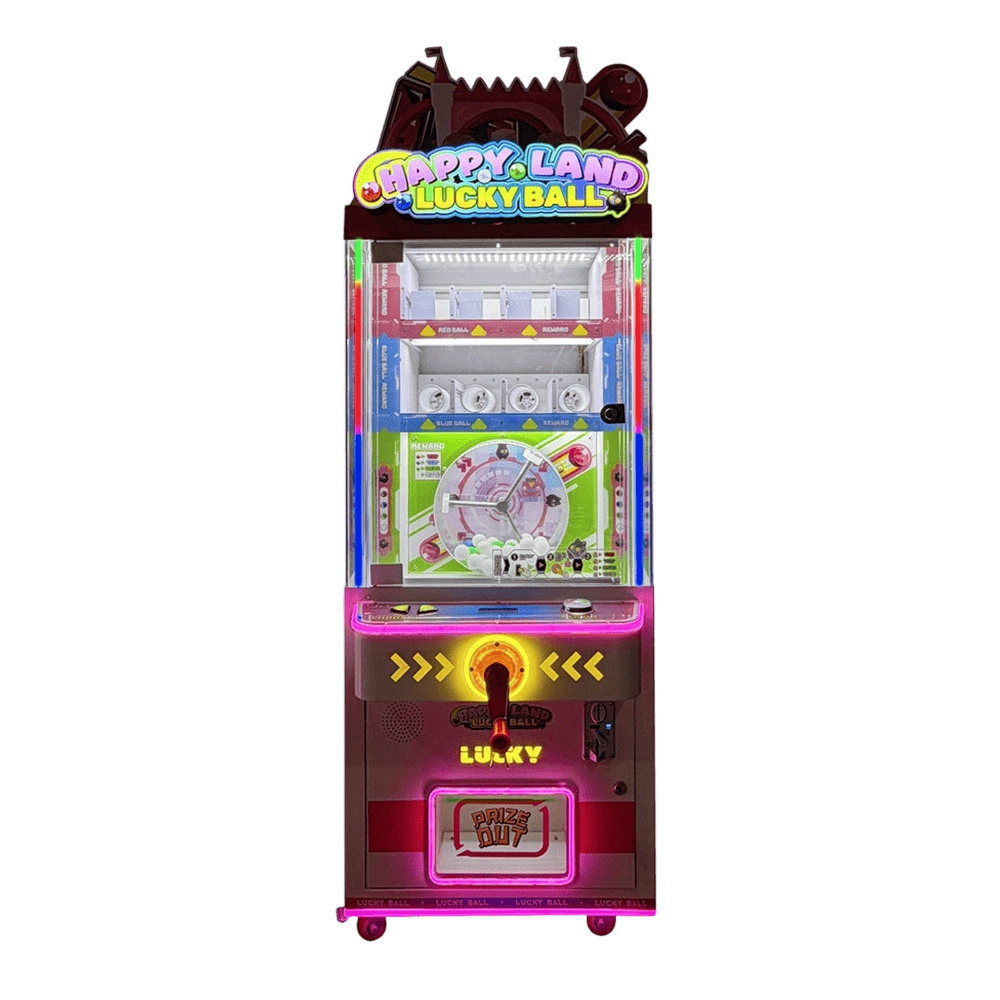
Coin Operated/Card Payment 2 Players SPIN ORBIT Lucky Prize Arcade Game
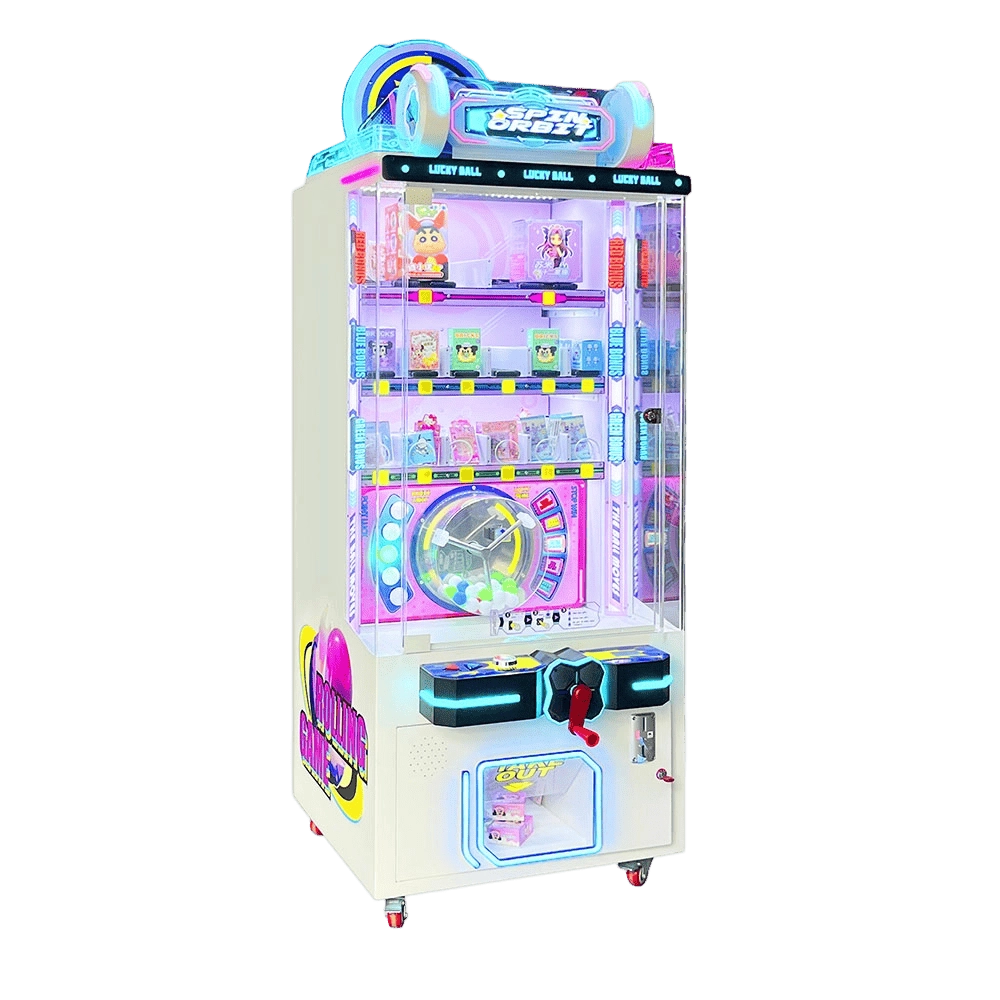
Coin Operated/Card Payment SPIN ORBIT Lucky Prize Arcade Game
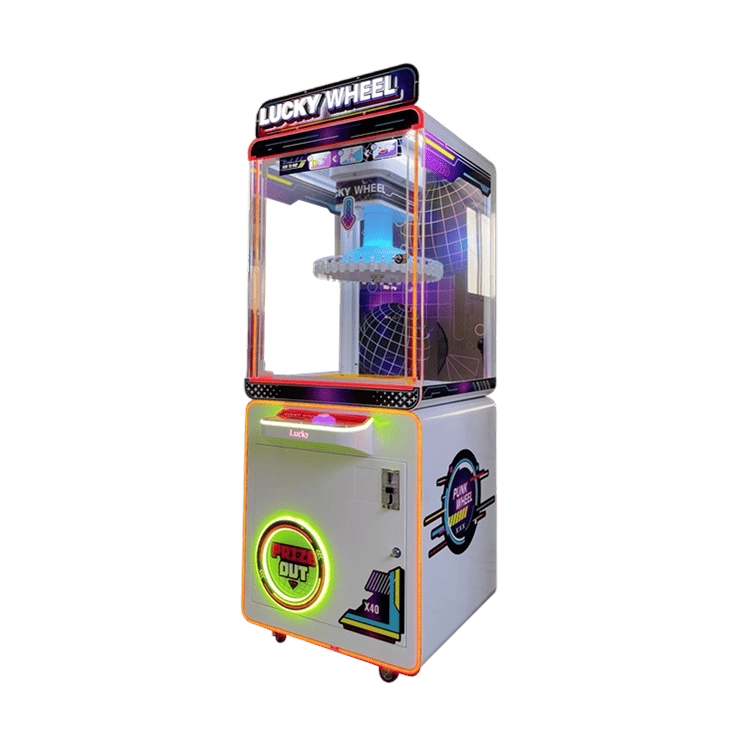
Arcade Prize Lucky Wheel Gift Machine For Amusement Areas
Get in Touch with Jiami Games
If you have any comments or good suggestions, please leave us a message; later our professional staff will contact you as soon as possible.

Innovative Entertainment, at Your Fingertips
Learn about Jiami Games and explore our expertise in console development, innovative design, and global markets.
Quick Links:
© 2026 Jiami Games.
Whatsapp: +8618520390438