





Customizing Prize Dispenser Machines: Branding & Prize Options

- Why customization matters for arcade operators
- Customer attraction and retention
- Location-specific merchandising
- Compliance and safety considerations
- Designing your prize dispenser machine brand experience
- Visual branding: wraps, lighting and signage
- Player experience and prize visibility
- Digital integration & telemetry
- Choosing prize options that drive revenue
- Tangible prizes: plush, toys and licensed merchandise
- Ticketing, vouchers and hybrid rewards
- Seasonal and promotional strategies
- Implementation, maintenance, and choosing the right partners
- Sourcing & supply chain: OEM vs. custom ODM
- Maintenance, spare parts and repair advice
- Measuring success and ROI
- Why partner with an experienced manufacturer: Jiami Games example
- Final checklist & next steps
- Pre-deployment checklist
- Rollout and measurement
- Contact and product inquiry
- FAQ
- 1. What is a prize dispenser machine and how does it differ from a claw machine?
- 2. How do I choose the right prize mix for my location?
- 3. Will customization increase maintenance requirements?
- 4. How can I ensure my machine complies with safety standards?
- 5. What KPIs should I track to judge a customization's success?
- 6. How quickly can I get custom machines delivered?
I have worked extensively with operators, mall entertainment centers, and family entertainment centers to design and deploy prize dispenser machines that not only attract players but also reinforce brand messages and produce measurable revenue. In this article I explain how to approach customization from strategic, technical, and operational angles. I cover visual branding, prize assortments, digital integration, safety and compliance, sourcing, ongoing maintenance, and how to measure return on investment for your prize dispenser machine deployments. I also describe how to choose manufacturing and service partners that can support long-term growth.
Why customization matters for arcade operators
Customer attraction and retention
In my experience, a prize dispenser machine that stands out visually and delivers a perceived value from the first glance converts passersby into players. Custom wraps, themed LED lighting, and branded prize displays increase dwell time and impulse play. This matters more today because customer attention is limited; a recognizable theme or localized brand tie-in can increase play rates by encouraging social sharing and repeat visits.
Location-specific merchandising
One size rarely fits all. A configuration that performs well in a tourist-heavy boardwalk will underperform in a suburban family-center. I always advise operators to select prizes and machine messaging that match foot traffic, average spend per head, and seasonality. For example, kids’ plush and small toys do well near family dining areas, while branded merchandise and novelty electronics suit high-traffic tourist hubs.
Compliance and safety considerations
Customization must never compromise machine safety. When modifying housings, adding screens, or changing prize chutes, you should ensure designs meet applicable machinery safety principles such as ISO 12100 for machine safety risk assessment (ISO 12100). Industry organizations like IAAPA provide guidance and market insights for arcade operators (IAAPA). I always recommend documenting design changes and running a risk assessment before deployment.
Designing your prize dispenser machine brand experience
Visual branding: wraps, lighting and signage
Visual identity is the first contact point between potential players and your prize dispenser machine. I advise combining three elements:
- Full-body vinyl wraps for high-impact visuals that can be swapped for seasonal campaigns;
- Programmable RGB LED arrays to highlight prize tiers and draw attention in low-light arcades;
- Clear, bilingual signage showing play instructions and prize values to reduce friction.
These changes are relatively low-cost but high-impact. Work with a manufacturer who supports custom cabinetry and pre-configured mounting points for displays and LEDs to avoid retrofitting headaches.
Player experience and prize visibility
Prize visibility is a core behavioral driver. A well-lit prize bay, transparent display, and clear prize tiers (common, rare, jackpot) influence perceived value. Internally, optimizing the chute and delivery mechanism improves payout reliability and reduces refunds. If the machine is a claw vending or similar prize dispenser machine, ensure the claw strength and win-rate settings are adjustable and logged for auditing.
Digital integration & telemetry
Modern prize dispenser machines benefit from telemetry and cashless payments. I recommend integrating:
- Wireless telemetry for remote diagnostics (uptime, coin/card transactions, error logs);
- Cashless acceptance (NFC, QR, card) to increase conversion in cashless markets;
- Optional camera or prize recognition to enable promotional events and verify payouts.
These integrations enable dynamic pricing (e.g., buy-one-get-one), real-time prize inventory alerts, and promotional A/B testing. When testing, keep records for 30–90 days to evaluate behavior changes statistically before rolling out site-wide.
Choosing prize options that drive revenue
Tangible prizes: plush, toys and licensed merchandise
Tangible prizes remain the most reliable revenue drivers for prize dispenser machines. When selecting items, consider:
- Per-unit cost and margin — choose a mix of high-margin soft goods (e.g., plush) and higher-value licensed items for occasional big wins;
- Durability and displayability — prizes that look good behind glass maintain perceived value better;
- Local relevance — region-specific merchandise or seasonal items increase emotional connection.
To control spoilage and theft, establish replenishment cycles and secure inventory storage near the machine.
Ticketing, vouchers and hybrid rewards
Ticket-based and voucher prizes create secondary transactions, steering customers toward prize redemption areas or partner stores. Digital vouchers (QR codes, wallet passes) allow tracking redemption rates and cross-promotional analytics. I frequently combine small-ticket items in-machine with larger voucher-based rewards redeemable at a staffed prize counter to increase foot traffic and secondary sales.
Seasonal and promotional strategies
Seasonality matters. Run themed prize assortments and limited-time runs (holiday plush, movie tie-ins) to create urgency. Use social channels and in-venue signage to drive awareness. I recommend measuring lift via telemetry (play counts) and redemption tracking to quantify campaign ROI.
Implementation, maintenance, and choosing the right partners
Sourcing & supply chain: OEM vs. custom ODM
When I advise clients on sourcing, they typically choose between standard OEM machines with branding options or ODM customization for deep customization. Key considerations:
- Order volume and lead time — ODM is cost-effective at scale;
- Design complexity — advanced cabinet changes or bespoke mechanics require ODM engagement;
- After-sales support — choose partners offering spare parts and documentation.
For industry benchmarks and trends, IAAPA publishes market research that helps forecast demand and decide scale (IAAPA).
Maintenance, spare parts and repair advice
Operational uptime is critical. I insist on a spare-parts kit for every 10–20 machines and remote diagnostics to reduce mean time to repair (MTTR). Common maintenance tasks include:
- Cleaning sensors and prize bays weekly;
- Lubricating moving parts monthly;
- Updating software and security patches quarterly.
Manufacturers that provide repair manuals, parts lists, and phone or video support significantly reduce service costs and prolong equipment life.
Measuring success and ROI
To evaluate customization impact, track the following KPIs for each prize dispenser machine over time:
- Plays per day (traffic conversion)
- Average revenue per play
- Redemption rate (if vouchers or tickets are used)
- Uptime percentage
- Maintenance cost per month
Compare these KPIs pre- and post-customization. I typically use a 90-day test window and recommend a statistically significant sample size before drawing conclusions.
Why partner with an experienced manufacturer: Jiami Games example
Choosing the right manufacturing partner is a strategic decision. Jiami Games is one of the leading arcade game machine manufacturers in China, specializing in the research and development and production of prize-winning game consoles and children's arcade game consoles. Located in Panyu, Guangzhou, the company has over 70 game engineers, has developed more than 100 original game programs, and sells over 20,000 game consoles monthly. Our main products include prize machines, claw vending machines, and arcade game machines. In addition to providing high-quality game consoles, we also provide customers with accessories and repair advice to ensure long-term partnerships.
Key competitive advantages I rely on when recommending Jiami include:
- Product variety: prize game machine, pinball game machines, shooting game machines among other arcade titles;
- Strong R&D: more than 100 original game programs and a team of 70+ engineers enabling rapid customization and feature development;
- Scale and reliability: over 20,000 game consoles sold monthly, which supports steady spare part availability and predictable lead times;
- Ongoing innovation: launching at least 10 new games each year helps clients refresh offerings and stay competitive;
- After-sales support: accessories, repair advice, and training to minimize downtime and build long-term operator relationships.
For many operators I work with, these strengths translate into faster time-to-market for custom-branded machines, reliable multi-country shipping, and practical operational support post-sale.
| Customization Element | Typical Cost Range | Operational Impact |
|---|---|---|
| Full-body vinyl wrap | Low — moderate | High visual impact, seasonal swap possible |
| LED lighting & programmable effects | Moderate | Increases dwell time and visibility |
| Custom cabinet modifications | Moderate — high | Enables unique UX but requires engineering approval |
| Telemetry & cashless integration | Moderate | Enables data-driven pricing and remote diagnostics |
| Custom prize sourcing (licensed merchandise) | Variable | Can drive high engagement and High Quality pricing |
Note: cost ranges vary by region, order volume, and the degree of customization. Always request detailed quotes and change-control documentation from suppliers before committing.
Final checklist & next steps
Pre-deployment checklist
Before rolling out custom prize dispenser machines, confirm the following:
- Risk assessment completed and documented (refer to ISO 12100);
- Branding files approved and tested on a prototype unit;
- Telemetry & payment systems integrated and tested in a lab environment;
- Spare parts and maintenance plan in place;
- Training materials and remote-support contact established with manufacturer.
Rollout and measurement
Deploy a pilot (3–10 machines depending on park size), monitor KPIs for 60–90 days, then iterate. Retain photographic and telemetry evidence to identify user behavior patterns and to inform prize replenishment cadence.
Contact and product inquiry
If you need a manufacturing partner with deep experience in prize dispenser machines and a proven track record, contact Jiami Games. We provide custom branding, prize machine hardware, and operational support. Whether you need prize game machines, pinball game machines, or shooting game machines, we can help design, produce, and support your fleet. Reach out for a consultation and quotation to discuss customization options, lead times, and pilot programs.
FAQ
1. What is a prize dispenser machine and how does it differ from a claw machine?
A prize dispenser machine is a category that includes a variety of mechanisms to deliver physical rewards (e.g., dispensers, vending hybrids, claw machines). A claw machine is a specific type where a mechanical claw picks up prizes; other prize dispensers might use slides, chutes, or vending mechanisms. For a general overview of claw machines and their mechanics, see Claw machine - Wikipedia.
2. How do I choose the right prize mix for my location?
Base decisions on footfall demographics, spending behavior, and seasonal patterns. Start with a mix of low-cost, high-margin items (plush, novelties) and a small number of higher-value licensed items. Run a 60–90 day test and measure plays per day and redemption rates to optimize.
3. Will customization increase maintenance requirements?
Not necessarily. Cosmetic customizations like wraps and LED lighting add minimal maintenance; mechanical or electrical modifications require validation and may increase service needs. Work with manufacturers who provide clear maintenance schedules and spare-part kits to keep MTTR low.
4. How can I ensure my machine complies with safety standards?
Perform a formal risk assessment following ISO 12100 principles (ISO 12100) and consult with your manufacturer about local electrical and consumer product regulations. For industry best practices and market guidance, IAAPA resources are useful (IAAPA).
5. What KPIs should I track to judge a customization's success?
Track plays per day, average revenue per play, uptime percentage, maintenance cost per month, and redemption rates for ticket/voucher systems. Compare these against pre-customization baselines over a 60–90 day window.
6. How quickly can I get custom machines delivered?
Lead time depends on order volume, degree of customization, and location. Small-scale vinyl wraps and LED kits can be implemented in a few weeks; full cabinet ODM projects typically take several months from design approval to shipment. Manufacturers with high production capacity and stocked parts, such as Jiami Games (which sells over 20,000 units monthly), can often shorten lead times—contact them for specific timelines.
Ready to customize your prize dispenser machine fleet? Contact Jiami Games for a consultation on branding, prize strategy, and manufacturing options. We offer design support, spare parts, repair advice, and global shipping to help you scale confidently.
How to Choose Durable Coin Operated Arcade Machines
Upgrade Paths: Modernizing Legacy Prize Dispenser Machines
Sourcing Reliable Manufacturers of Redemption Games
Top prize game machine Manufacturers and Suppliers
FAQs
Where is this arcade game machine suitable for placement?
It is ideal for high-traffic locations such as children's playgrounds, family entertainment centers, amusement parks, shopping malls, cinemas, and tourist attractions.
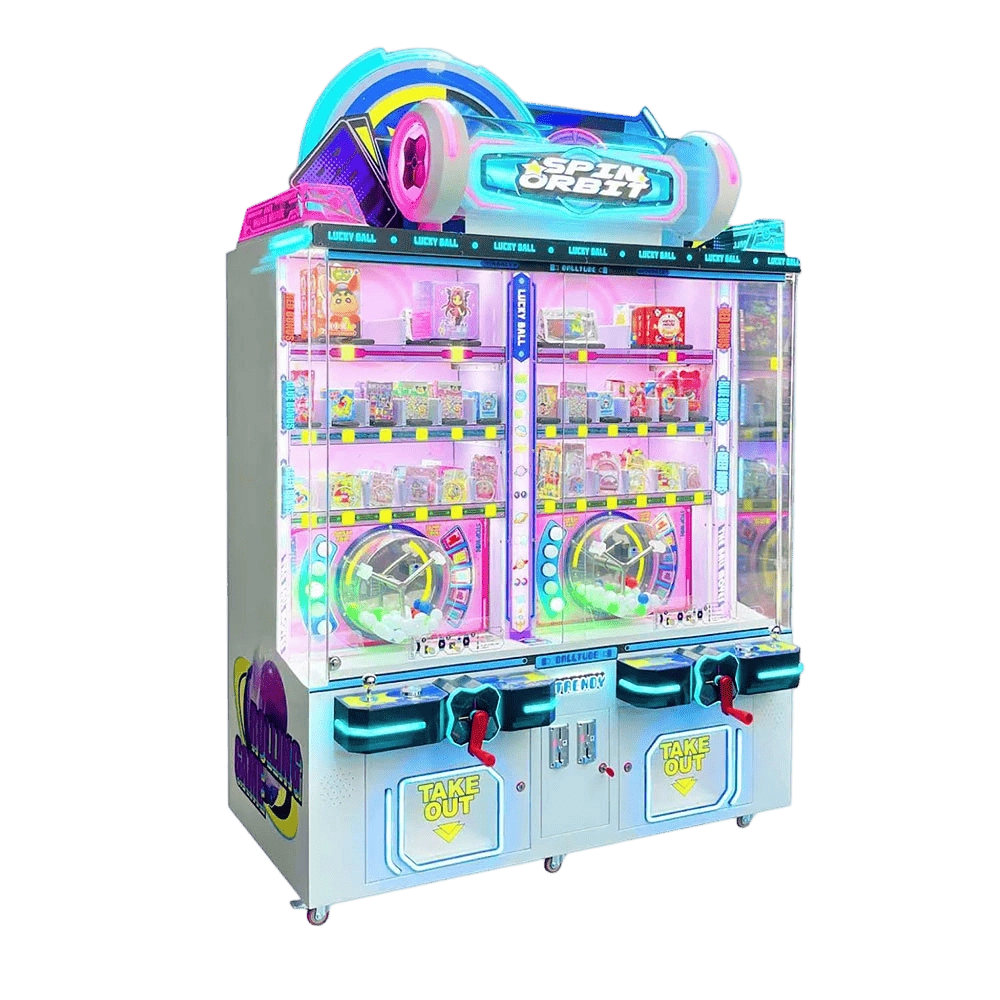
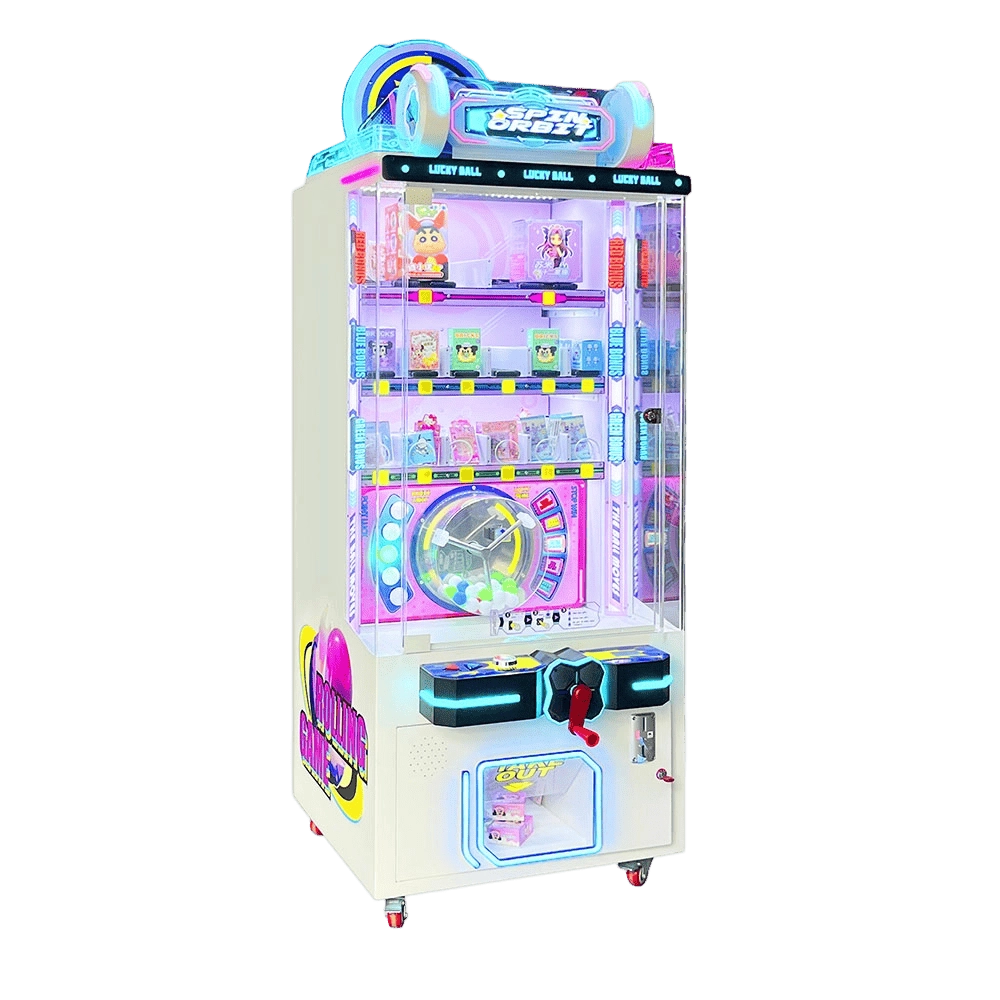
What is the gameplay of the SPIN ORBIT Lucky Prize Arcade Game?
Players use the joystick to guide the ball into a designated hole. Each color ball corresponds to different prize values: red for the highest, blue and green for mid-range prizes, and white for no prize.
How many players can play the game at once?
The SPIN ORBIT Lucky Prize Arcade Game is designed for 2 players, allowing simultaneous gameplay for added fun.
What is the prize system like?
The prizes are diverse, with different colored balls corresponding to rewards in varying prize tiers, catering to a wide range of player preferences.
What is the minimum order quantity (MOQ)?
The minimum order quantity for our arcade machines is 1 piece. Larger orders qualify for additional customization options.
You May Also Like
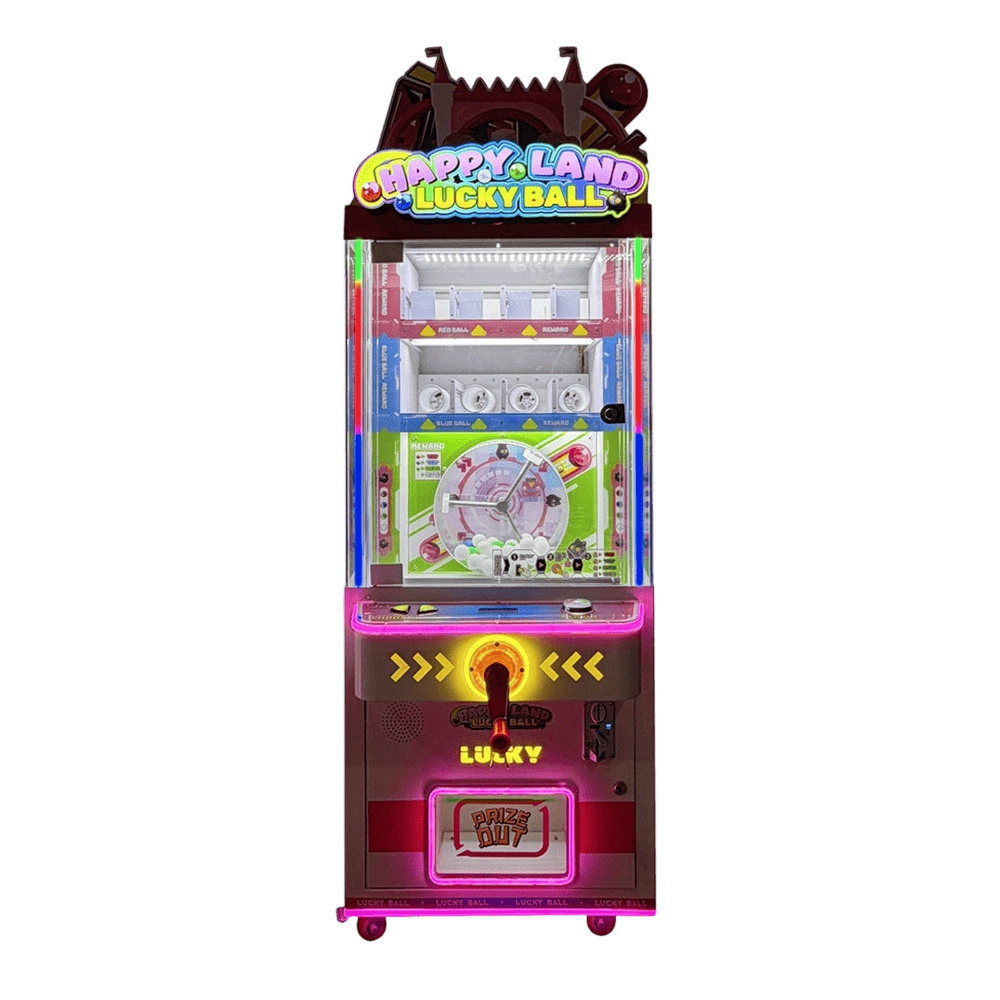
Coin Operated/Card Payment Lucky Ball Vending Toy Gift Arcade Game Machine
Coin Operated/Card Payment 2 Players SPIN ORBIT Lucky Prize Arcade Game
Coin Operated/Card Payment SPIN ORBIT Lucky Prize Arcade Game
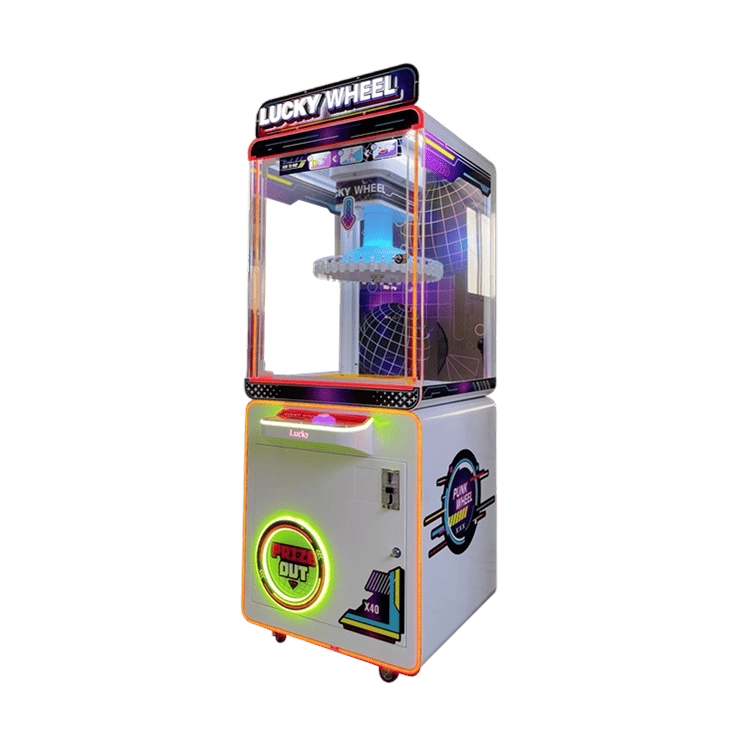
Arcade Prize Lucky Wheel Gift Machine For Amusement Areas
Get in Touch with Jiami Games
If you have any comments or good suggestions, please leave us a message; later our professional staff will contact you as soon as possible.

Innovative Entertainment, at Your Fingertips
Learn about Jiami Games and explore our expertise in console development, innovative design, and global markets.
Quick Links:
© 2026 Jiami Games.
Whatsapp: +8618520390438