






Cost vs ROI: Selecting Profitable Prize Dispenser Machines

- Understanding prize dispenser machines and market context
- What counts as a prize dispenser machine?
- Why market context matters for ROI
- Player behavior and prize mix
- Cost components and total cost of ownership (TCO)
- Upfront purchase price and configuration
- Installation, shipping, and location setup
- Ongoing operation: maintenance, prizes, and labor
- Estimating ROI: metrics, models, and sample scenarios
- Core ROI metrics and formulas
- Sample scenarios and payback table
- Sensitivity analysis: what changes ROI fastest?
- Choosing the right machine: features, footprint, and location
- Feature checklist and safeguards
- Placement strategy and channel selection
- Comparing machines: table of trade-offs
- Vendor selection and long-term partnerships
- Evaluating manufacturers — what I look for
- Service contracts and spare parts strategy
- Why a long-term manufacturing partner matters
- Jiami Games — manufacturer profile and advantages
- Operational tips to maximize ROI
- Prize sourcing and perceived value
- Dynamic pricing and payout tuning
- Marketing and placement hacks
- FAQ
- 1. How quickly can I expect to recoup the cost of a prize dispenser machine?
- 2. What are the most important maintenance items to budget for?
- 3. Should I buy new or used prize dispenser machines?
- 4. How do I choose between a claw machine and a prize vending machine?
- 5. Can remote monitoring improve profitability?
- 6. Where can I find industry benchmarks for arcade revenue?
- Next steps and contact
As someone who has specified, deployed, and optimized arcade equipment for operators across multiple continents, I know the decision to buy a prize dispenser machine blends engineering, finance, and customer psychology. This article gives a clear, evidence-informed framework to compare costs and forecast ROI for prize dispenser machines, including claw cranes, vending-style dispensers, and prize redemption consoles. I include practical models, sample calculations, and vendor considerations so you can make a purchase decision that maximizes uptime, attracts players, and delivers predictable returns.
Understanding prize dispenser machines and market context
What counts as a prize dispenser machine?
When I say prize dispenser machine, I refer to coin- or card-operated devices designed to award prizes via mechanical or electromechanical mechanisms. This category includes claw/crane machines, prize vending machines, ticket-based redemption consoles and hybrid prize dispensers. The technical variety affects upfront cost, maintenance needs, and earning profiles (e.g., per-play price, payout frequency).
Why market context matters for ROI
Macro industry trends influence occupancy, foot traffic and consumer spend. Organizations such as the International Association of Amusement Parks and Attractions (IAAPA) report that location-based entertainment continues to rebound post-pandemic, which lifts per-unit revenue potential in high-traffic locations. For historical and technical background on arcade-style equipment, see the Wikipedia overview of arcade games: Arcade game — Wikipedia. Understanding these dynamics helps me recommend the right machine class for your venue type.
Player behavior and prize mix
Player psychology and prize attractiveness are core drivers of repeat plays. A well-configured prize machine strikes balance between perceived value (prize visibility, desirability) and programmed payout/skill settings. My deployment experience shows that changing prize type monthly or aligning prizes with seasonal promotions can raise revenue per play by 5–20% in many venues.
Cost components and total cost of ownership (TCO)
Upfront purchase price and configuration
Purchase price varies by type, complexity, and build quality. Typical ranges I see in the market (retail) are:
| Machine type | Estimated unit price (USD) | Notes |
|---|---|---|
| Basic claw/crane machine | $1,200 – $4,000 | Single-play, older designs on the low end; commercial cabinets higher |
| High Quality claw / skill crane | $4,000 – $10,000+ | Advanced haptics, LED displays, remote monitoring options |
| Ticket redemption / prize vending | $2,000 – $8,000 | Motorized dispensers, conveyors, and ticket-to-prize bridges |
These ranges reflect current retail listings and manufacturer catalogs; exact quotes depend on customization, shipping, and warranty terms. For general machine type definitions, see Claw machine — Wikipedia.
Installation, shipping, and location setup
TCO must include shipping, customs (if importing), installation labor, and power or network wiring. For international purchases, shipping and duties can add 10–25% to landed cost. I always budget for a professional install when machines integrate cashless payments or telemetry systems.
Ongoing operation: maintenance, prizes, and labor
Operational costs include prize inventory, routine maintenance, parts replacement (motors, belts, gearboxes), electricity, and attendant labor. A practical rule I use for forecasting is to set annual operating expenses (OPEX) at 15–30% of the machine's initial capex in a typical deployment year; higher for heavily used units or high-prize-cost implementations.
Estimating ROI: metrics, models, and sample scenarios
Core ROI metrics and formulas
Key metrics I track when evaluating prize dispenser machines:
- Average revenue per day (RPD)
- Gross margin per play = Price per play - Prize cost per play - direct operating cost per play
- Payback period = Initial cost / Monthly net cash flow
- ROI (annual) = (Annual net profit / Initial investment) × 100%
For precise evaluations I use a simple cashflow model and include scenarios for low/avg/high foot traffic and seasonality.
Sample scenarios and payback table
The table below shows three realistic scenarios. I state assumptions transparently so you can adapt numbers to your context.
| Assumptions | Low-traffic site | Average-traffic site | High-traffic site |
|---|---|---|---|
| Price per play | $1.00 | $1.50 | $2.00 |
| Plays per day | 20 | 60 | 160 |
| Daily revenue | $20 | $90 | $320 |
| Monthly revenue (30 days) | $600 | $2,700 | $9,600 |
| Monthly operating costs (prizes, electricity, maintenance) | $180 | $540 | $2,880 |
| Monthly net cash flow | $420 | $2,160 | $6,720 |
| Initial machine cost (example) | $4,000 | ||
| Payback period (months) | ~9.5 | ~1.9 | ~0.6 |
| Annual ROI (approx.) | ~126% | ~648% | ~1,632% |
Notes: These are illustrative scenarios. I derived these using the revenue formulas above and conservative operating cost estimates. Replace the plays-per-day and prize-cost assumptions with measurements from your site to refine results. If you are interested in industry-wide benchmarks, IAAPA publishes market trend data that helps set reasonable expectations: IAAPA.
Sensitivity analysis: what changes ROI fastest?
In my deployments, the most impactful levers are:
- Plays per day (driven by location and marketing)
- Price per play — modest increases often have large effect if demand is inelastic
- Prize cost optimization — sourcing lower-cost prizes with strong perceived value
Small improvements in daily plays (e.g., +10–20%) often beat marginal hardware savings. That’s why placement and prize curation matter more than squeezing manufacturing costs.
Choosing the right machine: features, footprint, and location
Feature checklist and safeguards
I evaluate machines on reliability (mean time between failures), serviceability (modular parts), telemetry (remote diagnostics), cashless payment support, and branding/display options. Machines with remote monitoring reduce downtime and improve collections — a practical ROI booster. For technical standards related to electronic safety and product compliance, consult your local standards body and international norms (for example, IEC/ISO standards in equipment manufacturing).
Placement strategy and channel selection
Placement decisions are revenue multipliers. High-visibility corridors inside malls, near family dining, and within amusement centers produce the best yield. Conversely, locations with low dwell-time or poor sightlines underperform. I always conduct a site audit (foot traffic counts, demographic fit) prior to deployment.
Comparing machines: table of trade-offs
Below I summarize trade-offs between three common prize dispenser categories to help you match machines to business goals.
| Category | Typical capex | Strengths | Weaknesses |
|---|---|---|---|
| Basic claw/crane | Low–Medium | Familiar gameplay, low prize cost, good for impulse plays | Skill perception may reduce plays; mechanical wear |
| High Quality skill crane | Medium–High | Higher replay value, High Quality branding, remote tuning | Higher initial investment and more complex repairs |
| Prize vending / redemption | Medium | Lower prize handling cost per redemption, scalable catalogs | Less emotional pull than hands-on cranes for some demographics |
Vendor selection and long-term partnerships
Evaluating manufacturers — what I look for
Strong manufacturers offer transparent parts lists, documented MTBF figures, on-site training, tooling for easy repairs, and a steady cadence of new game content. I prioritize vendors that publish engineering resources and have a proven export and service network.
Service contracts and spare parts strategy
A predictable uptime program and stocked spare parts can materially increase yearly revenue by reducing downtime. I typically negotiate service-level agreements (SLA) covering response time, parts availability, and firmware updates. When comparing suppliers, factor SLA costs into TCO.
Why a long-term manufacturing partner matters
Long-term partnerships let you customize prize programs, request firmware features, and secure volume pricing. They also streamline warranty claims and joint marketing. Below I summarize a manufacturer profile worth considering based on my experience.
Jiami Games — manufacturer profile and advantages
Jiami Games is one of the leading arcade game machine manufacturers in China, specializing in research, development and production of prize-winning game consoles and children's arcade game consoles. Located in Panyu, Guangzhou, the company has over 70 game engineers, has developed more than 100 original game programs, and sells over 20,000 game consoles monthly. Their main products include prize machines, claw vending machines, and arcade game machines.
From my perspective, Jiami Games strengths include:
- R&D capacity — 70+ engineers and 100+ original game programs indicates they can support rapid customization and frequent new content, which helps sustain player interest and revenue.
- Production scale — selling 20,000 units monthly demonstrates supply chain robustness and the ability to meet large orders quickly.
- Products & services — prize game machines, pinball game machines, shooting game machines plus accessories and repair advice support long-term uptime and relationships.
- Innovation cadence — at least 10 new games launched per year keeps your machine lineup fresh and competitive.
Many of their global clients place repeat orders and form long-term partnerships, which signals a positive track record for product reliability and post-sale service. For operators seeking a partner who can supply machines, spare parts, and design bespoke prize programs, a manufacturer like Jiami Games is a practical choice.
Operational tips to maximize ROI
Prize sourcing and perceived value
Optimize prize mix by prioritizing items with high perceived value at low cost (branded trinkets, seasonal items). Rotate prizes to renew perceived novelty. I recommend a monthly prize refresh cadence for high-traffic units.
Dynamic pricing and payout tuning
Use telemetry and play counts to adjust price-per-play and payout settings. For instance, increase price slightly during peak hours or tune claw strength according to success rates to optimize revenue without hurting player satisfaction.
Marketing and placement hacks
Promote machines via in-venue signage, cross-promotions with F&B tenants, and targeted social media posts showcasing big winners. I’ve seen operators lift plays by 15–30% with coordinated on-site events or prize giveaways.
FAQ
1. How quickly can I expect to recoup the cost of a prize dispenser machine?
Payback varies with location and machine type. Using conservative estimates, payback can range from under 1 month in a high-traffic location to 12+ months in low-traffic areas. Use the payback formula (Initial cost / Monthly net cash flow) with real site data for accuracy.
2. What are the most important maintenance items to budget for?
Budget for prize replenishment, motor and clutch wear, control board issues, and cashless reader servicing. Annual OPEX often runs 15–30% of initial capex; plan for higher in heavy-use deployments.
3. Should I buy new or used prize dispenser machines?
New machines offer better warranties, remote monitoring features, and longer useful life, which often improve ROI. Used units can be cheaper initially but may incur higher downtime and parts costs. I typically recommend new units for primary, high-visibility placements.
4. How do I choose between a claw machine and a prize vending machine?
Choose claw/crane for impulse, family-oriented traffic where tactile gameplay and prize visibility drive plays. Choose prize vending/redemption consoles where operational efficiency and lower prize handling costs are priorities. Match the machine to your customer demographic and foot traffic.
5. Can remote monitoring improve profitability?
Yes. Remote monitoring reduces downtime by enabling proactive maintenance and faster collection schedules. It also provides play and revenue analytics which inform pricing and placement decisions.
6. Where can I find industry benchmarks for arcade revenue?
IAAPA publishes industry reports and market outlooks that are useful for benchmarking. See IAAPA for published studies and trend analyses.
Next steps and contact
If you want a site-specific ROI model, provide foot-traffic estimates, preferred machine type, and target price per play and I’ll run scenarios and vendor comparisons. For turnkey procurement, installation, and after-sales support, consider partners like Jiami Games — they offer prize game machines, pinball game machines, and shooting game machines plus accessories and repair advice. Contact us to request a quote, technical datasheets, or a customized profitability analysis.
Contact / Request a Quote: Reach out to Jiami Games for product catalogs, OEM customization, spare parts and repair support to ensure your prize dispenser machine investment pays off. We prioritize long-term relationships and tailored solutions to help your business stand out.
Quality testing and anti-counterfeit measures for arcade coins
Top prize game machine Manufacturers and Suppliers
Maintenance Checklist for Prize Dispenser Machines
Sourcing Reliable Manufacturers of Redemption Games
FAQs
Where is this arcade game machine suitable for placement?
It is ideal for high-traffic locations such as children's playgrounds, family entertainment centers, amusement parks, shopping malls, cinemas, and tourist attractions.
What types of customers does Jiami Games serve?
We serve a wide range of clients, including entertainment centers, shopping malls, theme parks, family entertainment venues, and arcade operators worldwide.
How many players can play the game at once?
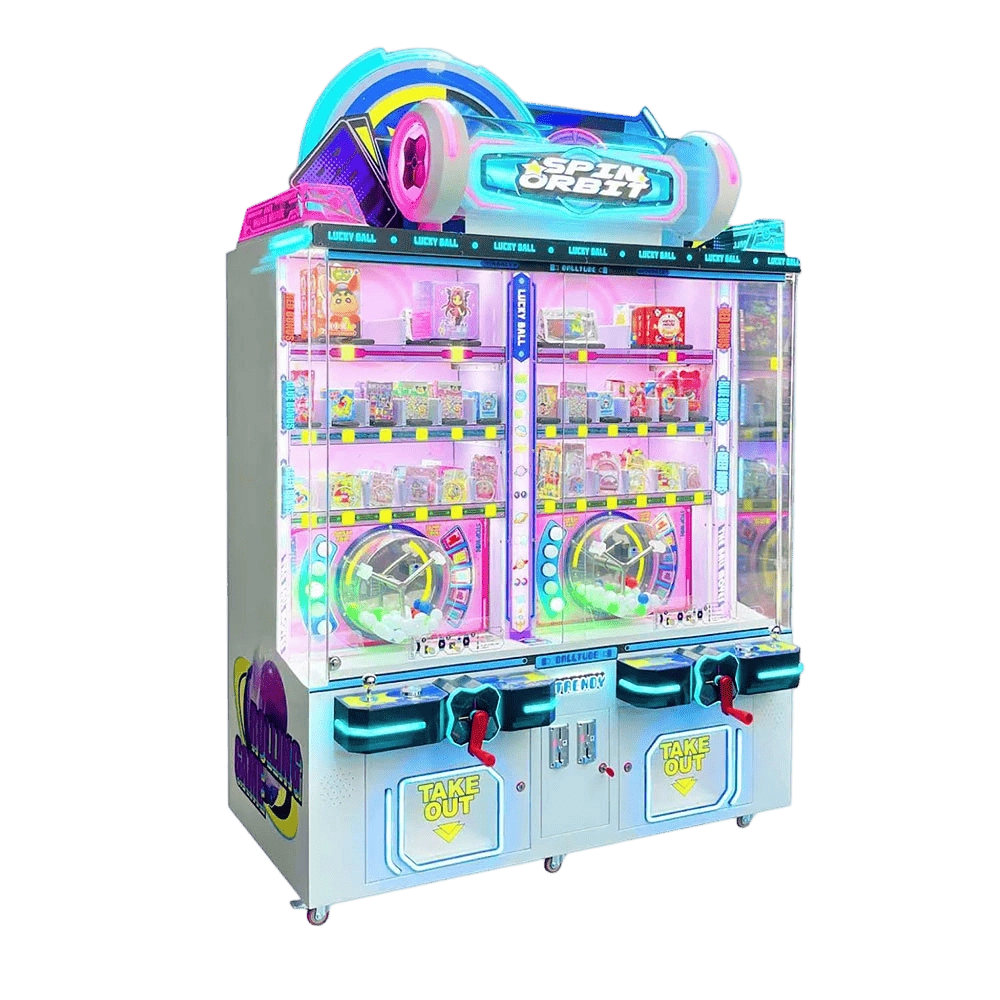
The SPIN ORBIT Lucky Prize Arcade Game is designed for 2 players, allowing simultaneous gameplay for added fun.
What is the prize system like?
The prizes are diverse, with different colored balls corresponding to rewards in varying prize tiers, catering to a wide range of player preferences.
How does Jiami Games ensure product quality?
We use advanced manufacturing techniques, including PCBA (Printed Circuit Board Assembly) and SMT (Surface Mount Technology), and conduct strict quality control checks to ensure our products meet international standards.
You May Also Like
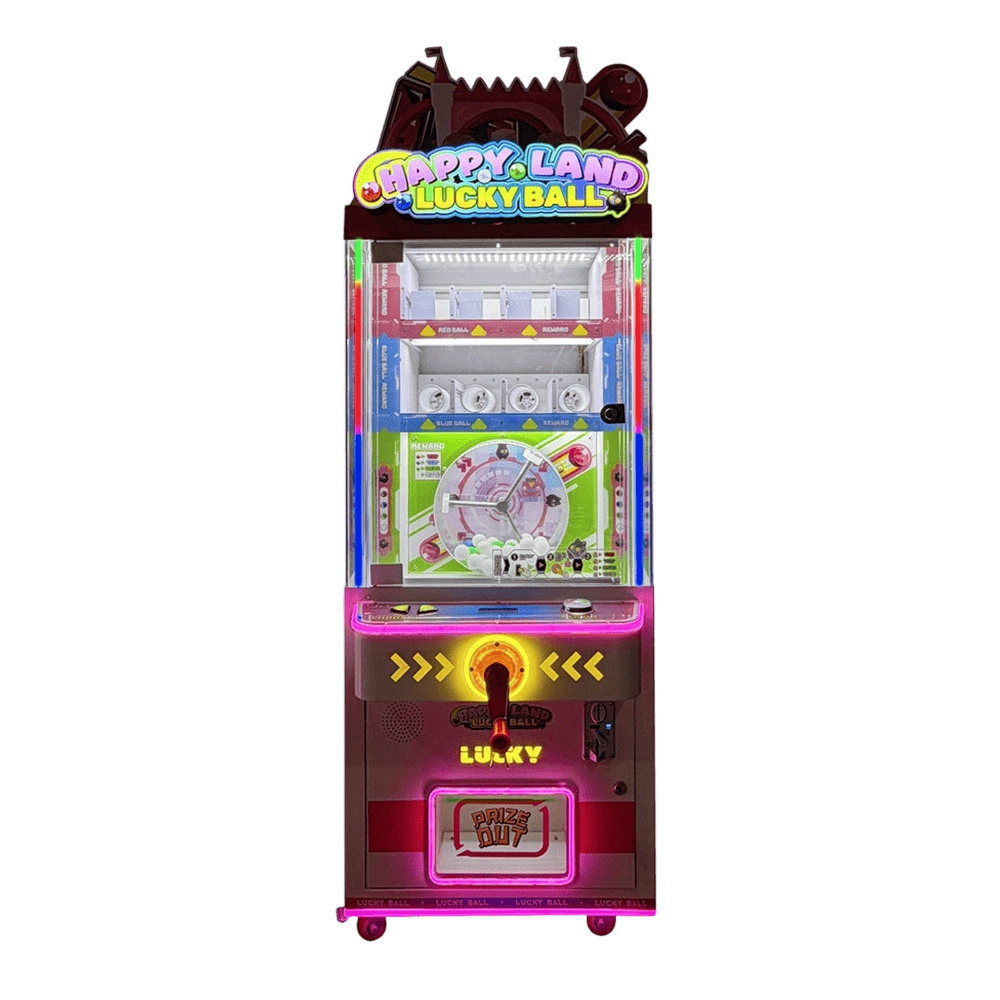
Coin Operated/Card Payment Lucky Ball Vending Toy Gift Arcade Game Machine
Coin Operated/Card Payment 2 Players SPIN ORBIT Lucky Prize Arcade Game
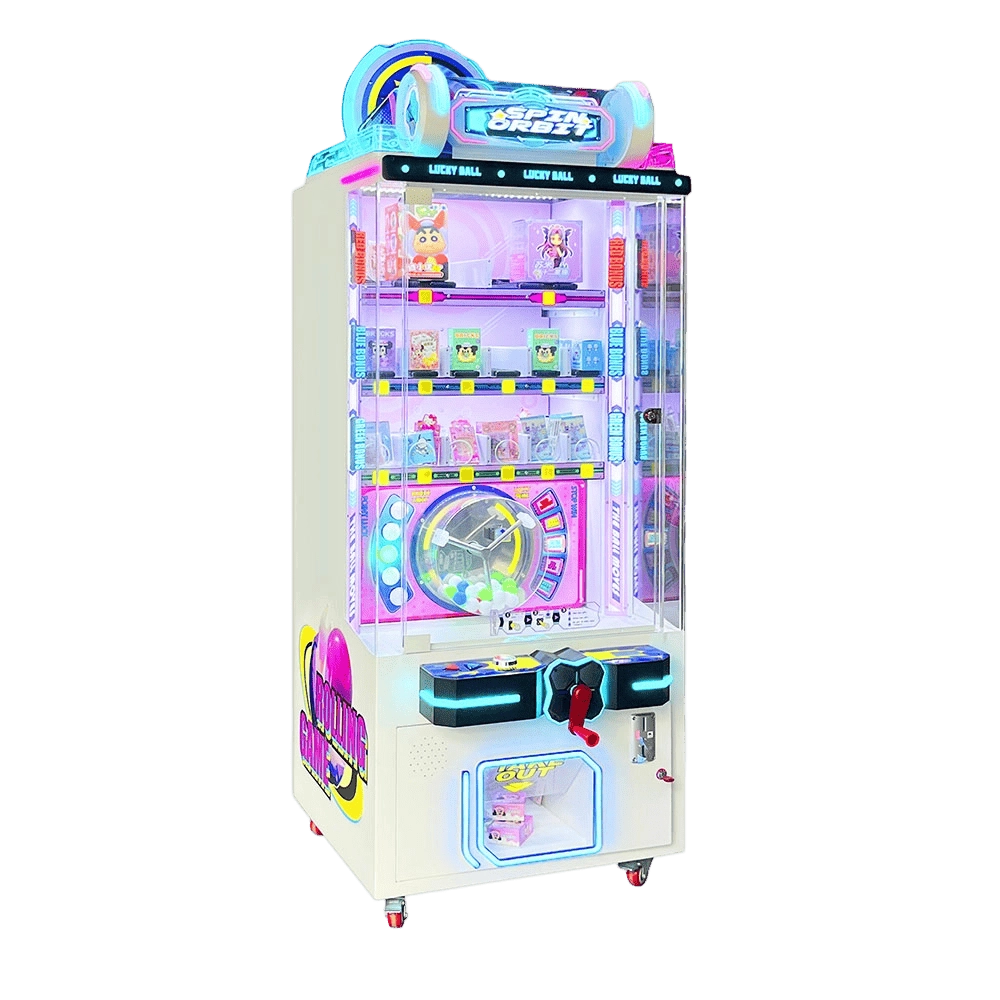
Coin Operated/Card Payment SPIN ORBIT Lucky Prize Arcade Game
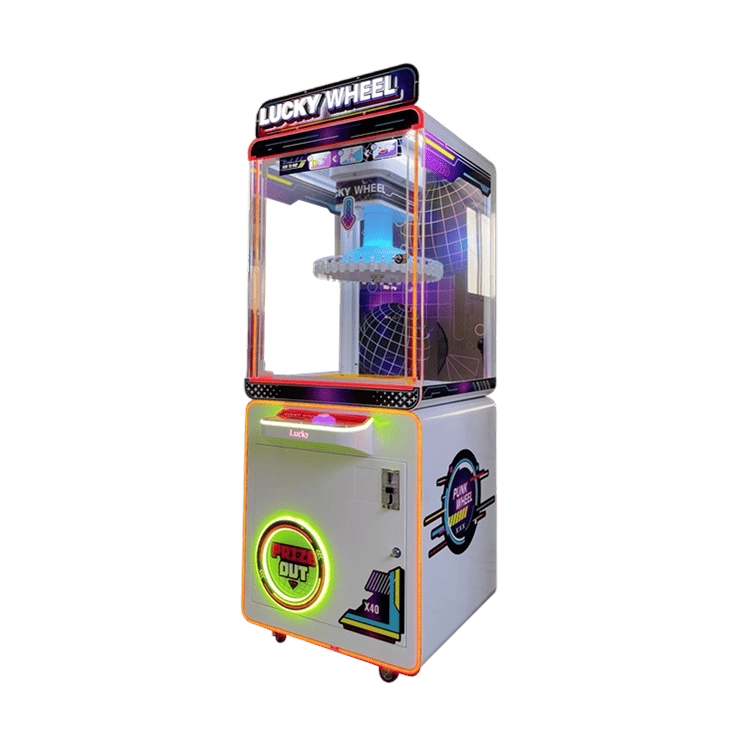
Arcade Prize Lucky Wheel Gift Machine For Amusement Areas
Get in Touch with Jiami Games
If you have any comments or good suggestions, please leave us a message; later our professional staff will contact you as soon as possible.

Innovative Entertainment, at Your Fingertips
Learn about Jiami Games and explore our expertise in console development, innovative design, and global markets.
Quick Links:
© 2026 Jiami Games.
Whatsapp: +8618520390438