





Compliance, Safety & Certification for Coin-Operated Prize Games

- Regulatory landscape and why compliance matters
- Scope: what counts as a coin-operated prize game
- Who sets the rules: markets and authorities
- Why non-compliance is costly
- Technical safety areas and applicable standards
- Electrical safety and wiring
- Electromagnetic compatibility (EMC) and wireless
- Material safety, toy safety, and small parts
- Certification pathways, testing, and documentation
- Typical certification matrix
- Testing labs, documentation and technical files
- Gambling, chance vs. skill rules and local licensing
- Design for safety: practical engineering and operator controls
- Mechanical design and guarding
- User interface, labeling and instructions
- Maintenance, spare parts and long-term safety
- Operator and manufacturer checklist — actionable steps
- Manufacturer pre-market checklist
- Operator pre-deployment checklist
- Recalls, incident handling and insurance
- Costs, timelines and market considerations
- Typical timelines for market entry
- Comparative summary of certification effort
- Jiami Games: manufacturing, compliance capabilities and product focus
- Who we are and what we make
- Compliance and quality approach
- Competitive strengths
- Practical examples and case study highlights
- Example: adapting a claw machine for the EU market
- Example: adding wireless payment modules for the US market
- Frequently Asked Questions (FAQ)
- Q1: Do all coin-operated prize machines need CE or UL certification?
- Q2: Are redemption games considered gambling?
- Q3: What safety features should be mandatory on machines used by children?
- Q4: How long does it take to get EMC and electrical testing completed?
- Q5: What documentation should I request from my manufacturer?
- Q6: Can retrofit changes (e.g., adding a new coin acceptor) affect existing certifications?
- Next steps and contact
Coin operated redemption prize winning games are a category of amusement devices that combine electrical systems, mechanical components, and consumer-facing interfaces. Ensuring these machines meet safety and certification requirements is essential for legal market access, operator risk reduction, and protecting players—especially children. This article summarizes applicable standards, testing routes, and practical compliance steps for manufacturers and operators worldwide, with actionable checklists and references to authoritative sources.
Regulatory landscape and why compliance matters
Scope: what counts as a coin-operated prize game
Coin-operated prize machines include prize cranes/claw machines, ticket redemption cabinets, coin pushers, and other arcade consoles that dispense prizes or tickets. They combine electrical, mechanical and sometimes pneumatic systems, and often target family entertainment centers, arcades, malls, and retail locations. For background on arcade history and device classification, see Arcade game — Wikipedia.
Who sets the rules: markets and authorities
Different jurisdictions enforce different combinations of product safety, electromagnetic compatibility (EMC), environmental directives, and gambling/regulatory laws. Typical authorities and frameworks include:
- United States: UL/ETL safety standards, FCC Part 15 for EMI, state gaming commissions for devices with prize/gambling implications. See FCC equipment authorization.
- European Union: CE marking to show conformity with relevant directives (Low Voltage Directive, EMC Directive, RoHS, WEEE). See EU CE marking guidance.
- International standards and quality systems: ISO 9001 for manufacturing quality management. See ISO 9001.
- Industry guidance and trade groups such as IAAPA for best practices and safety policies. See IAAPA.
Why non-compliance is costly
Consequences of non-compliance include import holds, product recalls, fines, operator liability after injury, and reputational damage. For redemption operators and manufacturers, certifications are not just paperwork—they are risk mitigation, market access tools, and sales enablers.
Technical safety areas and applicable standards
Electrical safety and wiring
Arcade and prize machines are typically evaluated for electrical safety under standards such as UL/CSA in North America or the Low Voltage Directive/IEC standards in Europe. Manufacturers should design to protect against shock, overheating, and fire. Key controls include proper grounding, overcurrent protection, cable routing, strain reliefs, and guarded high-voltage components.
Electromagnetic compatibility (EMC) and wireless
EMC testing ensures machines don’t cause or suffer undue radio interference. In the U.S., FCC Part 15 covers unintentional radiators; in the EU, the EMC Directive applies for CE marking. If a machine uses Wi‑Fi, Bluetooth or other radio modules, modules must have appropriate authorizations. See the FCC equipment authorization overview: FCC.
Material safety, toy safety, and small parts
When prizes or machines target children, toy safety standards (e.g., EN 71 in the EU) and chemical restrictions (RoHS/REACH) are relevant. EN 71 addresses mechanical/physical hazards and flammability for toys. If prizes include small parts, choking hazard labeling and design changes are required. See EU toy standards overview: European Commission — Toys.
Certification pathways, testing, and documentation
Typical certification matrix
Manufacturers should map each market to a certification matrix: safety standard (UL/IEC), EMC (FCC/EMC Directive), environmental (RoHS/WEEE), and local marks (UKCA post-Brexit). Below is a comparative table of common certifications and what they cover.
| Certification / Mark | Scope | Typical Markets | Notes |
|---|---|---|---|
| UL / ETL | Electrical safety testing, component evaluation | USA, Canada | Recognized labs (UL/Intertek) perform testing. Useful for insurance and operator acceptance. |
| CE (Low Voltage, EMC, RoHS) | Electrical safety, EMC, hazardous substances | EU | Self-declaration supported by test reports or Notified Body input for specific modules. |
| FCC Part 15 | Unintentional/Intentional RF emissions | USA | Emissions testing required; modules may carry modular approvals. |
| EN 71 | Toy safety (if prizes are toys) | EU | Applies when product or prize is intended for children under 14. |
| RoHS / REACH | Restricted hazardous substances; chemical compliance | EU, growing global adoption | Documentation and supplier declarations required. |
Testing labs, documentation and technical files
Create a technical file that contains schematics, BOM (bill of materials), test reports, risk assessment (EN ISO 12100 for machinery risk assessments), and user manuals with safety instructions. For CE marking, maintain declarations of conformity. Accredited test labs such as UL, SGS, Intertek/ETL, and T&T labs are commonly used—see UL: UL and ISO quality system guidance: ISO 9001.
Gambling, chance vs. skill rules and local licensing
Redemption games may be regulated under gambling or amusement laws depending on whether outcomes are deemed chance-based. State-level and national rules vary widely. Operators should consult local gaming authorities or legal counsel before deploying new prize types. Industry bodies like IAAPA provide guidance on regulatory trends: IAAPA.
Design for safety: practical engineering and operator controls
Mechanical design and guarding
Design out pinch points, provide tamper-resistant access panels, and use interlocks on service doors to cut mains power. For claw and prize retrieval areas, design baffles and transparent guards to limit reach into moving mechanisms. Use locking coin-door designs and anti-fishing measures for coin-hoppers.
User interface, labeling and instructions
Clear labeling reduces misuse. Include visible warnings for hot surfaces, moving parts, and choking hazards. Provide multilingual instructions and maintenance guides for operators, and ensure emergency stop and disconnects are easily reachable. For children’s areas, use age labels and prize-size guidance.
Maintenance, spare parts and long-term safety
Provide authorized spare parts with traceability and maintenance schedules. Train operators on safe lockout/tagout procedures. Document typical wear items (belts, bearings, motors) and recommended inspection intervals. Proper maintenance reduces liability and downtime.
Operator and manufacturer checklist — actionable steps
Manufacturer pre-market checklist
- Complete risk assessment (EN ISO 12100 style) and implement design mitigations.
- Choose applicable standards per market (UL/CE/FCC/EN71/RoHS) and plan test program.
- Produce technical file: drawings, BOM, test reports, user manuals, DoC.
- Implement production quality system (ISO 9001 recommended).
- Plan for service/parts and long-term supplier declarations for RoHS/REACH.
Operator pre-deployment checklist
- Verify certs and test reports for each device model before purchase.
- Inspect installation location for adequate ventilation, power protection, and secure anchoring.
- Train staff on operation, emergency stop, cleaning, and coin-door security.
- Keep maintenance log and perform pre-shift safety checks (guards, wiring, emergency stop).
Recalls, incident handling and insurance
Maintain an incident reporting process, preserve failed units for investigation, and notify relevant authorities if an injury occurs. Adequate product liability insurance and recall plans should be part of risk management.
Costs, timelines and market considerations
Typical timelines for market entry
Timelines vary by market and complexity. As a rule of thumb:
- Electrical and EMC testing: 2–8 weeks (depending on lab scheduling and rework requirement).
- CE technical file assembly and self-declaration: 1–4 weeks if test data is available.
- UL/ETL listings: 4–12 weeks depending on whether factory inspections are required.
These are indicative ranges—engage an accredited lab early to shorten time-to-market.
Comparative summary of certification effort
| Certification | Typical Effort | Key Dependencies |
|---|---|---|
| UL/ETL | Medium–High (lab tests + factory inspection sometimes) | Design maturity, safety components, factory processes |
| CE (Low Voltage + EMC) | Medium (tests + technical file) | Emissions performance, documentation |
| FCC Part 15 | Low–Medium (emissions testing) | PCB layout, shielding, use of certified modules |
Jiami Games: manufacturing, compliance capabilities and product focus
Who we are and what we make
Jiami Games is one of the leading arcade game machine manufacturers in China, specializing in the research and development and production of prize-winning game consoles and children's arcade game consoles. Located in Panyu, Guangzhou, the company has over 70 game engineers, has developed more than 100 original game programs, and sells over 20,000 game consoles monthly. Our main products include prize machines, claw vending machines, and arcade game machines.
Compliance and quality approach
Jiami Games integrates compliance into product development with structured testing, supplier material declarations (RoHS/REACH), and pre-shipment verification. We support customers with accessories and repair advice, and provide documentation required for market entry (electrical, EMC, and material compliance reports). We launch at least 10 new games every year and prioritize long-term partnerships—many international customers place repeat orders driven by our technical support and product quality.
Competitive strengths
Key advantages include a strong R&D team (70+ engineers), rapid new-game cadence, and high monthly production volumes. Combined with an emphasis on customer service—accessories, repair guidance, and customization—Jiami Games helps clients achieve compliant, market-ready machines. Main product strengths: prize game machines, pinball game machines, shooting game machines tailored for varied markets and safety requirements.
Practical examples and case study highlights
Example: adapting a claw machine for the EU market
Steps include confirming structural safety (no reachable live parts), EMC testing for emissions, RoHS-sourced components, and producing a CE technical file with risk assessment and user manual in local languages. Work with a Notified Body if any component requires third-party assessment.
Example: adding wireless payment modules for the US market
Use FCC-certified payment modules where possible; validate EMC performance at system level; ensure payment module integration maintains required isolation and grounding; update documentation for FCC compliance. For card readers, follow PCI-DSS if handling payment data.
Frequently Asked Questions (FAQ)
Q1: Do all coin-operated prize machines need CE or UL certification?
A1: It depends on the target market. Selling in the EU requires CE conformity to applicable directives (Low Voltage, EMC, RoHS). For the U.S., UL/ETL listings are not legally mandatory but are strongly recommended for safety, insurance, and operator acceptance. Always map required marks to markets before manufacturing.
Q2: Are redemption games considered gambling?
A2: It depends on jurisdiction and whether outcomes are predominantly chance vs. skill. Many countries treat skill-based redemption differently than chance-based gambling. Consult local gaming authorities or legal counsel; industry bodies like IAAPA provide guidance: IAAPA.
Q3: What safety features should be mandatory on machines used by children?
A3: Mandatory features include guarded pinch points, tamper-resistant coin doors, rounded edges, flame-retardant materials where specified, clear choking hazard labels for small prize parts, and emergency-stop accessible to attendants. If prizes are toys, verify EN 71 / local toy safety compliance.
Q4: How long does it take to get EMC and electrical testing completed?
A4: Typical lab timelines are 2–8 weeks for initial testing but can be longer if design rework is required. Early engagement with accredited test labs reduces delays.
Q5: What documentation should I request from my manufacturer?
A5: Ask for the technical file (schematics, BOM), test reports (EMC, safety), supplier RoHS/REACH declarations, user manuals, Declarations of Conformity (CE) or listing certificates (UL/ETL), and production quality certification (ISO 9001 if available).
Q6: Can retrofit changes (e.g., adding a new coin acceptor) affect existing certifications?
A6: Yes. Changes that affect emissions, safety, or materials can invalidate previous certifications. Re-evaluate the device and update test reports or technical files as needed.
Next steps and contact
For manufacturers and operators preparing to certify or deploy coin operated redemption prize winning games, begin with a market-mapping step: identify target markets, list applicable directives/standards, and plan tests early. If you need a production partner with compliance experience, Jiami Games offers R&D, quality control, and pre-shipment testing support to help you enter markets faster and more safely. Contact us to discuss customized prize game machines, compliance documentation, and after-sales support.
Contact Jiami Games for product inquiries, compliance support, or to request a technical dossier: consult@jiamigames.example (replace with actual contact) — or visit our factory in Panyu, Guangzhou to review production and testing workflows.
Top 10 prize game machine Manufacturers and Supplier Brands in 2026
Top pinball game machine Manufacturers and Suppliers
Top Coin-Operated Arcade Machines for Arcades and Venues
Customization and Branding for Coin-Operated Redemption Machines
FAQs
What is the gameplay of the SPIN ORBIT Lucky Prize Arcade Game?
Players use the joystick to guide the ball into a designated hole. Each color ball corresponds to different prize values: red for the highest, blue and green for mid-range prizes, and white for no prize.
How does Jiami Games ensure product quality?
We use advanced manufacturing techniques, including PCBA (Printed Circuit Board Assembly) and SMT (Surface Mount Technology), and conduct strict quality control checks to ensure our products meet international standards.
What is the prize system like?
The prizes are diverse, with different colored balls corresponding to rewards in varying prize tiers, catering to a wide range of player preferences.
What types of customers does Jiami Games serve?
We serve a wide range of clients, including entertainment centers, shopping malls, theme parks, family entertainment venues, and arcade operators worldwide.
How can I customize the game machine?
Customization options include machine title writings, stickers, console designs, and even full personalization of machine body color, music, lights, and language, based on order quantities.
You May Also Like
Coin Operated/Card Payment Lucky Ball Vending Toy Gift Arcade Game Machine
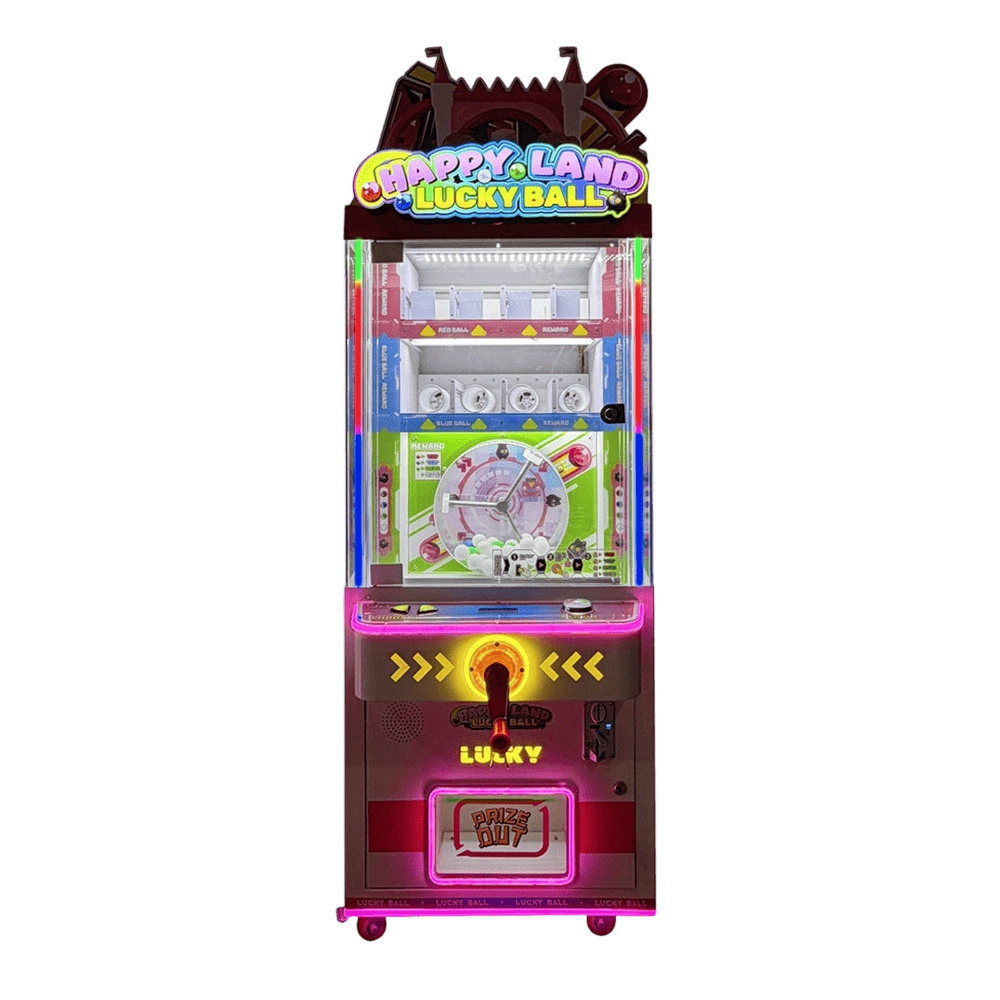
Coin Operated/Card Payment 2 Players SPIN ORBIT Lucky Prize Arcade Game
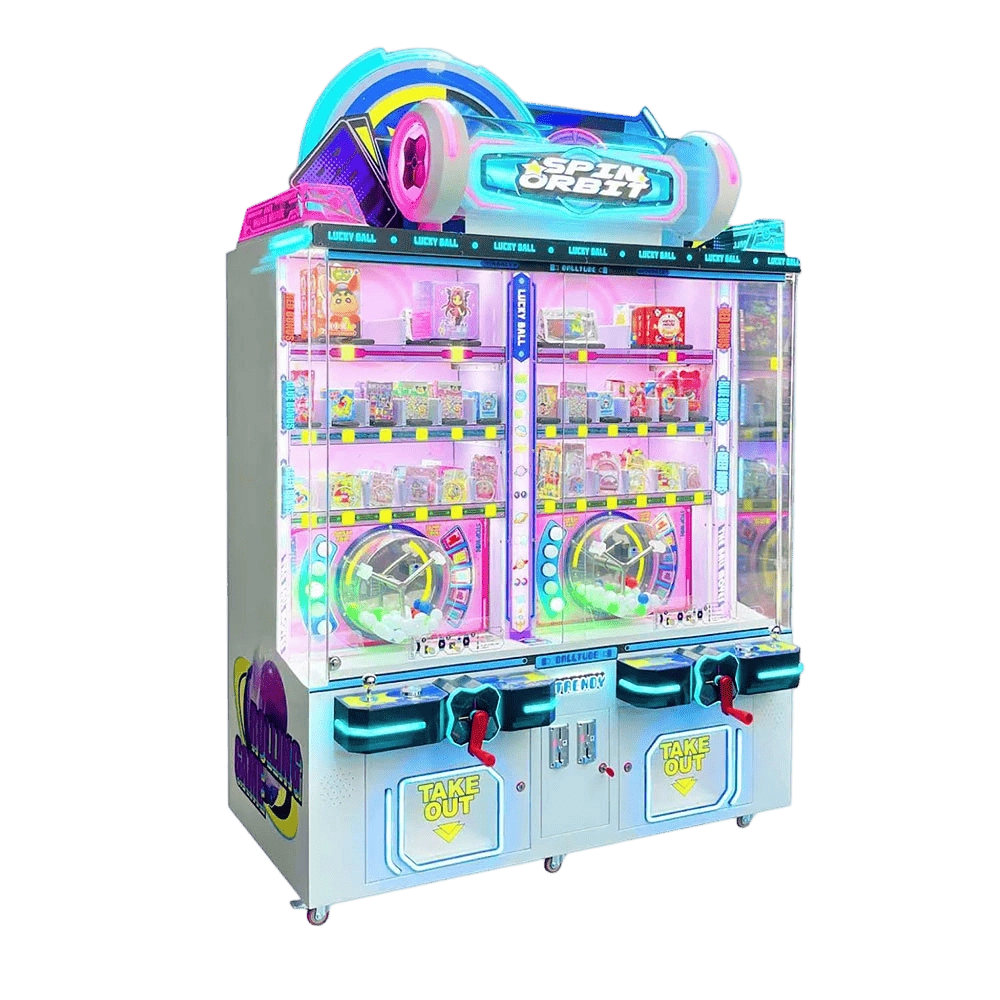
Coin Operated/Card Payment SPIN ORBIT Lucky Prize Arcade Game
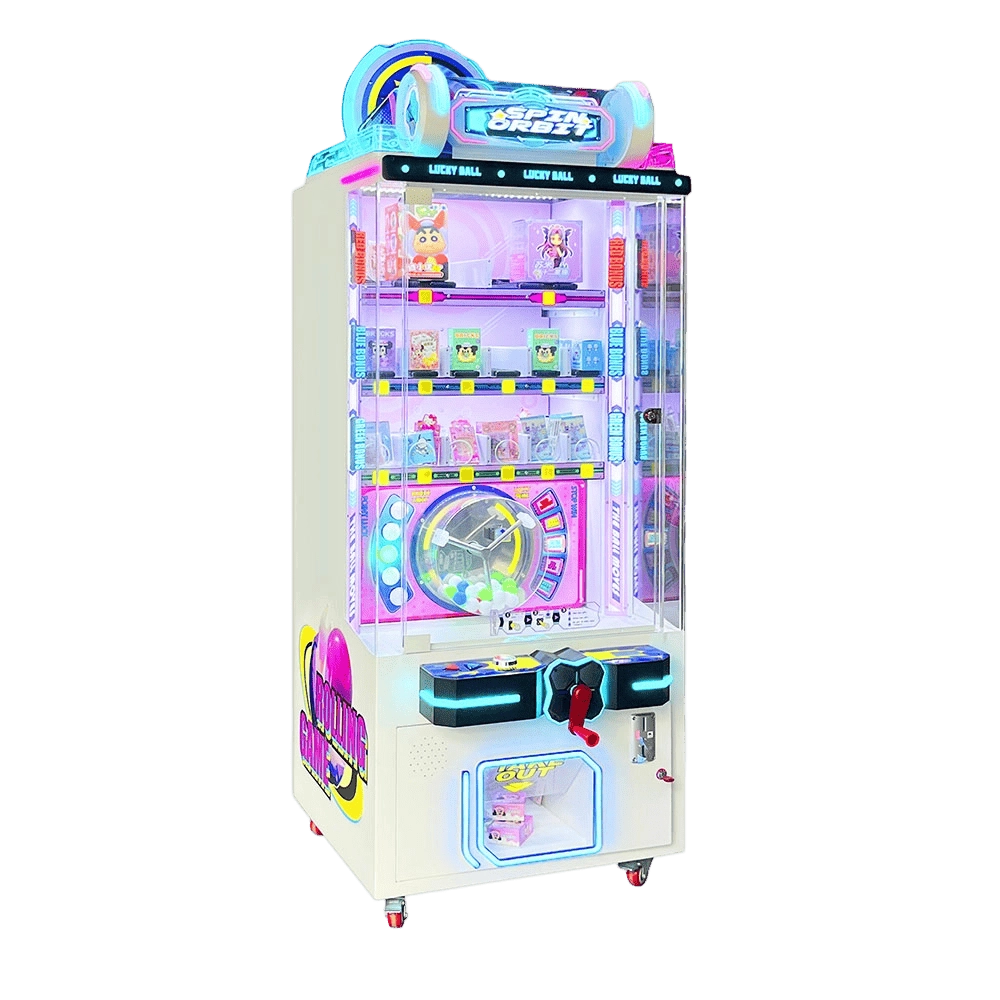
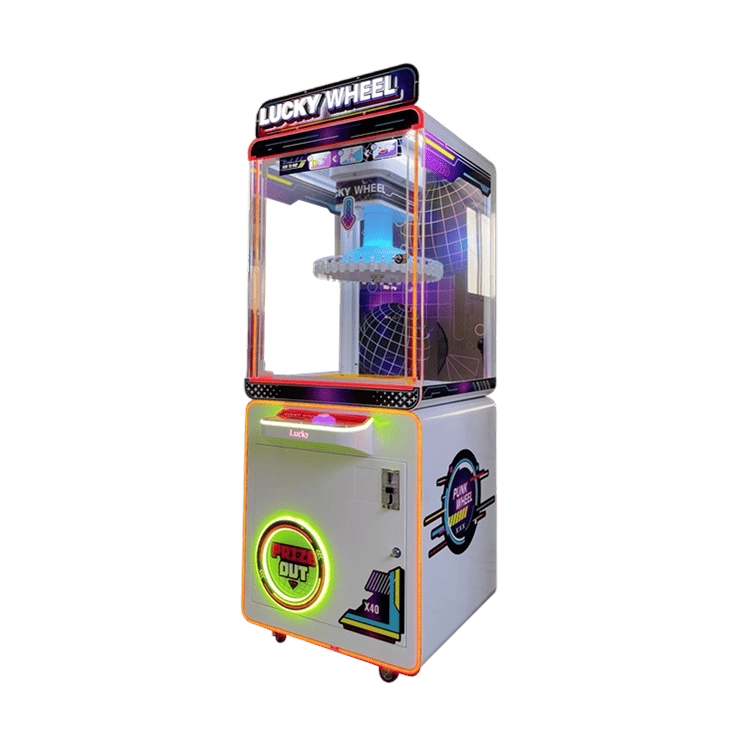
Arcade Prize Lucky Wheel Gift Machine For Amusement Areas
Get in Touch with Jiami Games
If you have any comments or good suggestions, please leave us a message; later our professional staff will contact you as soon as possible.

Innovative Entertainment, at Your Fingertips
Learn about Jiami Games and explore our expertise in console development, innovative design, and global markets.
Quick Links:
© 2026 Jiami Games.
Whatsapp: +8618520390438