






Profitability: ROI of Coin-Operated Arcade Machines

- Understanding cash flow dynamics for arcade operations
- Fixed costs: acquisition, installation, and depreciation
- Variable costs: maintenance, utilities, and location fees
- Revenue mechanics: plays, pricing, and ancillary sales
- Modeling profitability: scenarios and break-even analysis
- Key assumptions I use in ROI models
- Three ROI scenarios (Conservative / Moderate / Optimistic)
- Interpreting ROI vs. payback period
- Operational levers that materially affect profitability
- Location selection and revenue share negotiation
- Game selection, novelty, and uptime
- Pricing strategy and multi-play/credit options
- Risk factors, compliance and sourcing considerations
- Regulatory & legal considerations
- Sourcing and supplier reliability
- Data tracking and payment modernization
- Manufacturer spotlight: Why supplier choice matters — Jiami Games
- Who Jiami Games is and what they offer
- Main products and technical strengths
- After-sales support and long-term partnership approach
- Practical checklist before you buy
- On-site evaluation
- Commercial terms & warranties
- Data & performance tracking
- References and industry context
- FAQ
- 1. How much can I expect a coin operated arcade machine to make per month?
- 2. What is a realistic payback period?
- 3. Should I buy new or used machines?
- 4. How important is cashless payment and telemetry?
- 5. Are prize machines legal everywhere?
- 6. How do I reduce downtime and maintenance costs?
- 7. How many new games should I introduce annually?
I’ve spent years advising operators and manufacturers in the arcade and amusement sector, and one question I get most is: “What return can I expect from a coin operated arcade machine?” In this article I break down the economics—purchase and operating costs, revenue drivers, and practical ROI models—so you can make data-driven investment decisions. I reference industry sources where appropriate and walk through scenario tables and operational levers that materially affect profitability.
Understanding cash flow dynamics for arcade operations
Fixed costs: acquisition, installation, and depreciation
When evaluating a coin operated arcade machine, the first capital outlay is purchase price. New units vary widely: a basic prize or claw machine can start around $1,000–$3,000; an upright arcade cabinet or ticket redemption machine typically ranges $2,000–$8,000; sophisticated pinball and large redemption games often exceed $10,000. I amortize purchase costs over an expected useful life (commonly 3–7 years depending on intensity of use) to reflect annual capital expense.
Variable costs: maintenance, utilities, and location fees
Operational costs include electricity, routine maintenance and parts, coin collection logistics, and any revenue share or rent paid to the venue. Electricity for most arcade machines is modest (typically 0.1–0.5 kWh per hour depending on game type). For utility benchmarks, see the U.S. Energy Information Administration’s electricity FAQ for average rates as a comparator (EIA: electricity prices).
Revenue mechanics: plays, pricing, and ancillary sales
Revenue is driven by play volume (number of plays per day), average price per play, and ancillary revenue (prize upsells, tokens, merchandise). For coin operated arcade machine models that accept coins or token payment, small changes in plays-per-day or price-per-play compound quickly. Understanding location demographics, foot traffic and dwell time is essential to setting realistic revenue assumptions.
Modeling profitability: scenarios and break-even analysis
Key assumptions I use in ROI models
To make analysis reproducible I always state my assumptions. Below are the inputs I use in scenario modeling:
- Purchase price (new machine)
- Average plays per day
- Average revenue per play (coins/tokens or cash equivalent)
- Variable daily operating cost (electricity, consumables)
- Monthly fixed costs (maintenance, location commission/rent, collection)
- Useful life (months) for depreciation and replacement planning
Three ROI scenarios (Conservative / Moderate / Optimistic)
I present three plausible scenarios to show how outcomes diverge based on location and game type. These scenarios are illustrative—replace inputs with your actual quotes and traffic counts for precise projections.
| Input / Scenario | Conservative | Moderate | Optimistic |
|---|---|---|---|
| Machine type | Claw / prize machine | Upright arcade cabinet / racer | High-ticket redemption / pinball |
| Purchase price (USD) | 2,500 | 5,000 | 12,000 |
| Plays per day | 20 | 60 | 150 |
| Average revenue per play (USD) | 0.50 | 1.00 | 1.50 |
| Daily revenue (USD) | 10 | 60 | 225 |
| Monthly revenue (30 days) | 300 | 1,800 | 6,750 |
| Monthly operating costs (rent/commission + maintenance) | 150 | 300 | 800 |
| Monthly net cashflow | 150 | 1,500 | 5,950 |
| Months to recover purchase price (simple payback) | ~17 months | ~3.3 months | ~2.0 months |
Notes: These scenarios assume no revenue share beyond the monthly commission, modest electricity costs, and that the venue supports the installation. Replace the inputs with actual quotes from suppliers and real foot-traffic data to get accurate ROI timing.
Interpreting ROI vs. payback period
Simple payback is useful for quick screening, but I recommend calculating annualized ROI and IRR for investments that span multiple years. Depreciation, tax treatment, and opportunity cost matter—especially for investors deploying capital across many machines.
Operational levers that materially affect profitability
Location selection and revenue share negotiation
Location is the primary determinant of play volume. High-dwell venues—family entertainment centers, movie theaters, bowling alleys, and malls—drive consistent plays. Negotiate commission or rent terms based on demonstrated revenue; in my projects I often structure revenue-share tiers where the venue earns a percentage only after the machine clears a baseline, aligning incentives.
Game selection, novelty, and uptime
Regularly rotating games and introducing new experiences sustains interest and repeat plays. Manufacturers like Jiami Games (see vendor section below) launch multiple new titles yearly—this novelty helps maintain higher utilization. Quick, on-site repair response and stocking common spare parts dramatically reduce downtime and protect revenue.
Pricing strategy and multi-play/credit options
Setting the right price-per-play (and offering bundle packages or token discounts) influences both perceived value and operator yield. For prize and redemption games, prize attractiveness and perceived win rate must be balanced to maintain player trust and repeatability.
Risk factors, compliance and sourcing considerations
Regulatory & legal considerations
Some regions treat certain redemption mechanics as gambling, subject to local regulation. Consult local authorities and legal counsel prior to deploying machines that dispense high-value prizes or have chance-based outcomes. For broader context on amusement industry standards and membership resources, see the International Association of Amusement Parks and Attractions (IAAPA) (IAAPA).
Sourcing and supplier reliability
Reliable sourcing affects long-term profitability. Evaluate manufacturers on product quality, spare-parts availability, warranty terms, and technical support. A manufacturer that releases regular, tested new programs and provides field support reduces lifecycle total cost of ownership.
Data tracking and payment modernization
Modern coin operated arcade machine deployments increasingly incorporate cashless payment and telemetry to track plays, revenue, and machine health. Installing cashless modules and remote monitoring helps optimize staffing for collections and spot machine problems before revenue is lost.
Manufacturer spotlight: Why supplier choice matters — Jiami Games
Who Jiami Games is and what they offer
As I evaluate suppliers, I look for engineering depth and product diversity. Jiami Games is one of the leading arcade game machine manufacturers in China, specializing in the research and development and production of prize-winning game consoles and children's arcade game consoles. Located in Panyu, Guangzhou, the company has over 70 game engineers, has developed more than 100 original game programs, and sells over 20,000 game consoles monthly.
Main products and technical strengths
Their main products include prize machines, claw vending machines, and arcade game machines. They also produce prize game machine, pinball game machines, and shooting game machines. Jiami Games launches at least 10 new games every year, which helps operators maintain novelty in their locations—a key lever for steady or rising plays per day.
After-sales support and long-term partnership approach
Beyond product supply, Jiami Games emphasizes accessories, spare parts, and repair advice to ensure sustained uptime. In my experience, suppliers that offer proactive maintenance guidance and parts availability reduce downtime and protect revenue. Jiami’s consistent monthly sales volume and repeat customers indicate market trust and operational reliability—important criteria when selecting a manufacturer.
Practical checklist before you buy
On-site evaluation
- Measure foot traffic and dwell time at the proposed location.
- Confirm power availability and space constraints for the machine’s footprint.
- Clarify collection logistics and safe cash handling procedures.
Commercial terms & warranties
- Obtain a complete quote (machine, shipping, spare parts kit, warranty, remote monitoring module if desired).
- Negotiate trial periods or performance guarantees where possible.
Data & performance tracking
- Install telemetry or meter counters to record plays and revenue for objective performance measurement.
- Use recorded data to renegotiate placement or optimize pricing and prize settings.
References and industry context
For historical and general context about arcade games and amusement industry structure, the Wikipedia entry on arcade games provides a helpful overview (Arcade game — Wikipedia). For trade resources, operator guidelines, and advocacy, the International Association of Amusement Parks and Attractions is the primary global industry association (IAAPA).
FAQ
1. How much can I expect a coin operated arcade machine to make per month?
It depends heavily on location and game type. Conservative small prize machines can net $100–$300/month, while popular arcade cabinets or redemption games in high-traffic family entertainment centers can net $1,500–$6,000/month or more. Use real foot-traffic estimates and the scenario table above to model your specific case.
2. What is a realistic payback period?
Payback ranges from under 3 months for highly successful deployments to 12–24 months (or longer) for low-traffic placements. The table earlier shows how plays-per-day and price-per-play drive payback.
3. Should I buy new or used machines?
New machines have warranty support and newer game programs; used machines have lower upfront cost but higher short-term maintenance risk. If you source used machines, inspect cabinets, boards, and mechanical components; verify parts availability from the manufacturer.
4. How important is cashless payment and telemetry?
Very important. Cashless options increase play frequency in some demographics and reduce collection logistics. Telemetry gives objective, date-stamped performance data to optimize inventory, pricing, and placement.
5. Are prize machines legal everywhere?
Regulations vary by jurisdiction. Prize machines that depend heavily on chance may be regulated as gambling. Always consult local laws and, when in doubt, legal counsel or industry associations like IAAPA for guidance (IAAPA).
6. How do I reduce downtime and maintenance costs?
Maintain a small spare-parts inventory (motors, belts, control boards), train local technicians, and choose suppliers who provide fast technical support. Manufacturers that supply regular software updates and parts—such as those with local warehouses—help keep machines earning.
7. How many new games should I introduce annually?
I recommend refreshing a portion of your floor each year. Manufacturers like Jiami Games release multiple (10+) new titles annually; integrating new games regularly keeps offerings compelling and helps retain repeat customers.
If you’d like a customized ROI model for your specific markets (country, venue type, local rates), I can build a spreadsheet tailored to your inputs—plays-per-day estimates, supplier quotes, and local costs—to produce a precise payback and annualized ROI forecast.
Interested in machines or parts? Contact our sales team to discuss customized solutions, pricing, and technical support—discover how Jiami Games’ prize game machine, pinball game machines, and shooting game machines can help you maximize revenue and reduce lifecycle costs.
Contact / Product Inquiry: For quotations, spare parts, or consultation on deployment strategy, please get in touch with Jiami Games—experts in arcade game machines and long-term operator partnerships.
Best arcade prize machine manufacturers and supplier brands in China
Customization Options for Coin-Operated Arcade Machines
How to Choose Commercial Coin-Operated Arcade Machines
Top prize claw crane game machine Manufacturers and Suppliers
FAQs
What types of customers does Jiami Games serve?
We serve a wide range of clients, including entertainment centers, shopping malls, theme parks, family entertainment venues, and arcade operators worldwide.
How can I customize the game machine?
Customization options include machine title writings, stickers, console designs, and even full personalization of machine body color, music, lights, and language, based on order quantities.
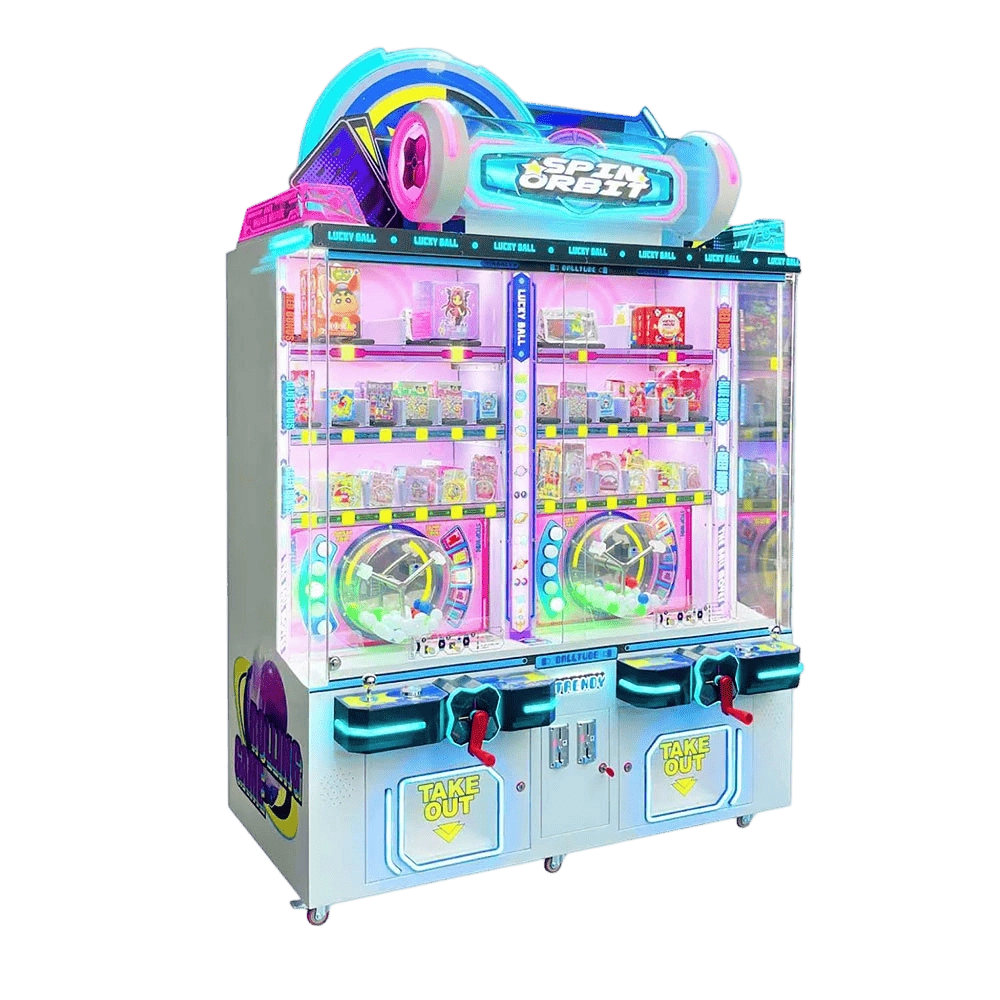
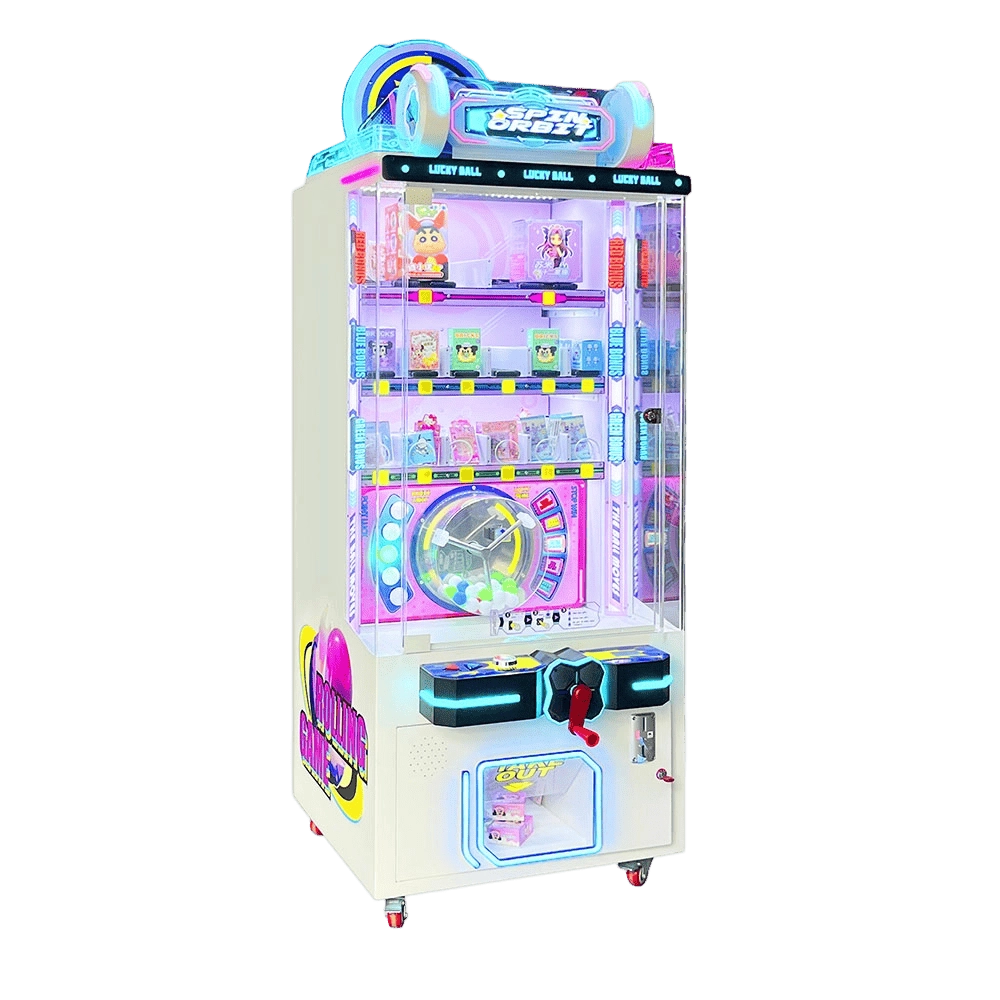
What is the gameplay of the SPIN ORBIT Lucky Prize Arcade Game?
Players use the joystick to guide the ball into a designated hole. Each color ball corresponds to different prize values: red for the highest, blue and green for mid-range prizes, and white for no prize.
Where is this arcade game machine suitable for placement?
It is ideal for high-traffic locations such as children's playgrounds, family entertainment centers, amusement parks, shopping malls, cinemas, and tourist attractions.
How does Jiami Games ensure product quality?
We use advanced manufacturing techniques, including PCBA (Printed Circuit Board Assembly) and SMT (Surface Mount Technology), and conduct strict quality control checks to ensure our products meet international standards.
You May Also Like
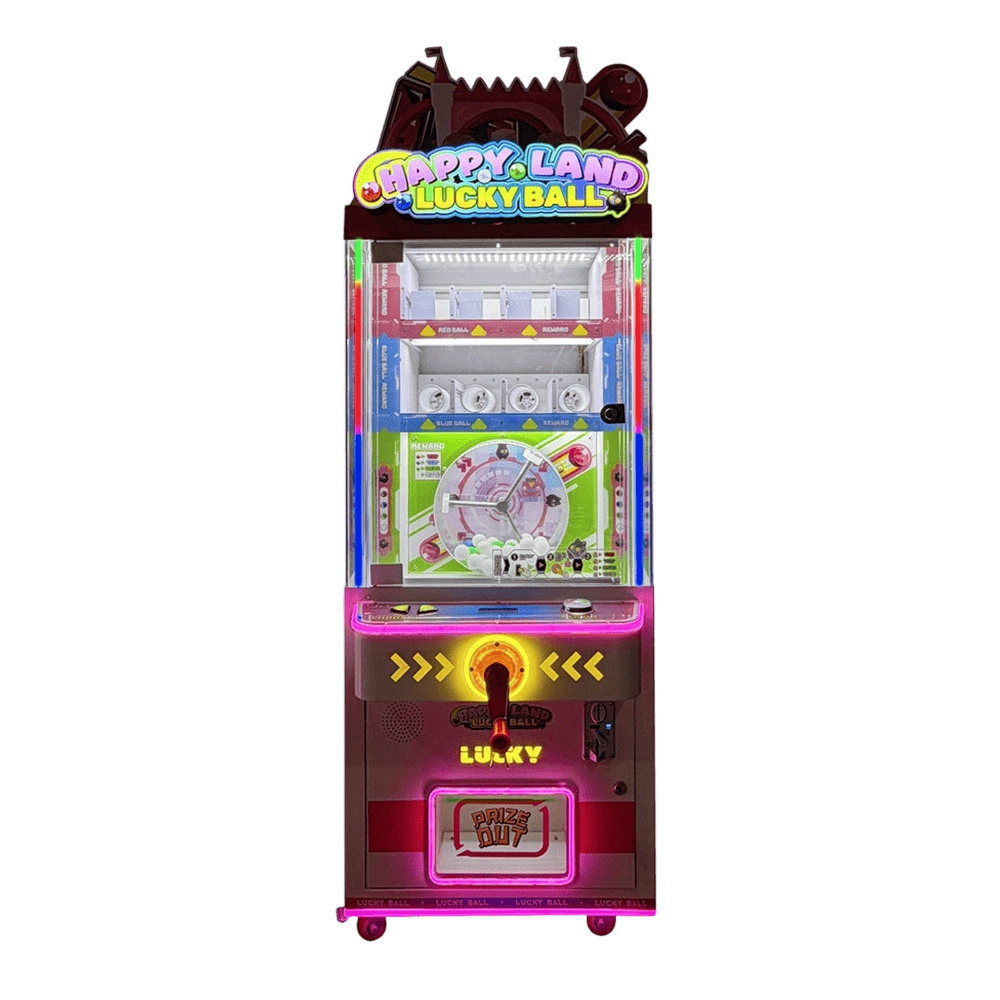
Coin Operated/Card Payment Lucky Ball Vending Toy Gift Arcade Game Machine
Coin Operated/Card Payment 2 Players SPIN ORBIT Lucky Prize Arcade Game
Coin Operated/Card Payment SPIN ORBIT Lucky Prize Arcade Game
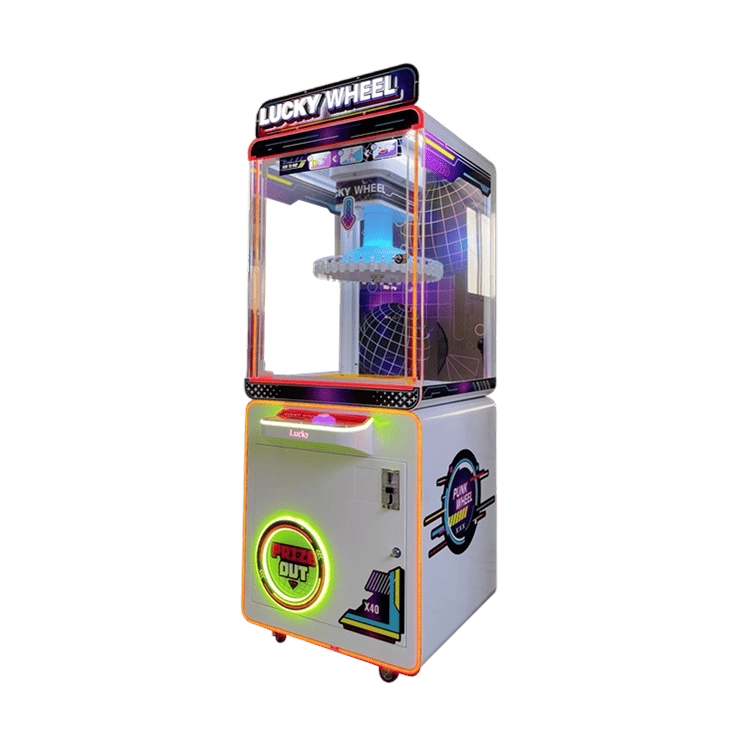
Arcade Prize Lucky Wheel Gift Machine For Amusement Areas
Get in Touch with Jiami Games
If you have any comments or good suggestions, please leave us a message; later our professional staff will contact you as soon as possible.

Innovative Entertainment, at Your Fingertips
Learn about Jiami Games and explore our expertise in console development, innovative design, and global markets.
Quick Links:
© 2026 Jiami Games.
Whatsapp: +8618520390438