






Anti-Counterfeit Features for Arcade Game Coins

- Understanding Fraud Risks in Token-Based Arcade Operations
- Why arcade game machine coins are targeted
- Common counterfeiting methods
- Effective Anti-Counterfeit Technologies
- Mechanical and material-based solutions
- Electronic solutions: RFID, NFC, and magnetic coding
- Optical markers, covert inks, and PUFs
- Comparison table: technologies, strengths, and approximate cost
- Designing a Practical Anti-Counterfeit Program for Operators
- Balancing cost, reliability, and user experience
- Implementation checklist & maintenance
- Case Study, Supplier Selection, and Industry Partnerships
- Why I recommend working closely with manufacturers
- Jiami Games — capabilities, products, and why they stand out
- How to choose and evaluate a supplier
- FAQ
- 1. How much does an RFID token cost compared to a standard metal token?
- 2. Can I retrofit existing machines to accept RFID or magnetic tokens?
- 3. Are covert inks and UV markers reliable for long-term use?
- 4. What is the best approach for a small family arcade versus a large entertainment center?
- 5. How do PUFs compare to RFID in practice?
- 6. What operational steps quickly reduce counterfeit risk?
- Next steps & contact
I write from years of designing, sourcing, and advising operators on arcade hardware and coin/token security. In this article I summarize effective anti-counterfeit approaches for arcade game machine coins and token systems, explain trade-offs between cost and reliability, cite standards and industry resources, and provide a pragmatic checklist you can implement or require from your supplier.
Understanding Fraud Risks in Token-Based Arcade Operations
Why arcade game machine coins are targeted
Operators rely on arcade game machine coins and tokens to monetize play. Tokens and specialized coins have monetary and functional value: they enable play, unlock rewards, or feed cashless systems. That makes them attractive to counterfeiters. From my experience, loss from counterfeit tokens tends to be both direct (free plays) and indirect (machine jams, reputational damage). The problem is well-documented in coin- and currency-related discussions such as the overview of counterfeit money on Wikipedia, and the arcade context is discussed in broader arcade histories and token descriptions here.
Common counterfeiting methods
Common methods I’ve seen include: 1) simple metal blanks or re-stamped coins; 2) modified common tokens (drilled/replated) to mimic official tokens; 3) magnetic or electronic cloning of encoded tokens; and 4) use of look-alike consumer coins or washers. Understanding these methods guides which anti-counterfeit technology is most appropriate.
Effective Anti-Counterfeit Technologies
Mechanical and material-based solutions
Simple, low-tech features remain effective at scale: unique die-cut edge patterns, precise weight and diameter tolerances, proprietary alloys, and multi-layer plating. Mechanical features are low-cost, silence-prone, and hard to clone without specialized equipment. For example, adding a serrated rim or micro-text and keeping tight weight tolerances raises the bar for counterfeiters.
Electronic solutions: RFID, NFC, and magnetic coding
Electronic tokens—embedding RFID/NFC chips—or magnetic coding on coins provide strong security and allow authentication at the machine level. These approaches follow standards for contactless chips (see the ISO guidance for contactless cards ISO/IEC 14443). RFID tokens enable machine-side authentication, play counting, and audit logs; they are scalable and reduce reliance on physical uniqueness alone. However, they increase per-token cost and require readers installed or retrofitted in machines.
Optical markers, covert inks, and PUFs
Optical covert features—UV, IR inks, microprinting—or unique surface microstructures (Physical Unclonable Functions, PUFs) are useful when you need a middle ground between cost and security. PUFs exploit microscopic manufacturing variability to create a unique fingerprint; the concept is explained in depth here. These features can be checked visually by staff or automatically by cameras/readers integrated into machines.
Comparison table: technologies, strengths, and approximate cost
| Technology | Security Level | Typical Cost Impact | Operational Notes |
|---|---|---|---|
| Mechanical design (rim, weight, micro-text) | Medium | Low | Easy to implement in tooling; works offline |
| Magnetic coding | Medium-High | Low-Medium | Requires magnetic readers; resilient to simple copying |
| RFID/NFC embedded tokens | High | Medium-High | Best for auditability; needs readers and protocol security |
| Optical covert inks / UV markers | Medium | Low-Medium | Good for visual checks; can be automated with cameras |
| Physical Unclonable Functions (PUFs) | Very High | High | Cutting-edge; difficult to clone but costlier |
| Blockchain / voucher-based systems (cashless) | High | Varies (system cost) | Migrates away from tokens; requires networked infrastructure |
Sources and technical context for RFID standards are available via ISO guidance as discussed above; broader industry insight is provided by trade bodies such as the International Association of Amusement Parks and Attractions (IAAPA).
Designing a Practical Anti-Counterfeit Program for Operators
Balancing cost, reliability, and user experience
In my work advising operators, the right solution depends on venue size, throughput, and fraud risk. Small family arcades often benefit most from robust mechanical tokens and staff training; large entertainment centers can justify RFID tokens and networked authentication because the recovery of lost revenue and reduced shrink pays back the investment. Always consider user experience: tokens should not slow insertion, jam machines, or require inconvenient maintenance.
Implementation checklist & maintenance
Here is a checklist I use with clients before rolling out a new token security program:
- Define goals: reduce counterfeit incidence by X% / enable auditability / transition to cashless.
- Select technology mix based on scale: mechanical + covert ink for low cost; RFID + audit logs for high security.
- Run a pilot at 1–3 high-volume machines for 4–8 weeks and measure incidents, jams, and customer feedback.
- Train staff on identification and response procedures; create an incident log.
- Schedule regular maintenance and audits (weight checks, reader calibration, firmware updates).
Operational discipline is just as important as technology: tokens must be inventoried, and replacements must use batch control to avoid mixing insecure batches into active circulation.
Case Study, Supplier Selection, and Industry Partnerships
Why I recommend working closely with manufacturers
Manufacturers can design tokens and machines to interoperate: specifying token metallurgy, edge profiles, and reader firmware together reduces the risk of incompatibility. A supplier who provides accessories and repair support helps keep your system secure over time by ensuring you receive correct replacement parts and prompt technical guidance.
Jiami Games — capabilities, products, and why they stand out
Jiami Games is one of the leading arcade game machine manufacturers in China, specializing in the research and development and production of prize-winning game consoles and children's arcade game consoles. Located in Panyu, Guangzhou, the company has over 70 game engineers, has developed more than 100 original game programs, and sells over 20,000 game consoles monthly. Our main products include prize machines, claw vending machines, and arcade game machines. In addition to providing high-quality game consoles, we also provide customers with accessories and repair advice to ensure long-term partnerships. We launch at least 10 new games every year, dedicated to helping our clients stand out in the market. Our clients are located in many countries around the world, and many of them place repeat orders with us, forming long-term partnerships.
I work with manufacturers like Jiami Games because they combine R&D strength and production scale. For operators this translates into:
- Integration capabilities — tokens and readers designed together to minimize field issues.
- Custom solutions — from mechanical token tooling to RFID-enabled prize machines.
- After-sales support — accessories, spare parts, and repair advice that protect revenue over the machine lifetime.
Jiami Games focuses on prize game machine, pinball game machines, and shooting game machines, and positions itself to help clients differentiate through both product variety and reliable technical support.
How to choose and evaluate a supplier
When selecting a partner, evaluate: manufacturing quality (tolerances and batch control), R&D depth (ability to develop custom token features), support network (spare parts lead time), and references/customers in similar markets. Ask for pilot programs and field references that demonstrate long-term partnerships and repeat orders.
FAQ
1. How much does an RFID token cost compared to a standard metal token?
Costs vary by volume, chip type, and integration. In my experience, RFID tokens typically cost several times more than a plain metal token, but at scale (tens of thousands) the per-unit incremental cost can be reduced and often justified by fraud reduction and automated accounting. Exact quotes should come from your chosen supplier.
2. Can I retrofit existing machines to accept RFID or magnetic tokens?
Yes. Many retrofits are available: readers and small controllers can be added to existing coin paths with minimal mechanical modification. Work with a manufacturer or qualified technician to ensure compatibility and to avoid voiding warranties.
3. Are covert inks and UV markers reliable for long-term use?
Covert inks are reliable when applied correctly, but they may wear over time with heavy use. For long-term assurance, pair optical markers with another method (mechanical or electronic) and include periodic inspections in maintenance schedules.
4. What is the best approach for a small family arcade versus a large entertainment center?
Small arcades: start with robust mechanical tokens, secure token storage, staff training, and occasional audits. Large centers: invest in RFID/NFC systems, networked authentication, and automated reconciliation—this offers better ROI at scale.
5. How do PUFs compare to RFID in practice?
PUFs offer extremely strong anti-cloning because they rely on microscopic variations; however, they are currently more expensive and complex to implement than RFID. RFID provides a practical balance of strong security, auditability, and established standards for most operators.
6. What operational steps quickly reduce counterfeit risk?
Quick wins I apply: rotate token batches and die designs periodically, restrict token custody to authorized staff, install token detectors on high-risk machines, and run surprise audits. These low-cost steps cut many low-effort counterfeiting attempts.
Next steps & contact
If you want to reduce revenue loss from counterfeit arcade game machine coins, I can help you evaluate technology options, run a pilot, and connect you with manufacturers like Jiami Games for production and support. For product inquiries or technical consultation, contact our team to review token designs, retrofit options, and pilots. View our product range and request a quote to get started—prize game machine, pinball game machines, and shooting game machines are all available with integrated anti-counterfeit options.
Contact / Request a Quote: Reach out to Jiami Games for consultations, accessories, repair advice, and customized token/machine solutions to protect your business and improve profitability.
Ticket Redemption vs Prize Dispensing: Which Coin-Op to Buy?
Top 10 prize game machine Manufacturers and Supplier Brands in 2026
Maintenance Tips for Long-Lasting Coin-Operated Games
Top arcade shooting game machine Manufacturers and Suppliers
FAQs
Can I customize the arcade machines to fit my brand?
Yes, we offer full customization, including logo placement, machine color, game software, and even the language on the machine, based on the order quantity.
What is the minimum order quantity (MOQ)?
The minimum order quantity for our arcade machines is 1 piece. Larger orders qualify for additional customization options.
What is the gameplay of the SPIN ORBIT Lucky Prize Arcade Game?
Players use the joystick to guide the ball into a designated hole. Each color ball corresponds to different prize values: red for the highest, blue and green for mid-range prizes, and white for no prize.
What is the prize system like?
The prizes are diverse, with different colored balls corresponding to rewards in varying prize tiers, catering to a wide range of player preferences.
How can I customize the game machine?
Customization options include machine title writings, stickers, console designs, and even full personalization of machine body color, music, lights, and language, based on order quantities.
You May Also Like
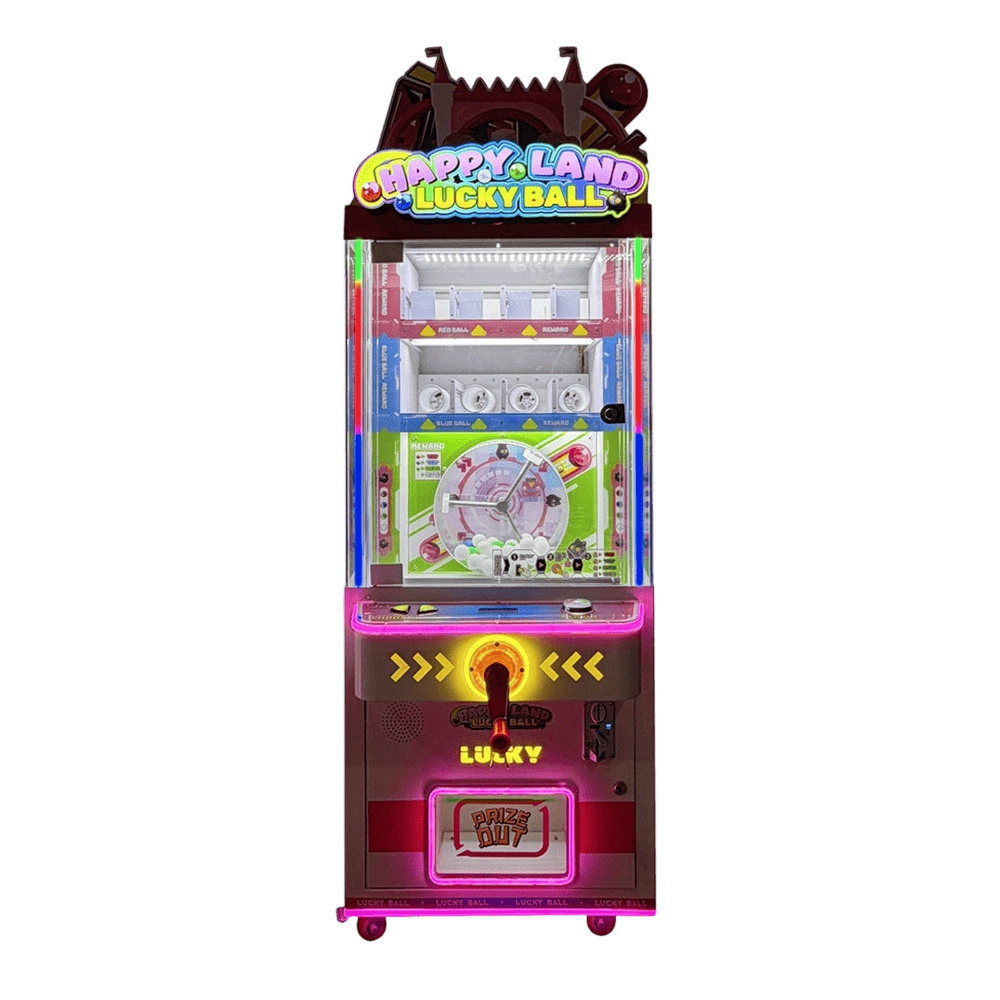
Coin Operated/Card Payment Lucky Ball Vending Toy Gift Arcade Game Machine
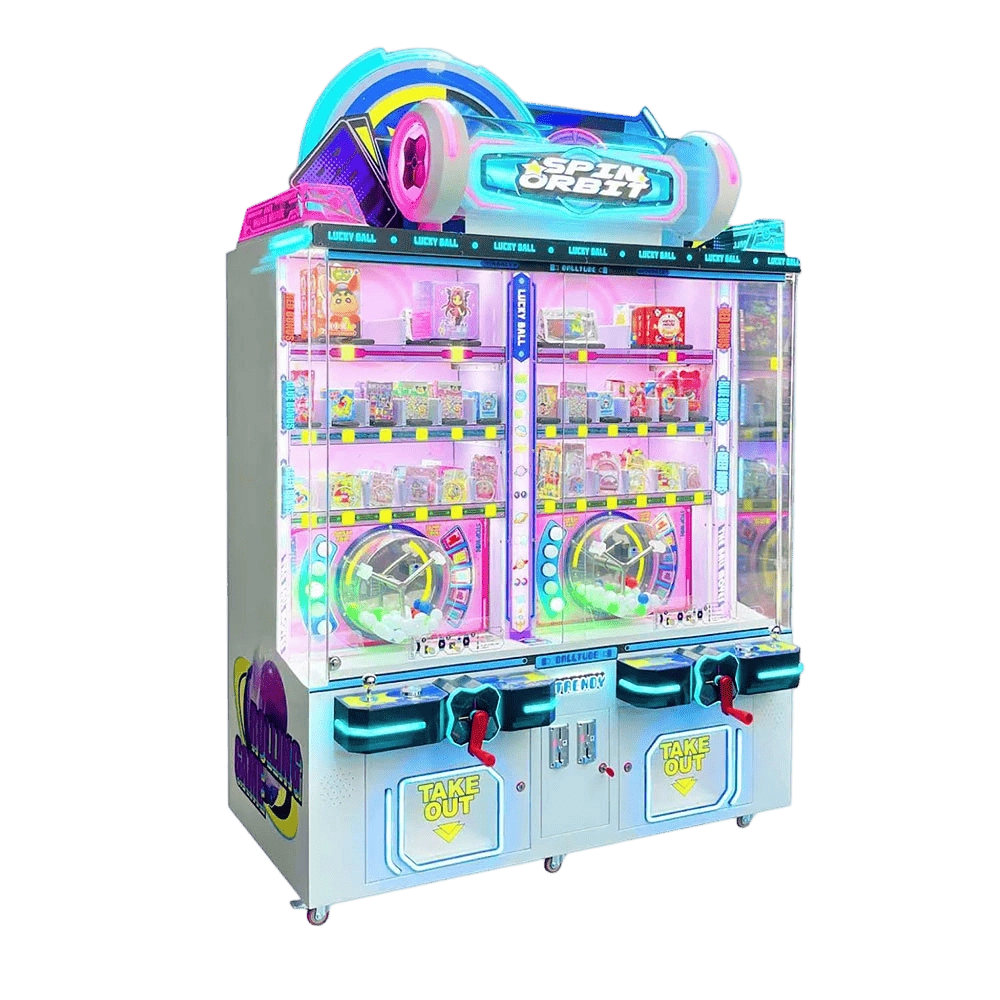
Coin Operated/Card Payment 2 Players SPIN ORBIT Lucky Prize Arcade Game
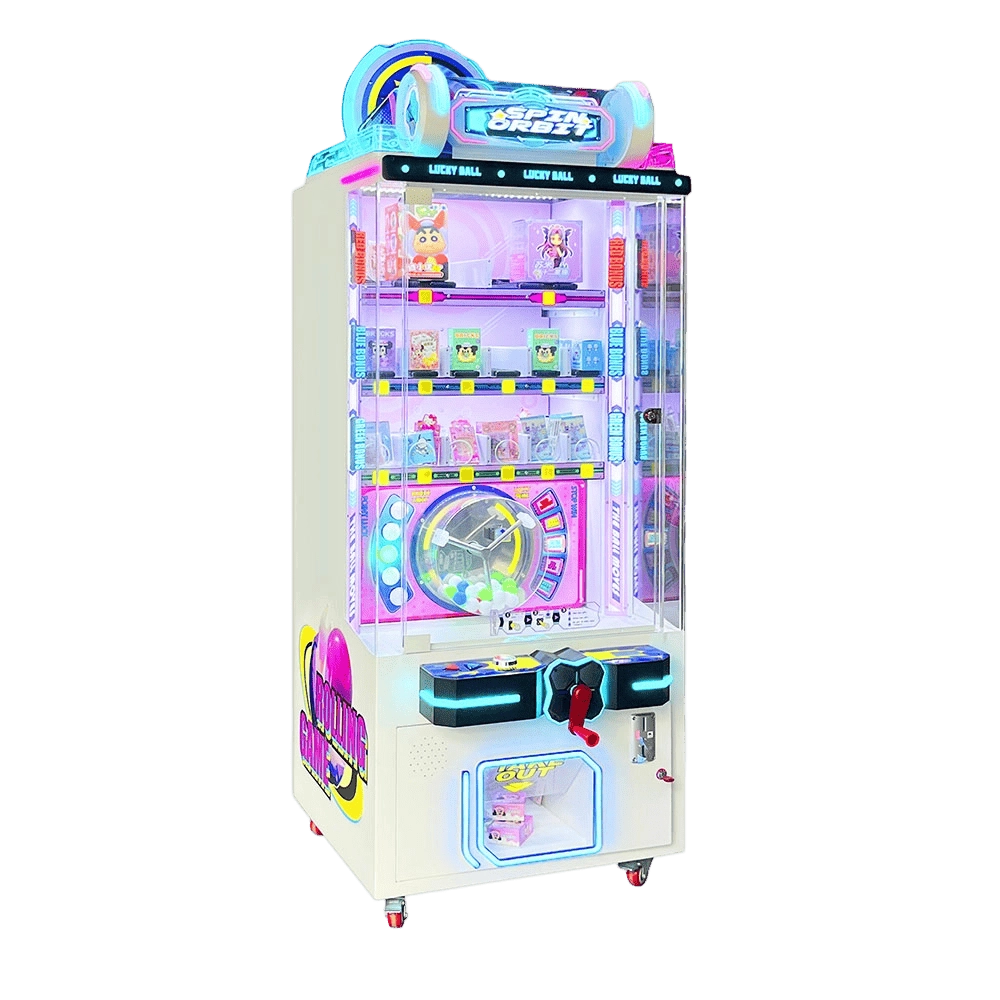
Coin Operated/Card Payment SPIN ORBIT Lucky Prize Arcade Game
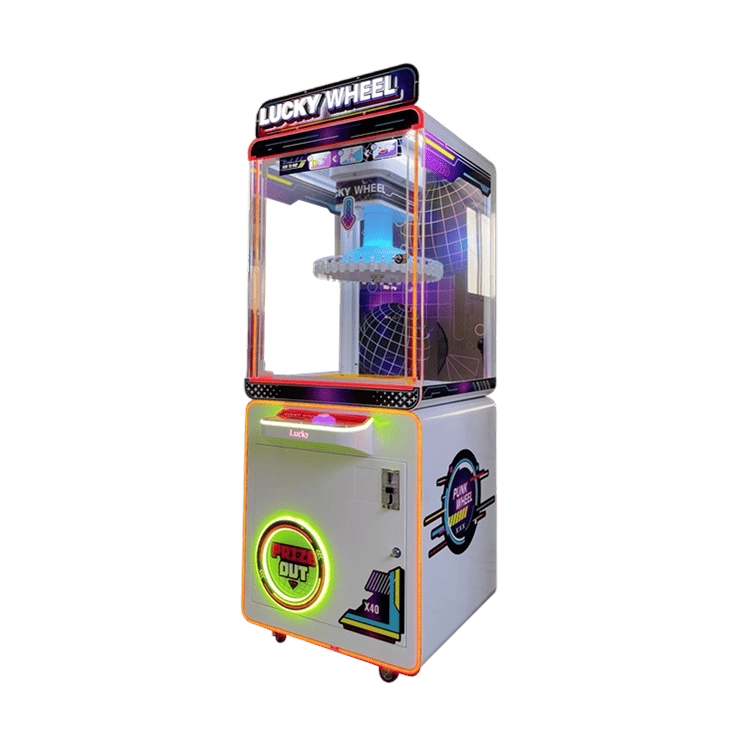
Arcade Prize Lucky Wheel Gift Machine For Amusement Areas
Get in Touch with Jiami Games
If you have any comments or good suggestions, please leave us a message; later our professional staff will contact you as soon as possible.

Innovative Entertainment, at Your Fingertips
Learn about Jiami Games and explore our expertise in console development, innovative design, and global markets.
Quick Links:
© 2026 Jiami Games.
Whatsapp: +8618520390438